
There are nights in New York City that feel like myths before they’re even memories—nights where the walls of a venue tremble not from volume, but from veracity. This past Monday, May 12, under the vaulted ceiling of Webster Hall, Alemeda conjured such a night. As the opener for Rachel Chinouriri, she did not simply warm up the room—she transfigured it, leaving an indelible glow in her wake.

Alemeda, born Rahema Shifa Alameda on December 13, 1999, in Ethiopia, is a Sudanese-Ethiopian singer-songwriter known for her genre-blending music that fuses alternative rock, pop, and R&B. Raised in a strict household in Phoenix, Arizona, where music was restricted, she discovered her passion for music by secretly listening to pop radio and watching Disney Channel originals like “High School Musical.” This clandestine exposure ignited her desire to create music that defies conventional boundaries.
In 2021, Alemeda gained viral attention with her debut single “Gonna Bleach My Eyebrows,” followed by tracks like “Post Nut Clarity” and “Don’t Call Me,” which showcase her fearless lyricism and eclectic sound. Her debut EP, FK IT, released in 2024 under Top Dawg Entertainment and Warner Records, solidified her place in the music industry as a bold and unapologetic artist. Alemeda’s music often explores themes of self-expression, empowerment, and emotional honesty, resonating with a diverse audience seeking authenticity in art.
As one of the few Ethiopian-Sudanese artists in the mainstream music scene, Alemeda is not only breaking cultural barriers but also redefining what it means to be a Black woman in alternative music. Her journey from a restrictive upbringing to becoming a star on the rise exemplifies her resilience and commitment to her craft.

Alemeda stepped onto the stage at Webster Hall not with bombast but with the confidence of stillness. Draped in tones that echoed candlelight and cosmic dust, she seemed less like a performer and more like a vision—one set to blur the line between ceremony and show. From the first breath of her set, the atmosphere in the room shifted. A hush fell like snowfall. And then came her voice: velvet, breathy, at once ancient and incandescent.
If music is a form of spell work, Alemeda is a high priestess.
She opened with “Gonna Bleach My Eyebrows,” an up-tempo triumph stitched in defiance and softness. The crowd leaned in—not with the frenzy of fandom, but with reverence. Her presence was magnetic, but not aggressive. There was no need for spectacle. She possessed that rare quality: to be simultaneously enormous and intimate.
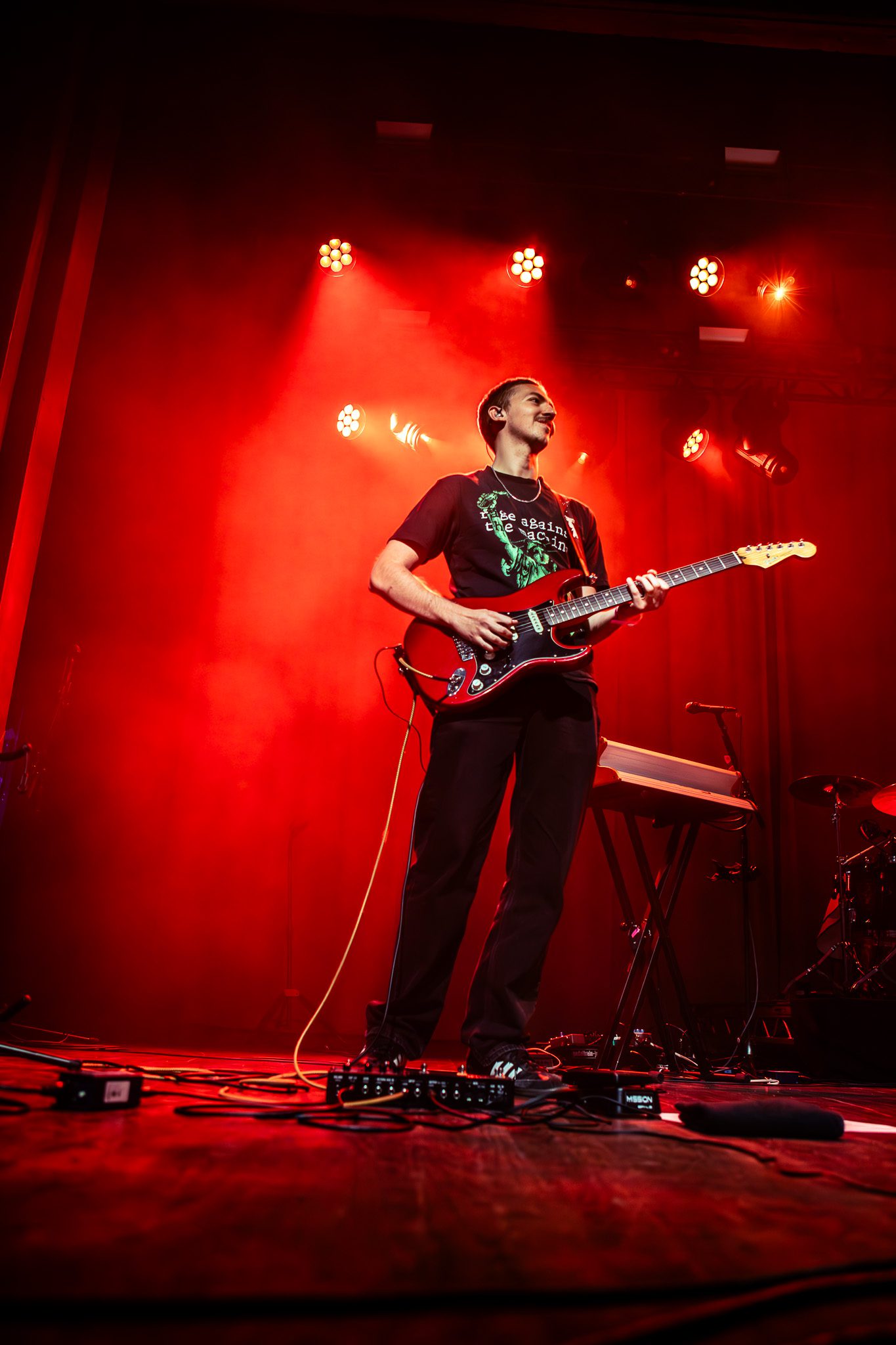
What followed was a set that read like a confessional poem dressed in magnificent guitar lines and heartbeats. On “First Love Song,” she sang with deadpan charm and raw self-awareness, swaying between sarcasm and sincerity like a pendulum between past selves. Her lyrics, full of barbed wit and deep ache, dripped like honey over distorted instrumentals. It was soul music for the anxious, R&B for the disassociated, indie pop for the quietly heartbroken.
As Alemeda slipped into “Guy’s Girl,” the crowed reacted with knowing nods and half-laughed exhales—the shared catharsis of being young, impulsive, and too aware of it. Her set bloomed not just with sonic texture, but emotional excavation. Between songs, she offered soft smiles and occasional glances that said, “I see you.” And the crowd—engrossed with wide-eyes, mostly twenty-something, swaying like underwater grass—said it back.
She closed with “Don’t Call Me,” a reserved ballad that floated like incense through the rafters of Webster Hall. Her voice stretched itself thin, like a ribbon pulled taut over grief and growth. By the time the final note curled into silence, the room was not clapping—it was expelling.
Alemeda does not perform in the traditional sense; she disarms. There is no neat catharsis in her work—just the push and pull of irony and sincerity, biting wit dressed in playful guitar riffs, chaos made palatable through melody. Her songs don’t cry out for your empathy; they dare you to laugh, flinch, and then recognize yourself in the aftertaste. Genre is just a disguise. Emotion is the engine.
Opening for Rachel Chinchouriri—an artist whose own sound floats between heartbreak and hope—Alemeda felt like a foil and a force. Where Rachel confides, Alemeda confronts. She turned the stage into a smirking question mark, challenging the crowd to not just feel, but to interrogate the feeling with candor.
In her short set, Alemeda didn’t just warm up the room—she warped it, made it strange and sharp and new.
There is something eccentric about an artist who can say everything with a smirk and still leave you gutted. Alemeda does just that. With a voice like velvet over glass and a presence that teeters between mischief and melancholy, she turned Webster Hall into a confessional booth where no one asked for forgiveness—only recognition.
And as her set slipped away, like a secret passed between verses, the question remained: How can something so unserious feel so true?
Alemeda knowns. And soon, so will everyone else.















Leave a Reply