
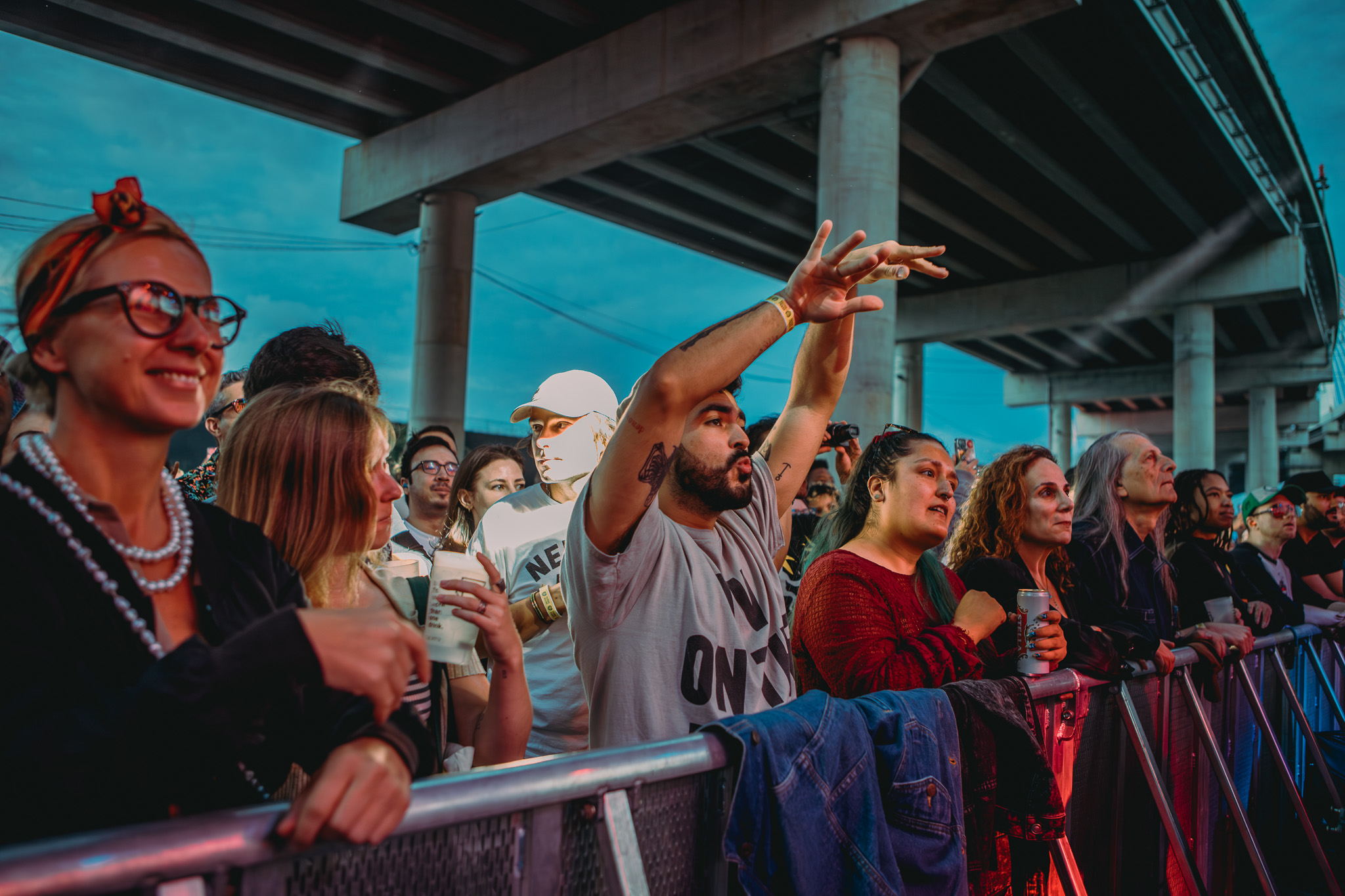
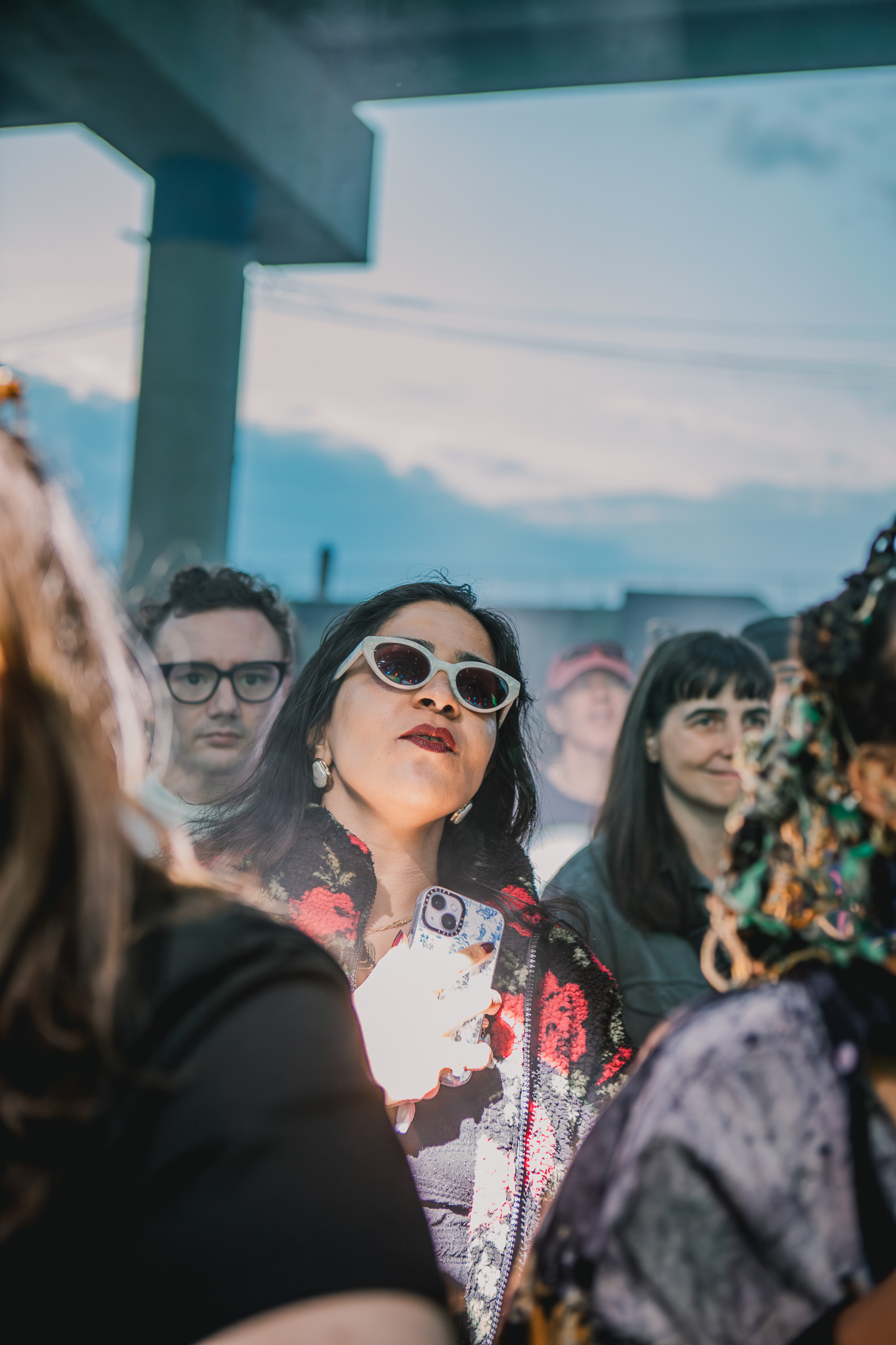
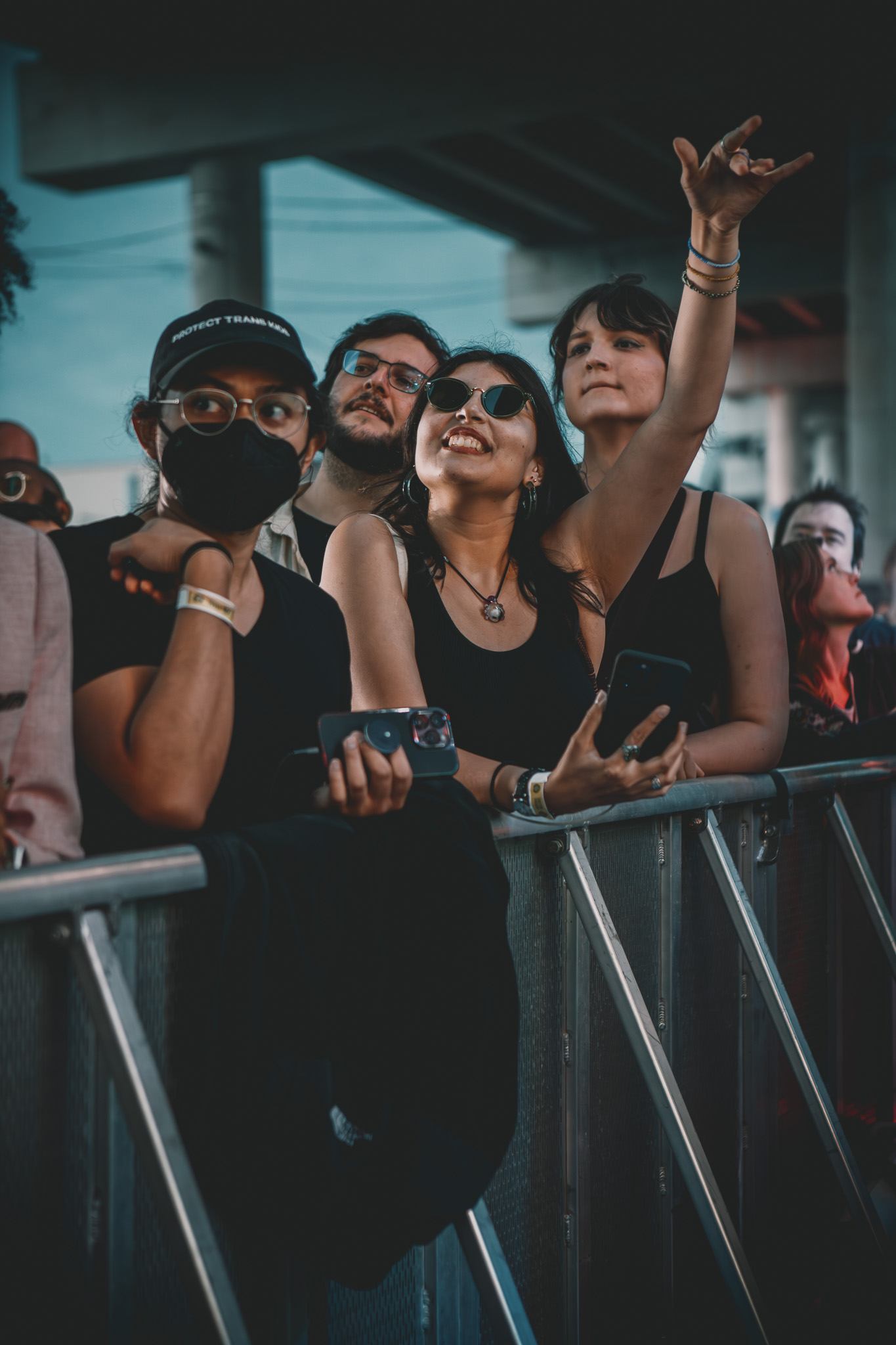
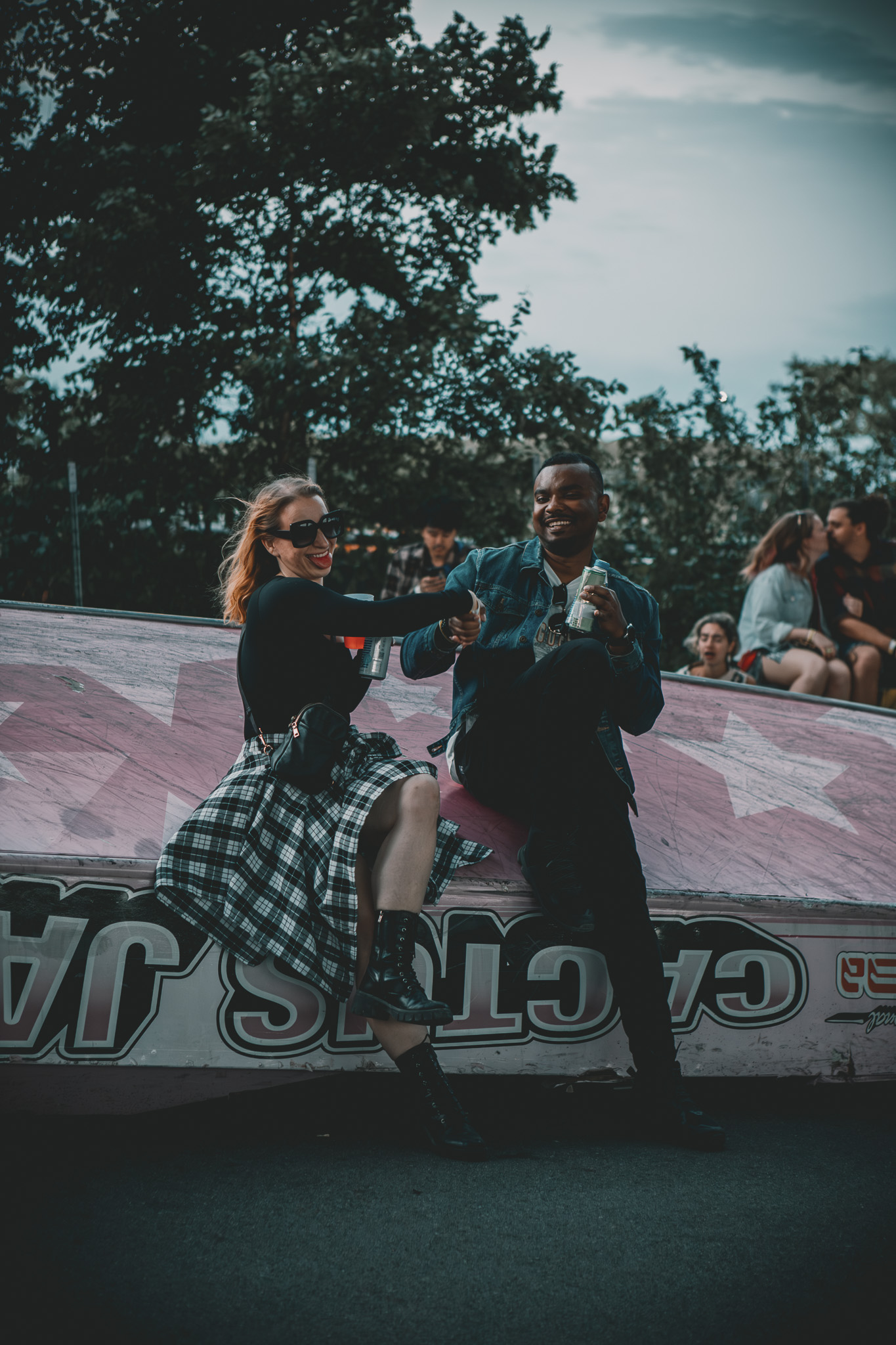
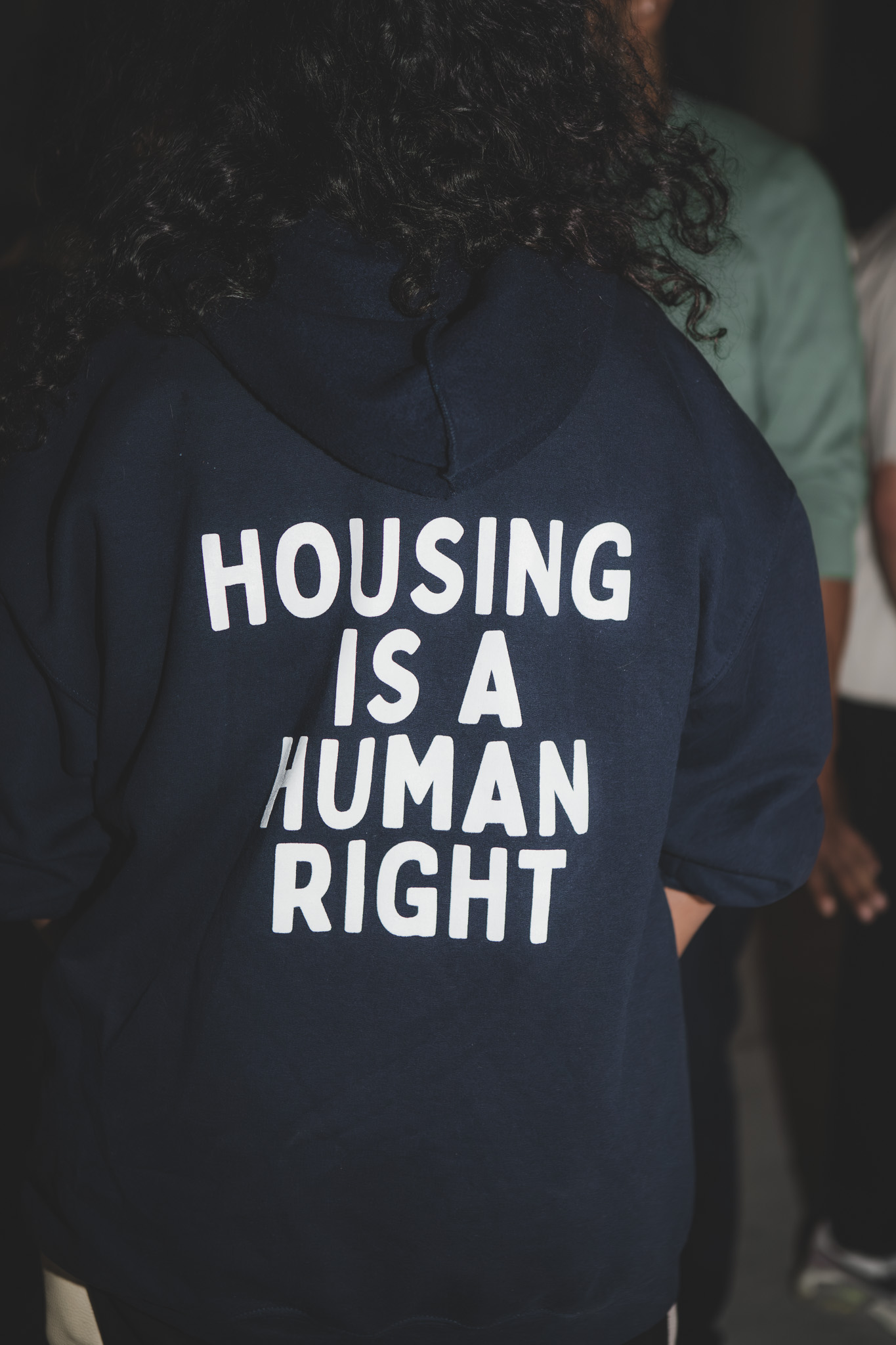
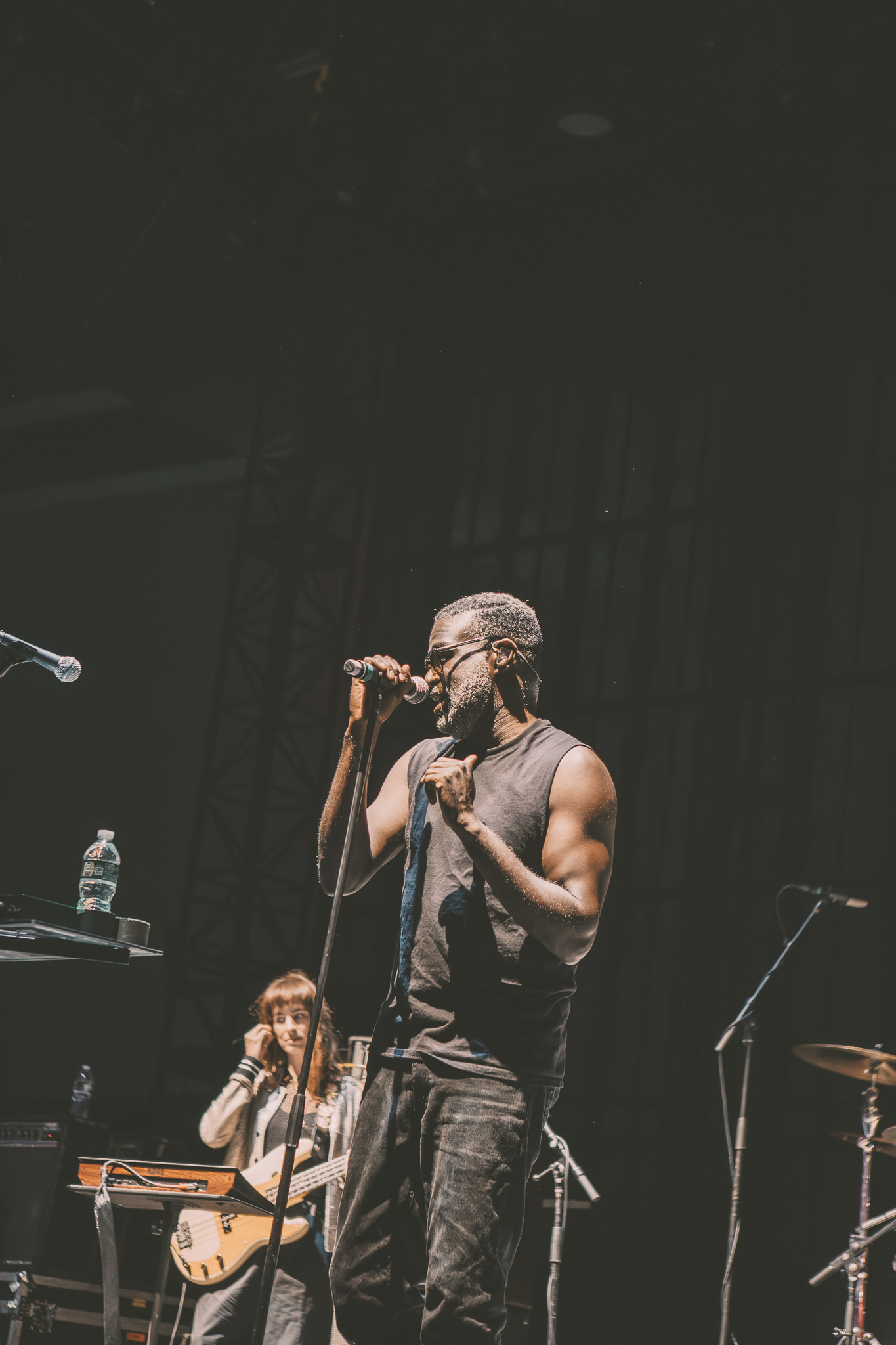
There aren’t many festivals I walk into without knowing a single name, but Saturday, under the Kosciuszko Bridge felt like a dare I was meant to take. “There Goes The Neighborhood” turned the concrete underbelly into a cathedral for eccentric frequencies and tender noise, a haven for experimental soundscapes where the bass shivered the concrete. TV On The Radio curated it like a love letter. Tunde Adebimpe joked about age buying you the freedom to pull all your favorites on one stage, but the night proved why he became attached; each set it’s own weather system, all of them snapping together like puzzle pieces that had been waiting years to meet.
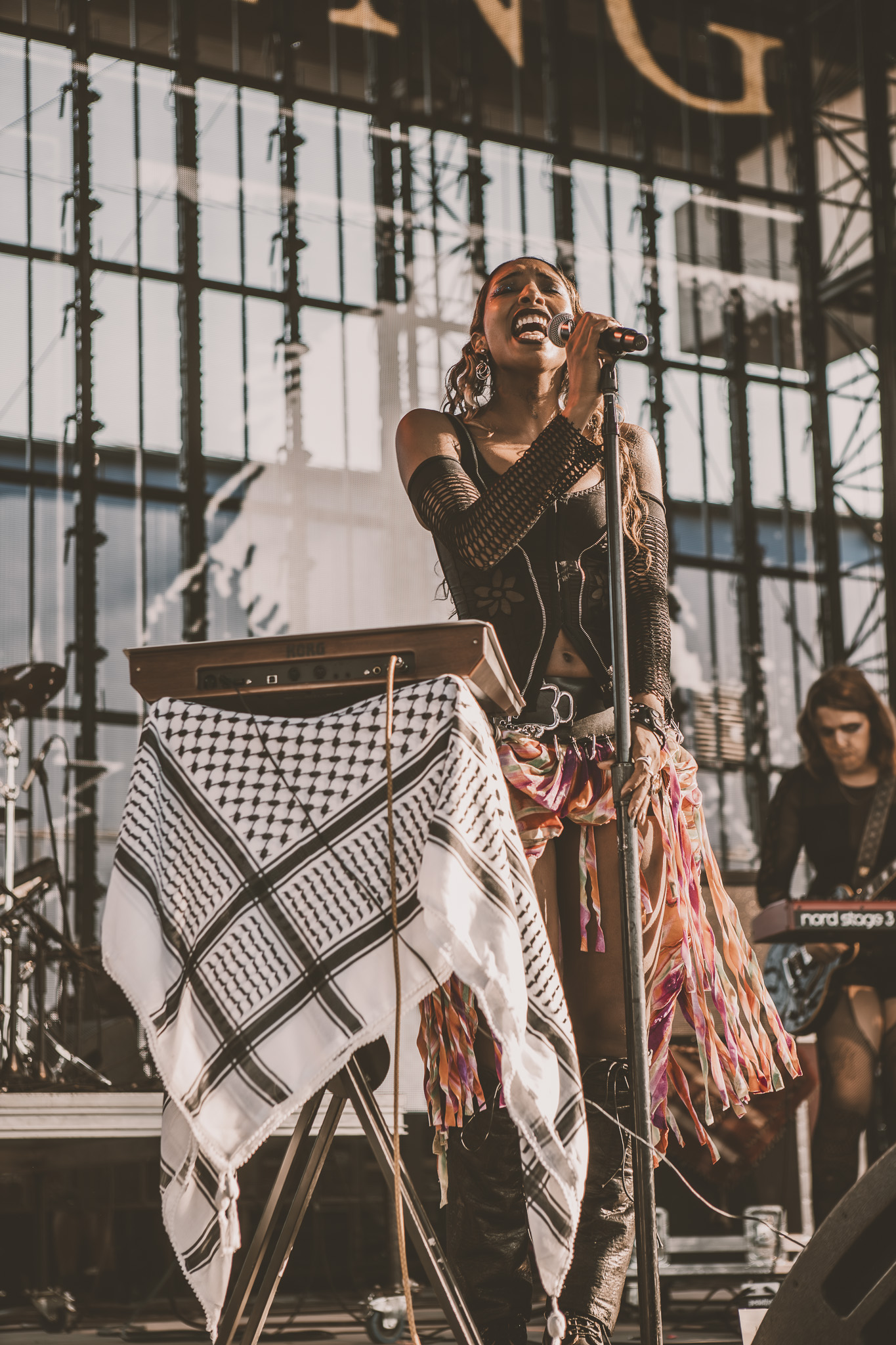
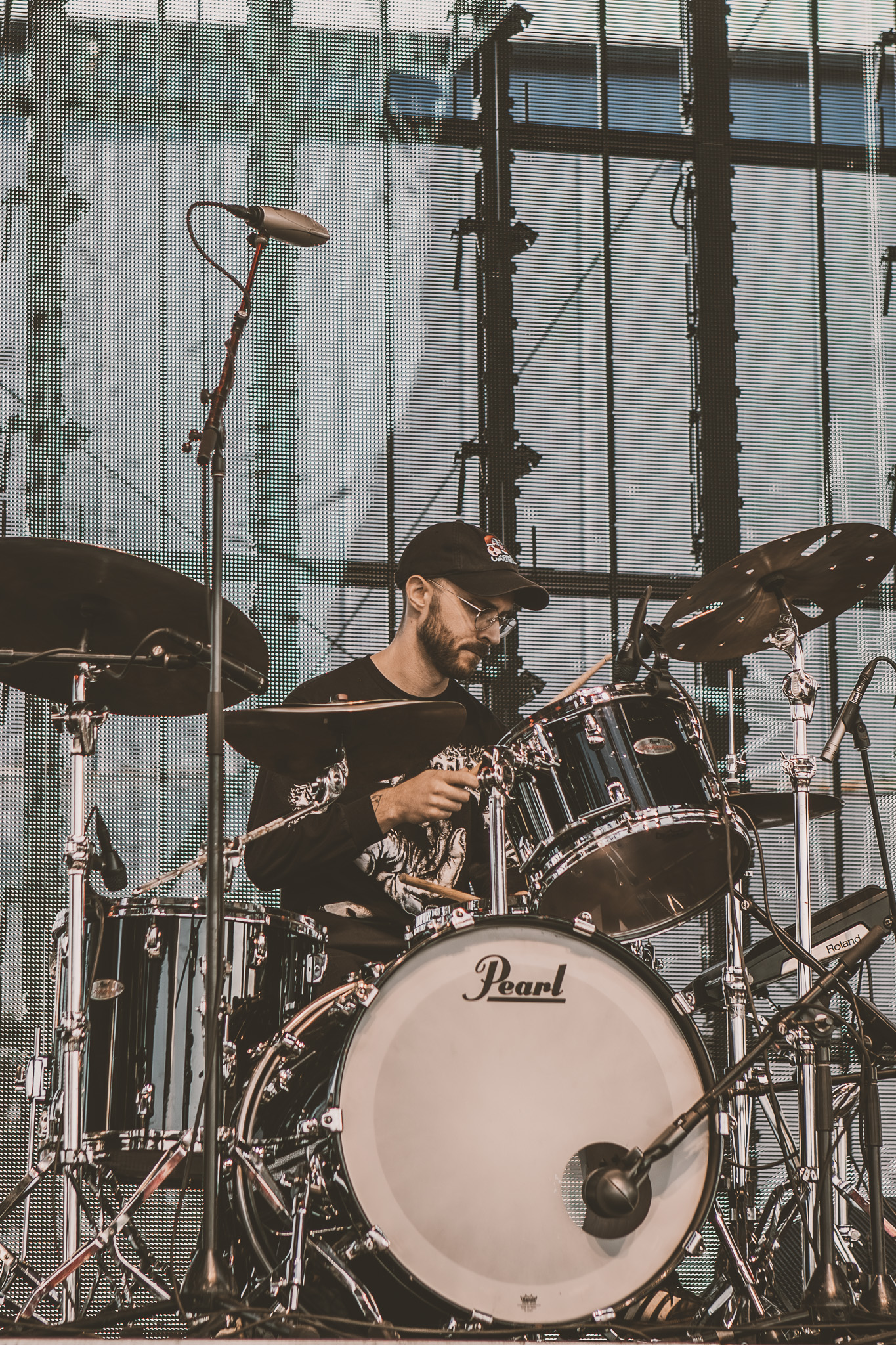
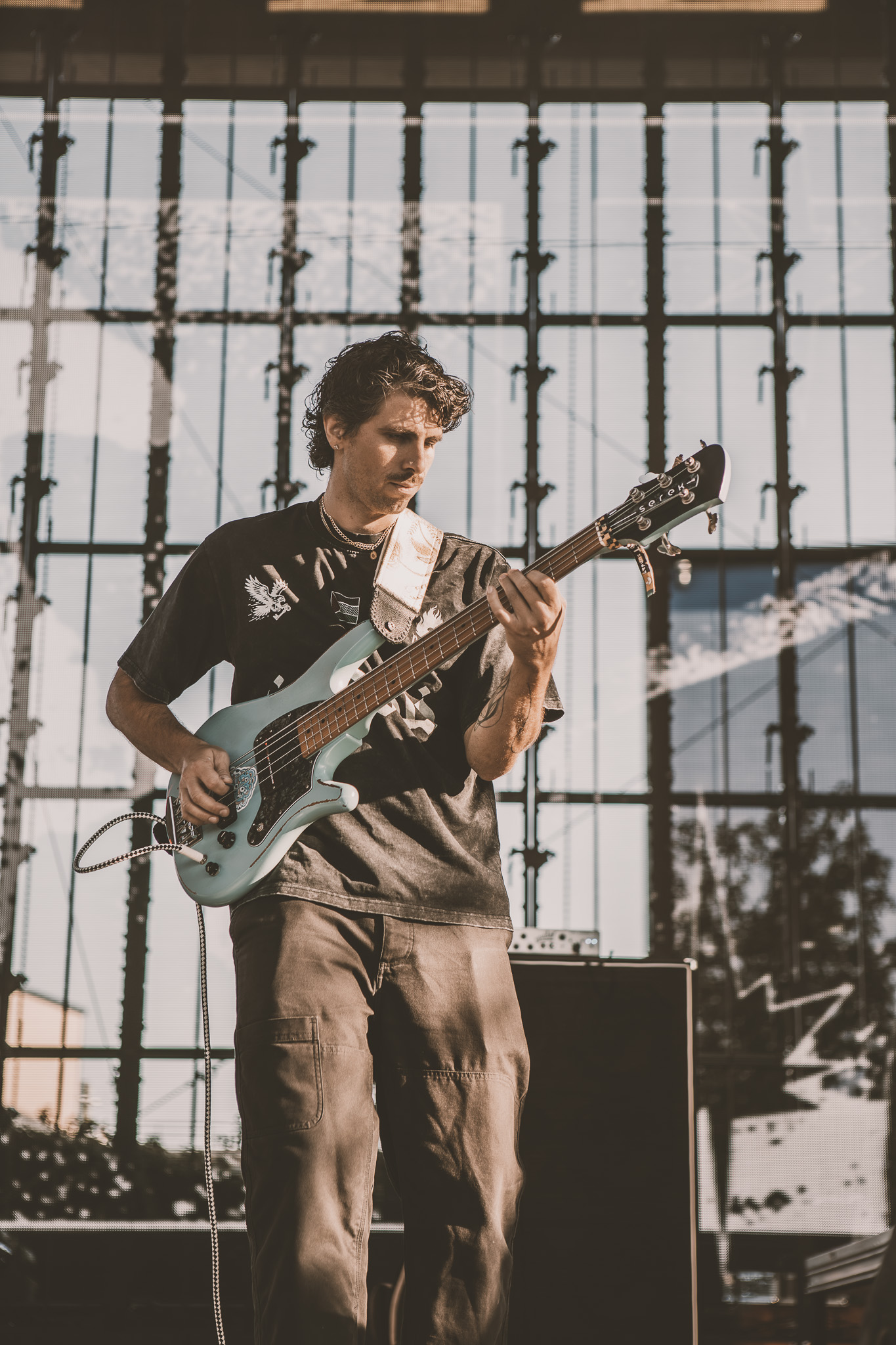
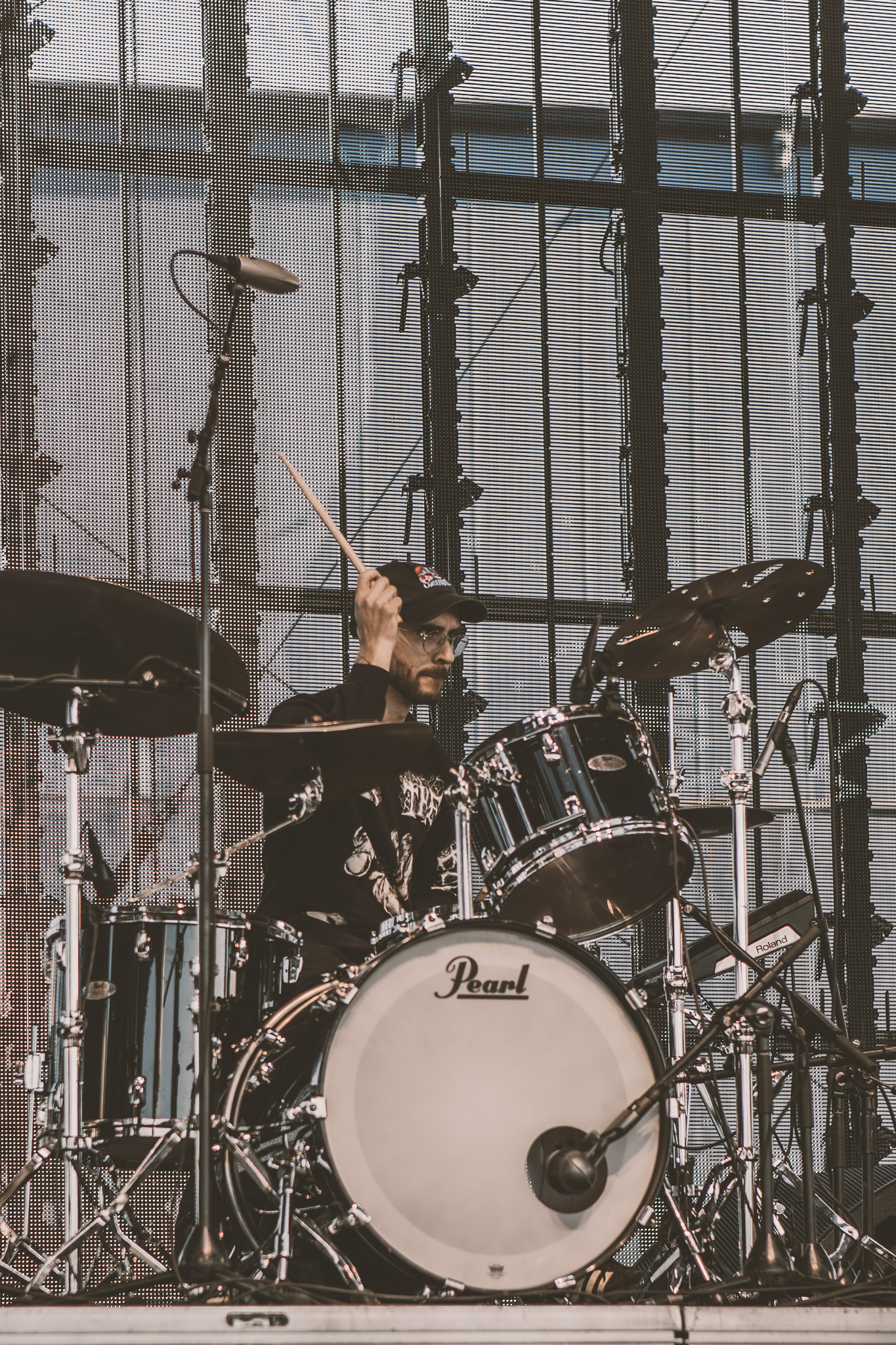
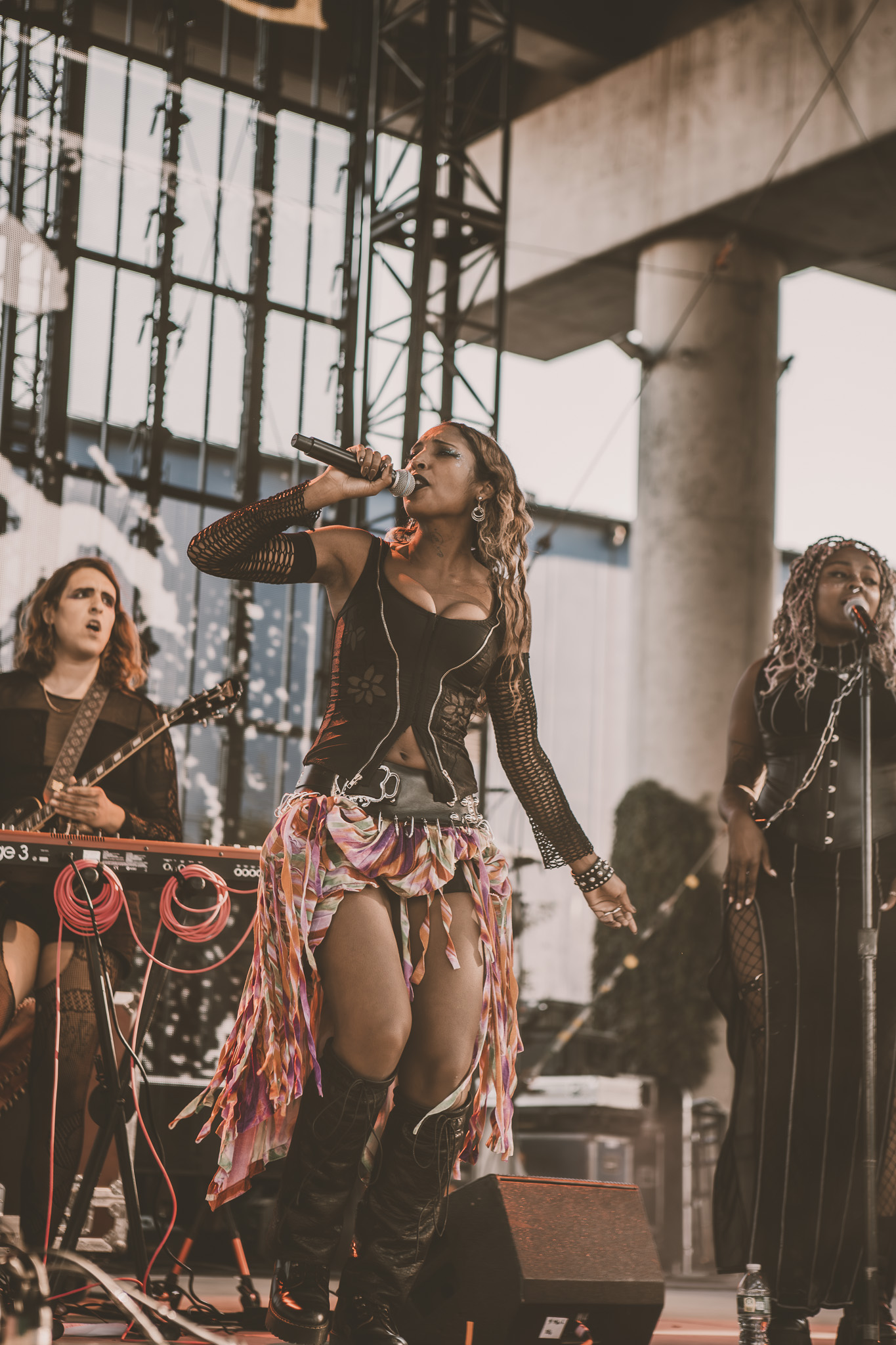
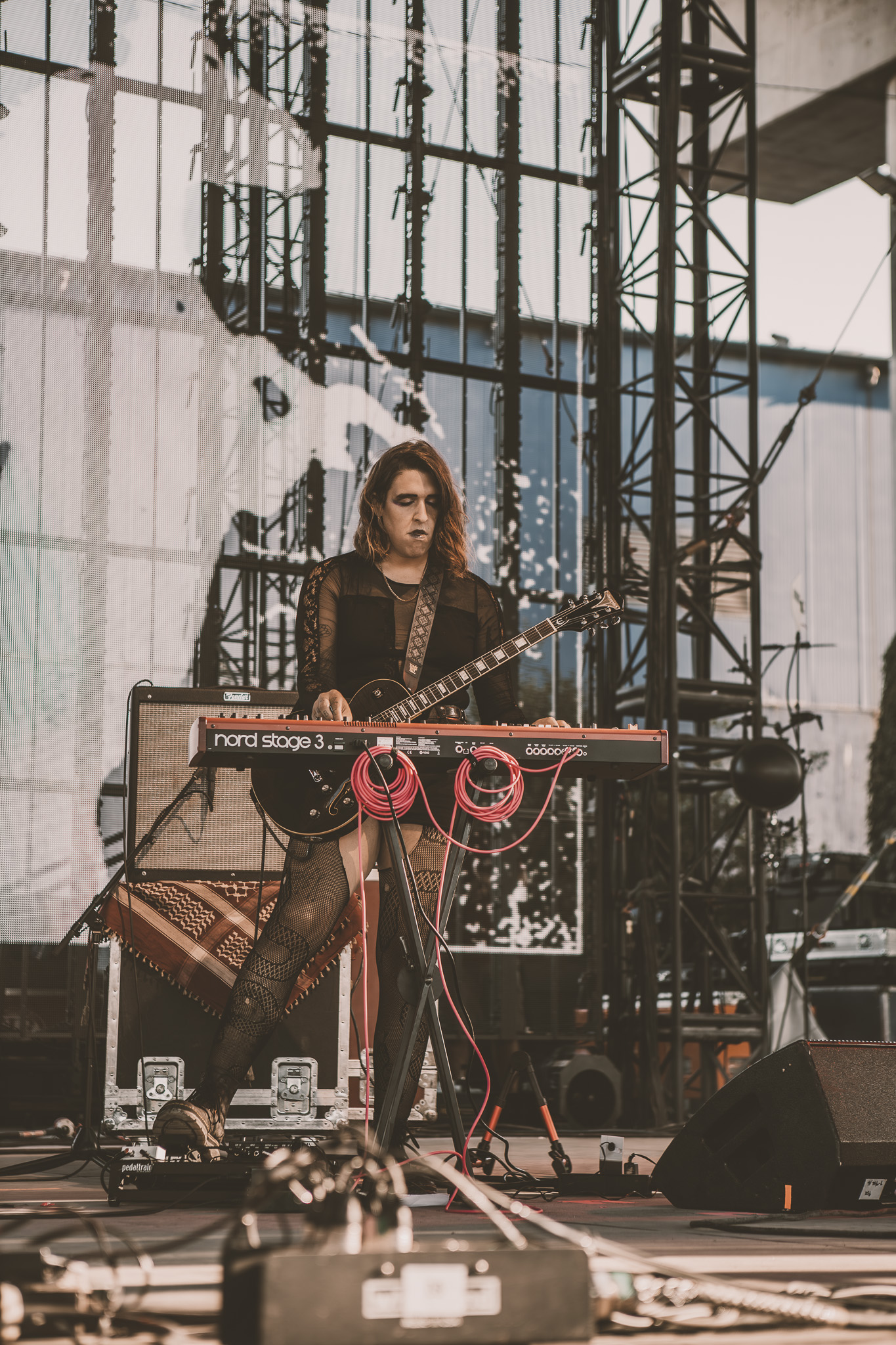
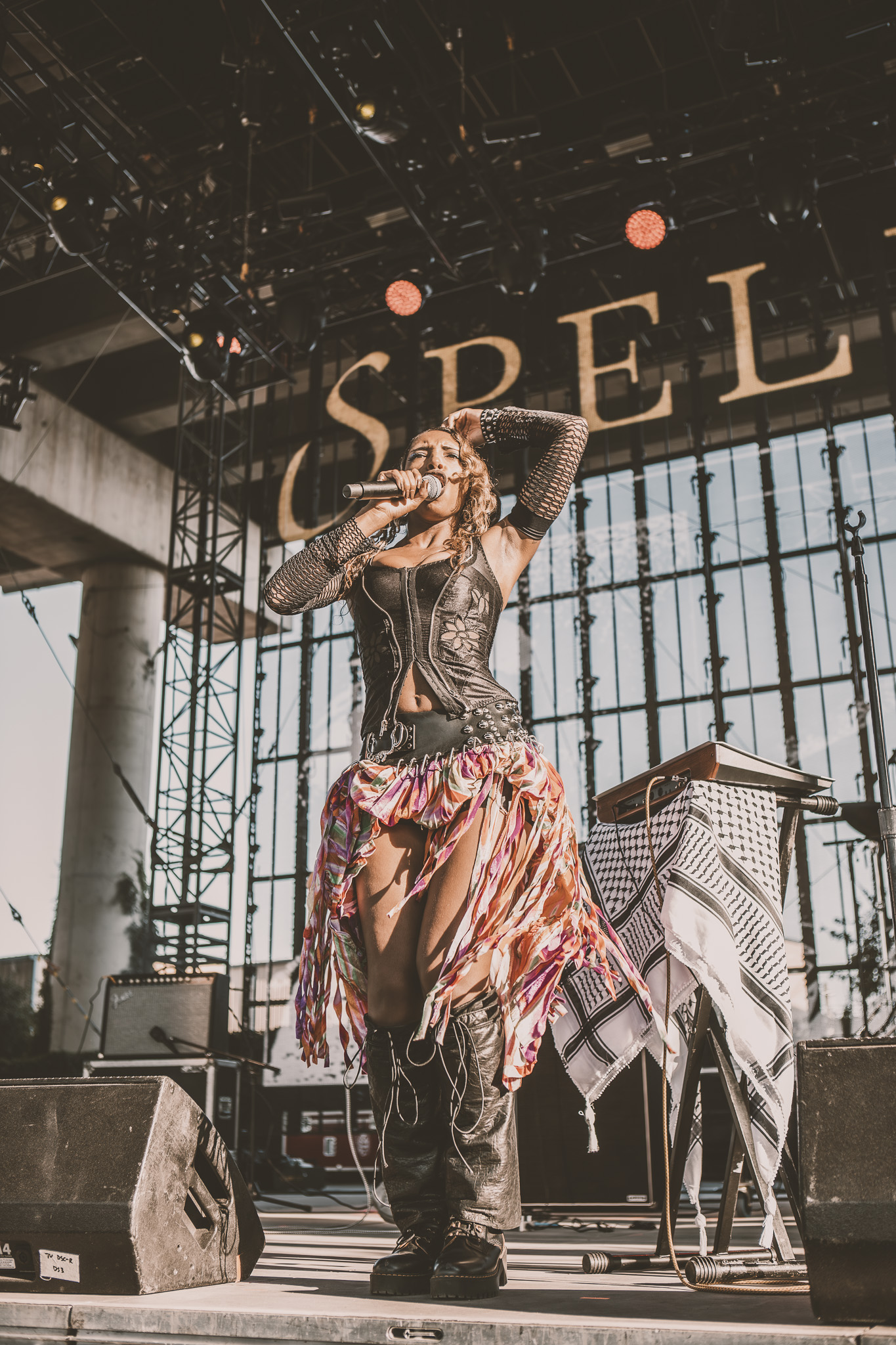
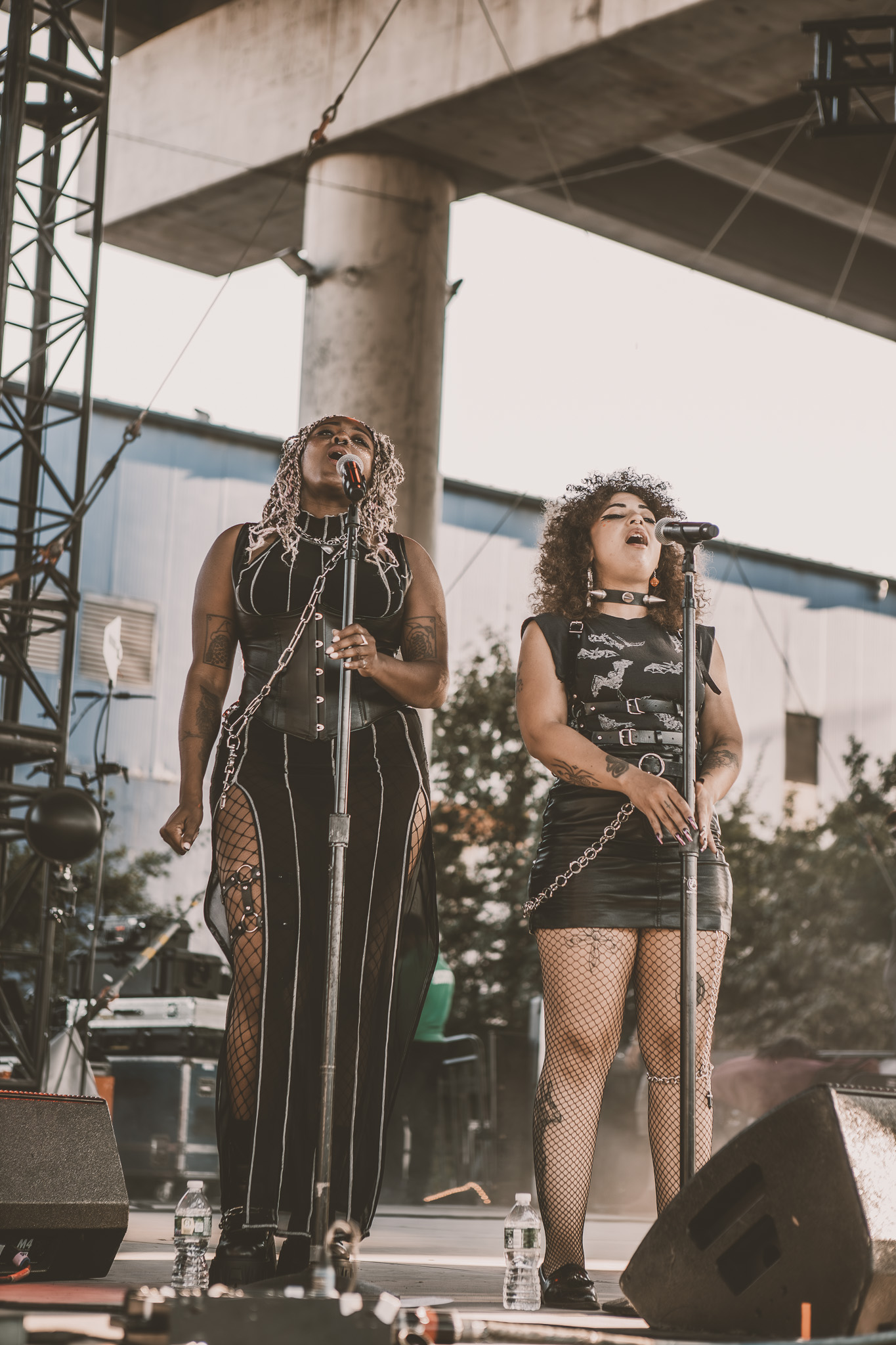
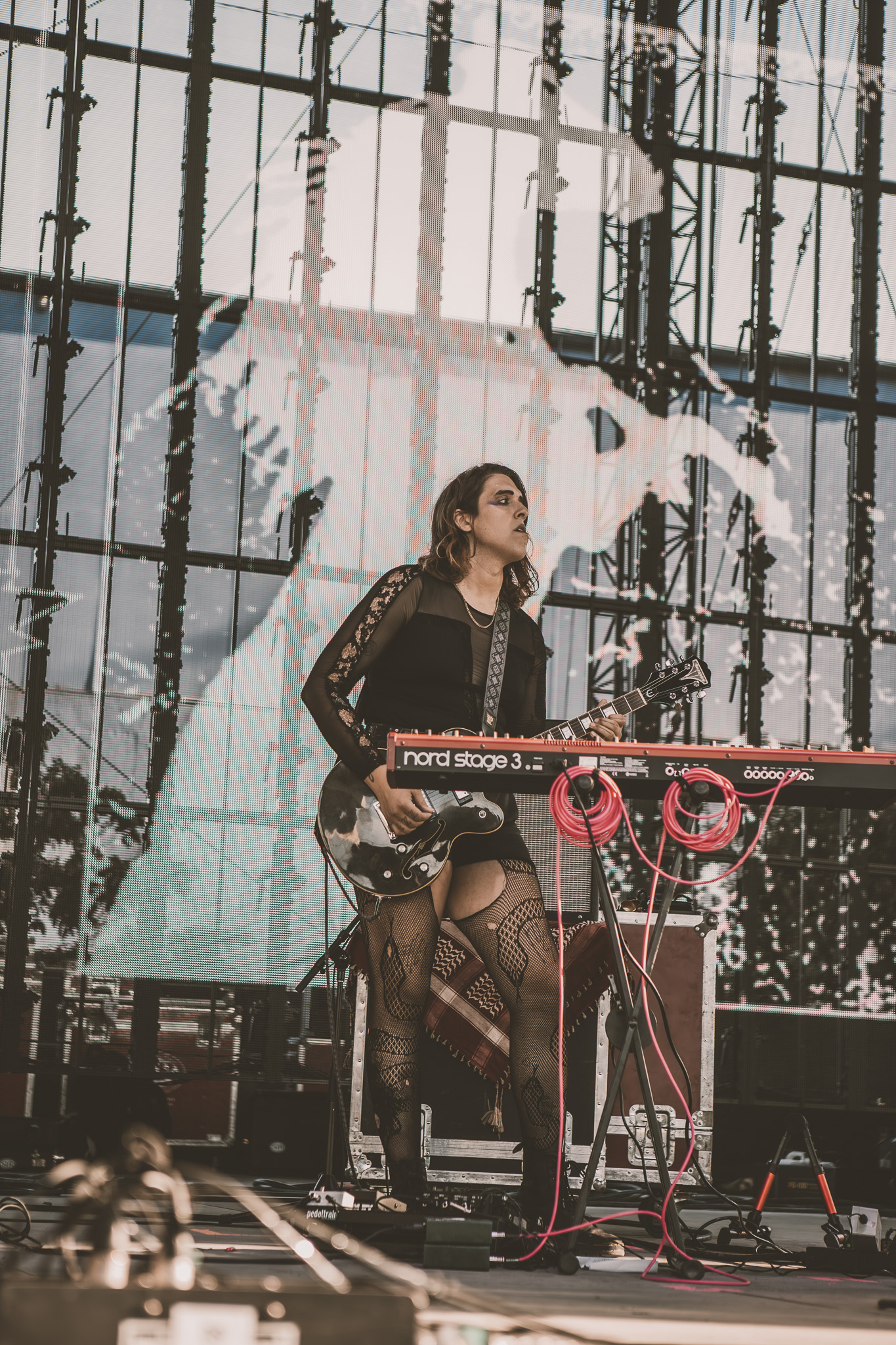
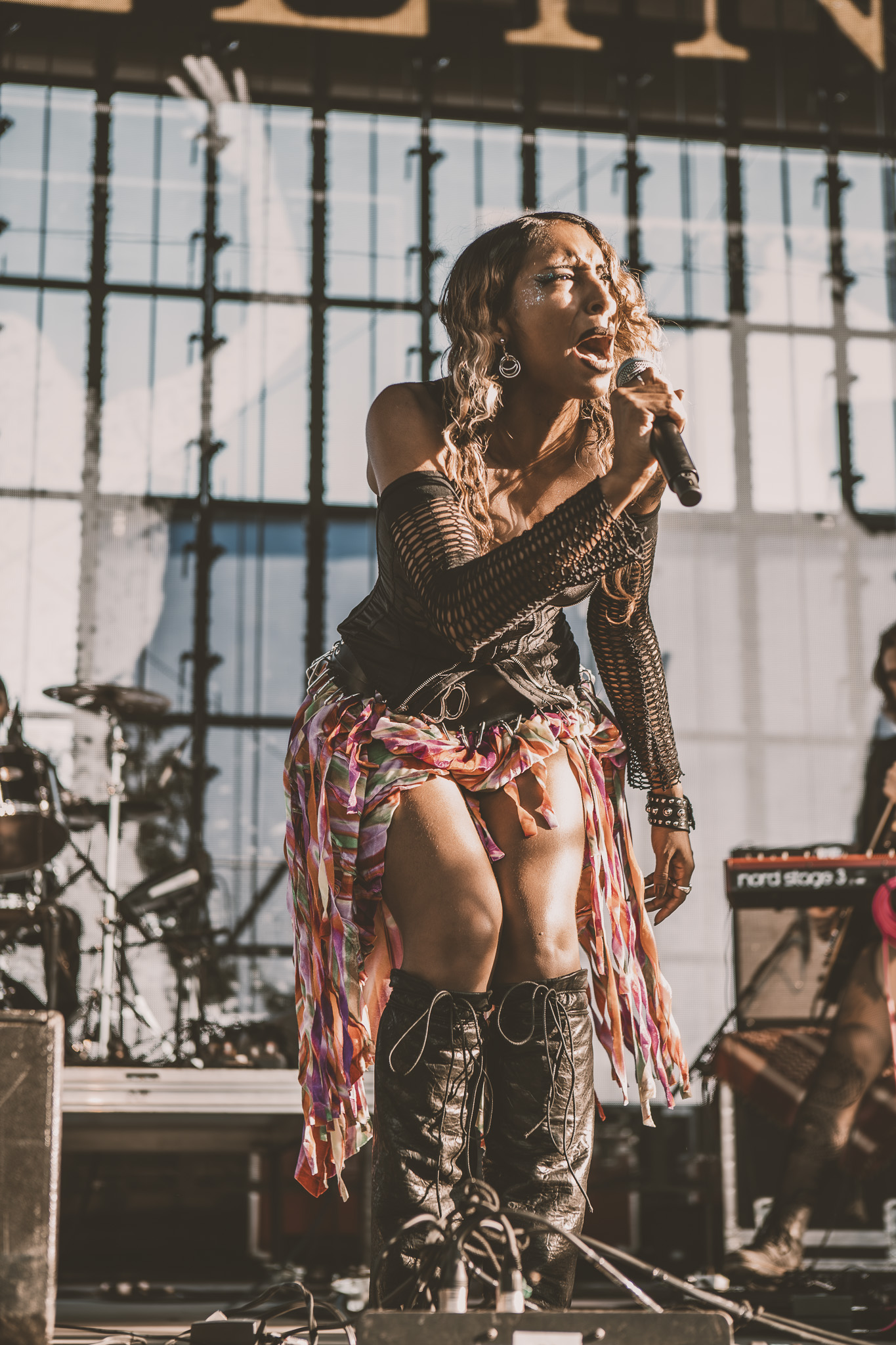
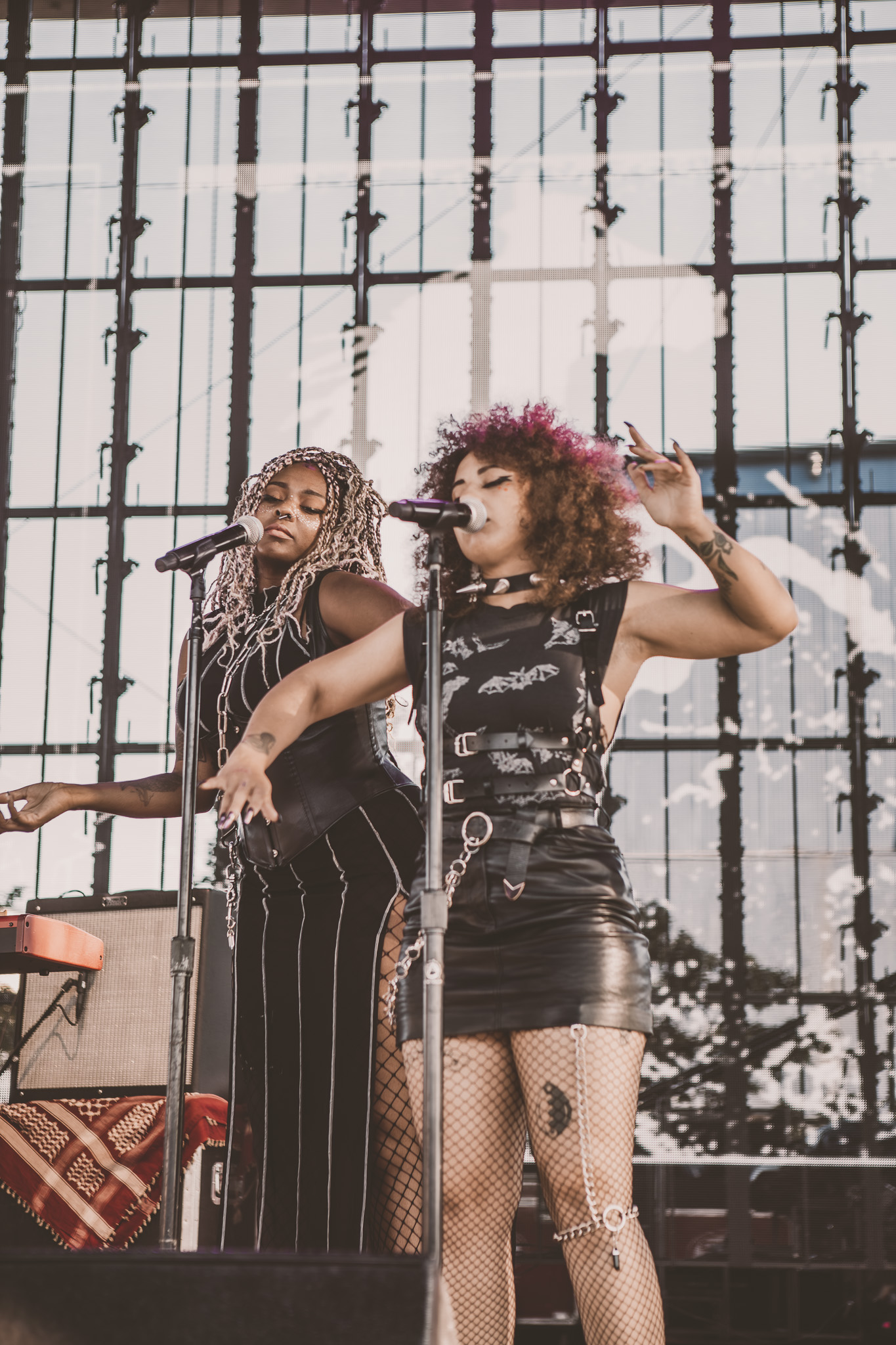
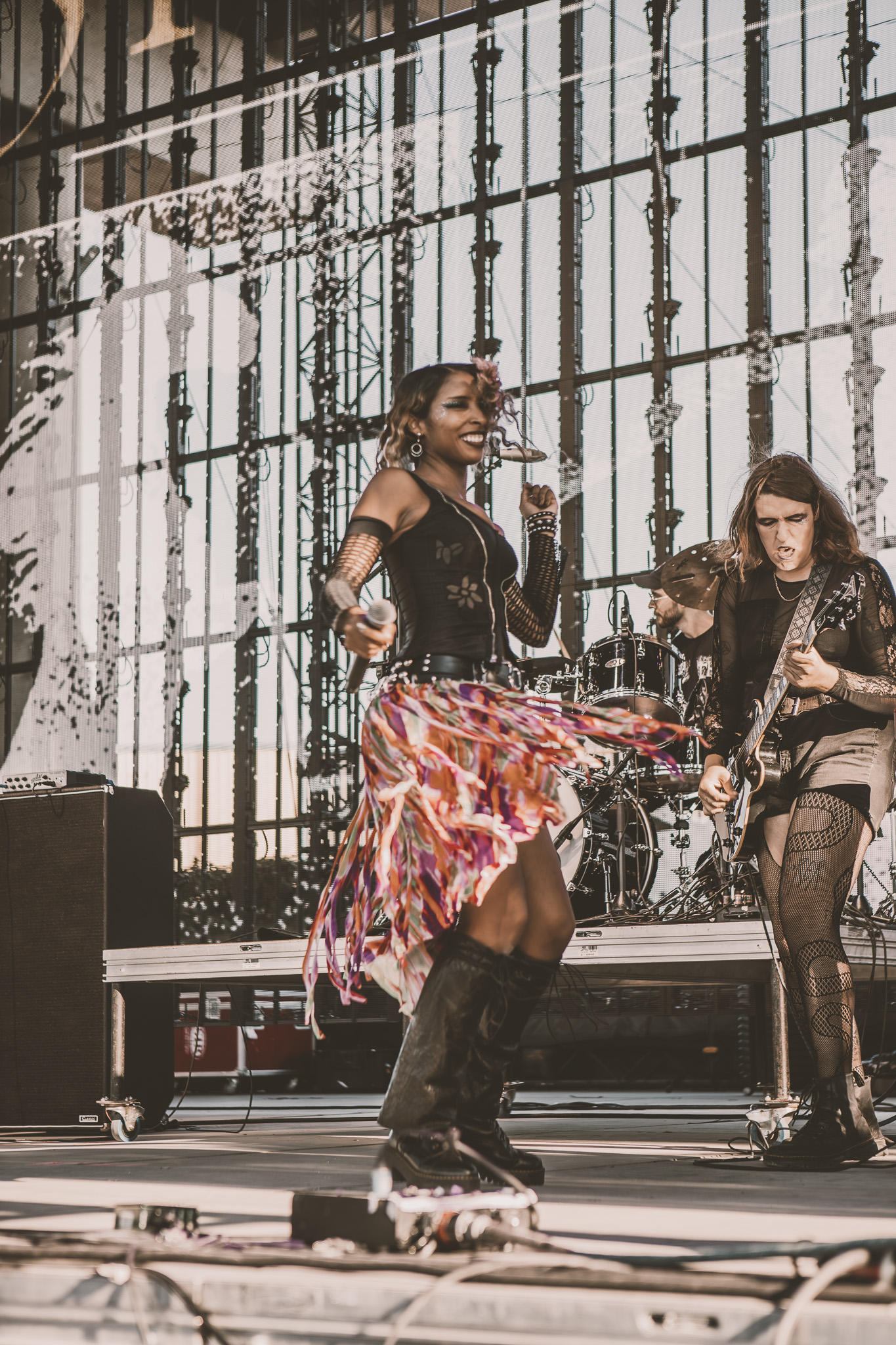
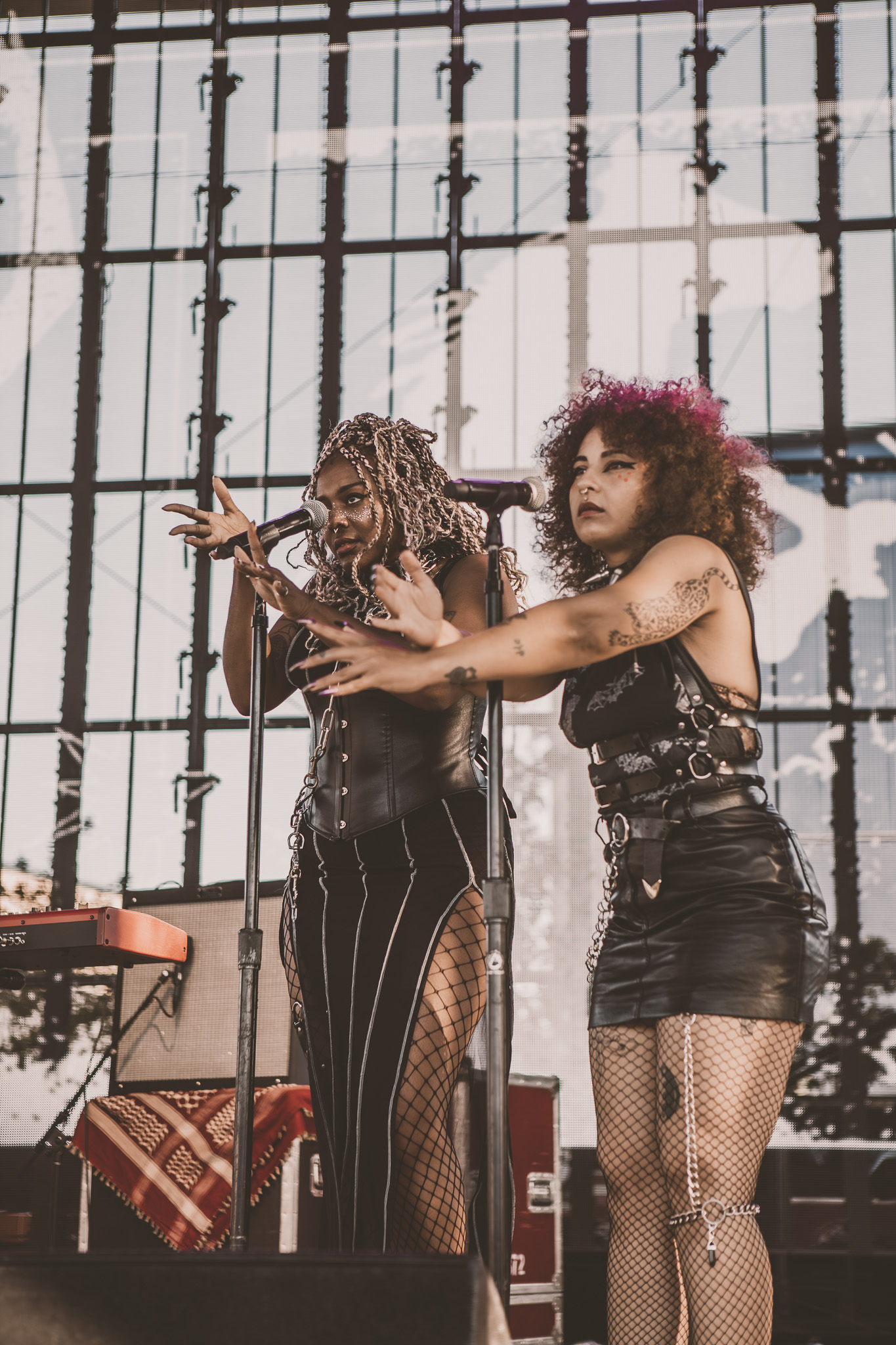
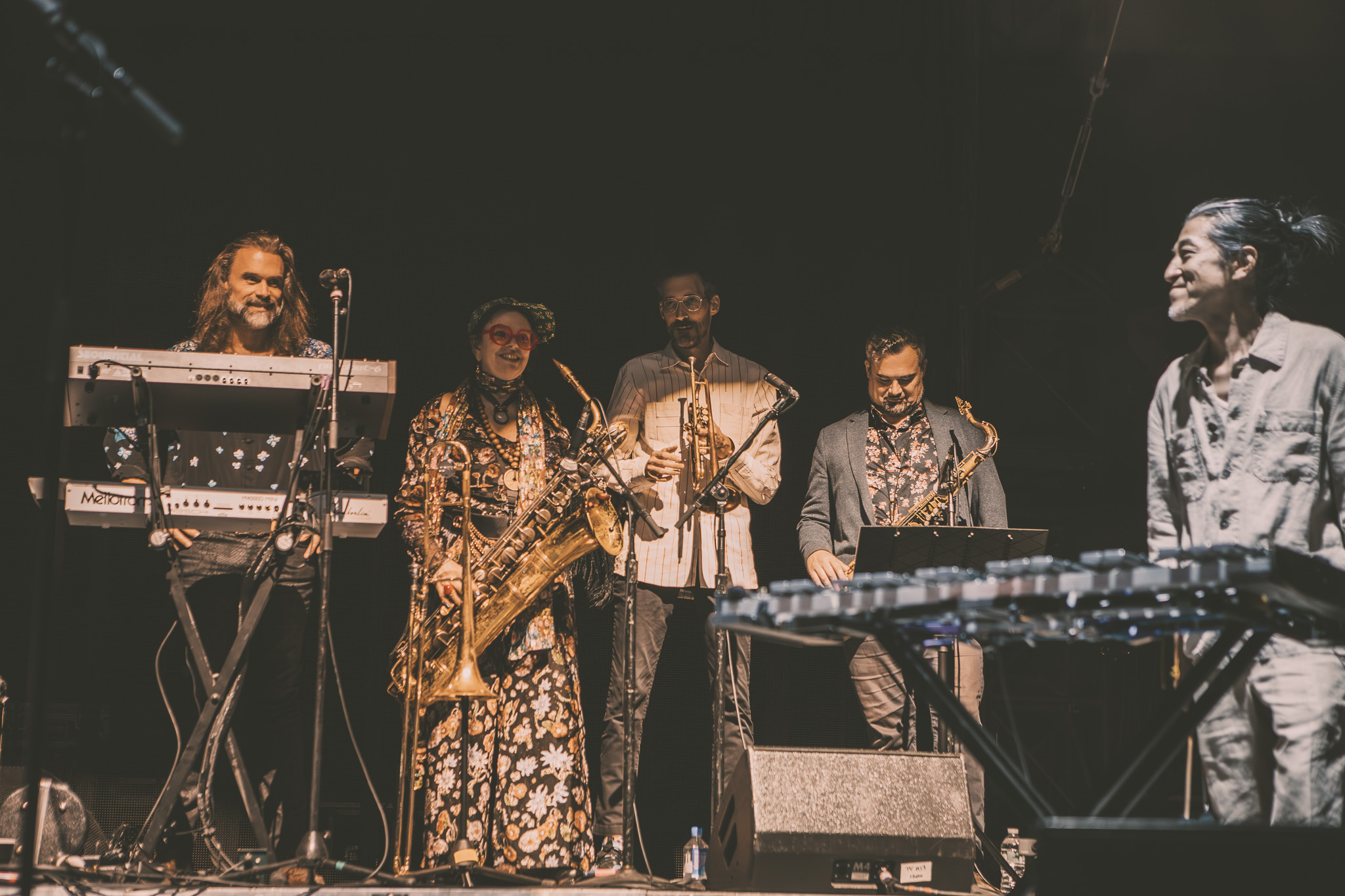
SPELLLING opened the night like a spell actually being cast. “Transcendent” is the only word that fits: harmonies rising like mist from the river, bodies loosening as if gravity had finally given us a night. Chrystia Cabral moved with a kind of lucid magnetism – soft steps, sharp intent – and the crowd, small at first, floated with her. The band held a world in place you couldn’t name by genre; it felt borderless. Two voices braided around her like moonlight on chrome, and their subtle sway kept time better than any metronome. As an invitation, it was spectacular; this is the threshold, come in.
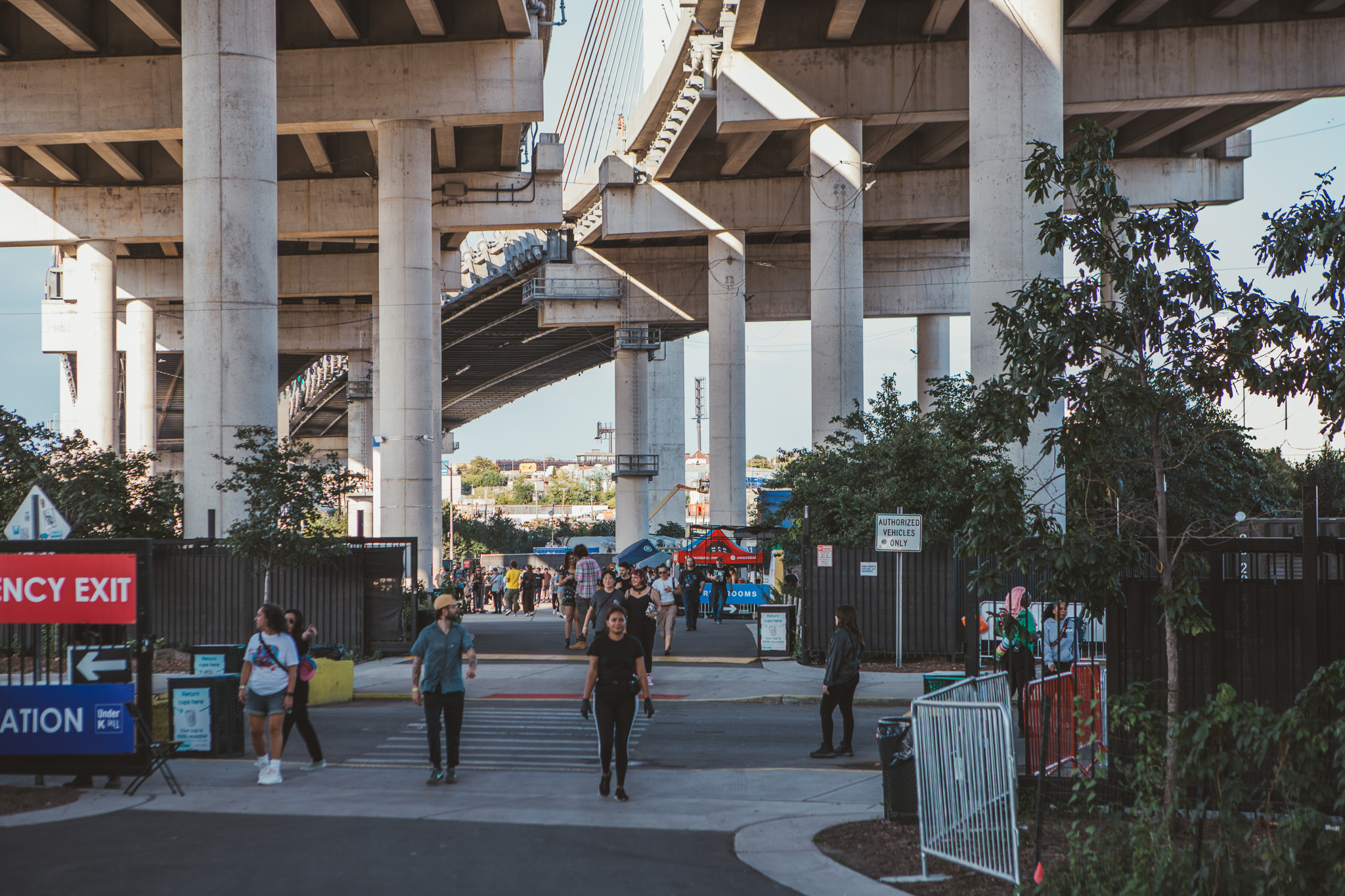
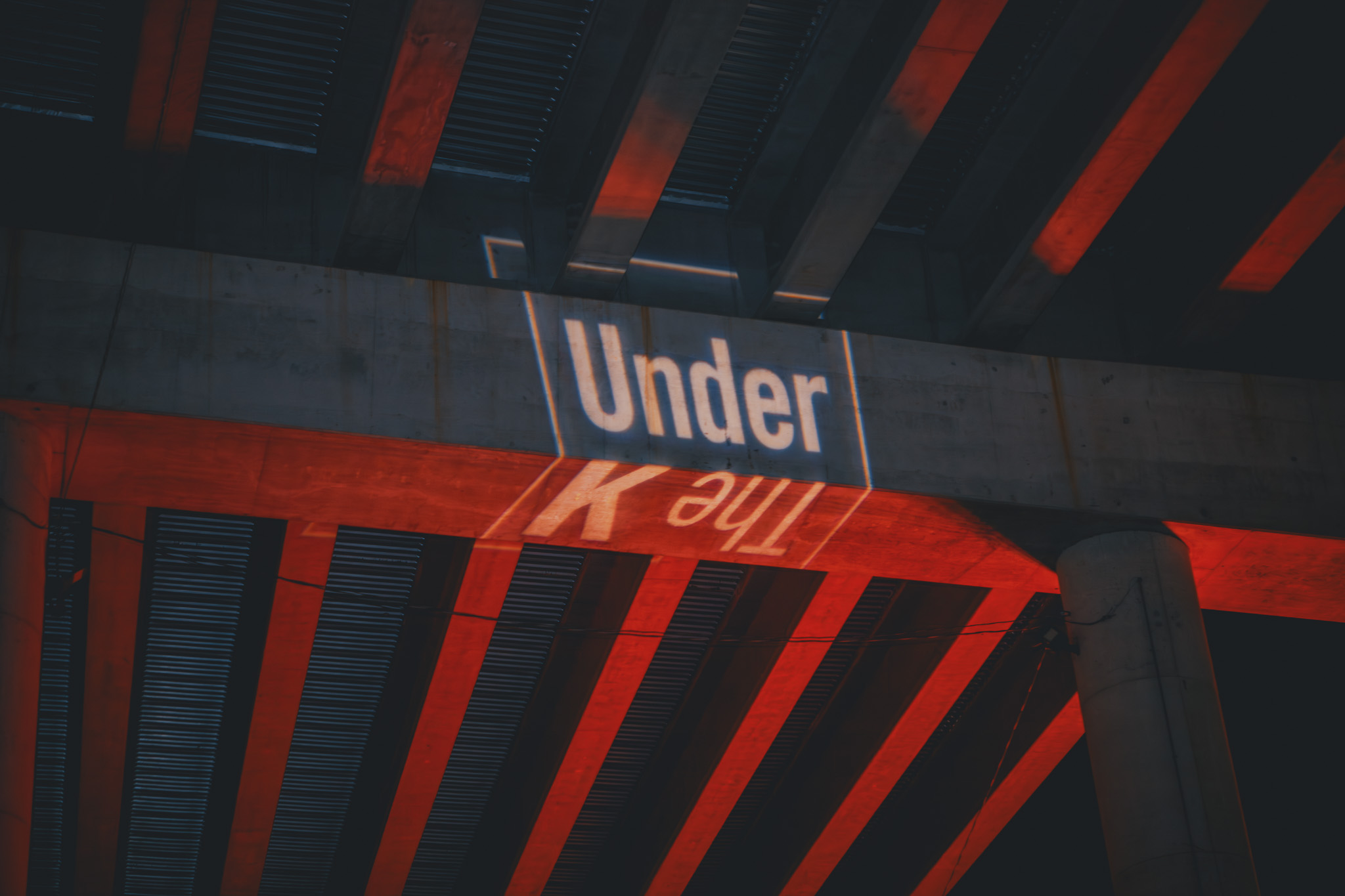
I slipped away after to take in the sprawl. Under The K Bridge is larger than it looks on a map; an urban canyon stretched with light and scaffolding. The journey’s a little jagged – from Manhattan it was just under an hour, then a ten-minute walk from the bus to the VIP gate – but the site plan was thoughtful: rideshare a block or so away, a general admission entrance down the line, room for the city to breathe. You could feel the heft of the bridge overheard, the way it held us, how the sound climbed the pillars and echoed like a blessing.
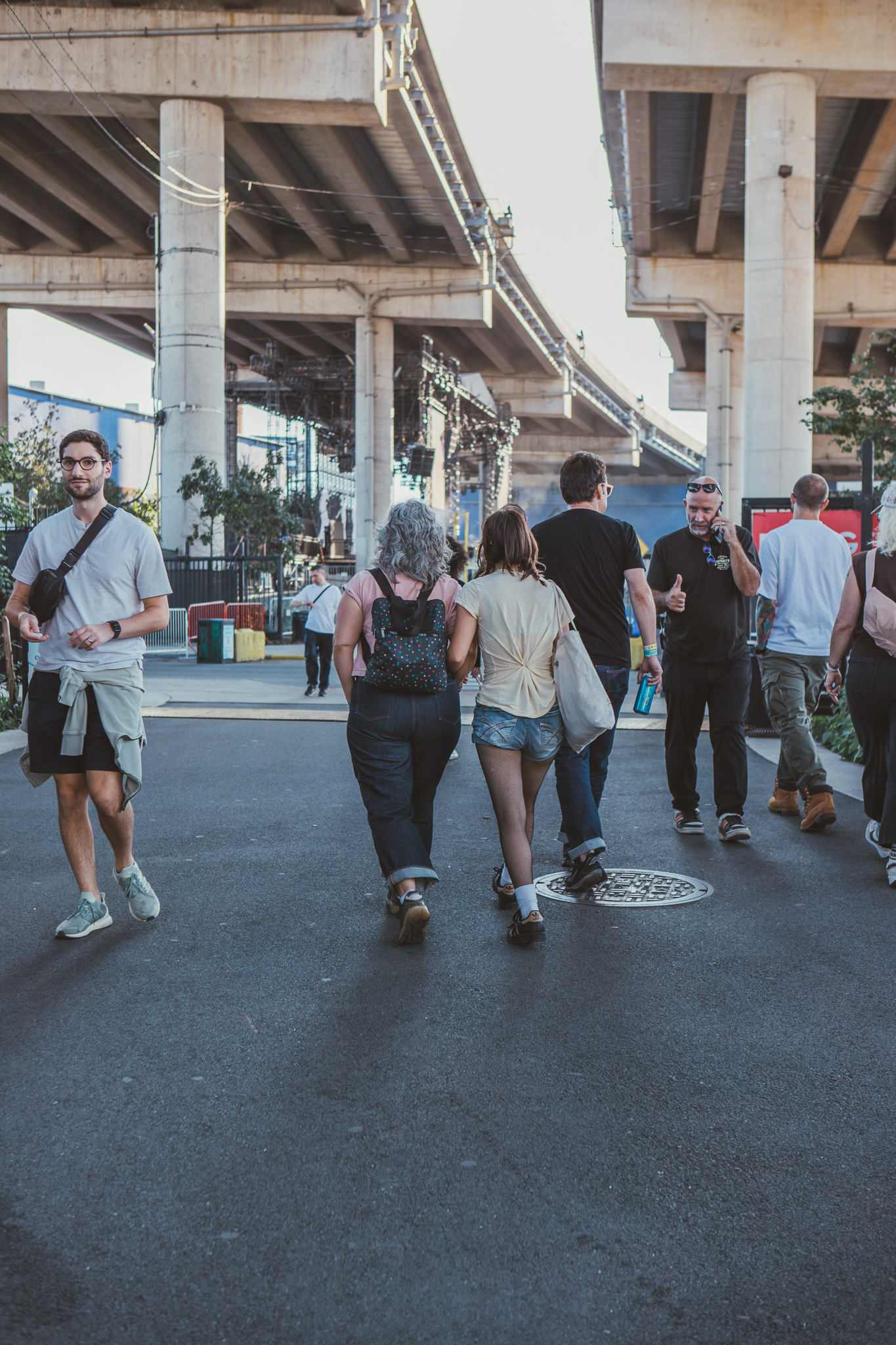
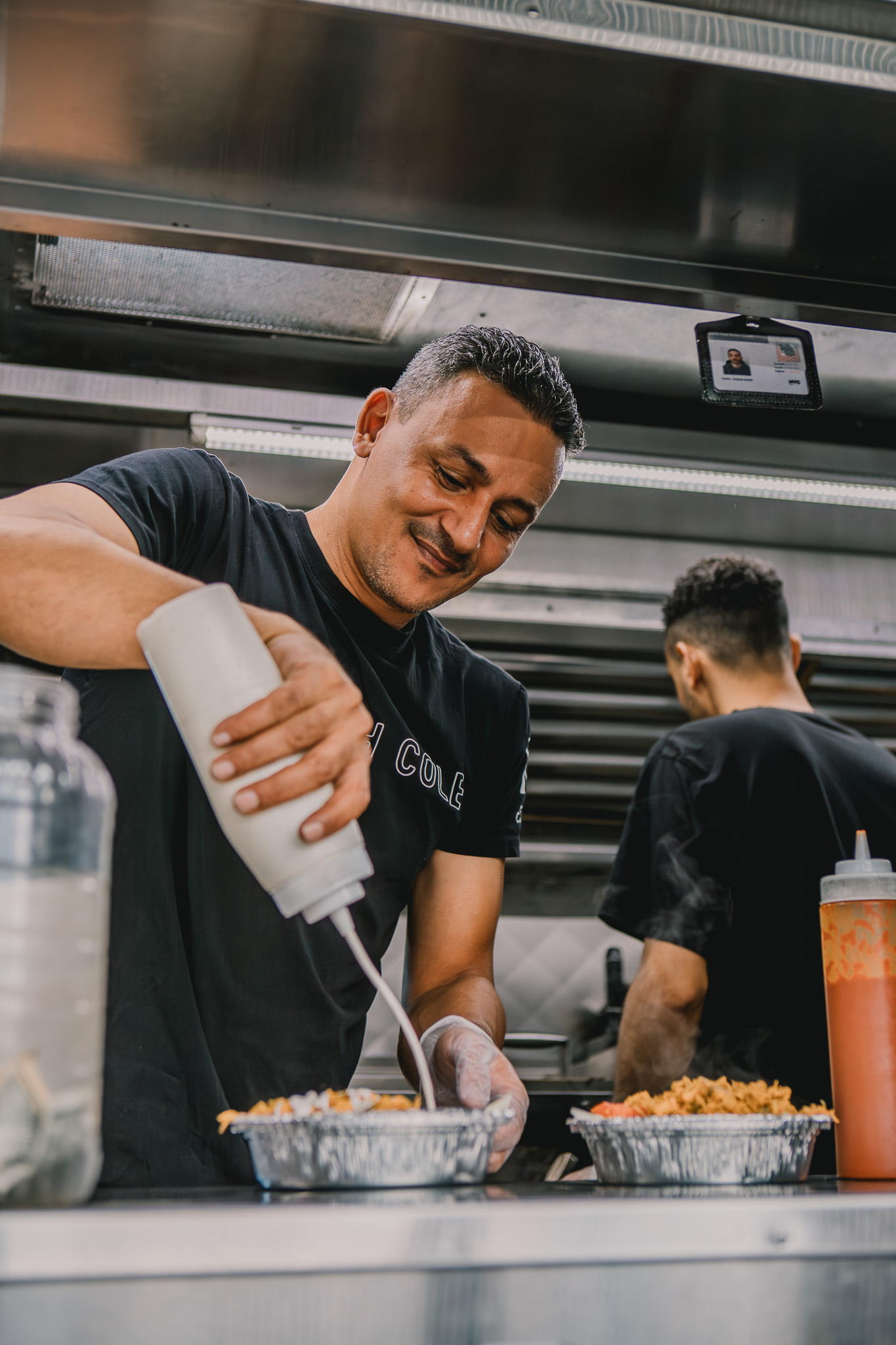
If New York is a mouth, it better be fed, and this festival understood the assignment. For a five-band bill, the food universe was shockingly rich: trucks, pop-ups, local restaurants smoldering behind tents. Everything was Brooklyn-sourced, and you could taste the pride. I started with a Halal cart classic – chicken over rice, the only correct move when the night’s just beginning. The owner had the easy warmth New Yorkers guard like treasure; sauces poured generously, conversation even more so. It’s the little things that set a night like this humming,
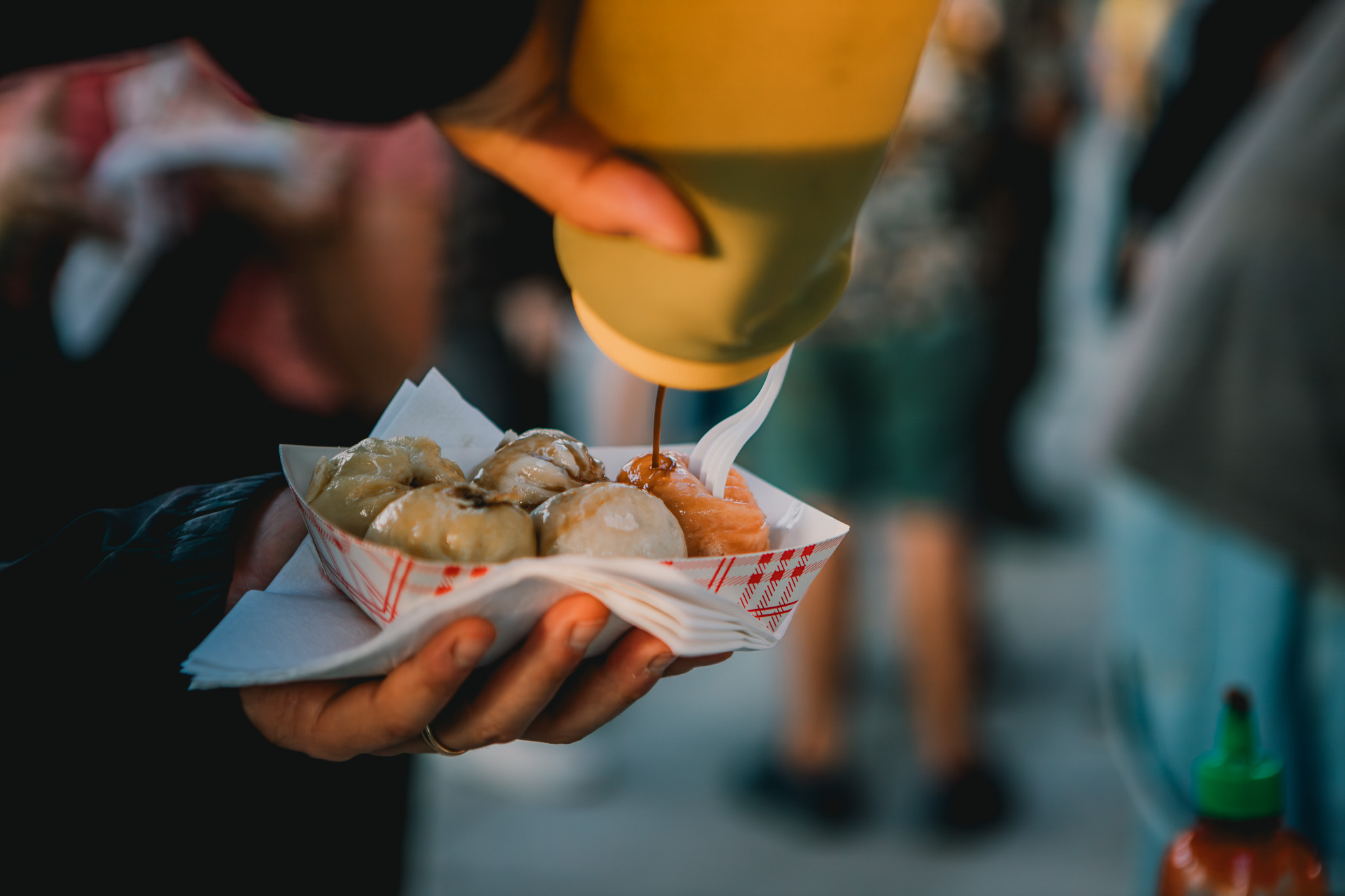
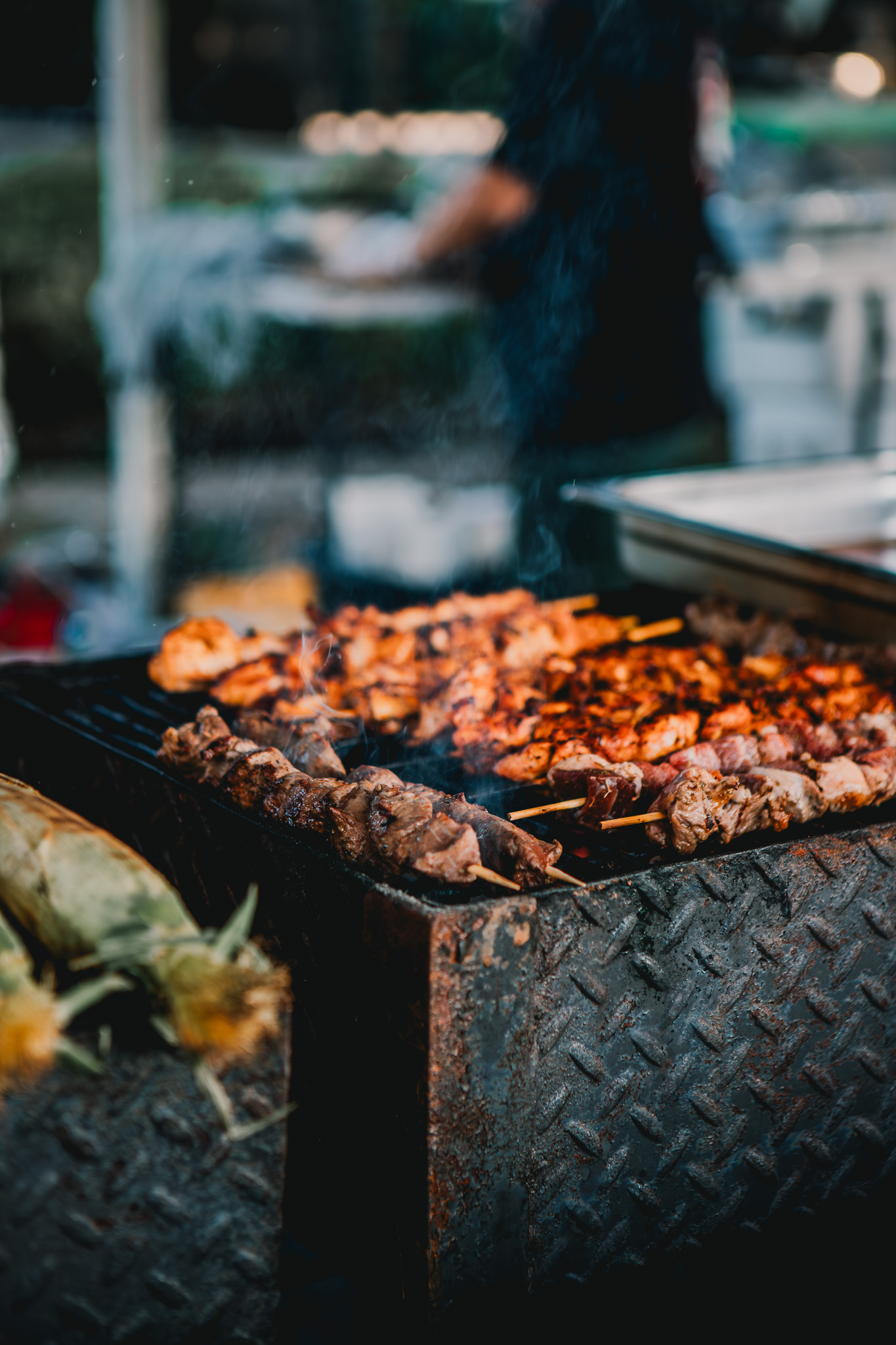
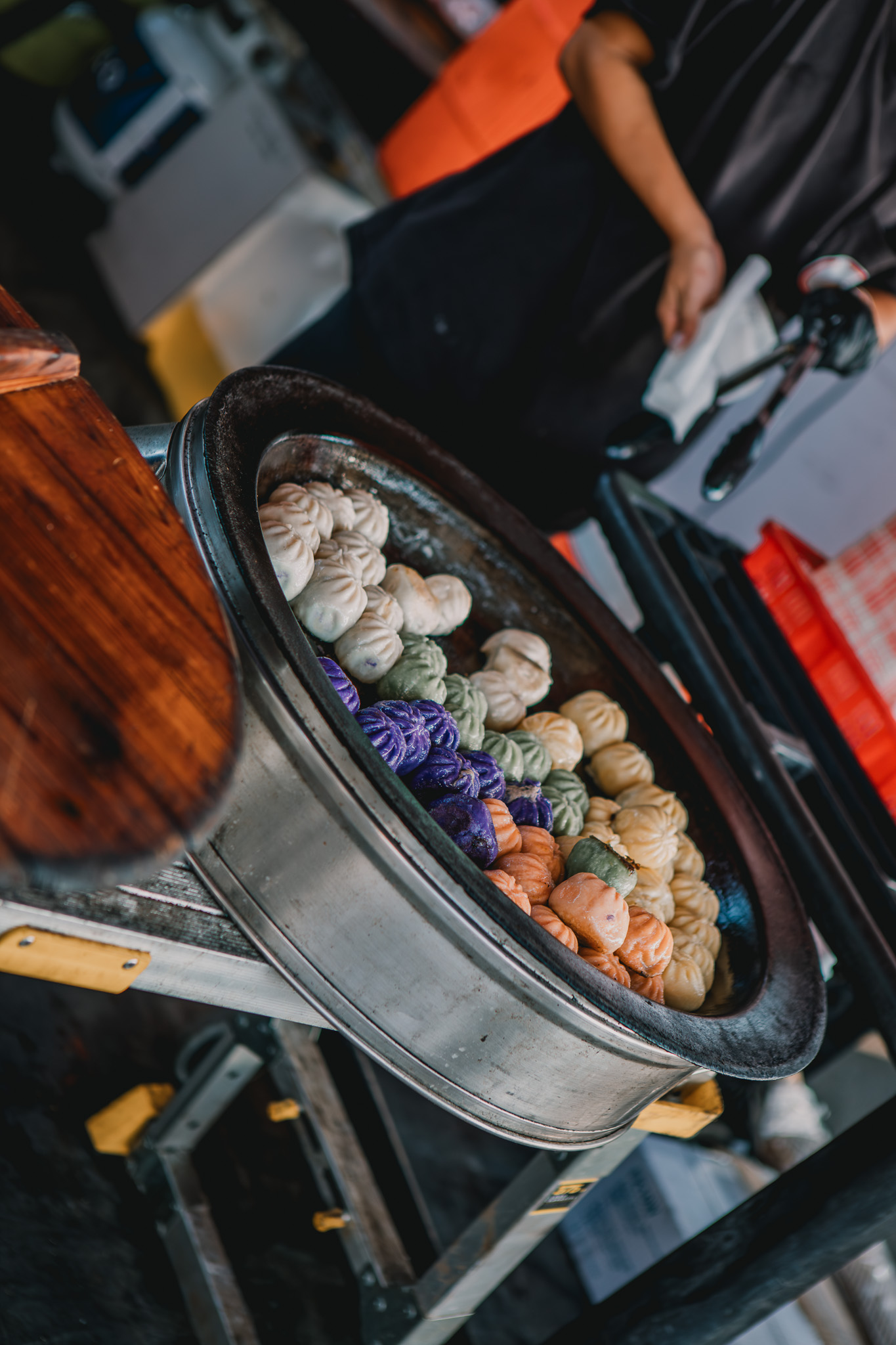
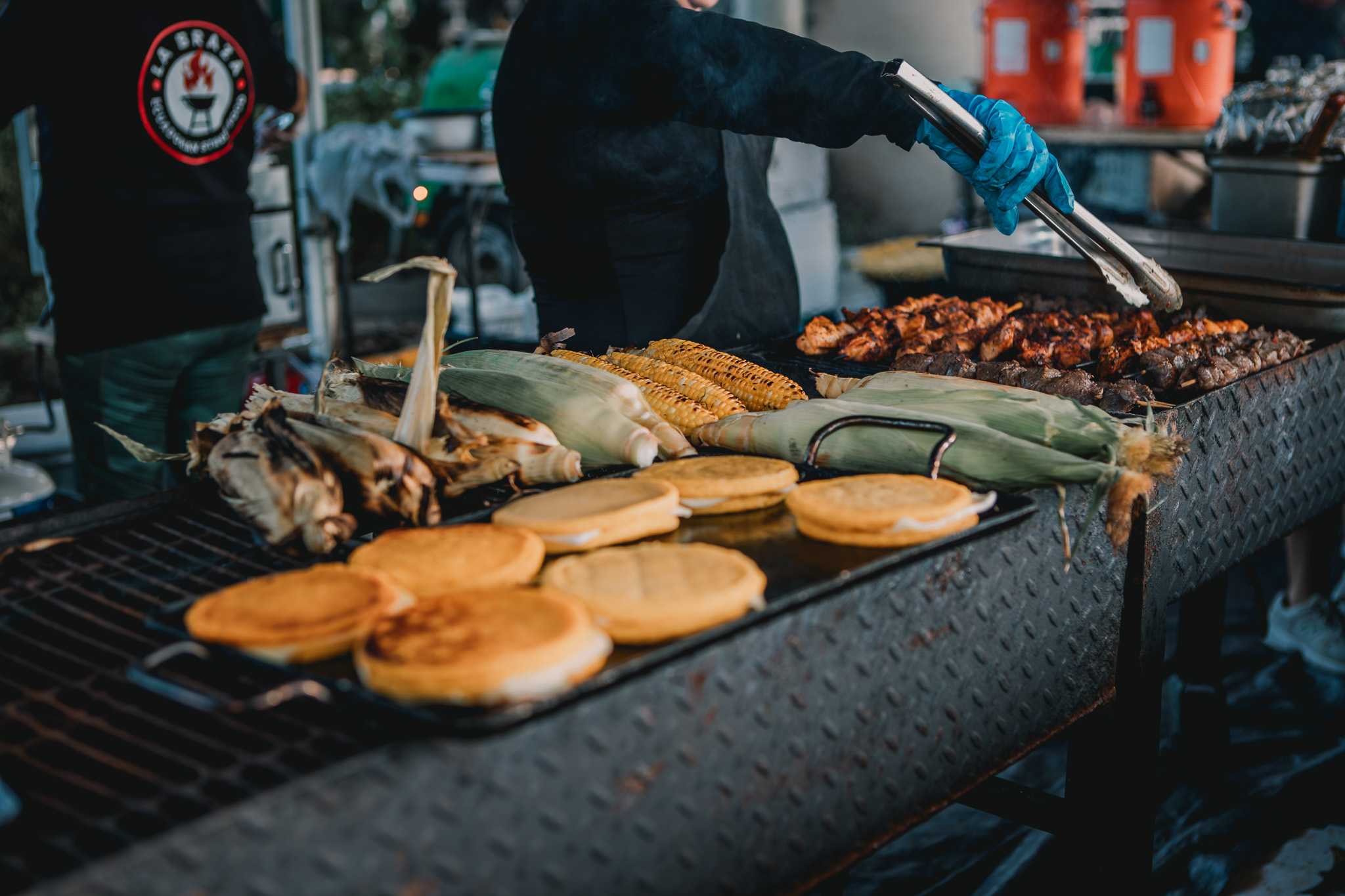
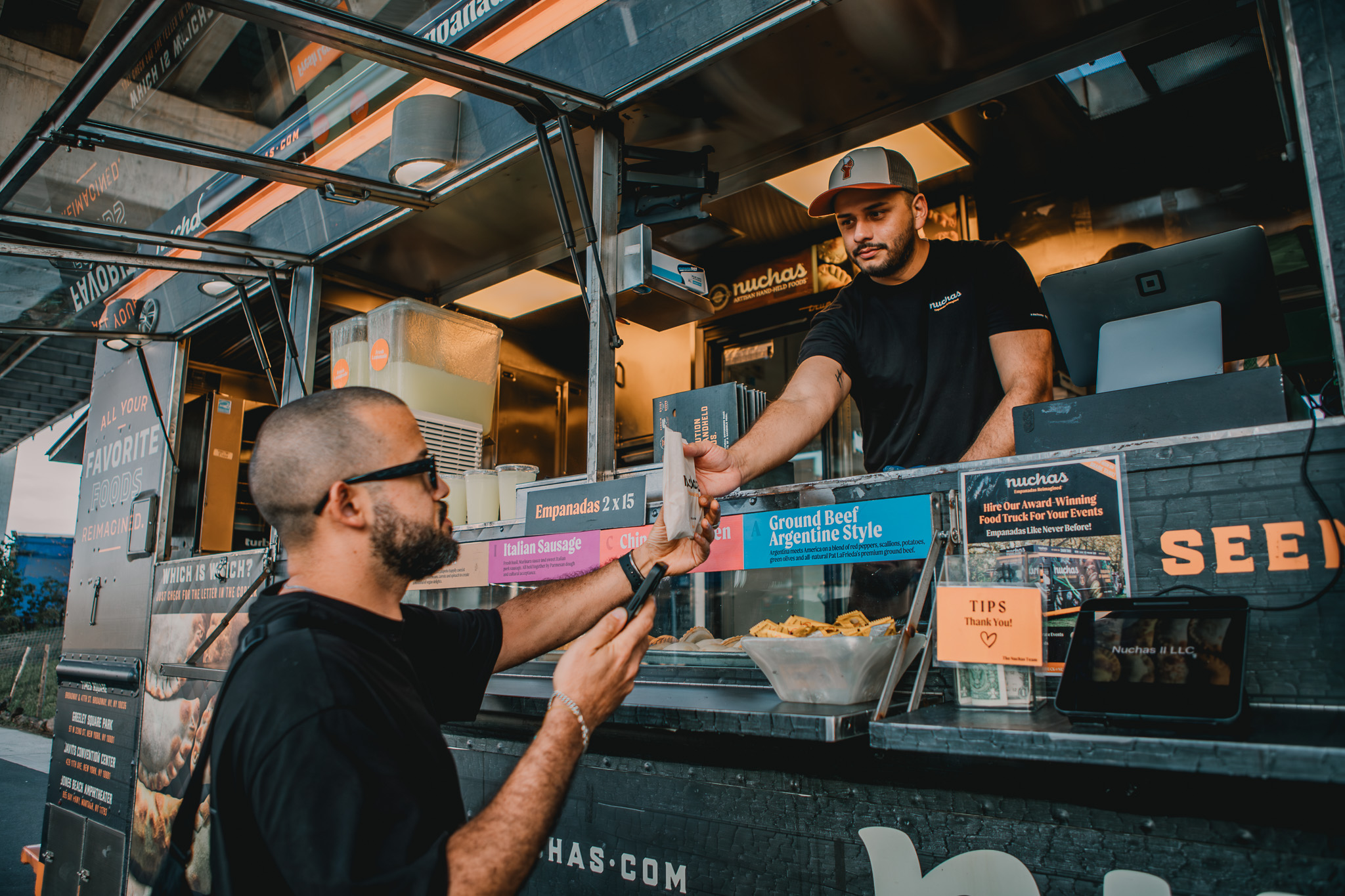
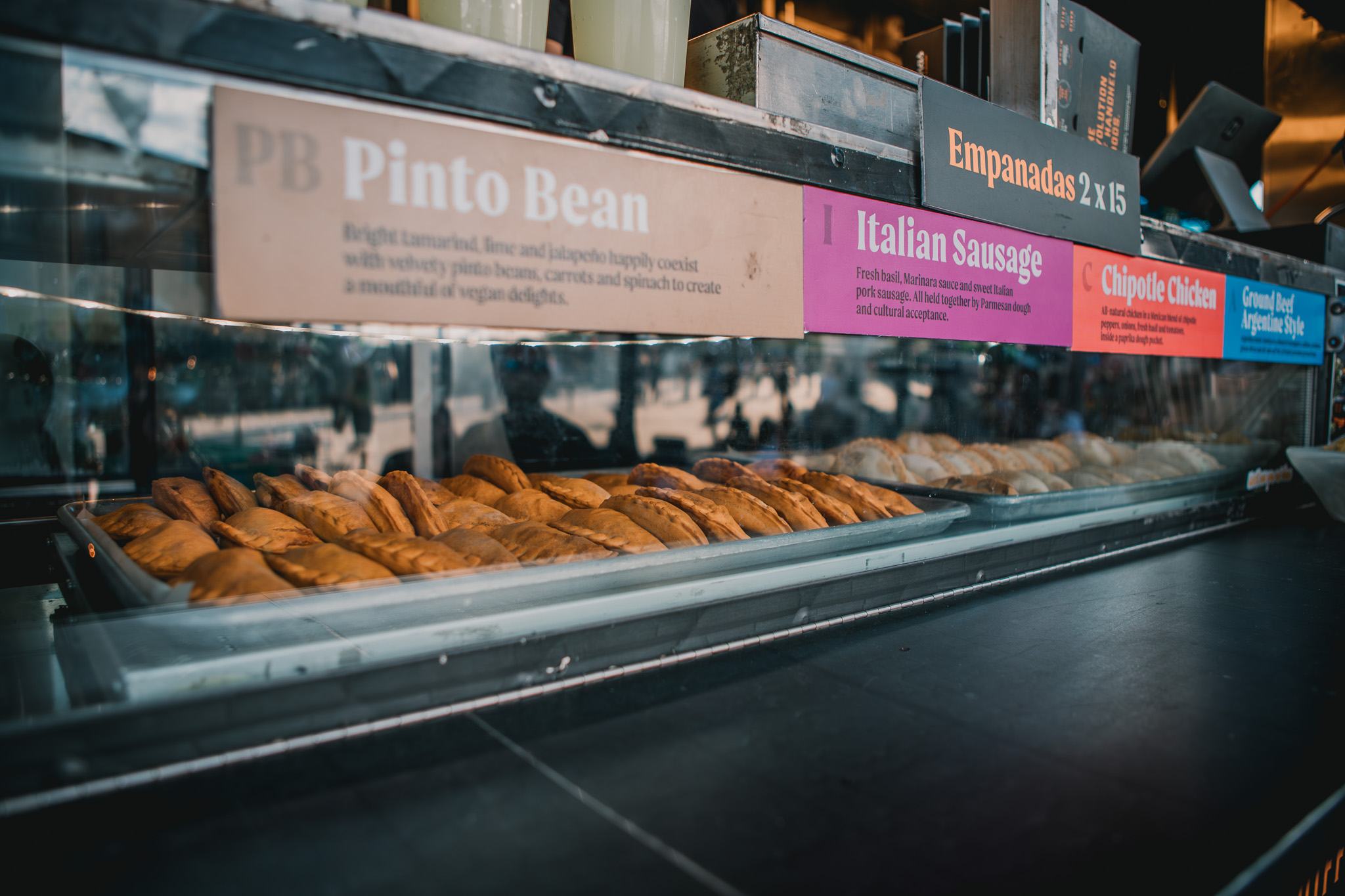
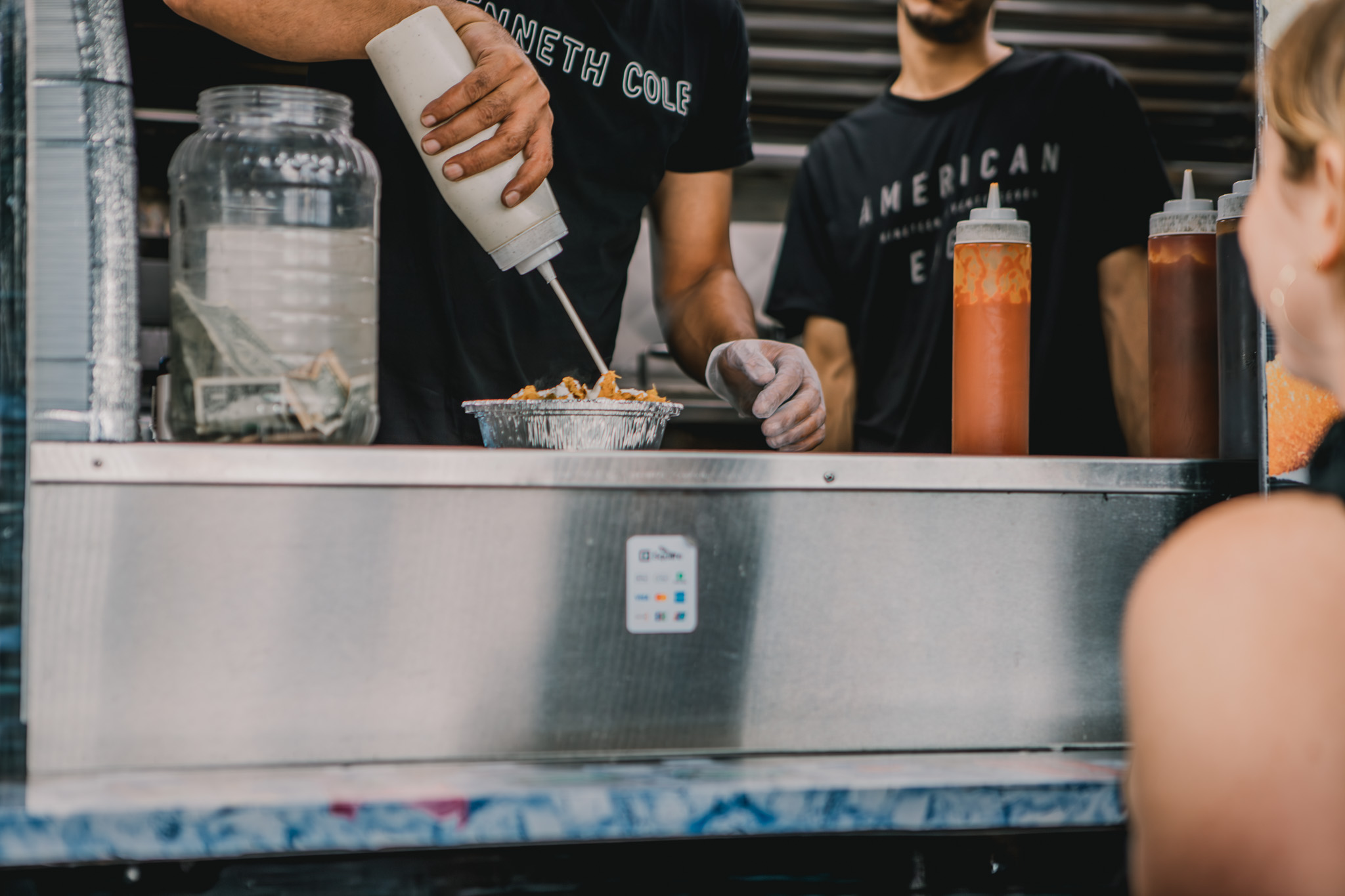
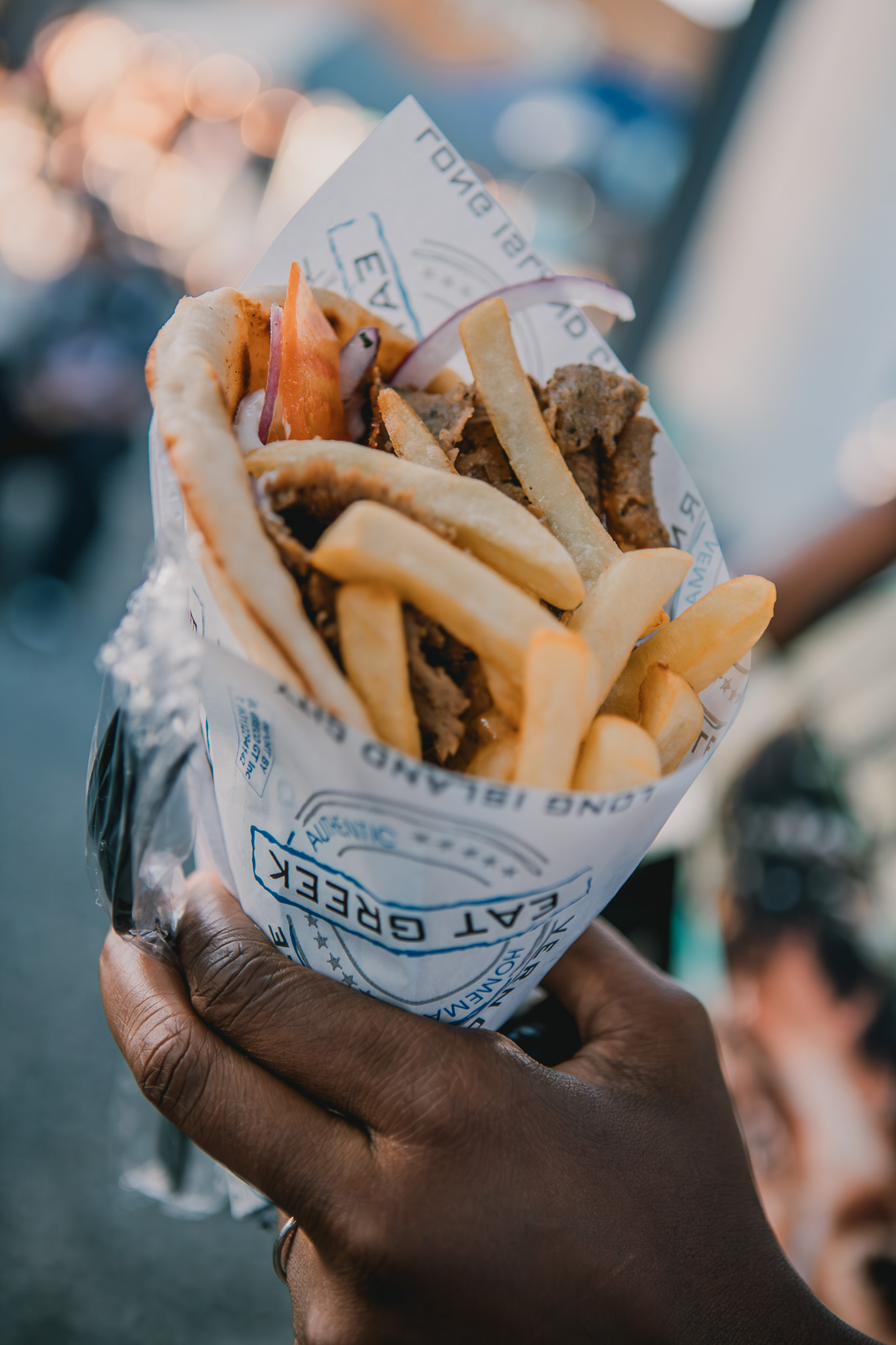
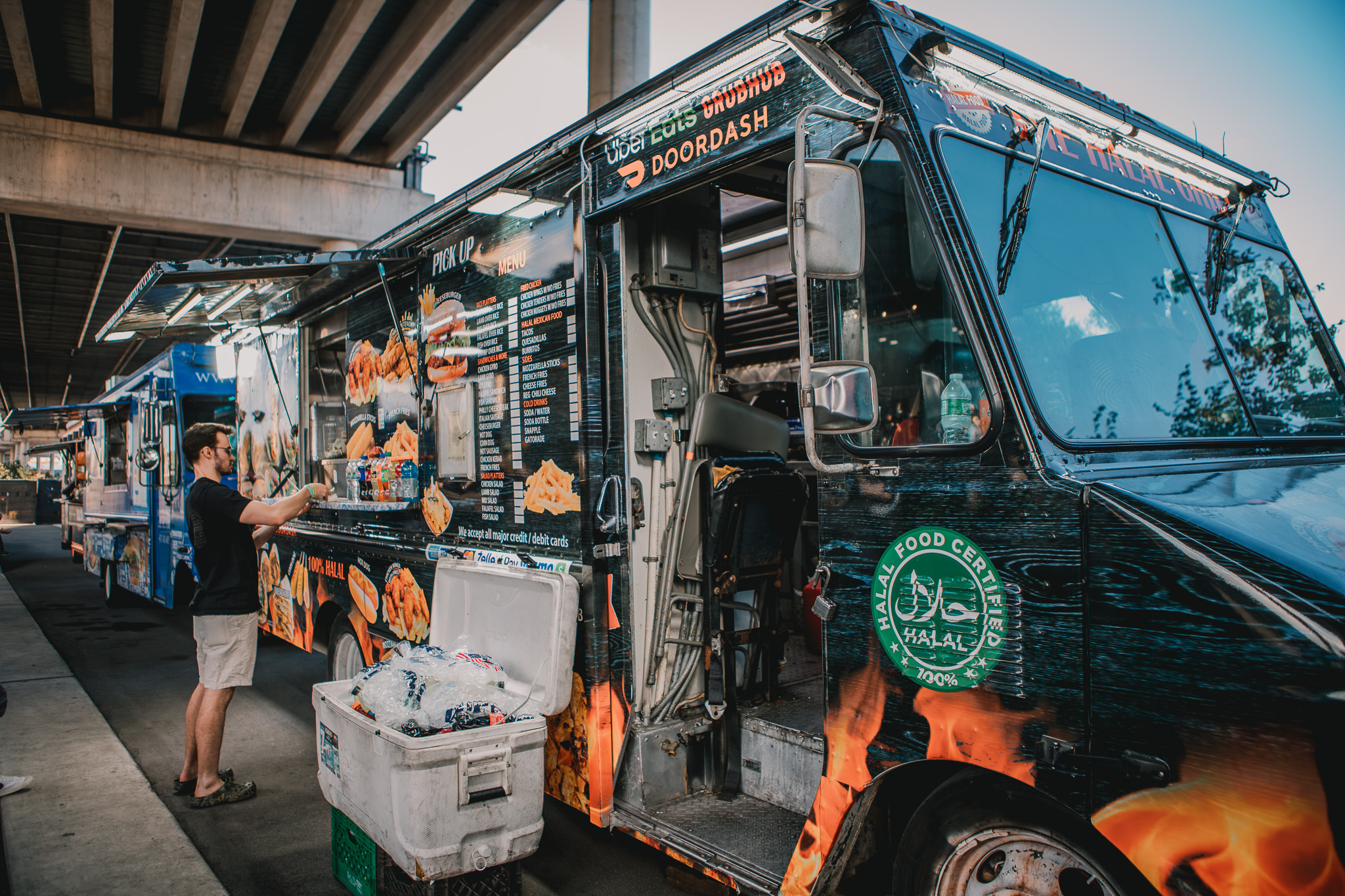
The only design quirk: the food court lived a good walk from the stage. It meant you couldn’t hear much music while you ate, and later, when the crowd swelled, juggling a meal and a set was a minor sport. But it also carved out a sanctuary: friends catching up over plates without drowning the quiet of an opening verse, while the production stayed pristine for those pressed to the barricade. VIP earned its keep here: fewer bodies, couches and tables, a view that turned the whole bridge into a private mezzanine. In a summer where everyone’s arguing about talkers in crowds, this layout felt like a truce.


Between sets, Hannibal Buress strolled out and threaded the night together with a grin and a half hour of easy mischief. Comedian, actor, producer, Chicago landlord, sure, but mostly a mood ring set to “welcome.” The banter felt like somebody’s living room, jokes bouncing off pylons, strangers laughing like cousins who finally made it to the cookout. It told you what kind of festival this was: curated but unpretentious, homegrown but hospitable.
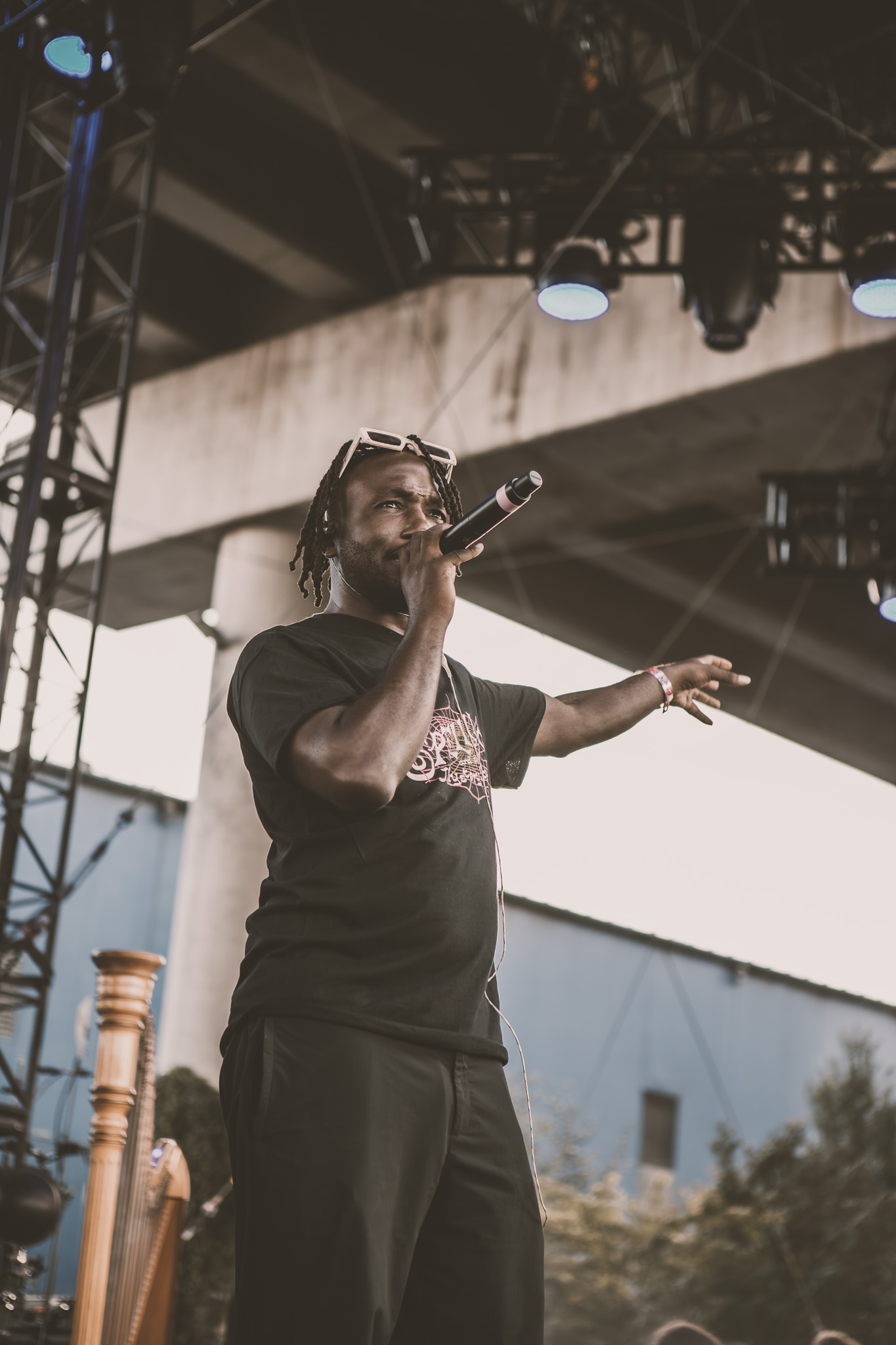
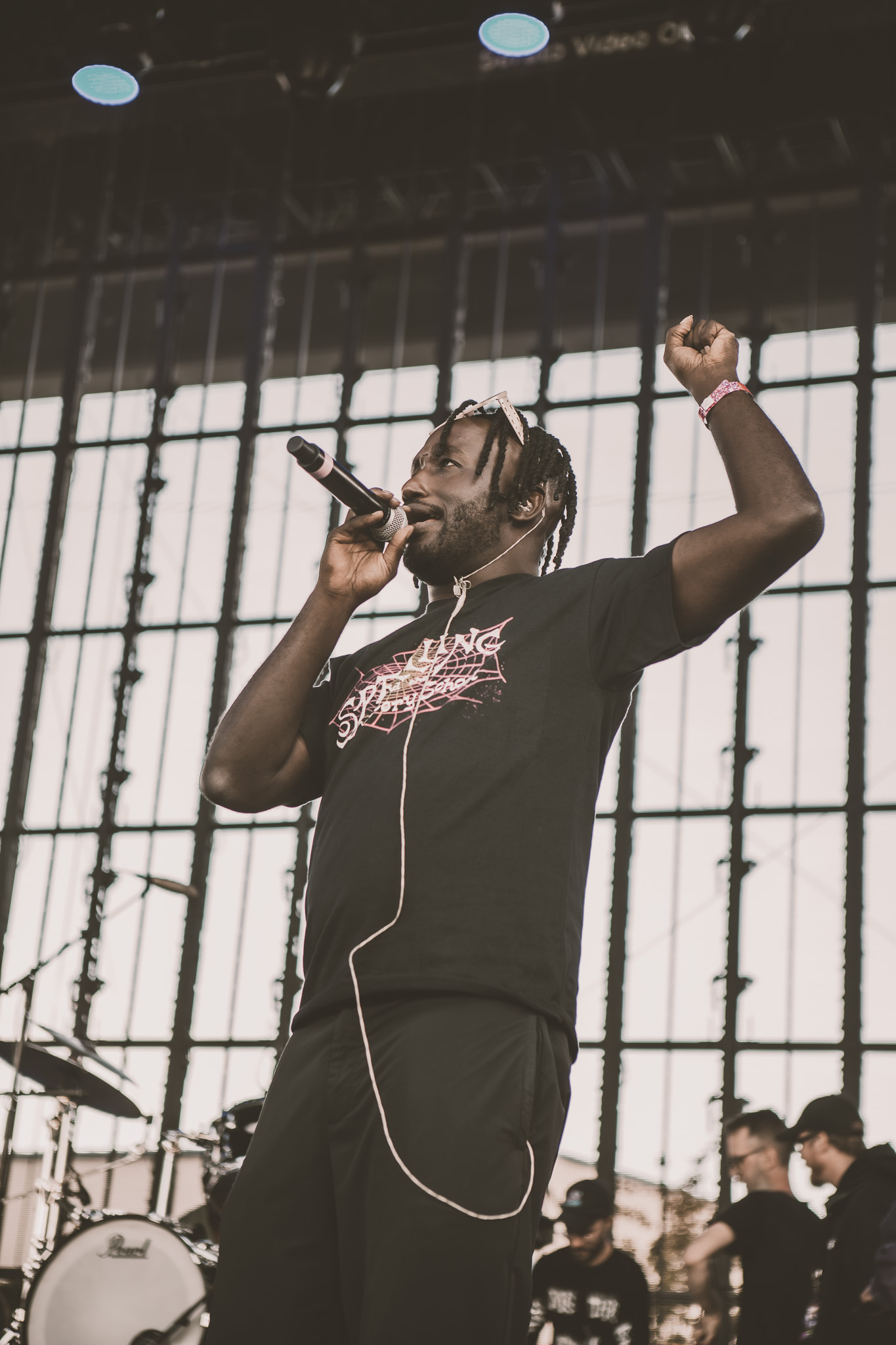

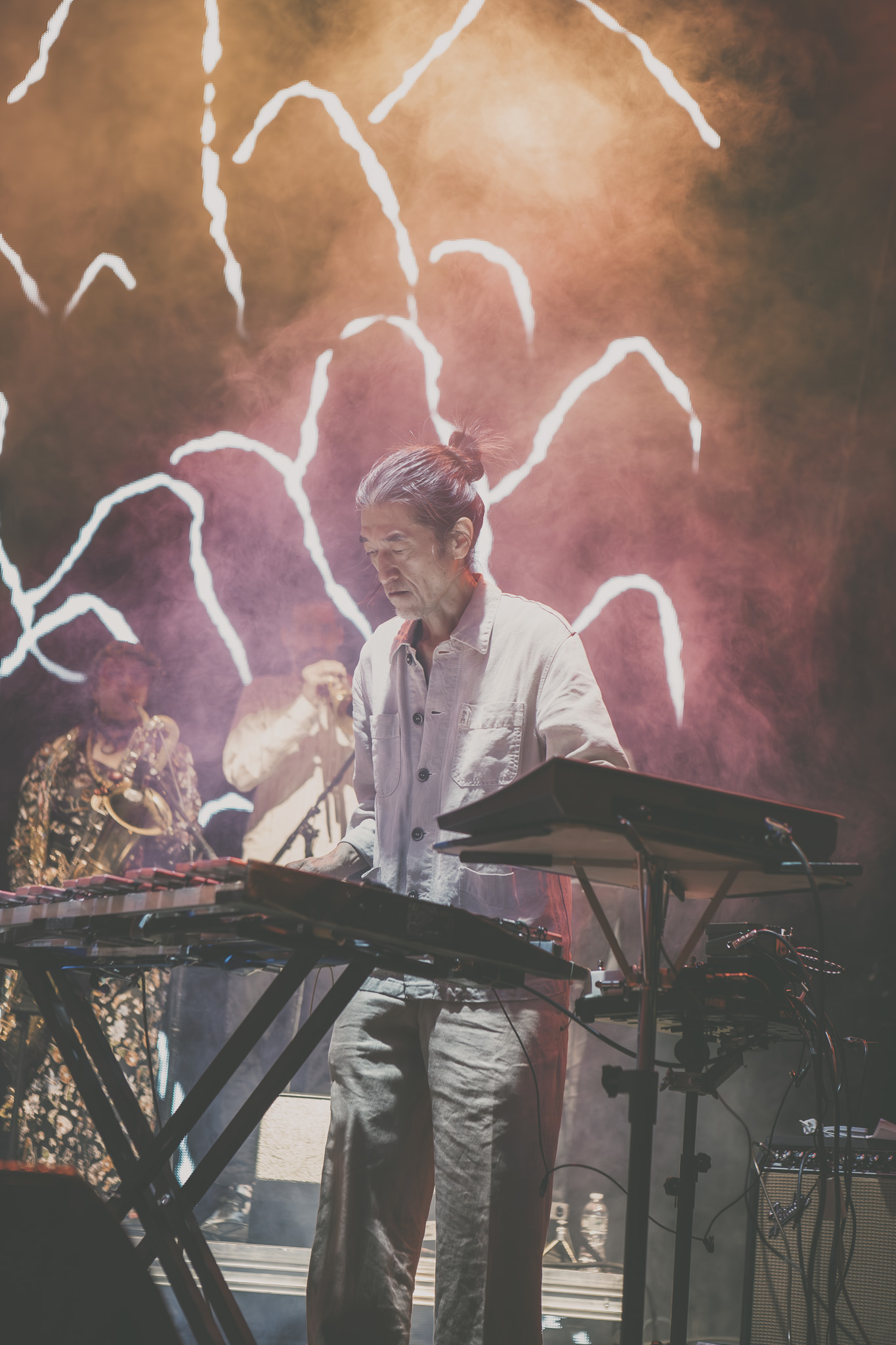
Then Moor Mother stepped into a silence she made holy. No comparison fits. It was protest music melted into poetry and re-forged with brass and bone; a trumpet traded for a shell, percussion built from unfamiliar shapes, beats that felt like they were being born in front of us. Moor Mother is a visionary in all respects, it a soul-laden sound that holds a monumental message. The venue went pin-drop still. You could hear breath. You could hear the hinge of your own attention. Revolutionary isn’t hyperbole; it was an axis shift.
Somewhere between that hush and the next surge, I found the Land of Sea booth and ordered an iced lavender peaflower matcha because I am not immune to a beautiful drink. It tasted like it looked – soft, bright floral – and the owner, one of the three running the stand, told me Tunde’s a regular; he’d invited them personally. Community wasn’t a garnish here; it was the broth. You could feel it in every corner: neighbors feeding neighbors under a bridge that became a beating heart.


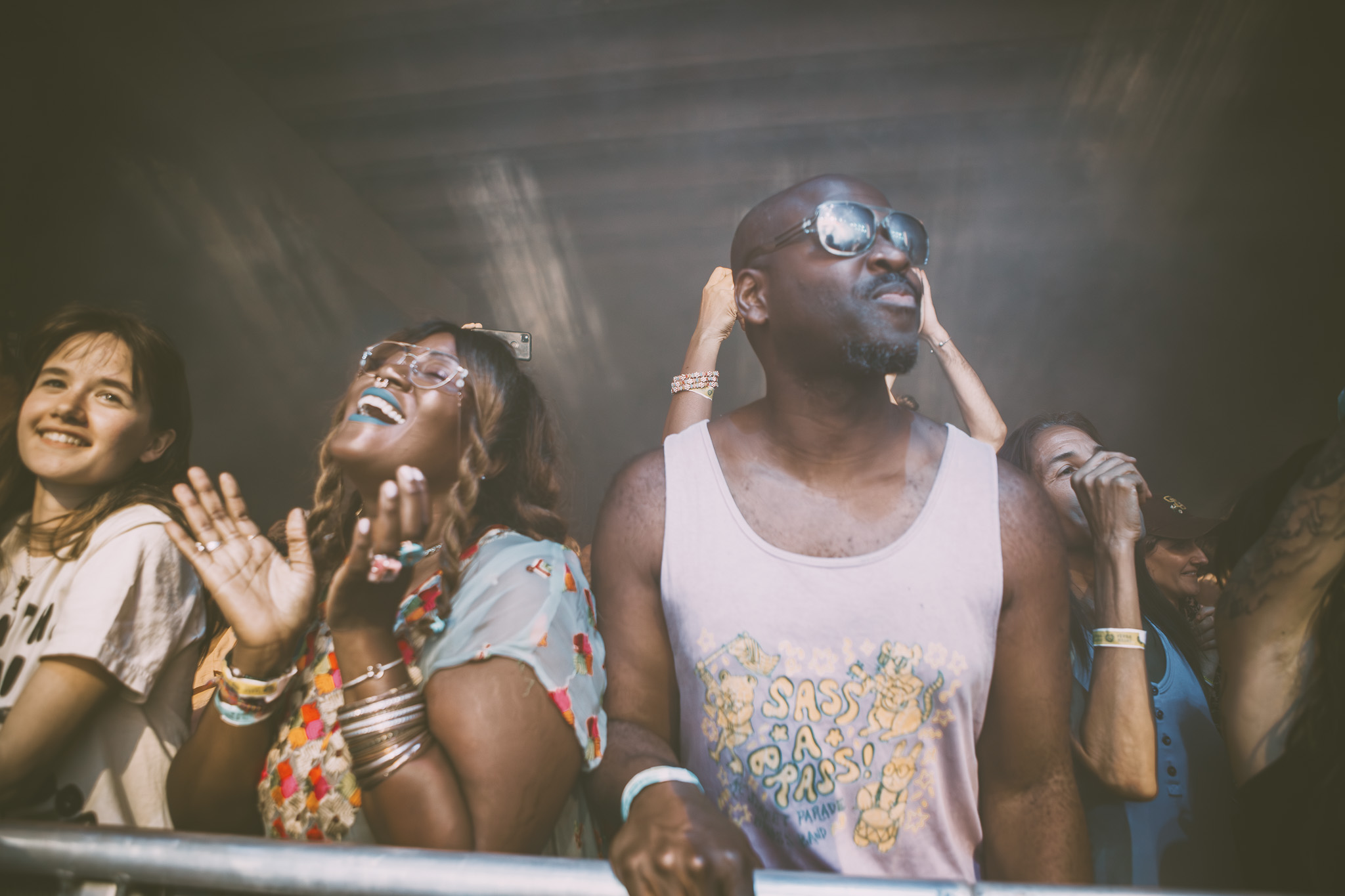
By the time Sudan Archives took the stage, the crowd was shoulder-to-shoulder and pulsating. I didn’t know her work going in; I left disciple. No band, no safety net; just a looping pedal, keys, violin, and a body ready to sprint. She owned the stage until the stage felt too small, then vaulted the barricade and turned the pit into a block party, heat rising off the concrete. Vivacious doesn’t cover it; she was precise and feral, polished and free, and her set became my favorite of the night in real time.
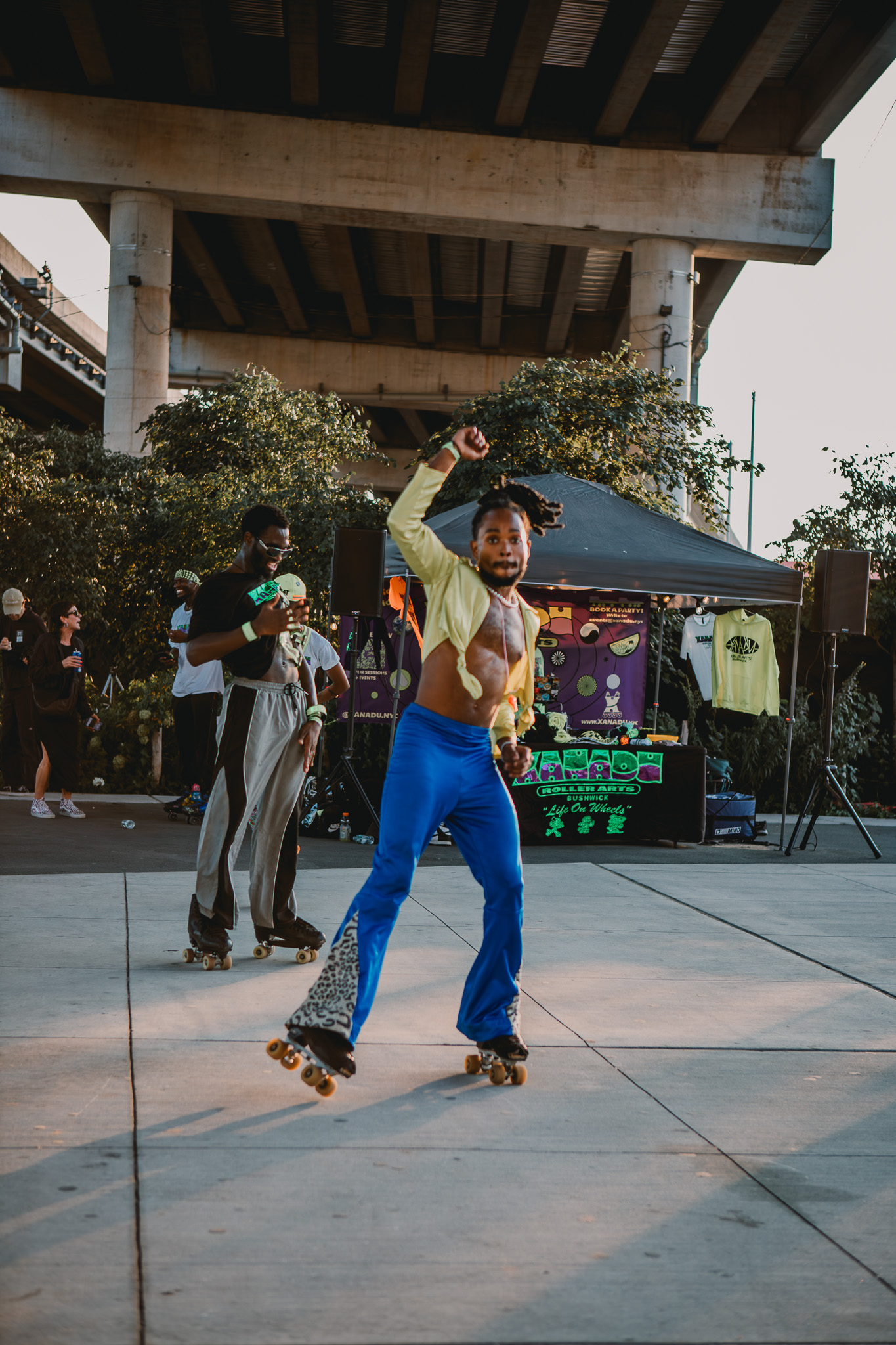
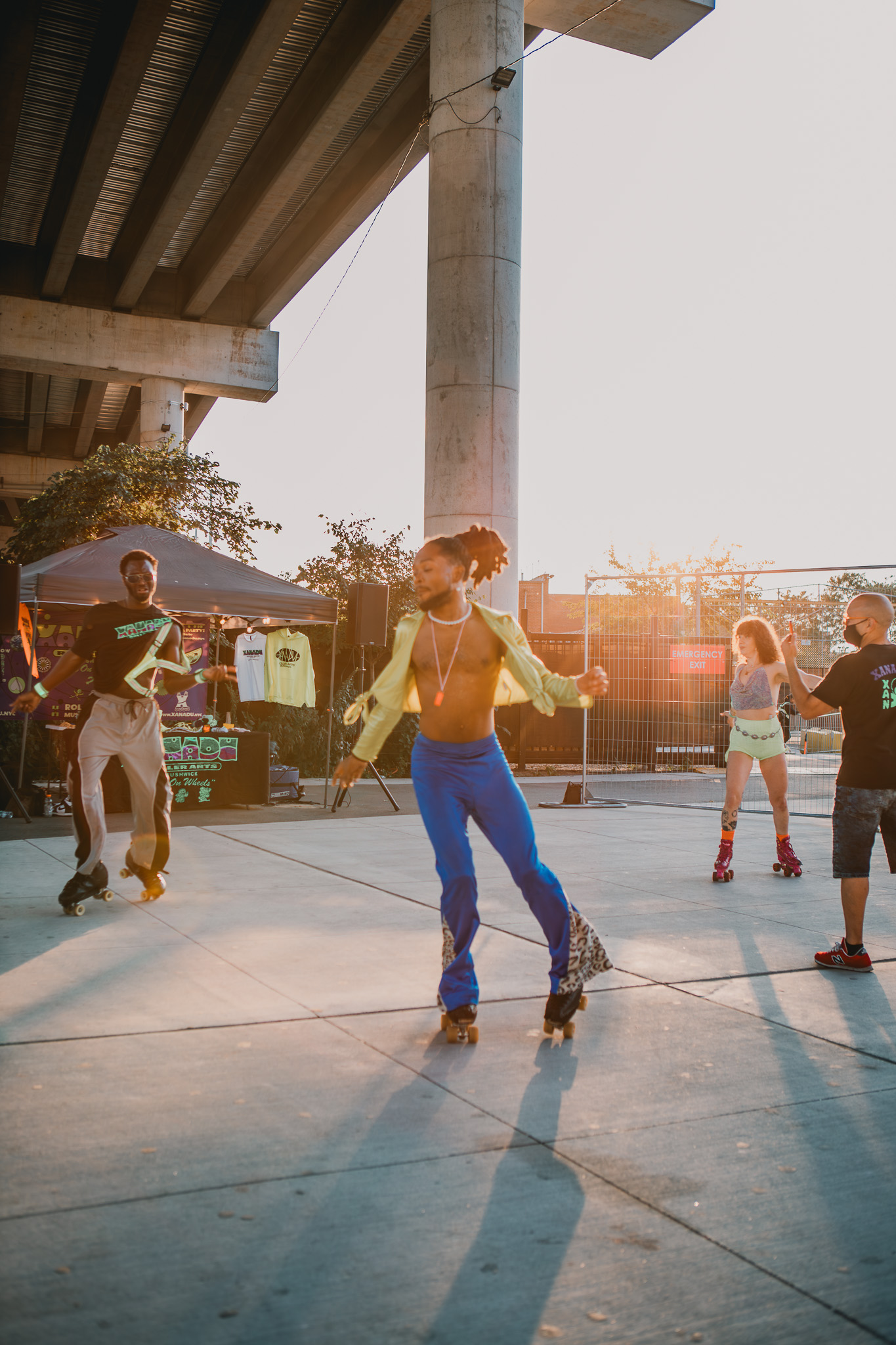
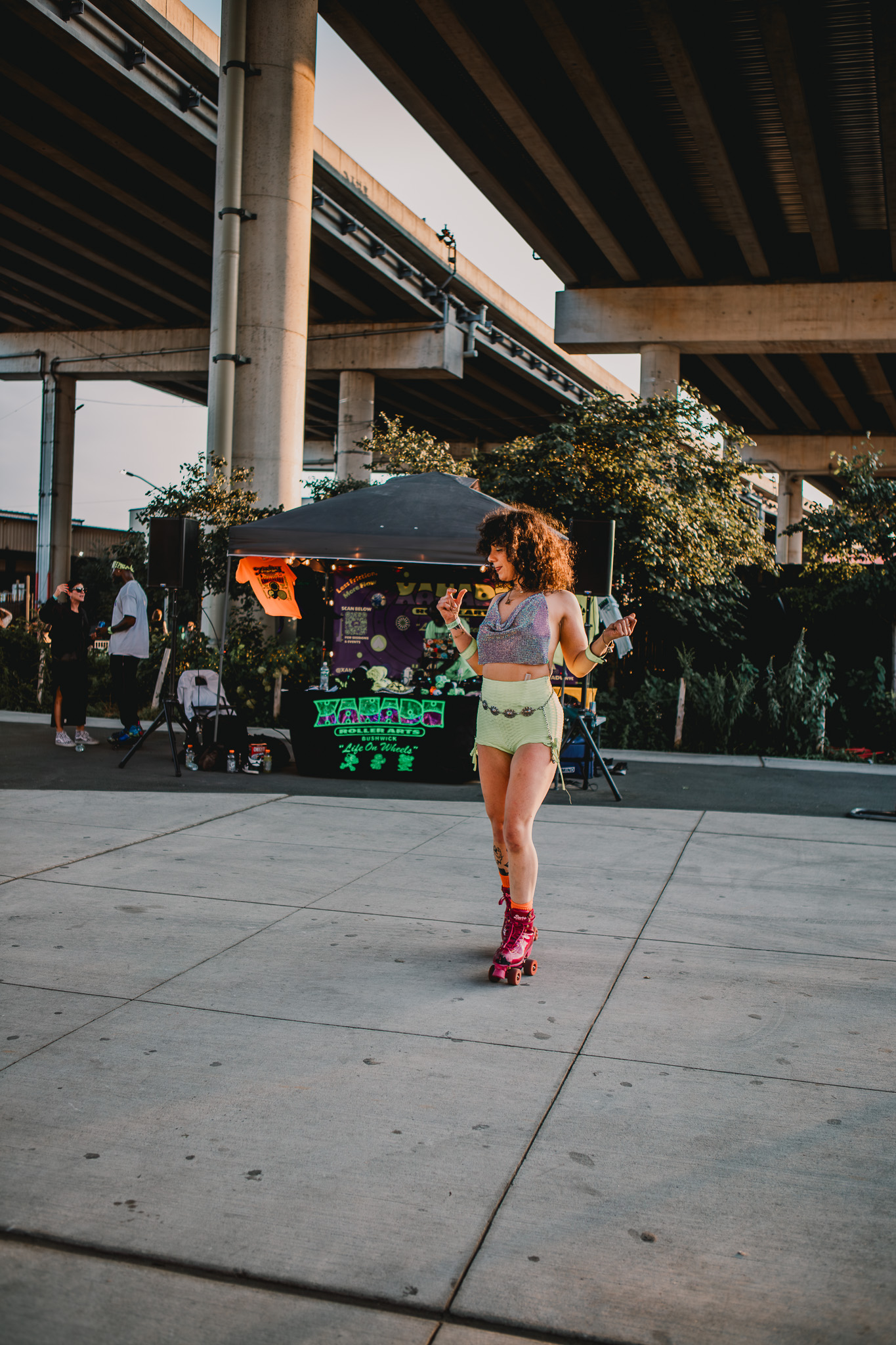
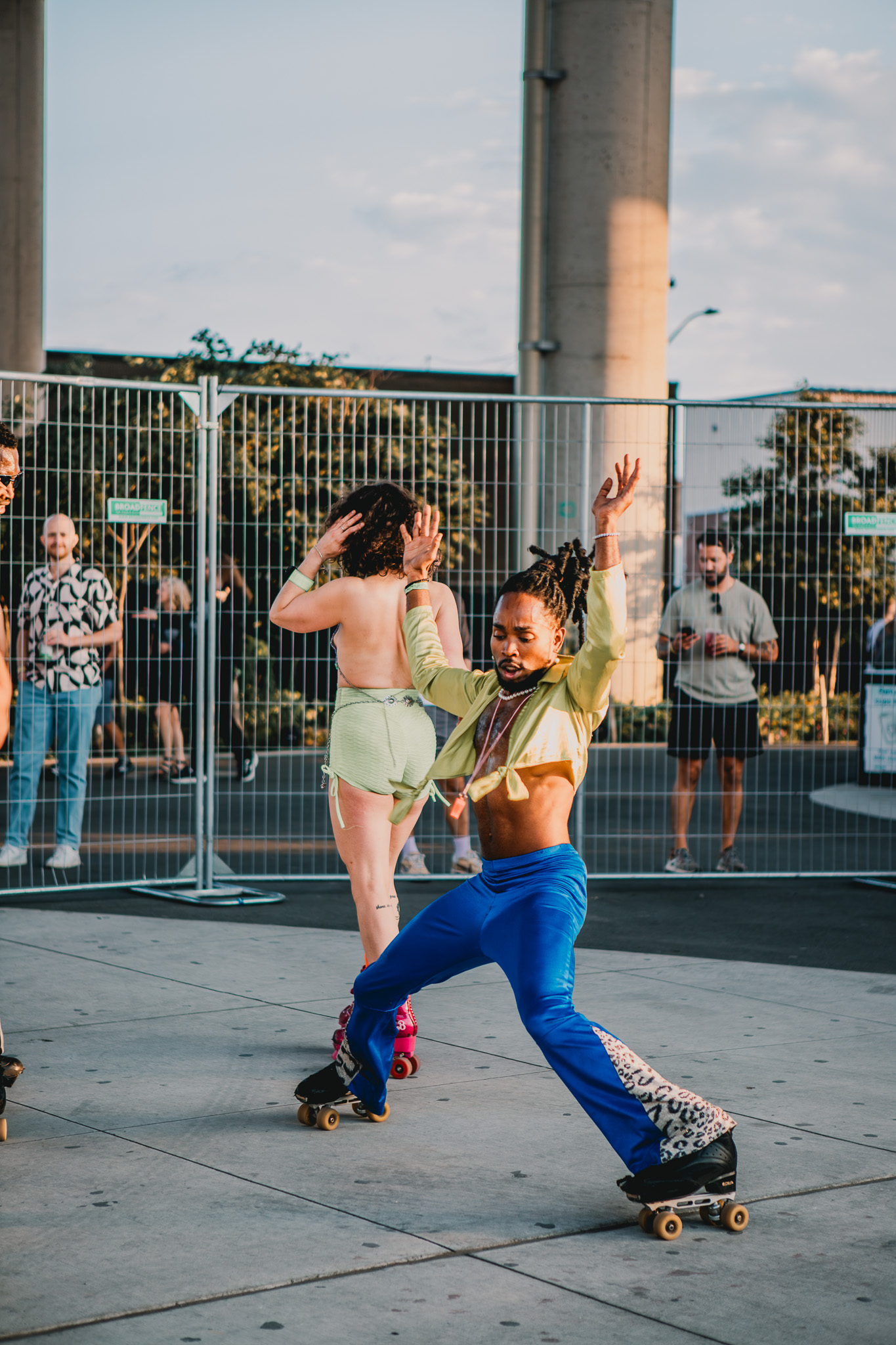
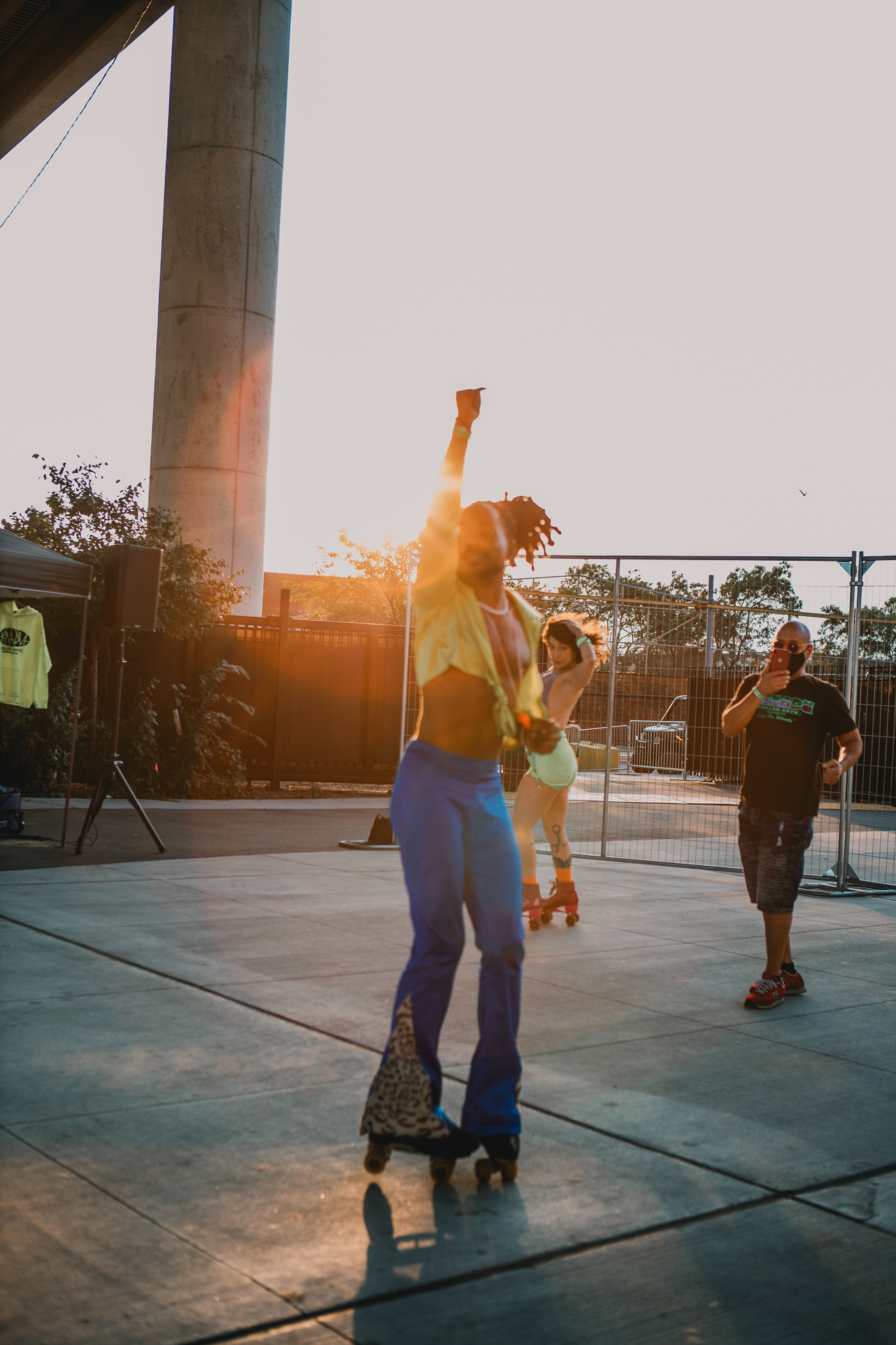
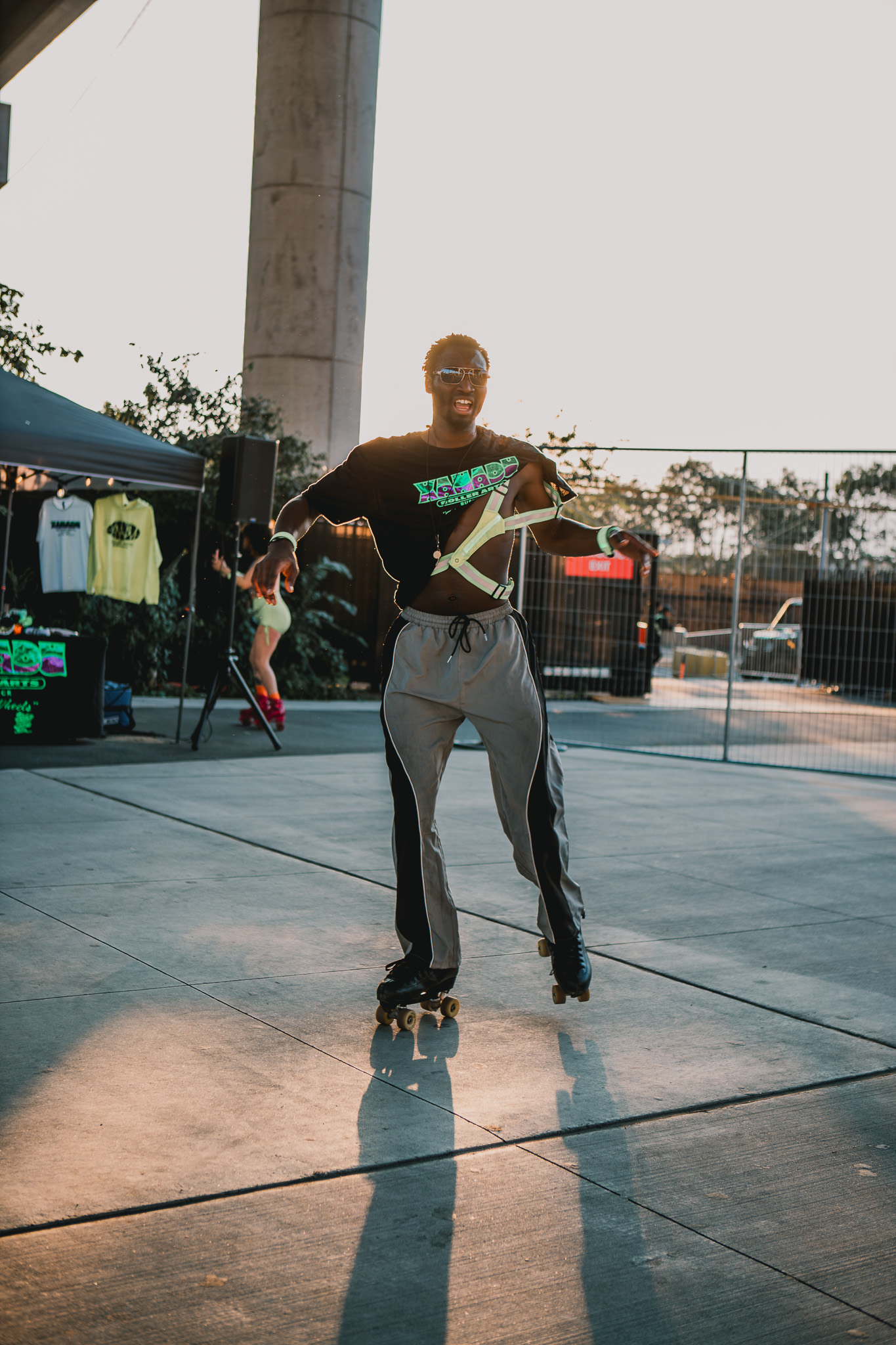
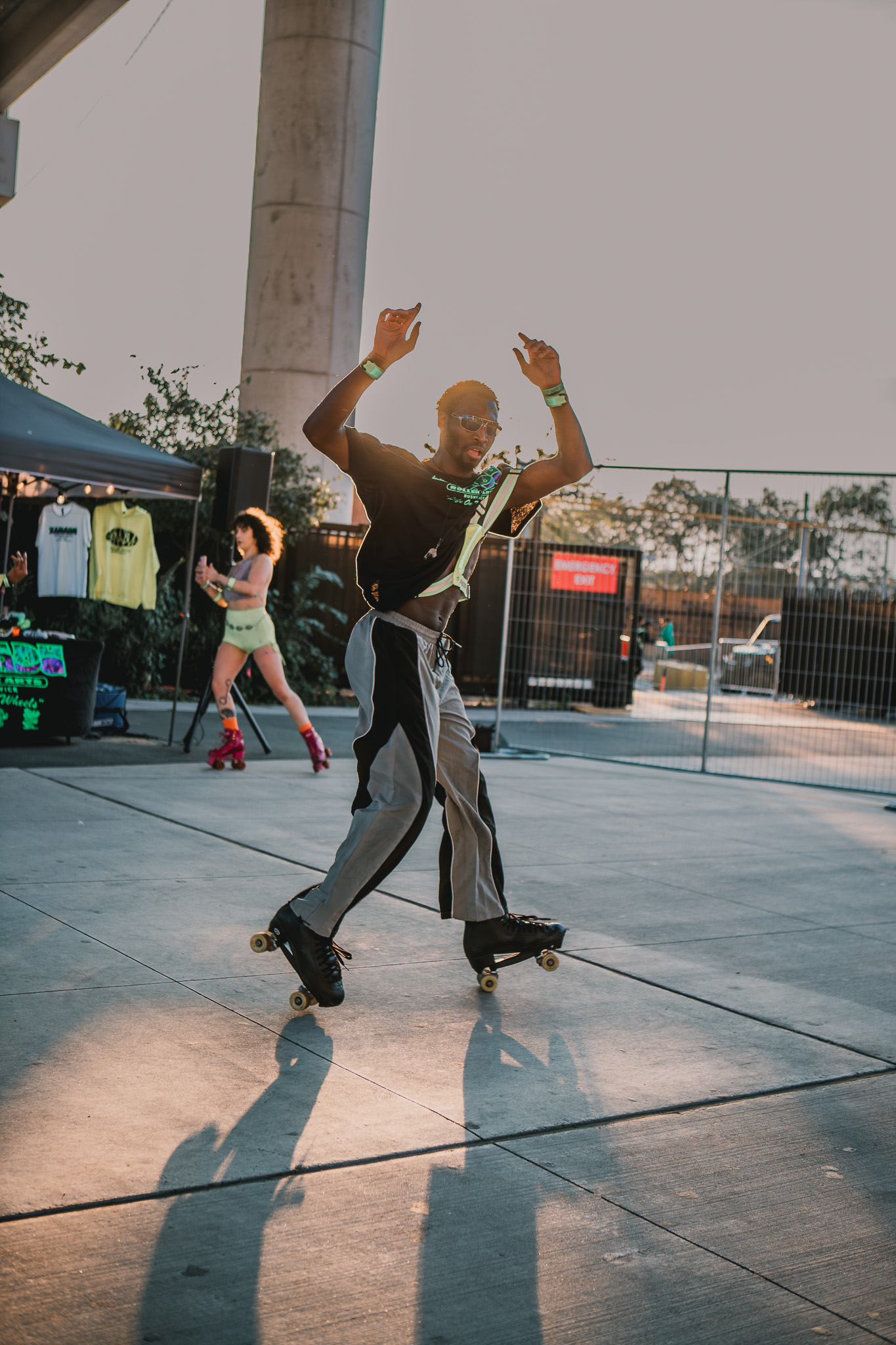
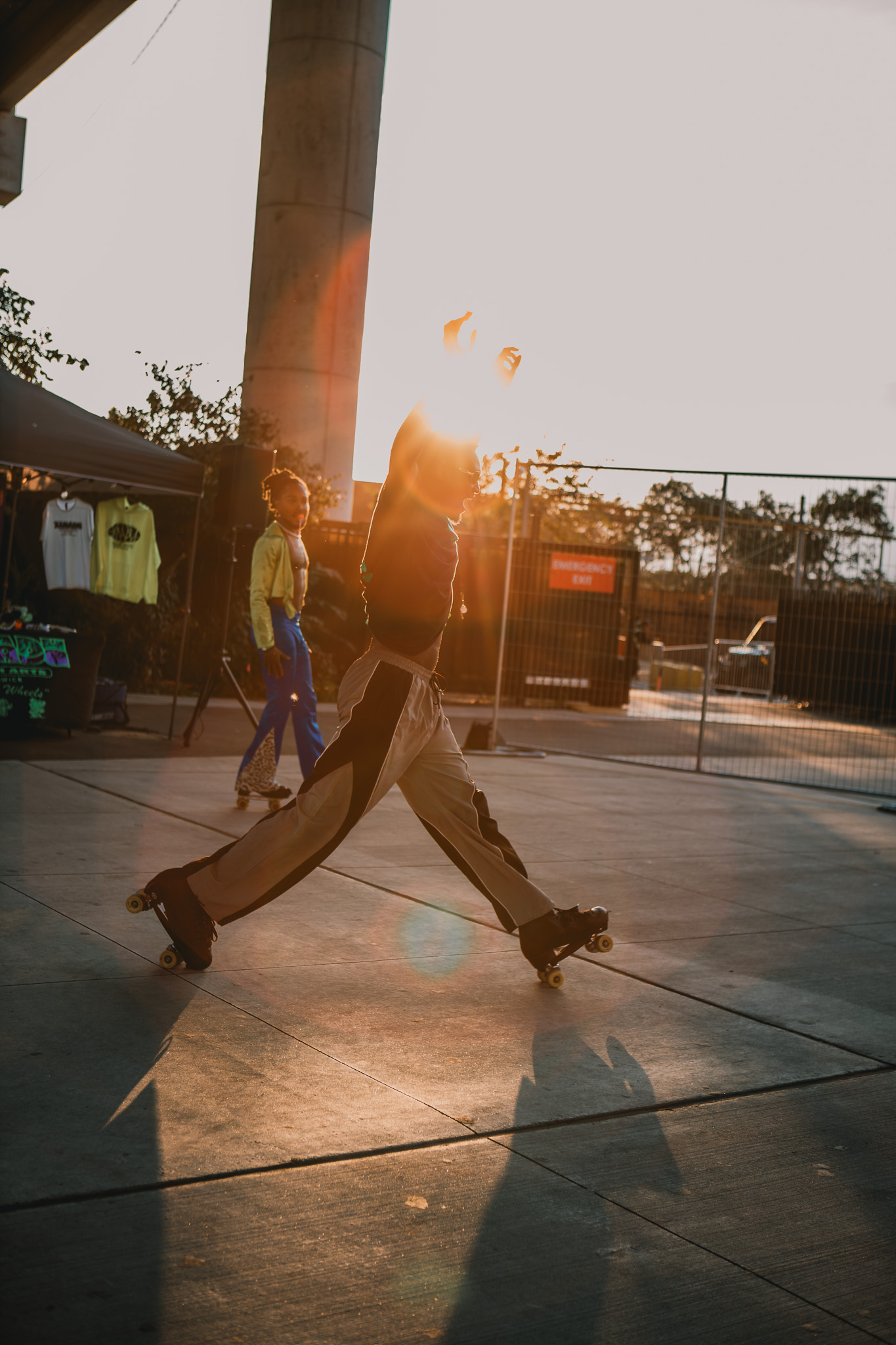
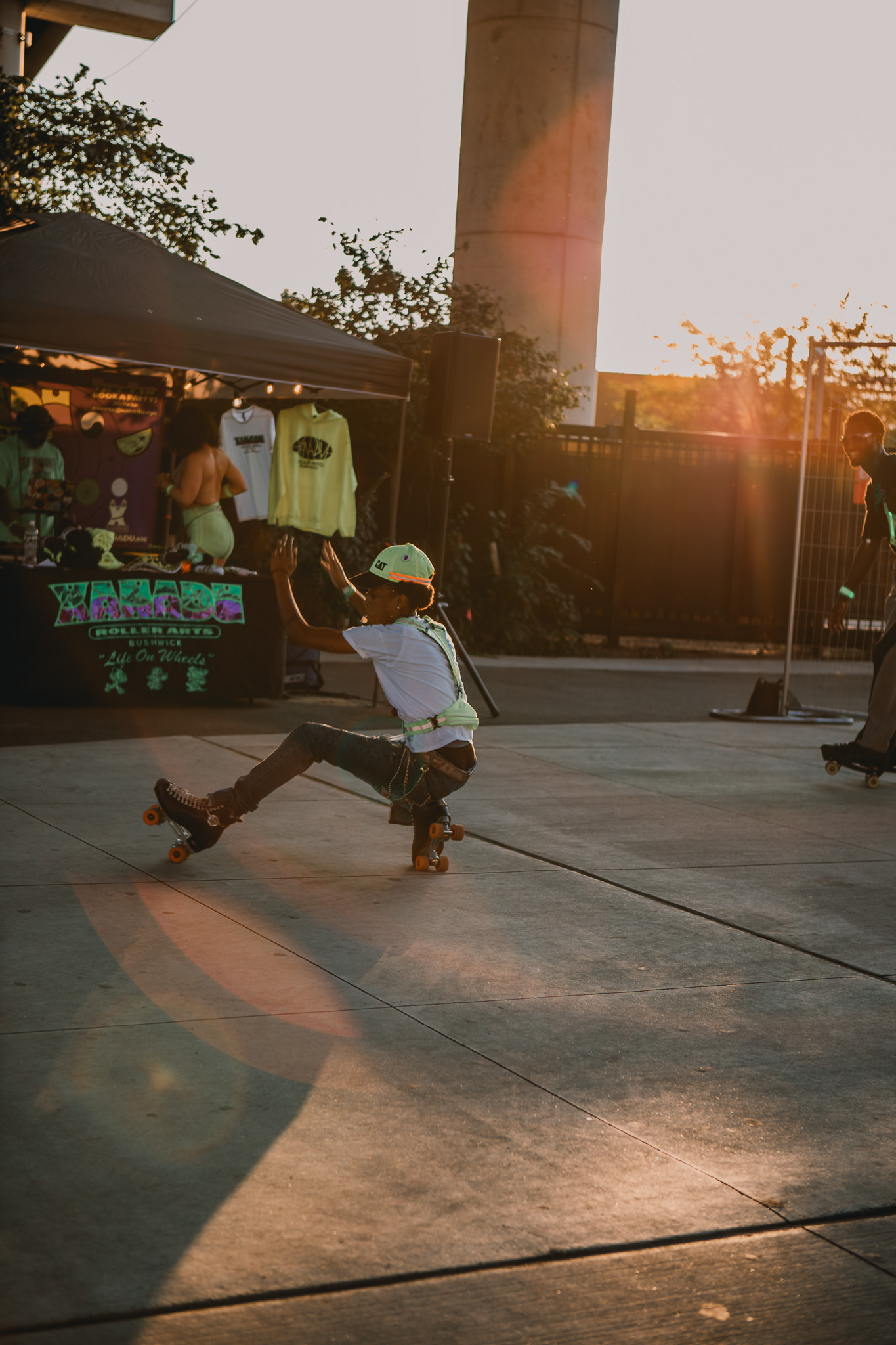
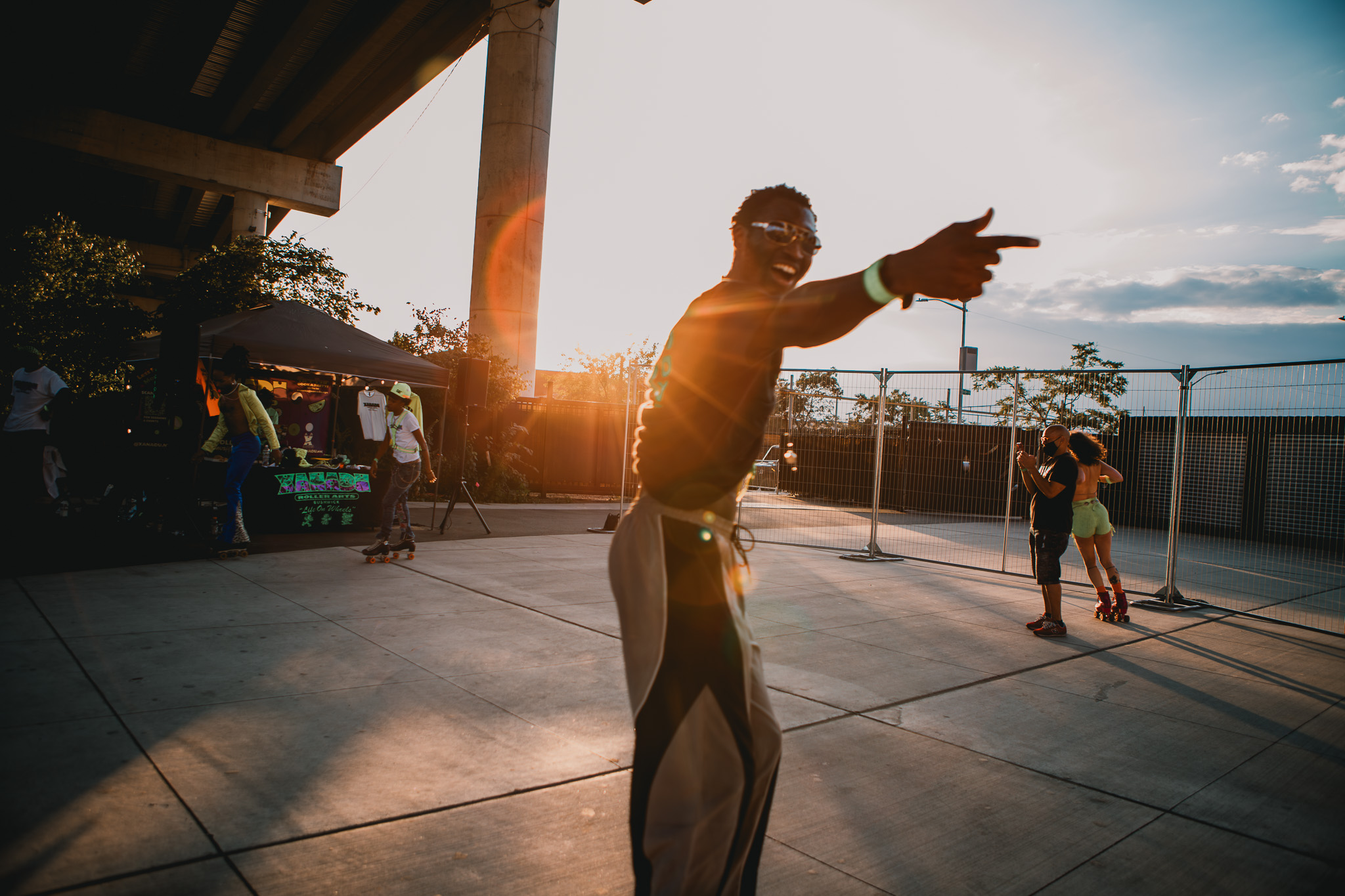
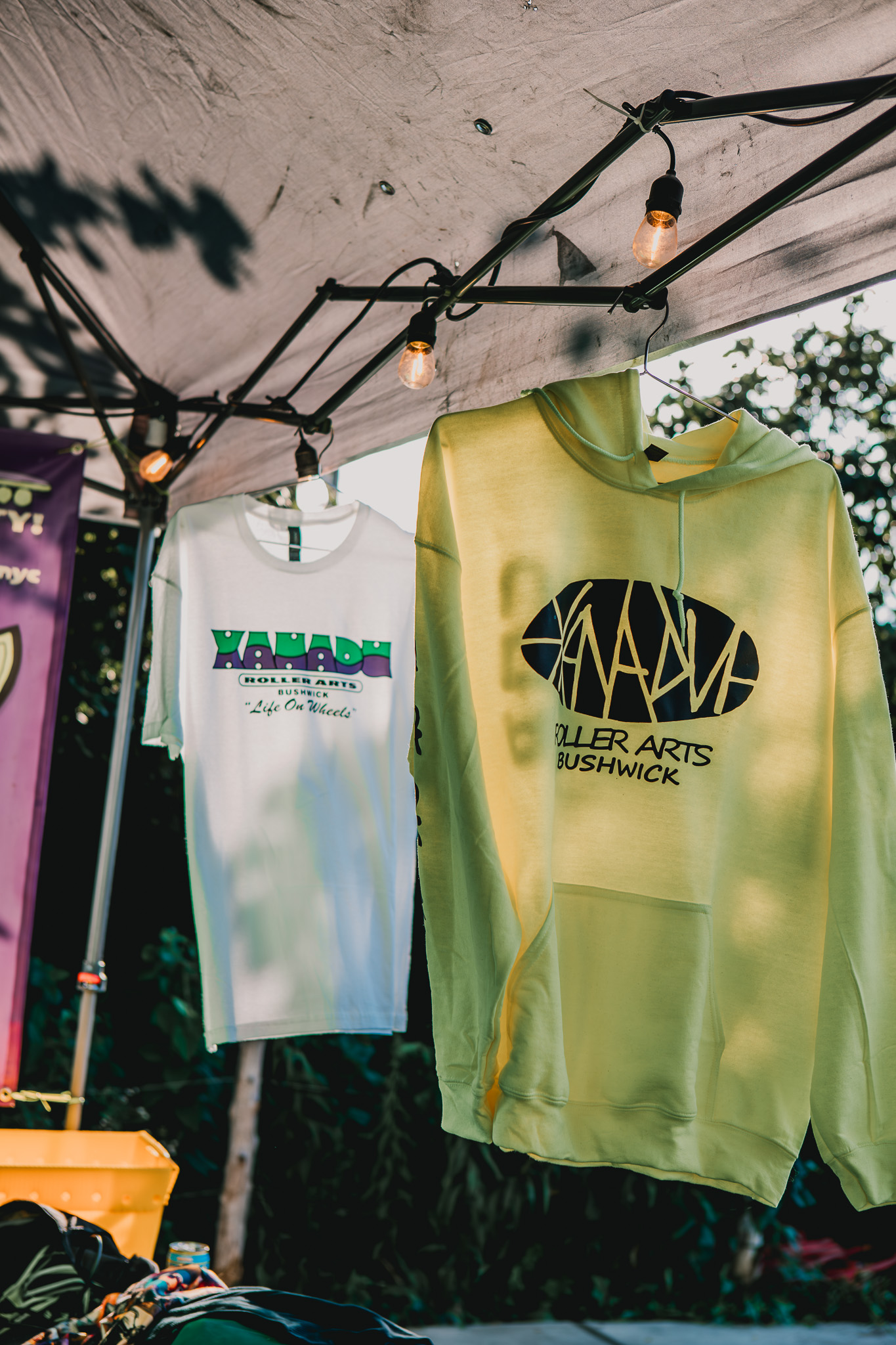
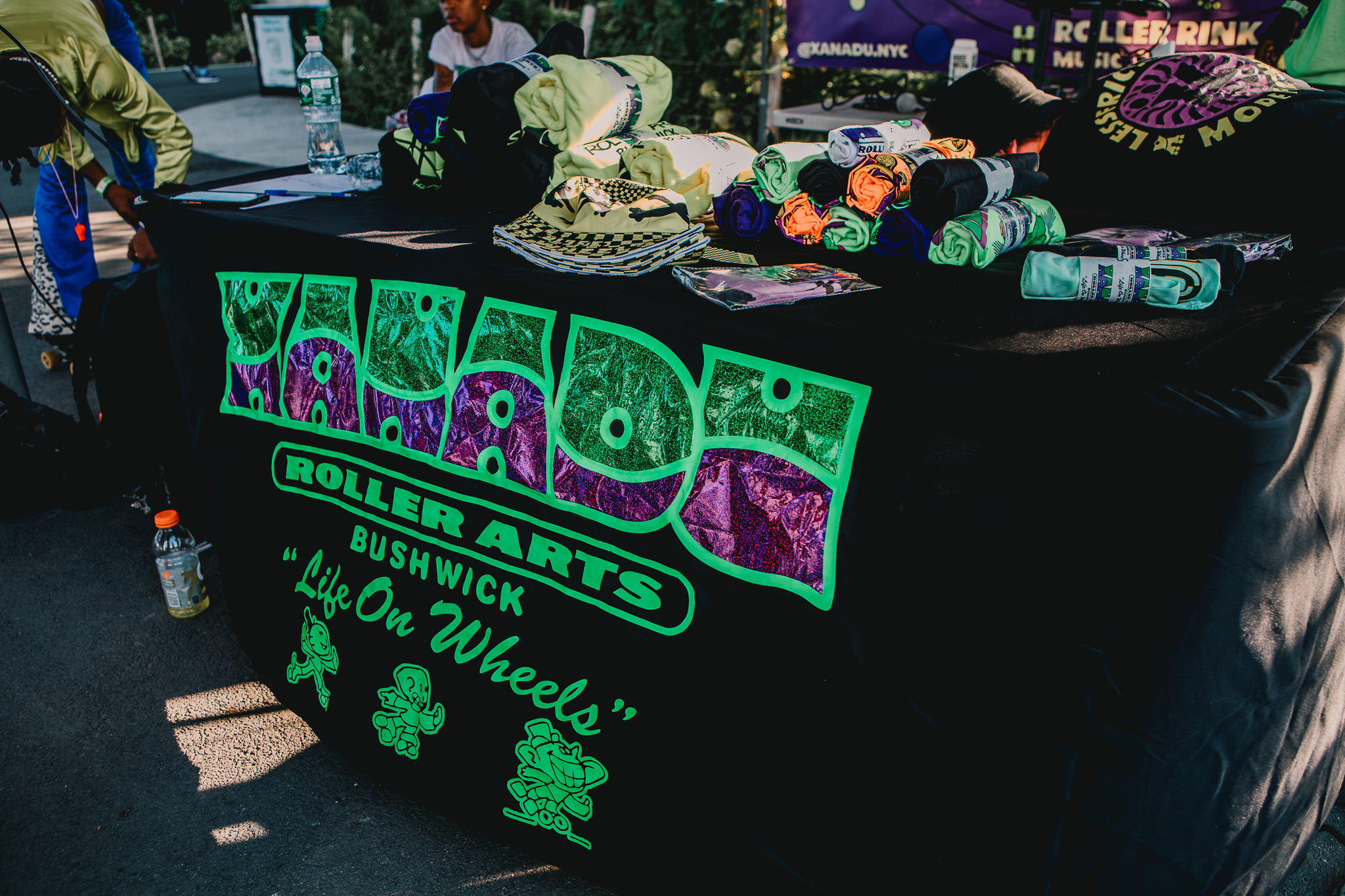
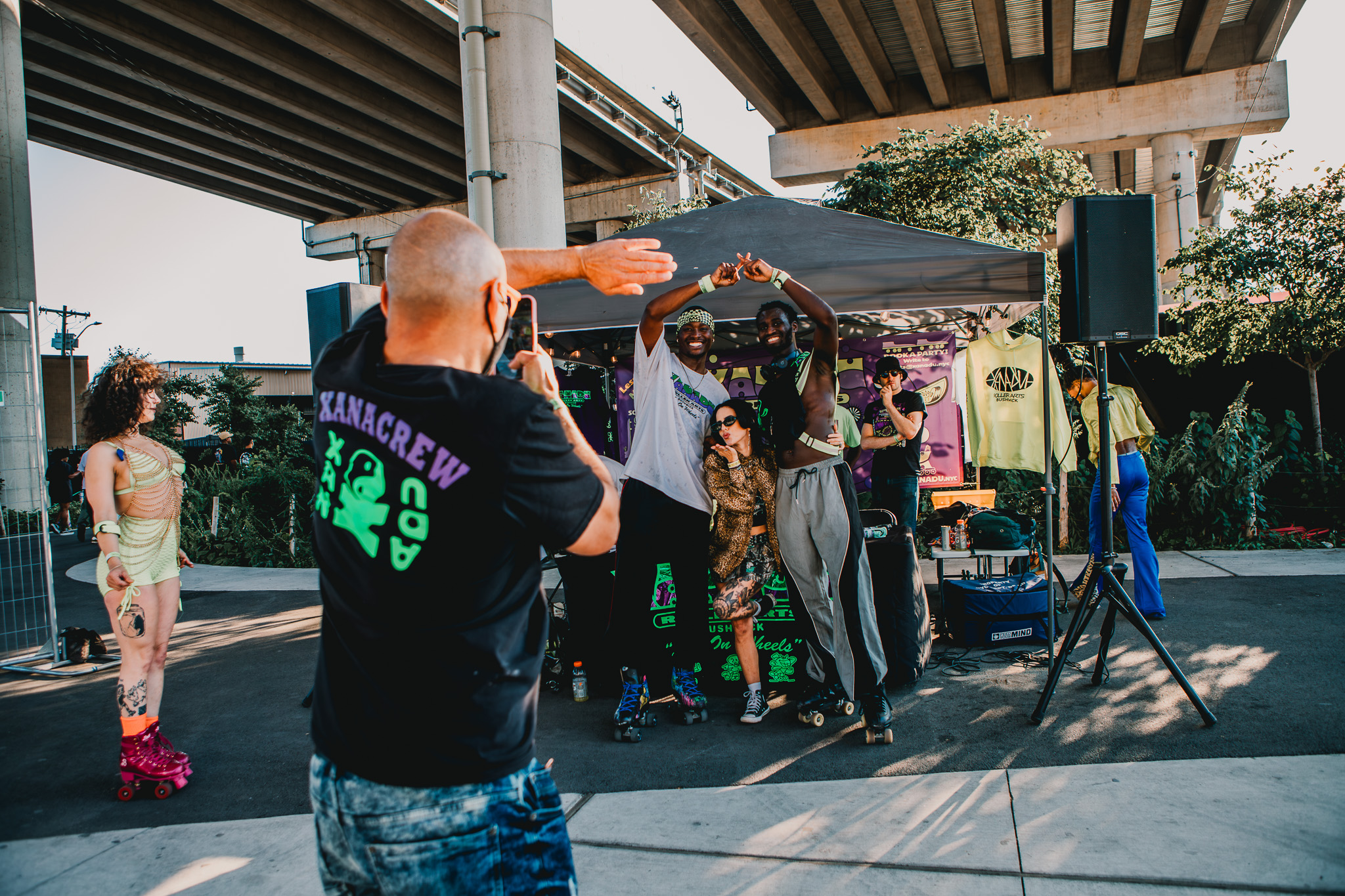
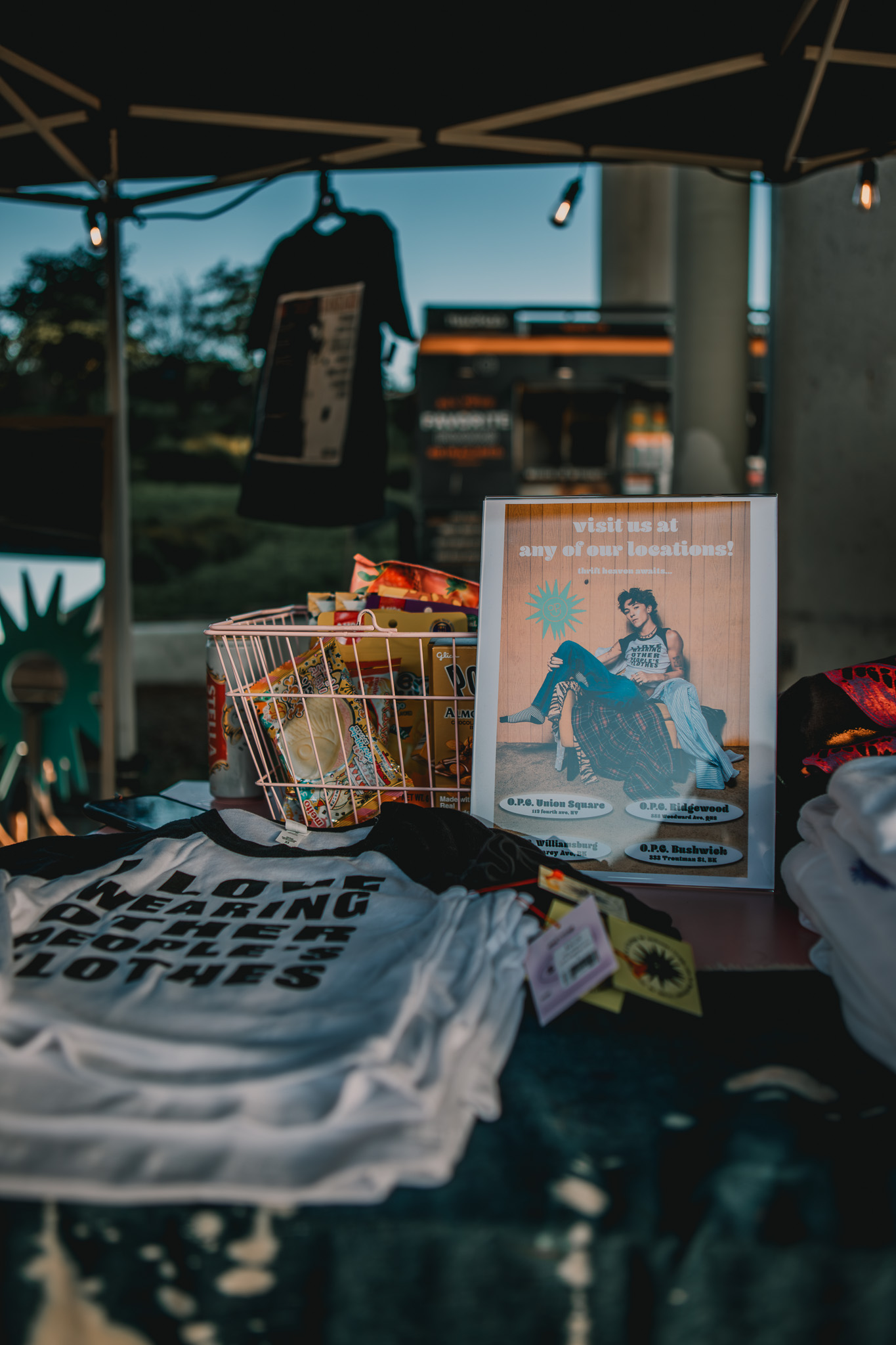
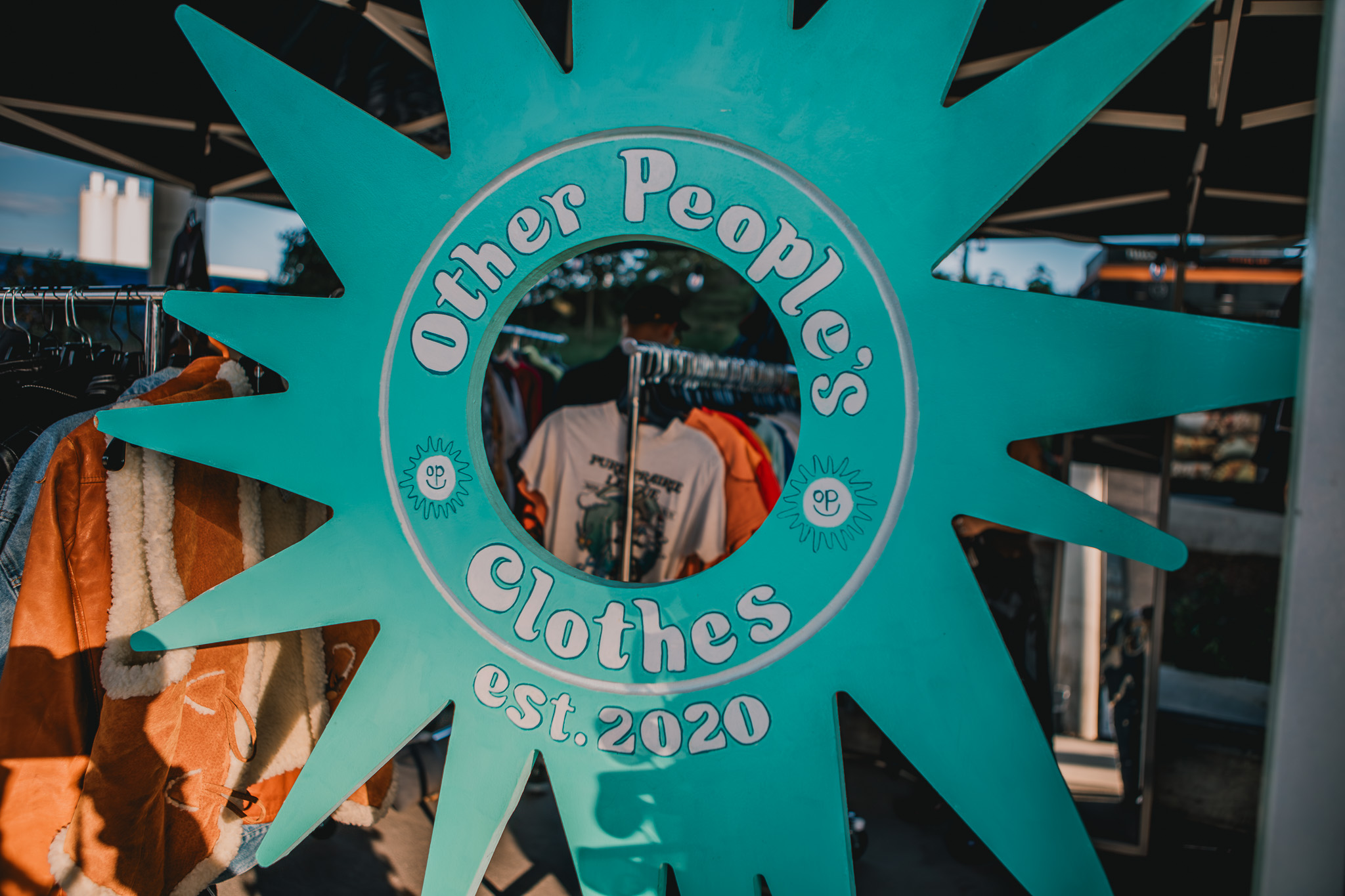
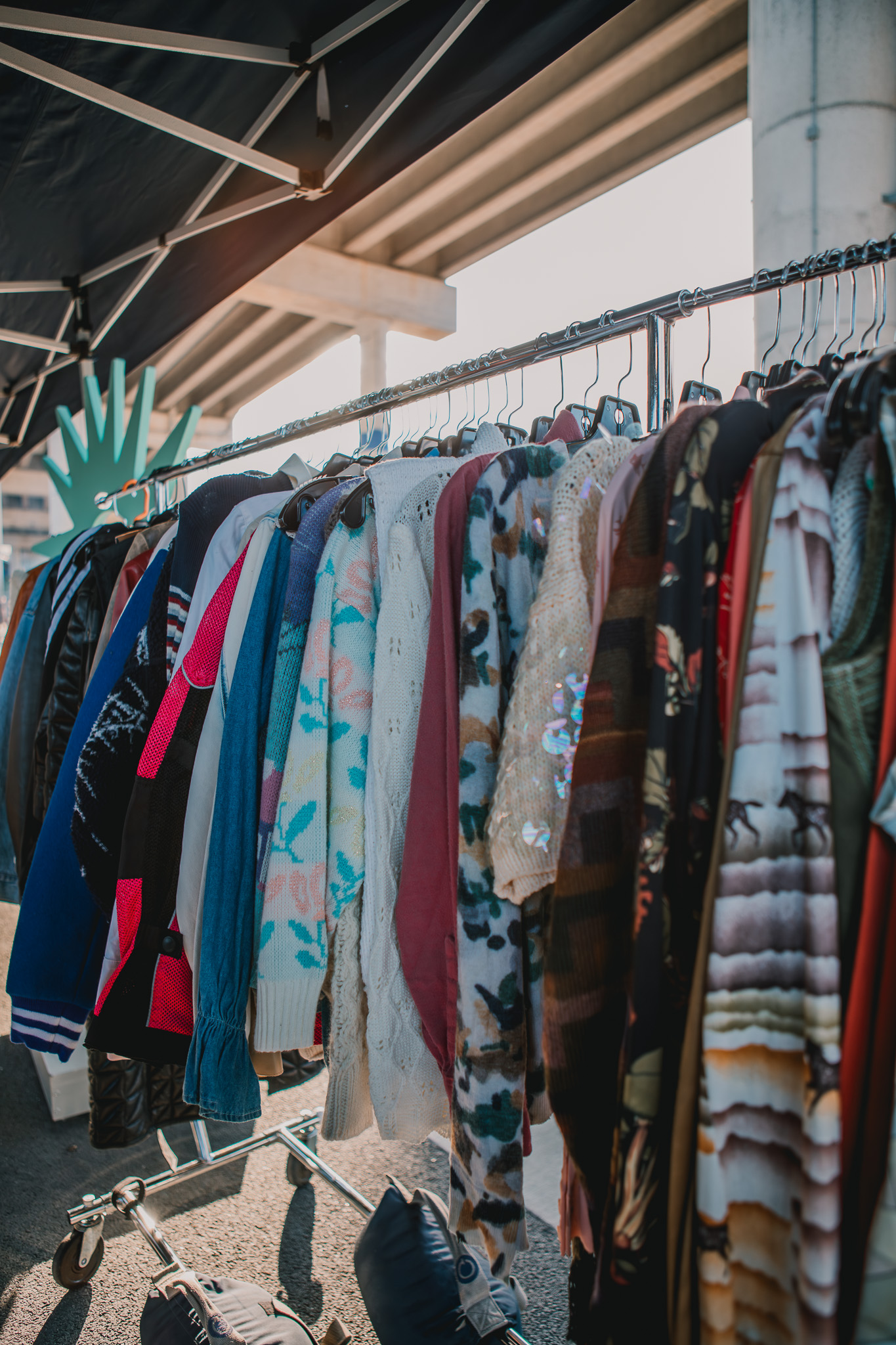
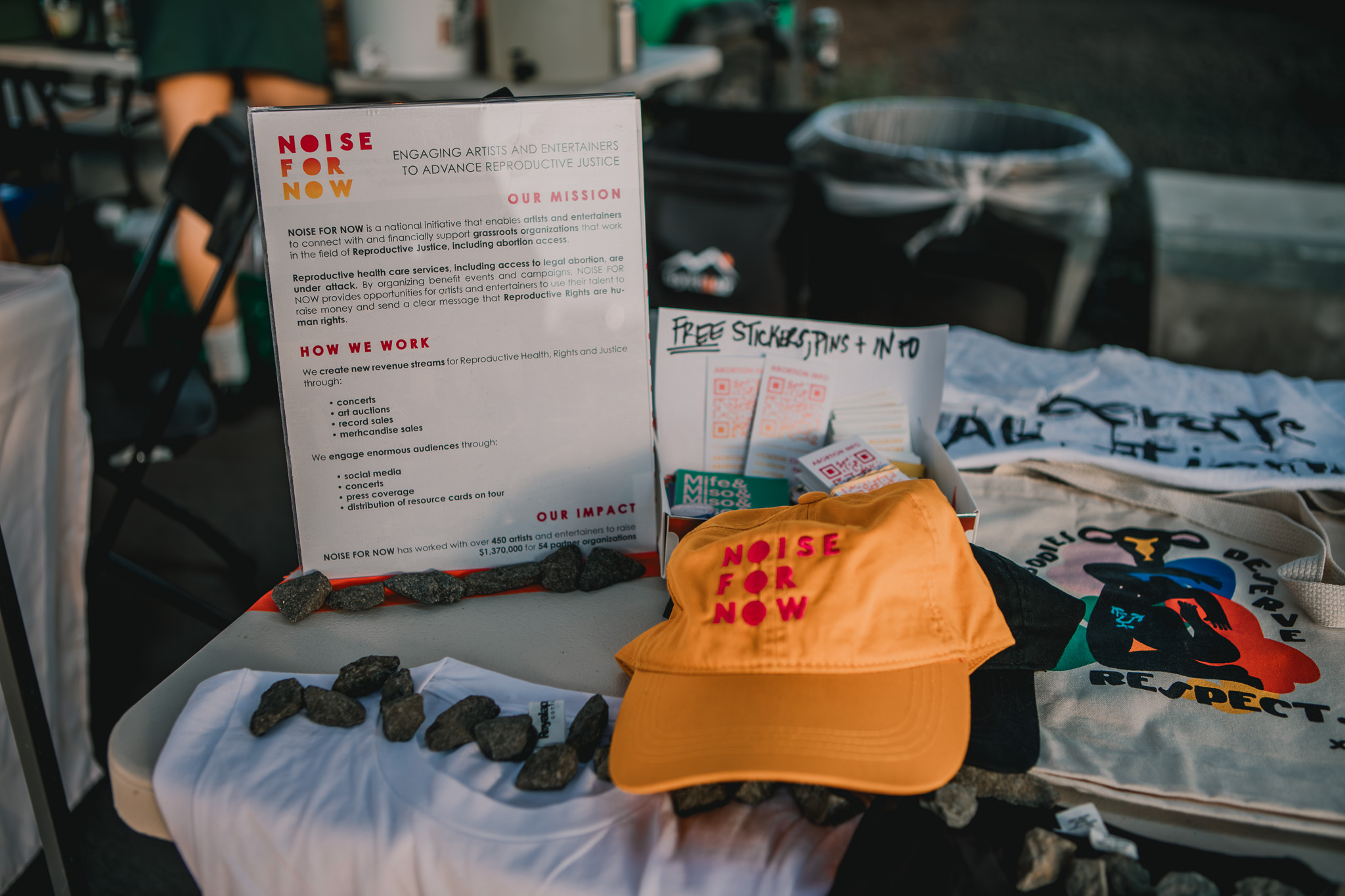
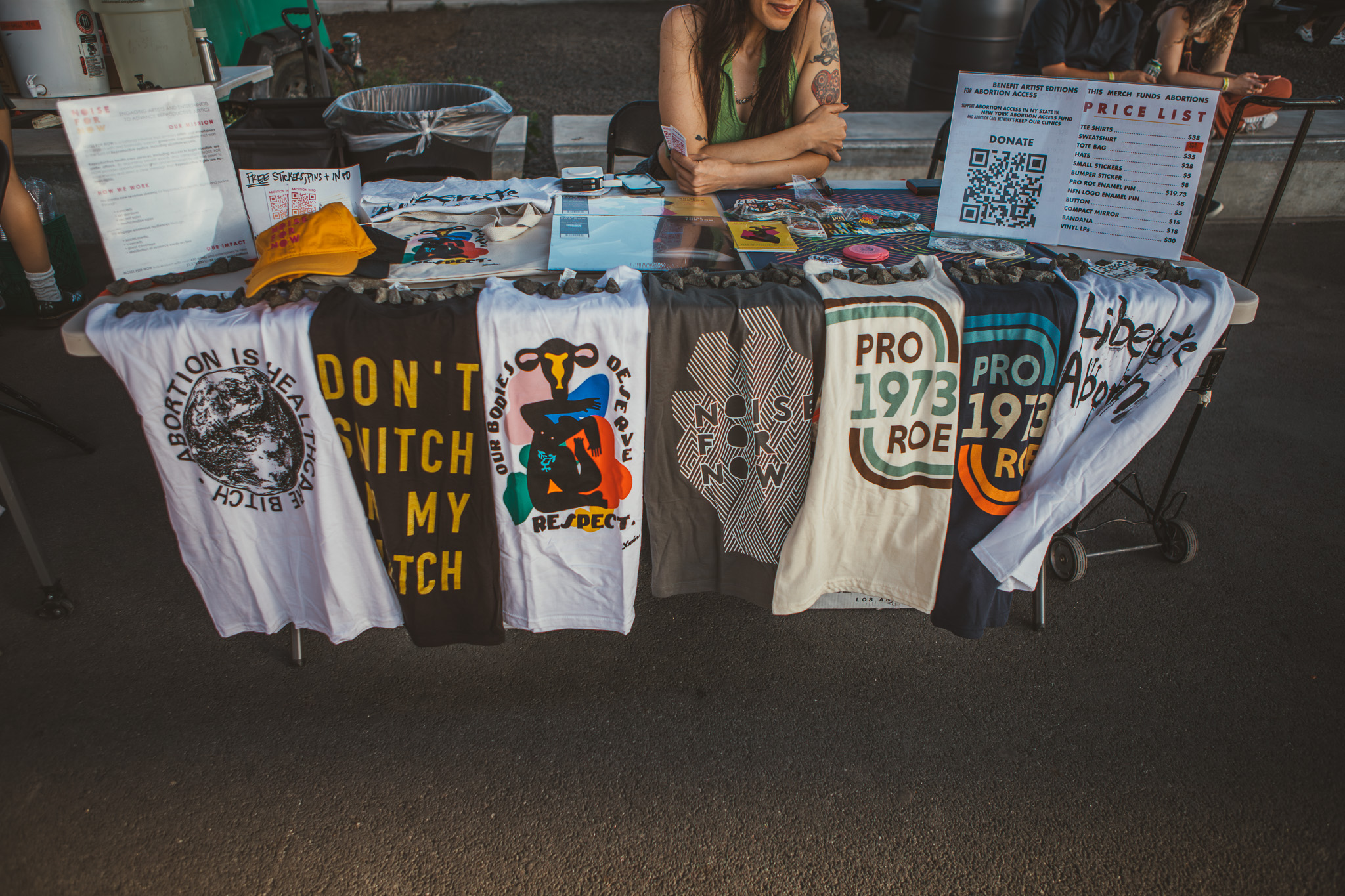
As the sky began to bruise, I wandered the vendors one last time and stopped dead at Xanadu Roller Arts. It was a time machine set to the 1970s: colorful outfits, split drops, spins that left my mouth open. They lured people into a rolling dance between sets and reminded me that nostalgia can be kinetic, not just costume. A few booths down, a Brooklyn vintage stall had a rack woven by love: perfectly curated, bright, previously adored. I’ll definitely be visiting the shop next time I cross through Brooklyn during the day; booths that good don’t happen by accident.
Then darkness, and Flying Lotus. There was a short delay – and it was well worth it. He needs the night. When the LEDs bloomed, the artist vanished; just light, sound, and the sense of falling into a video game designed by a poet. Screens became portals, and I watched from VIP for a minute, just to catch a glimpse of the mastermind behind the monolith, but even there the visuals had the gravity. The set wasn’t about seeing him; it was about being swallowed whole.
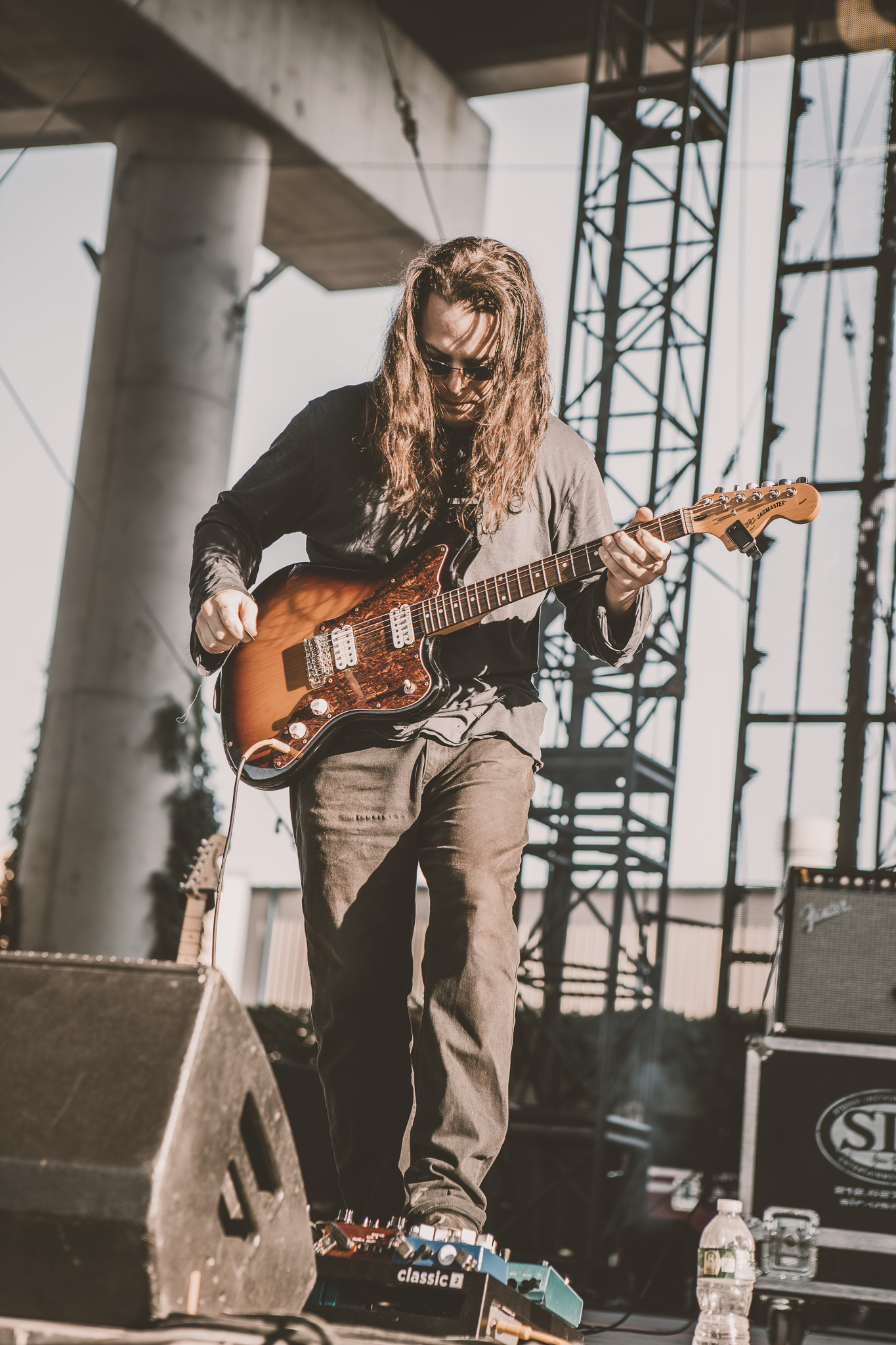
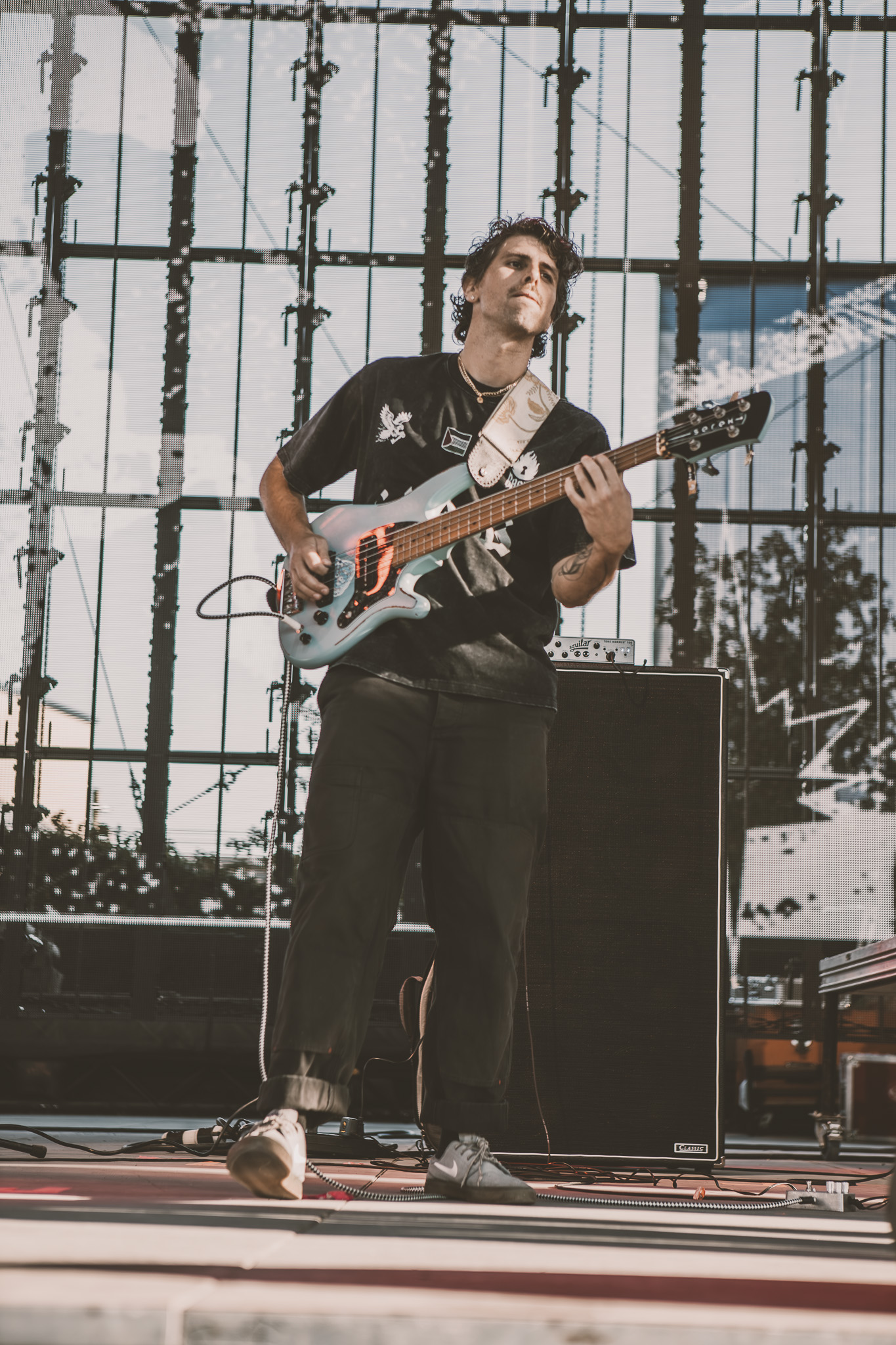
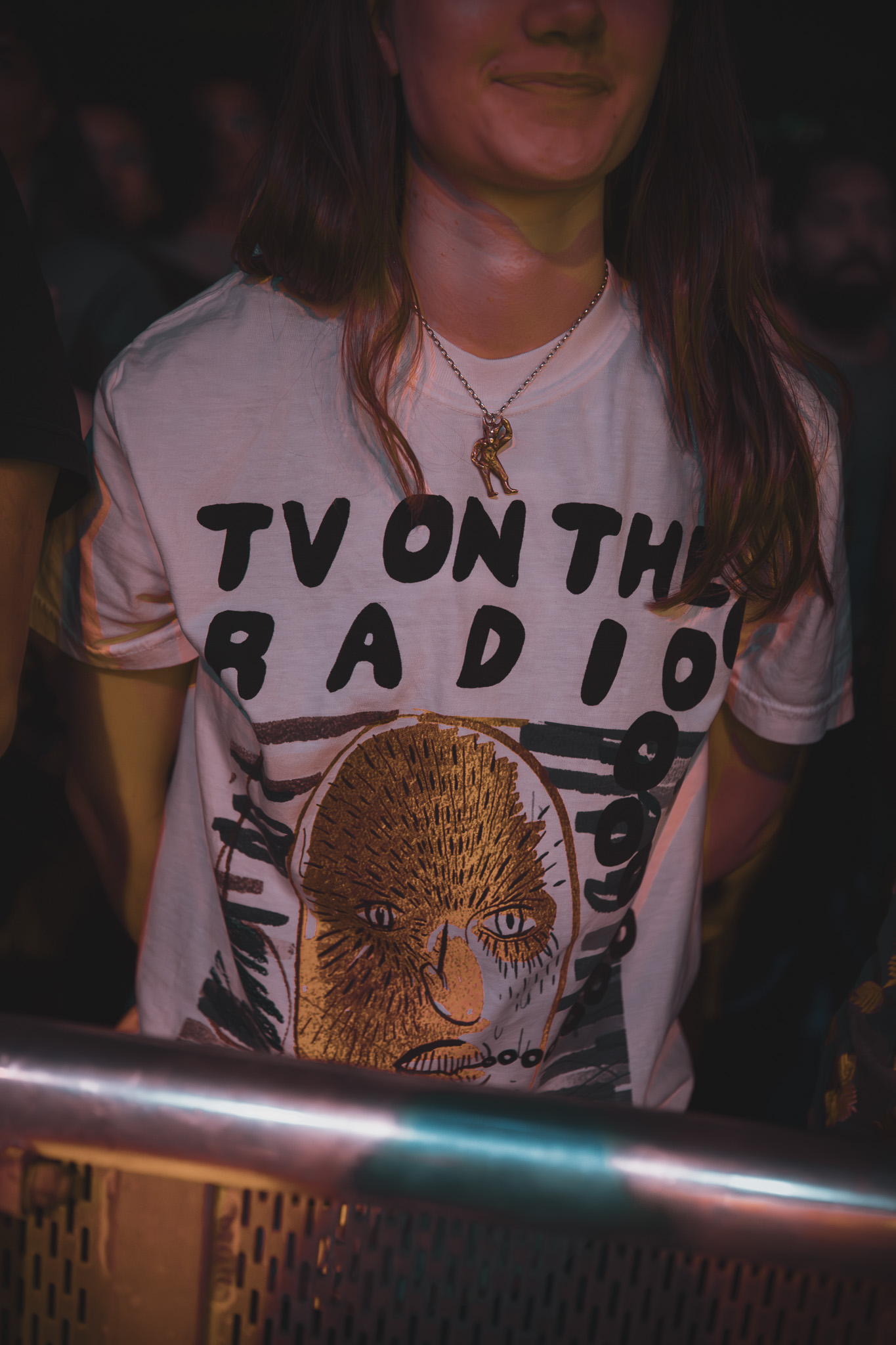
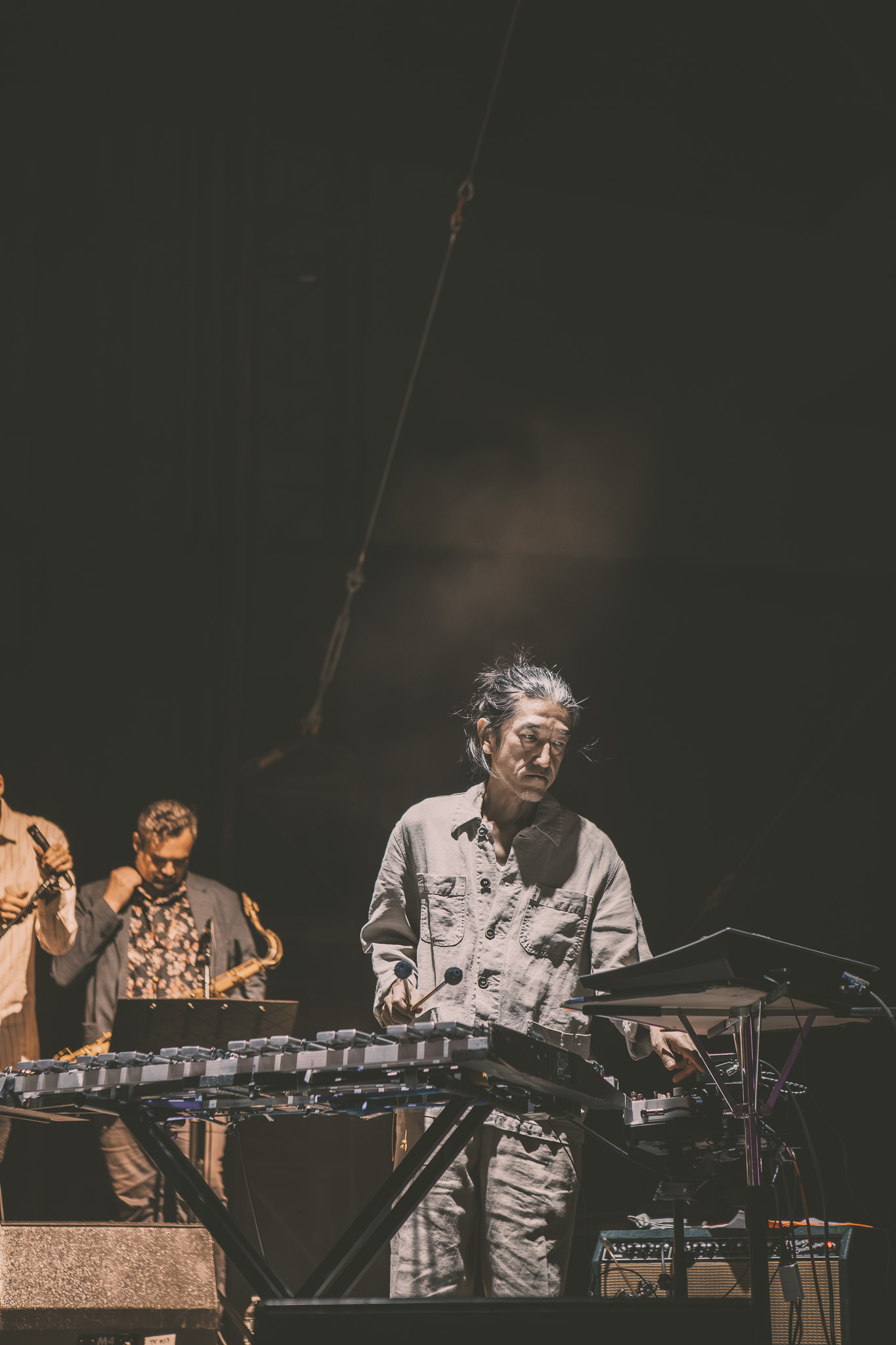
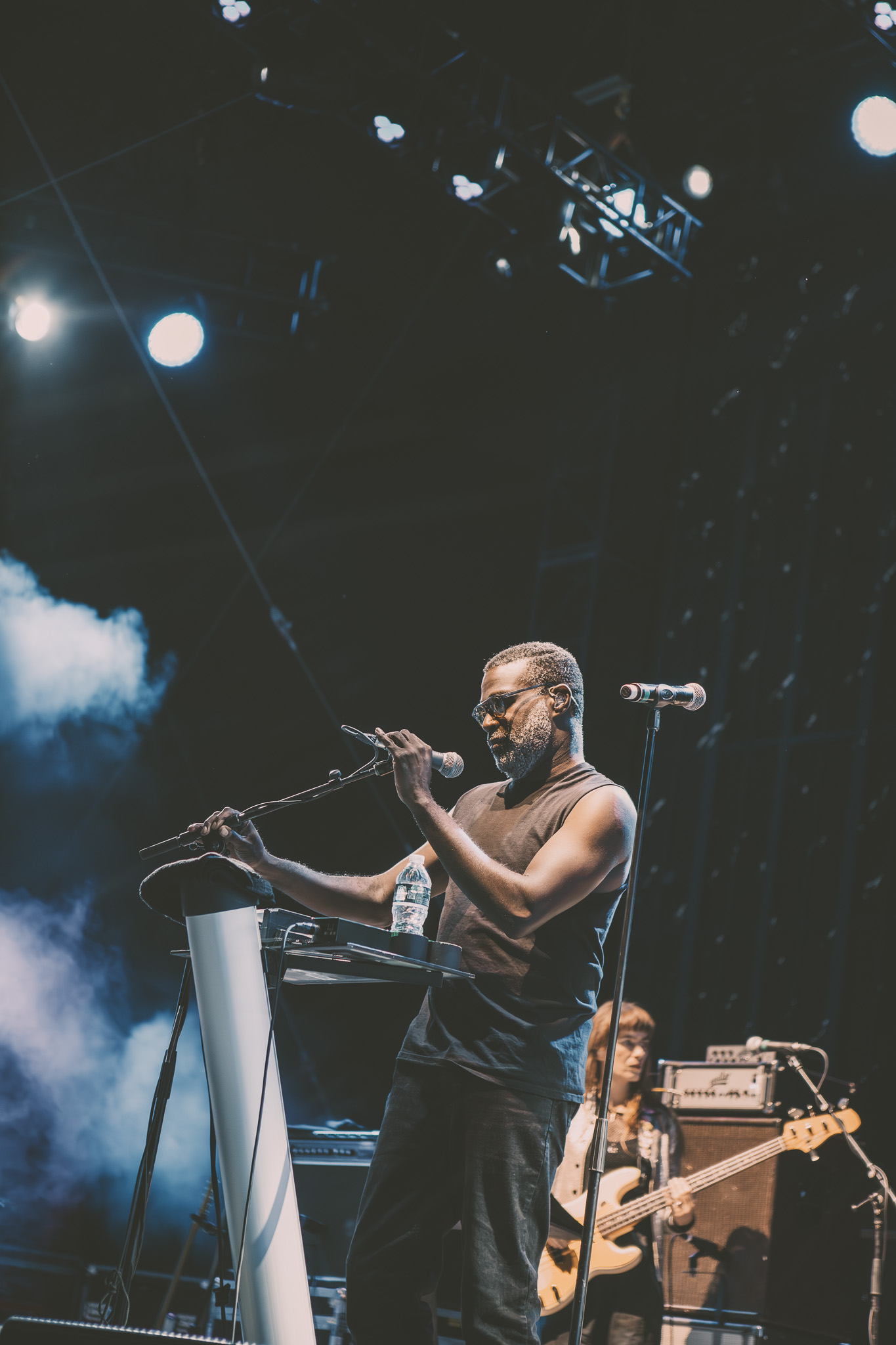
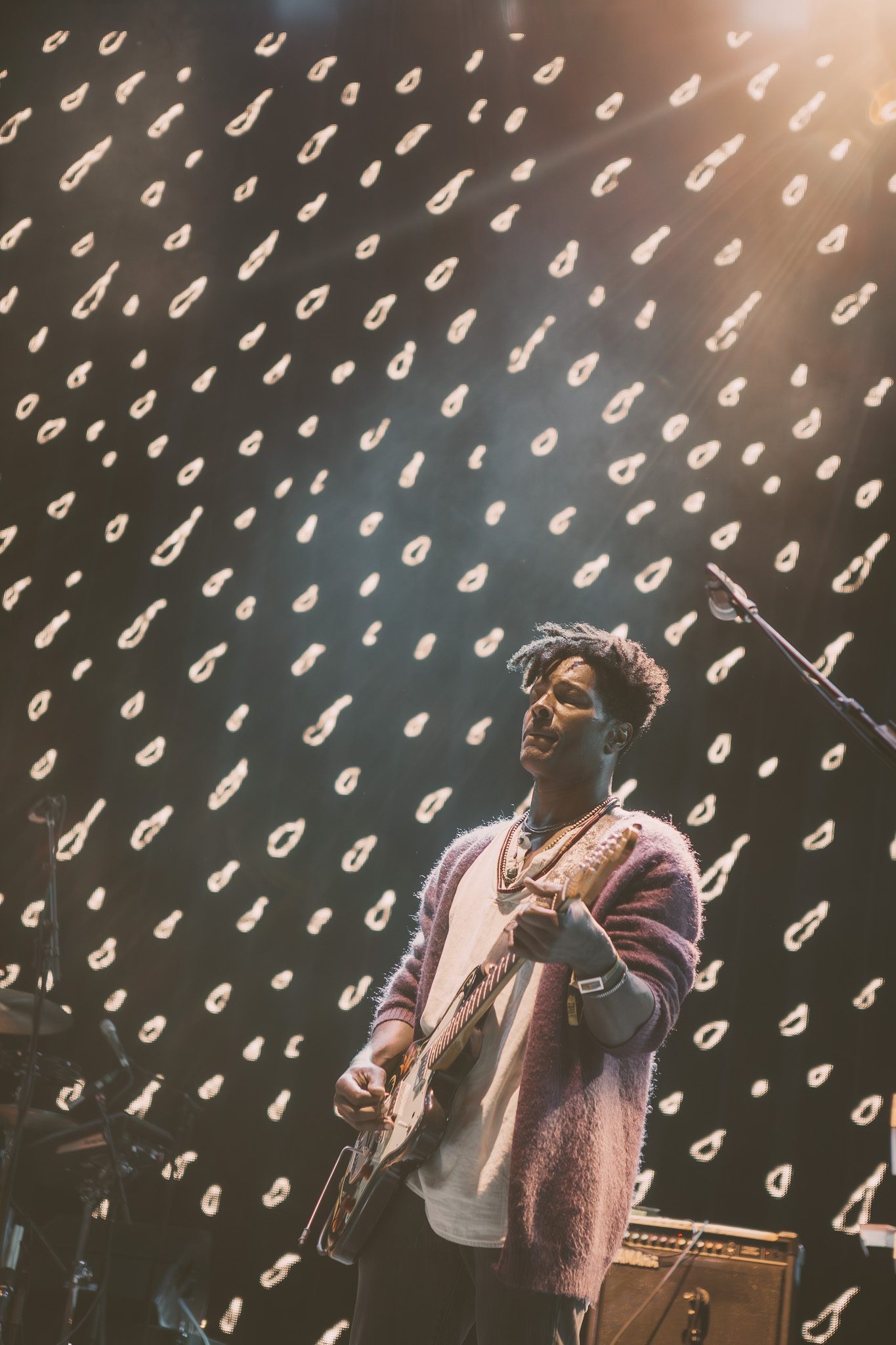
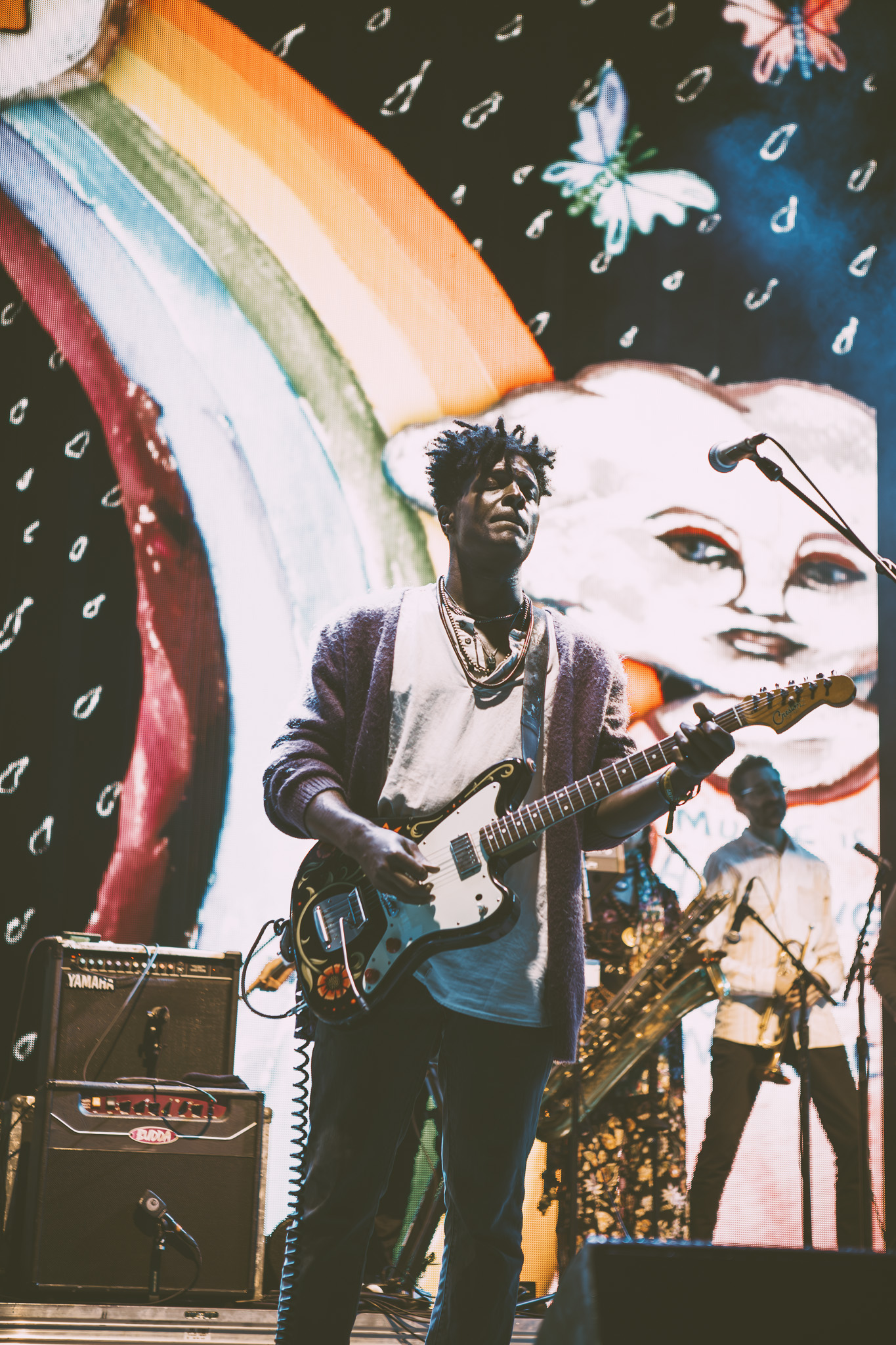
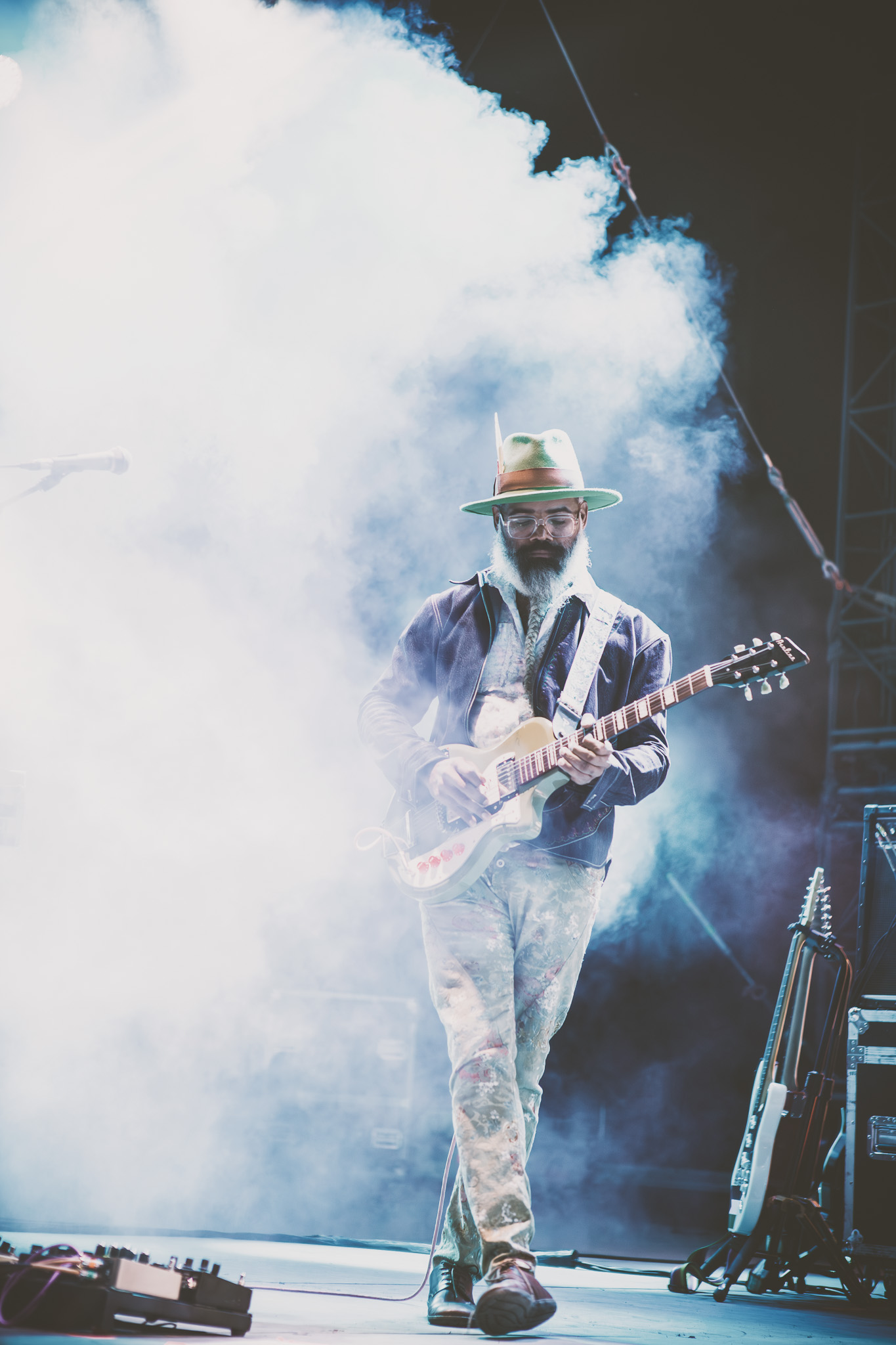
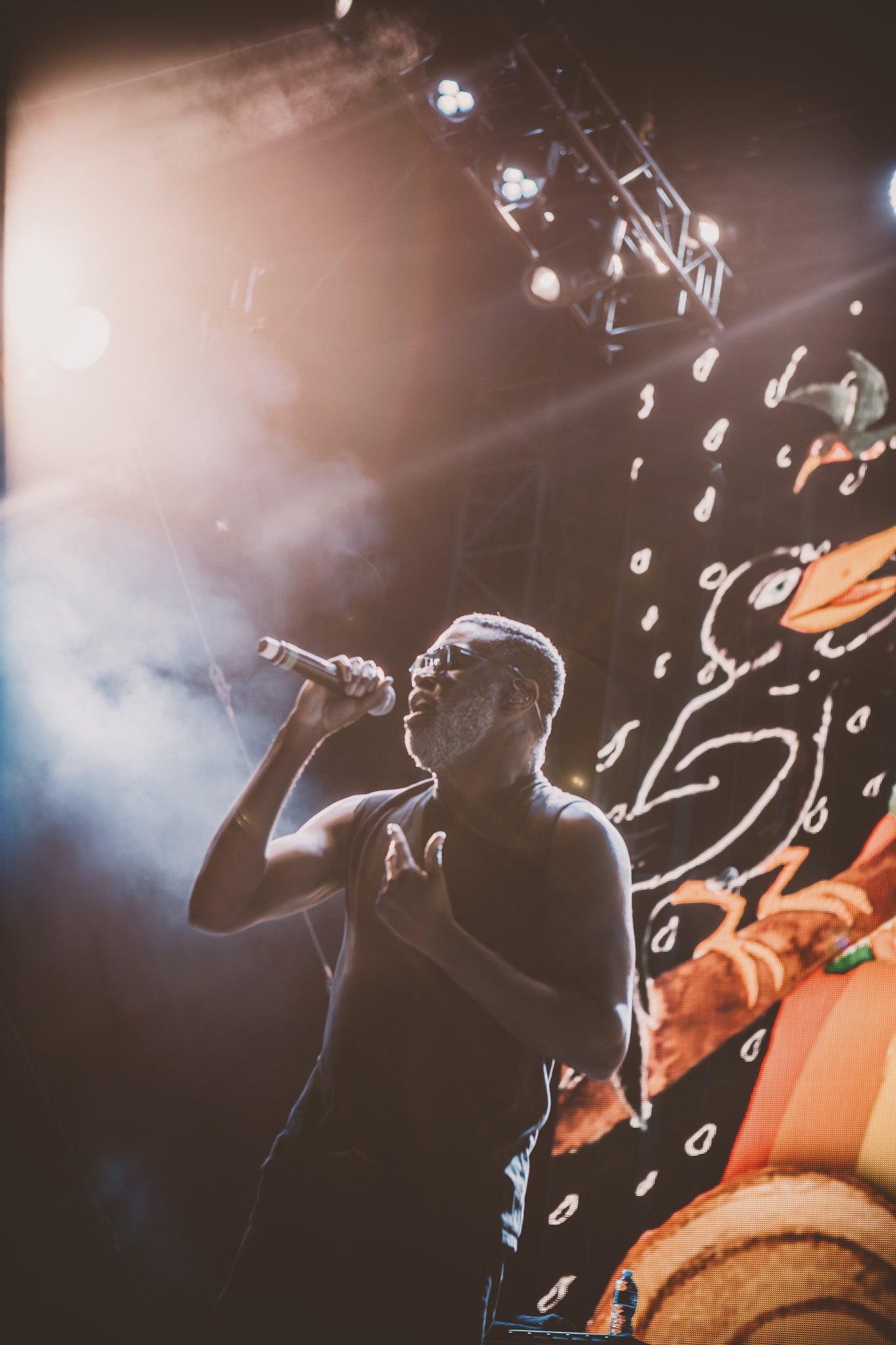
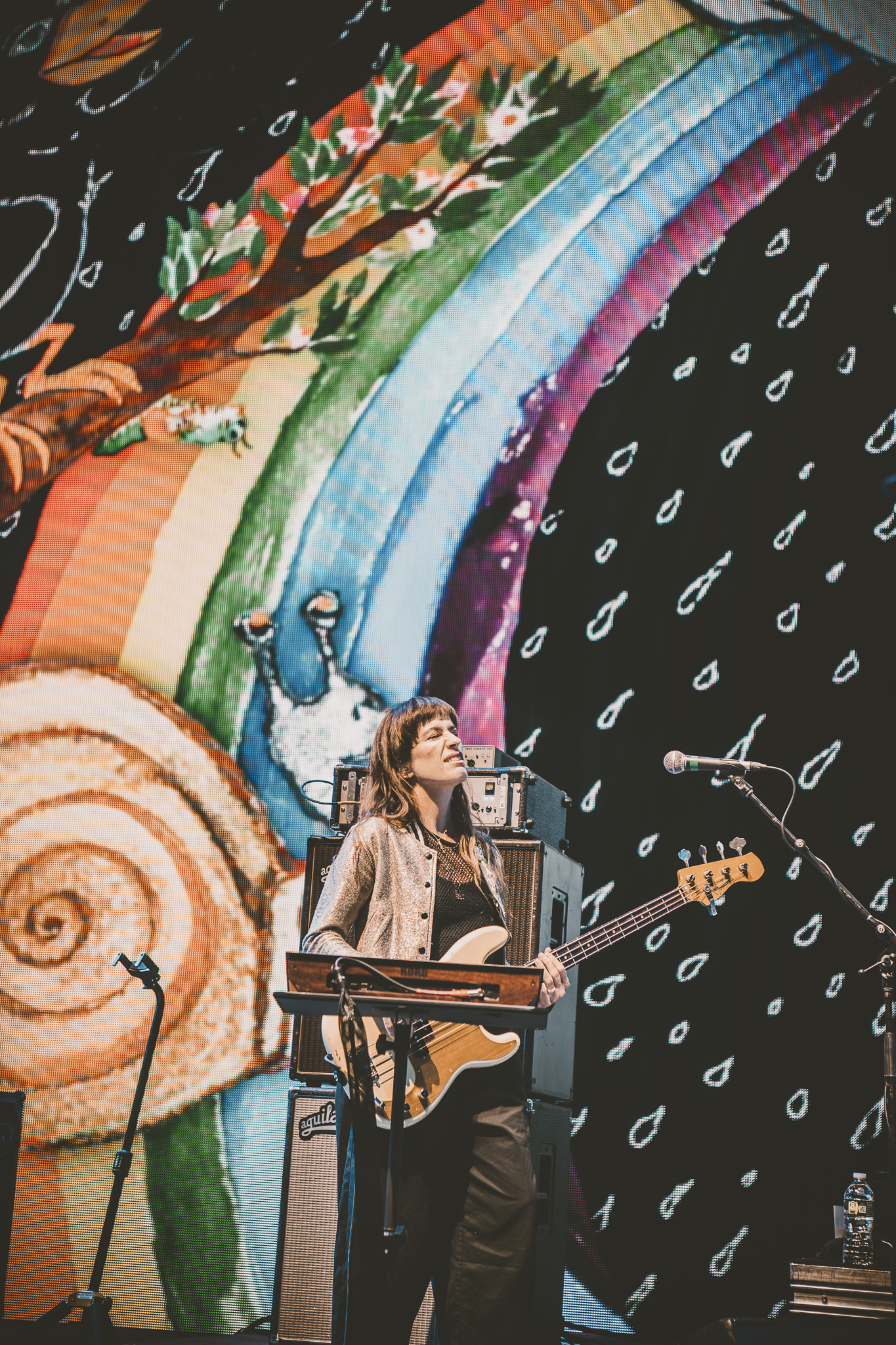
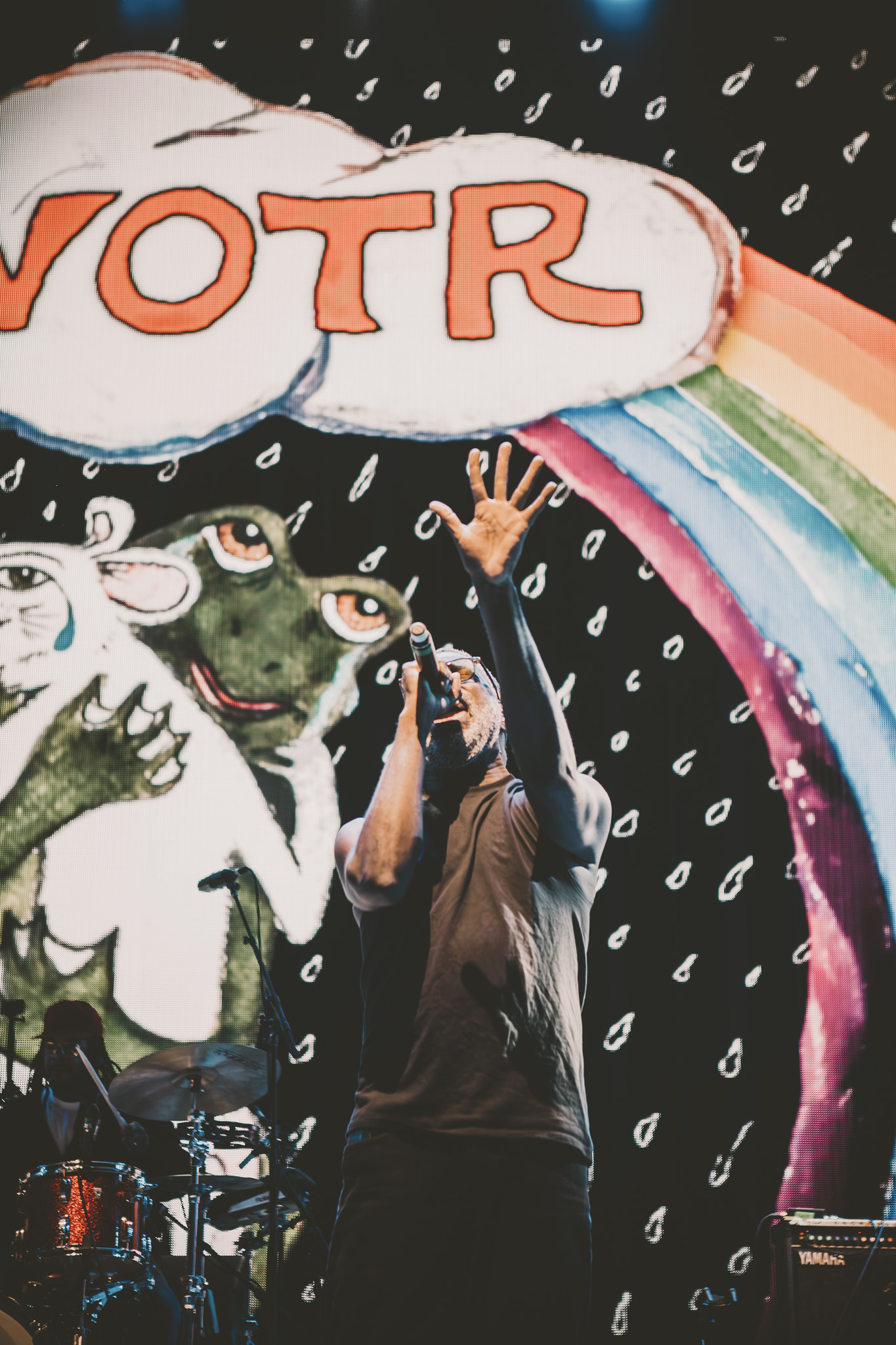
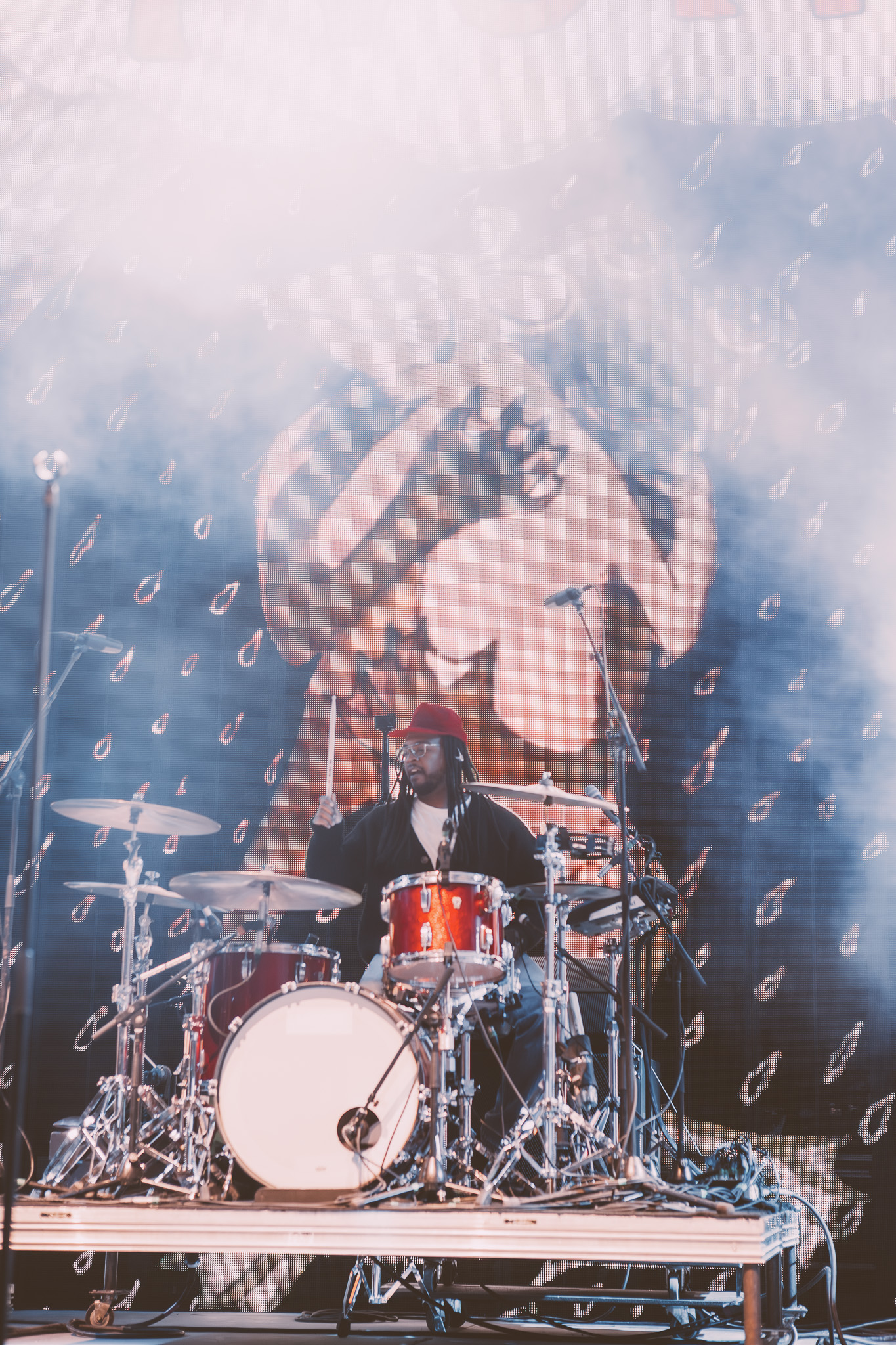
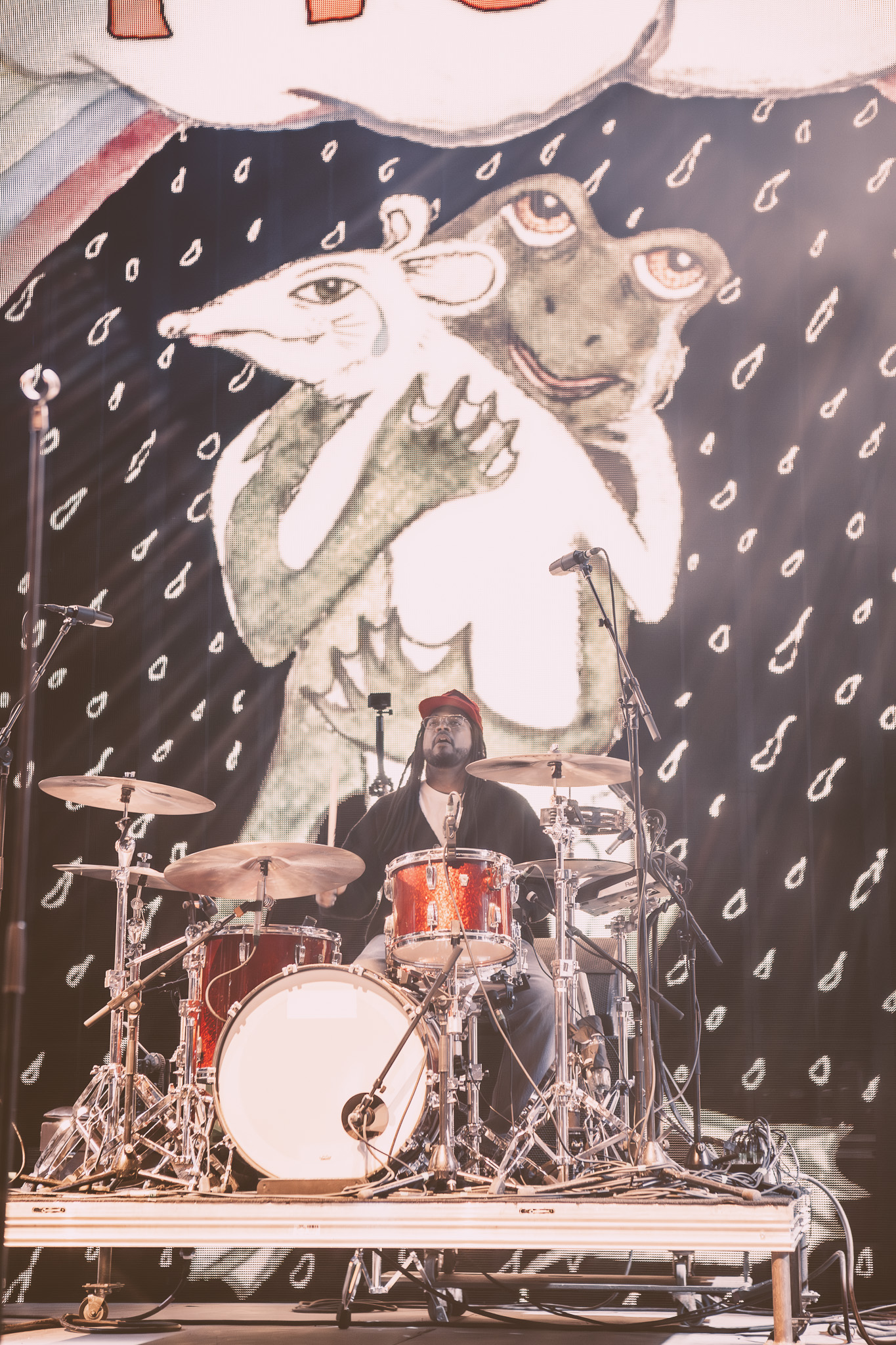
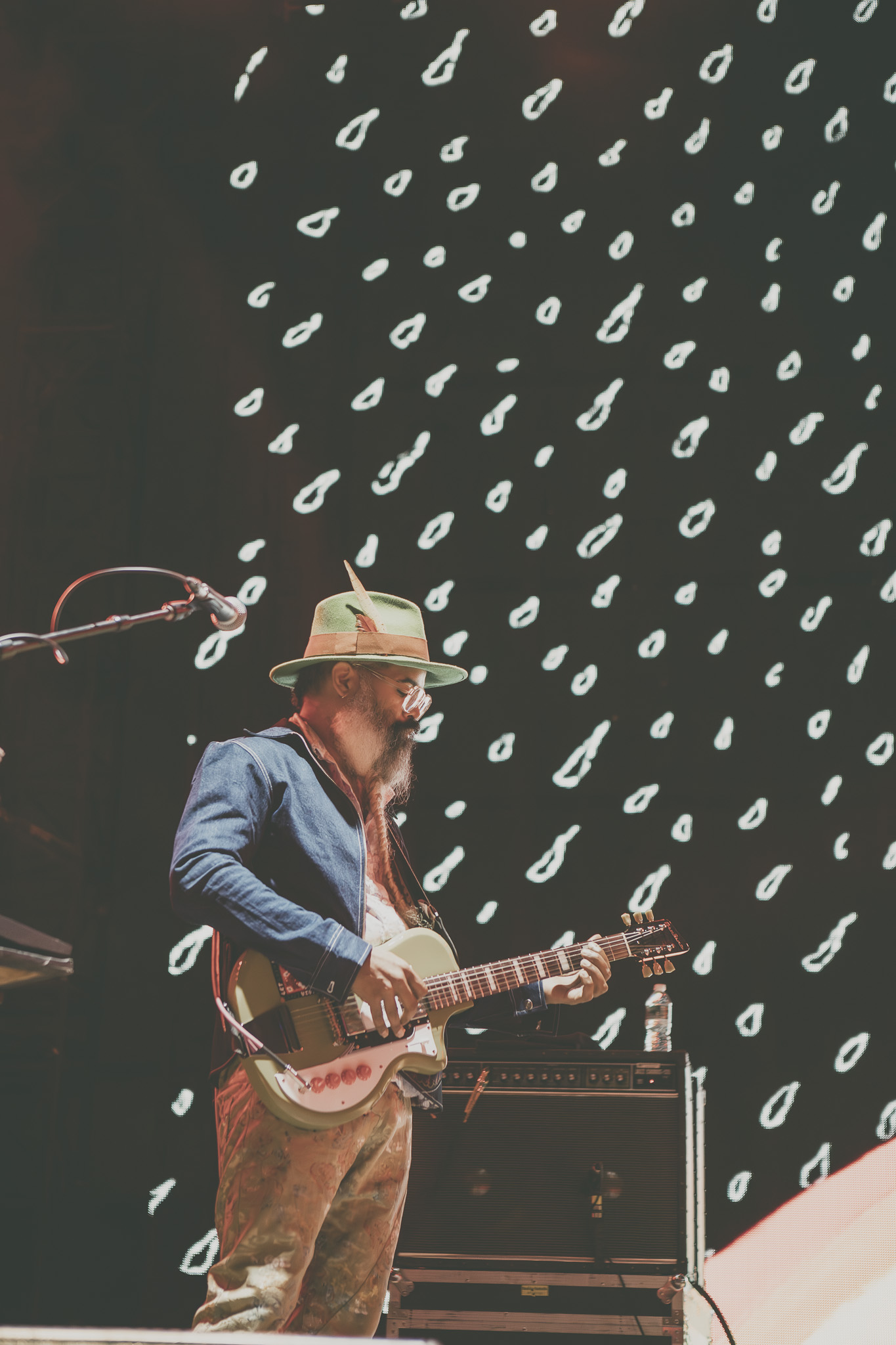
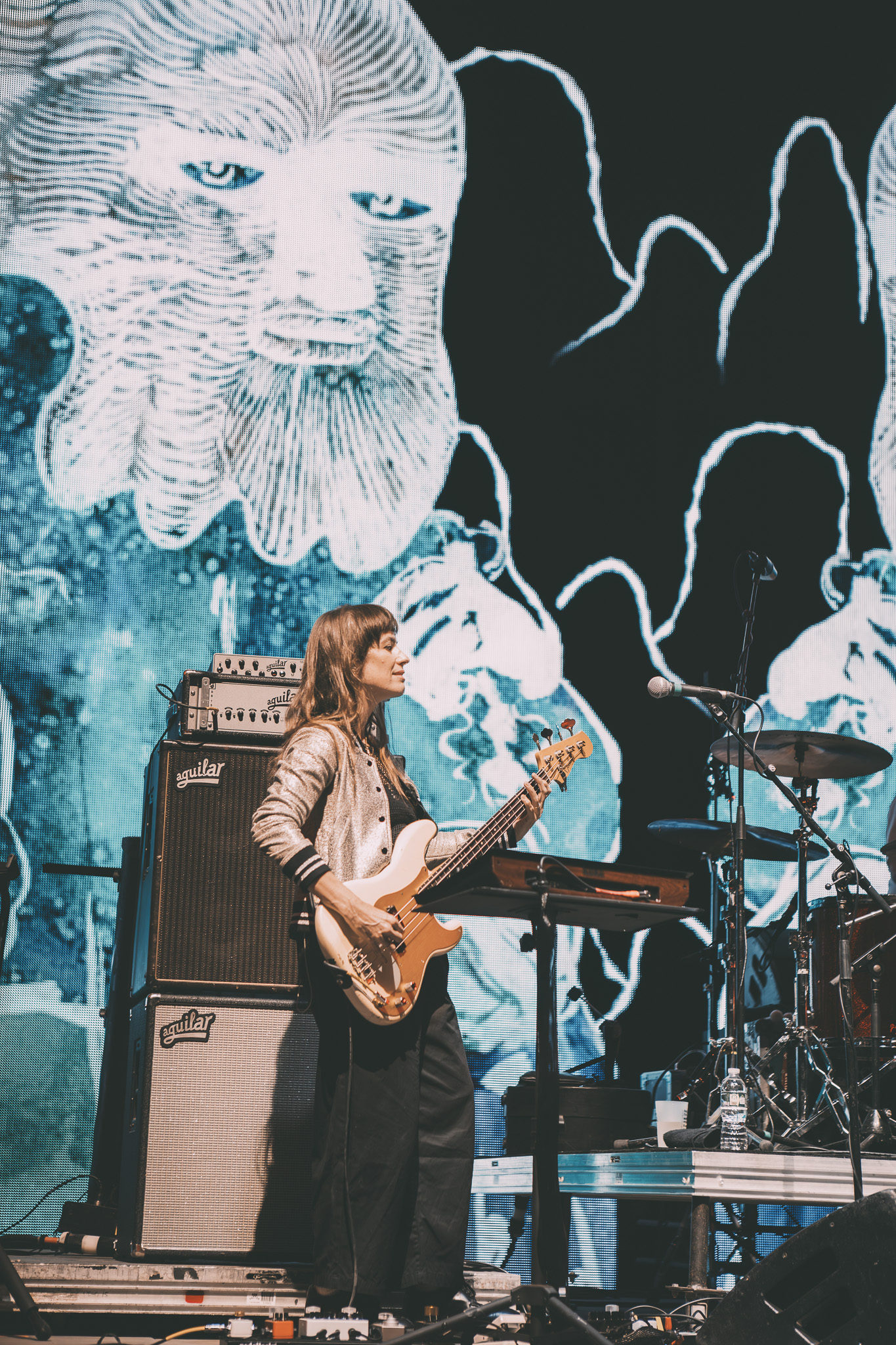
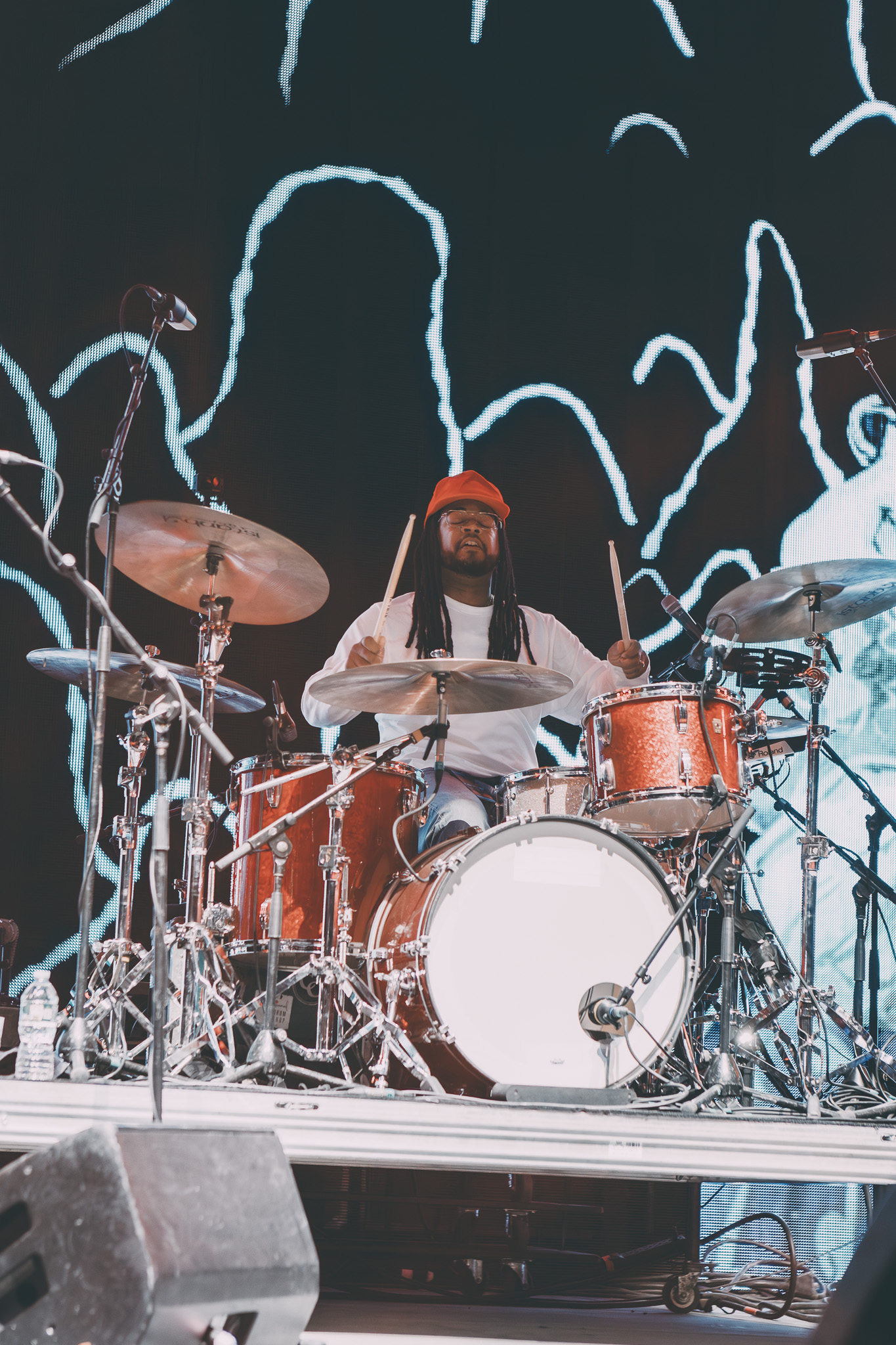
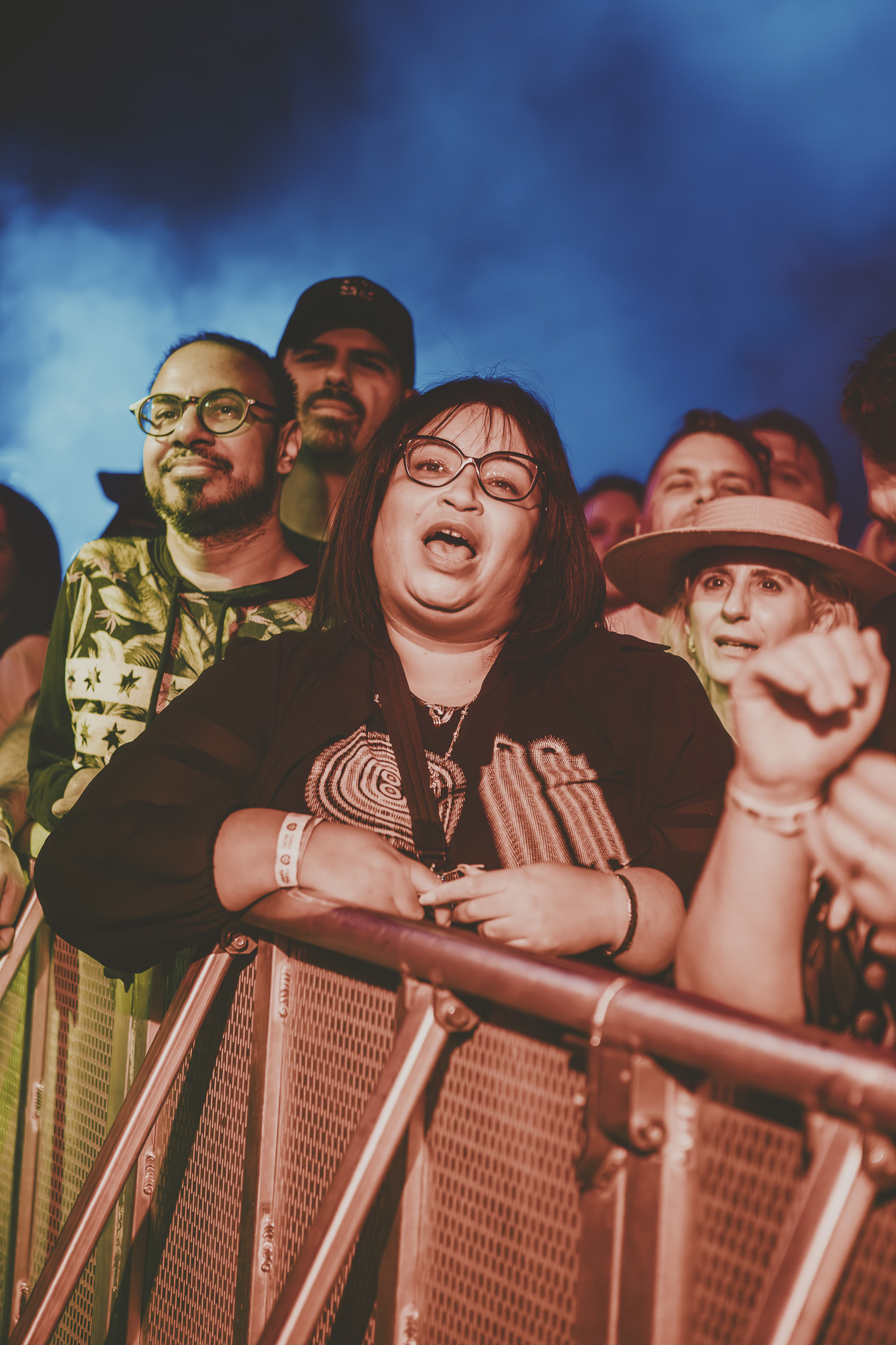
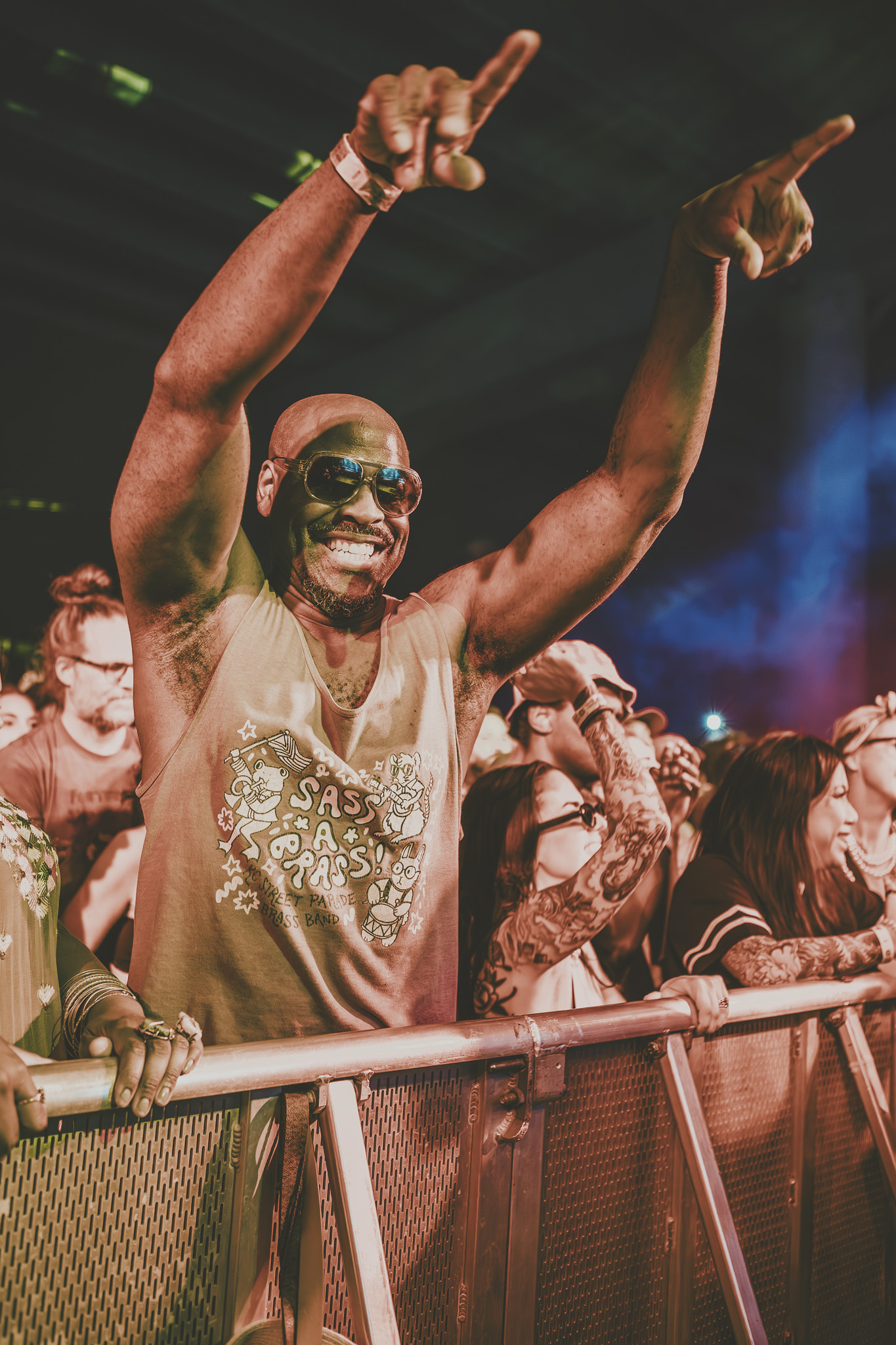
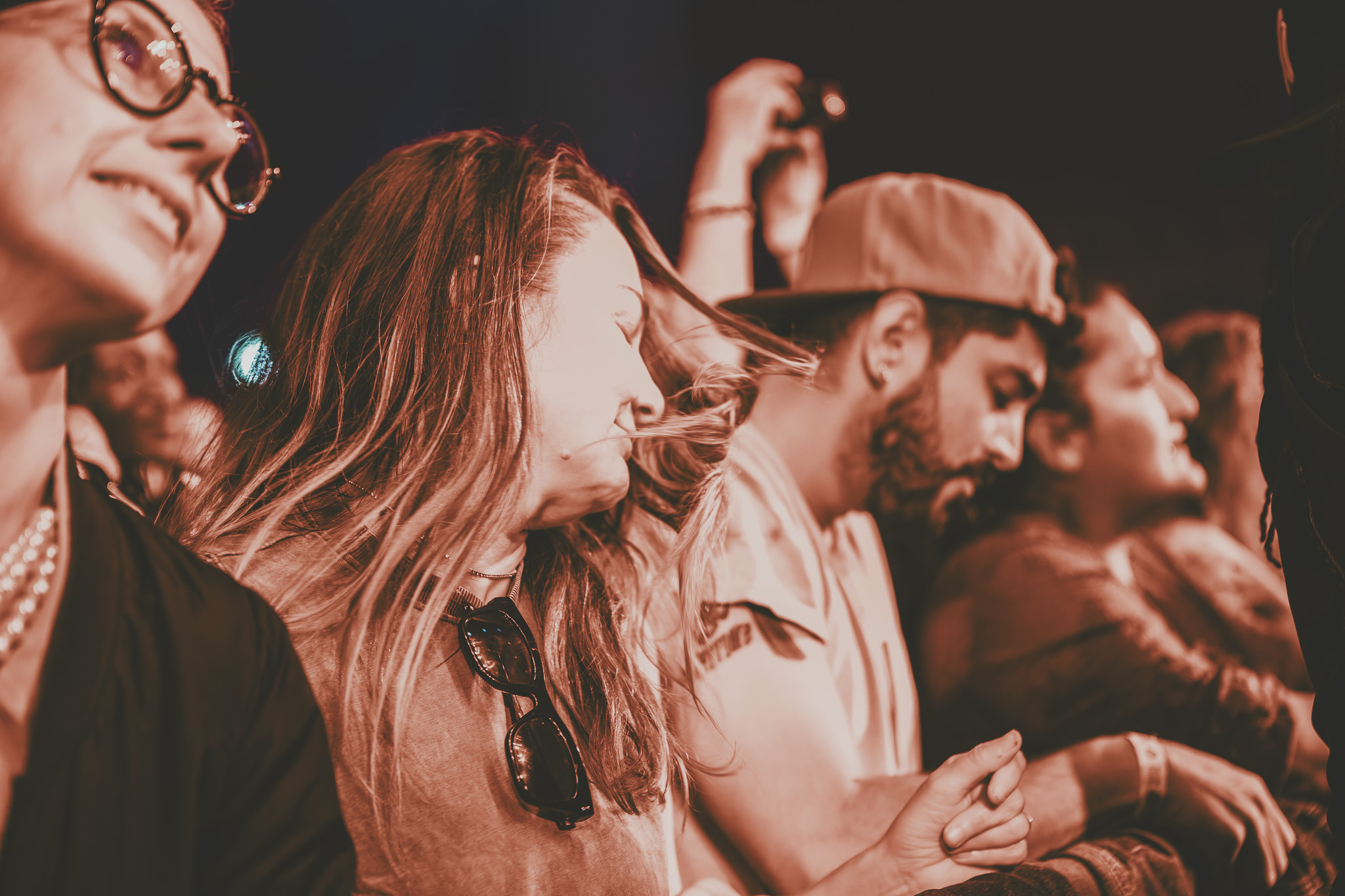
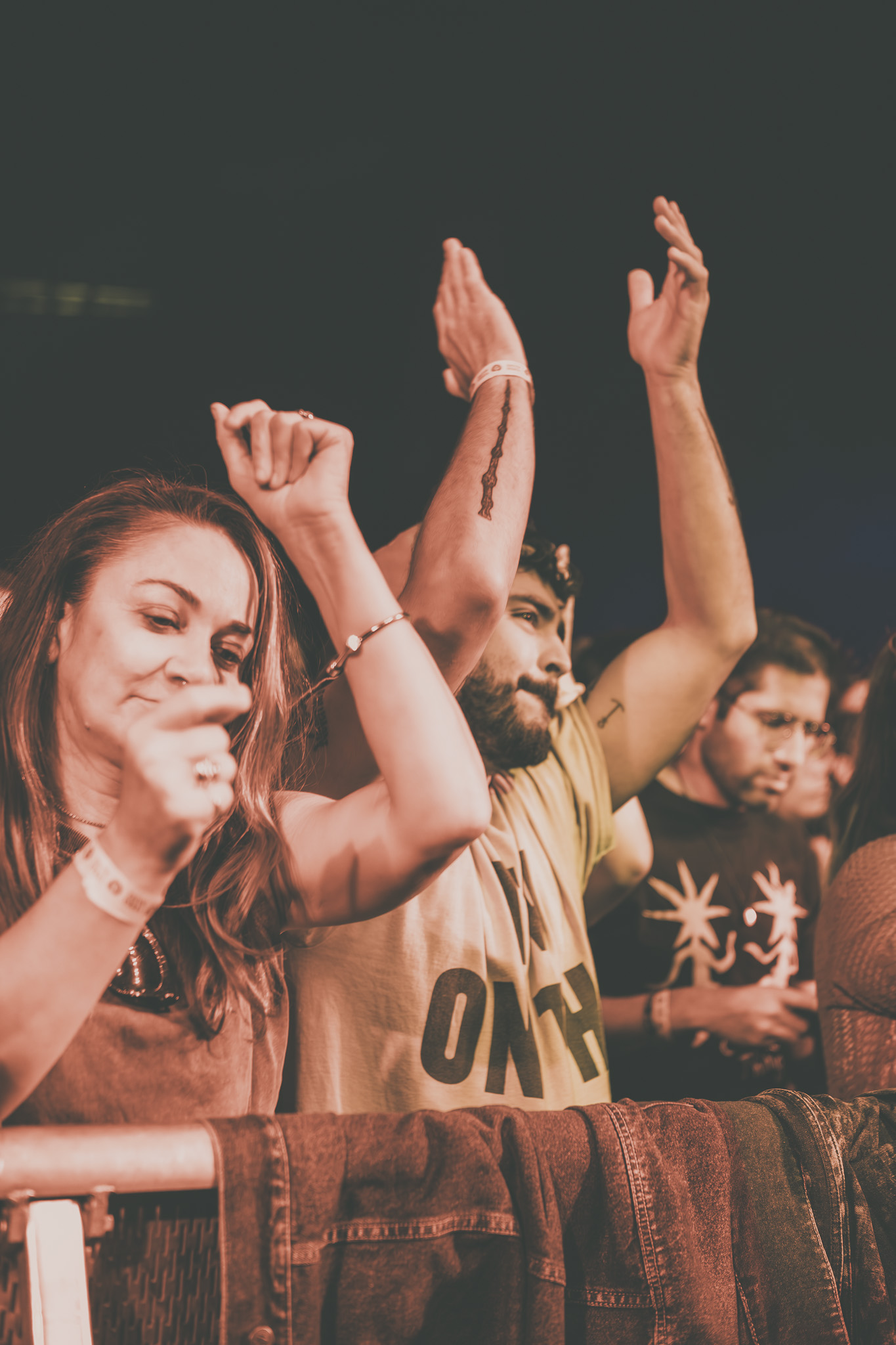
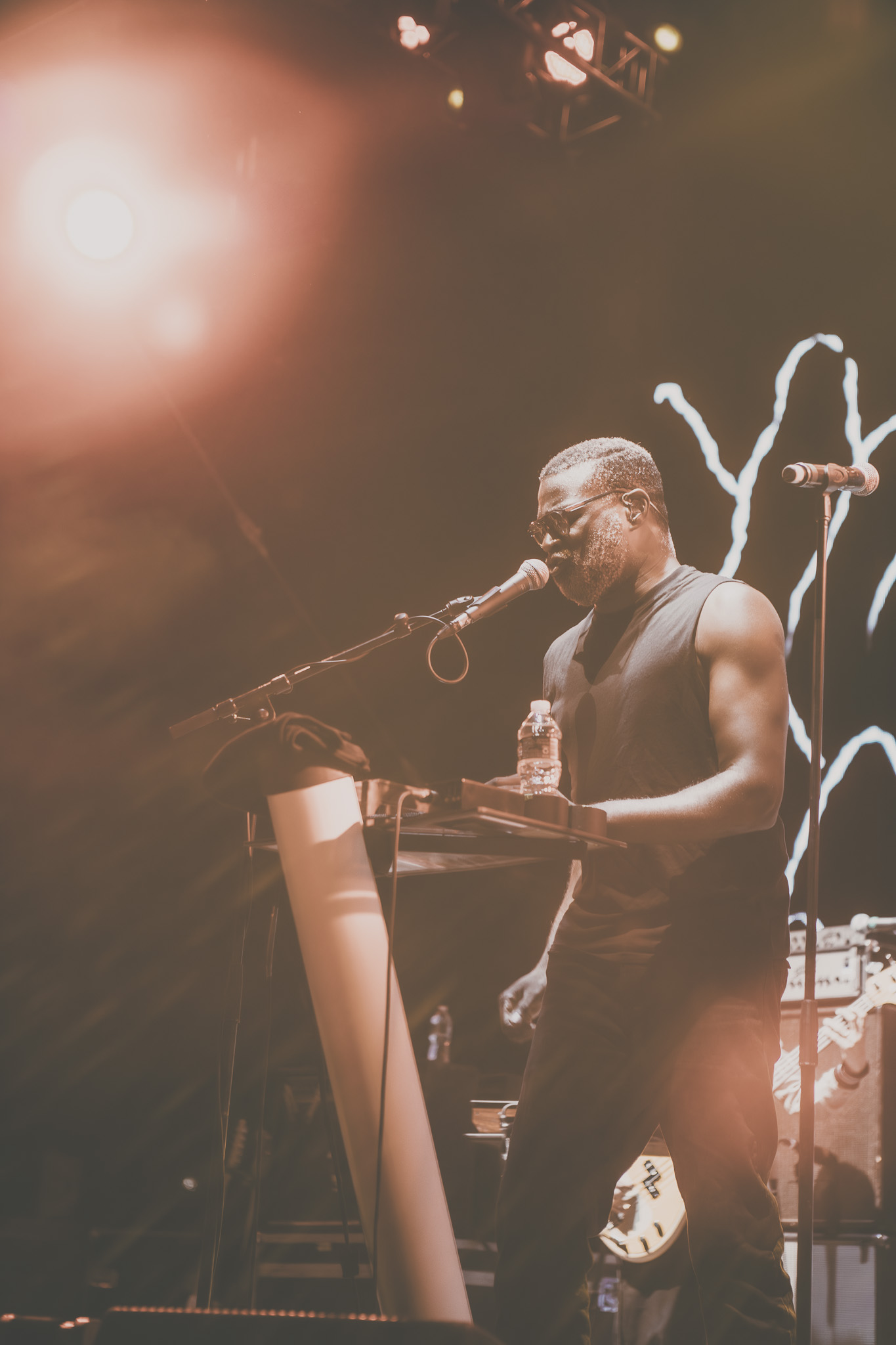
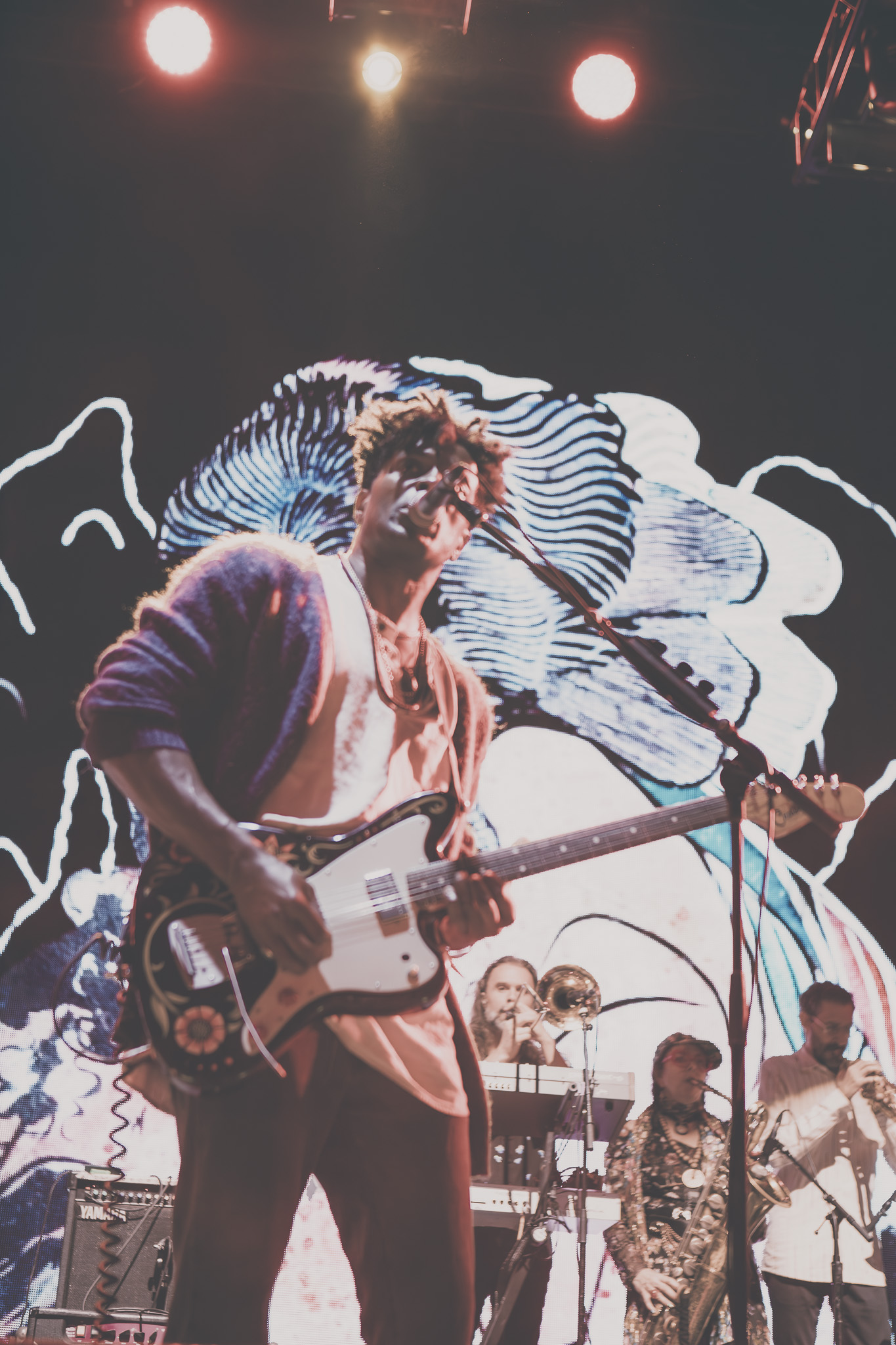
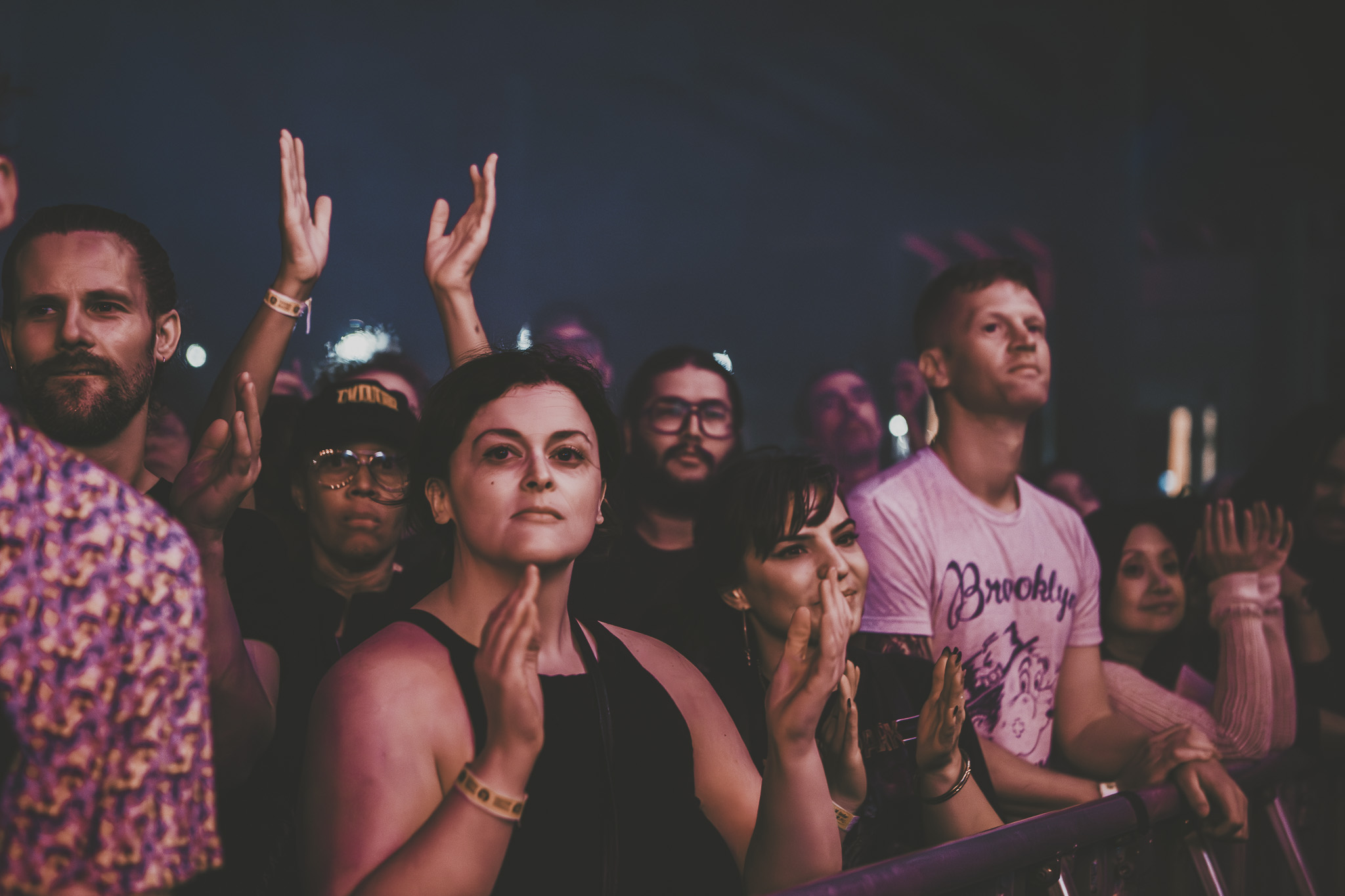
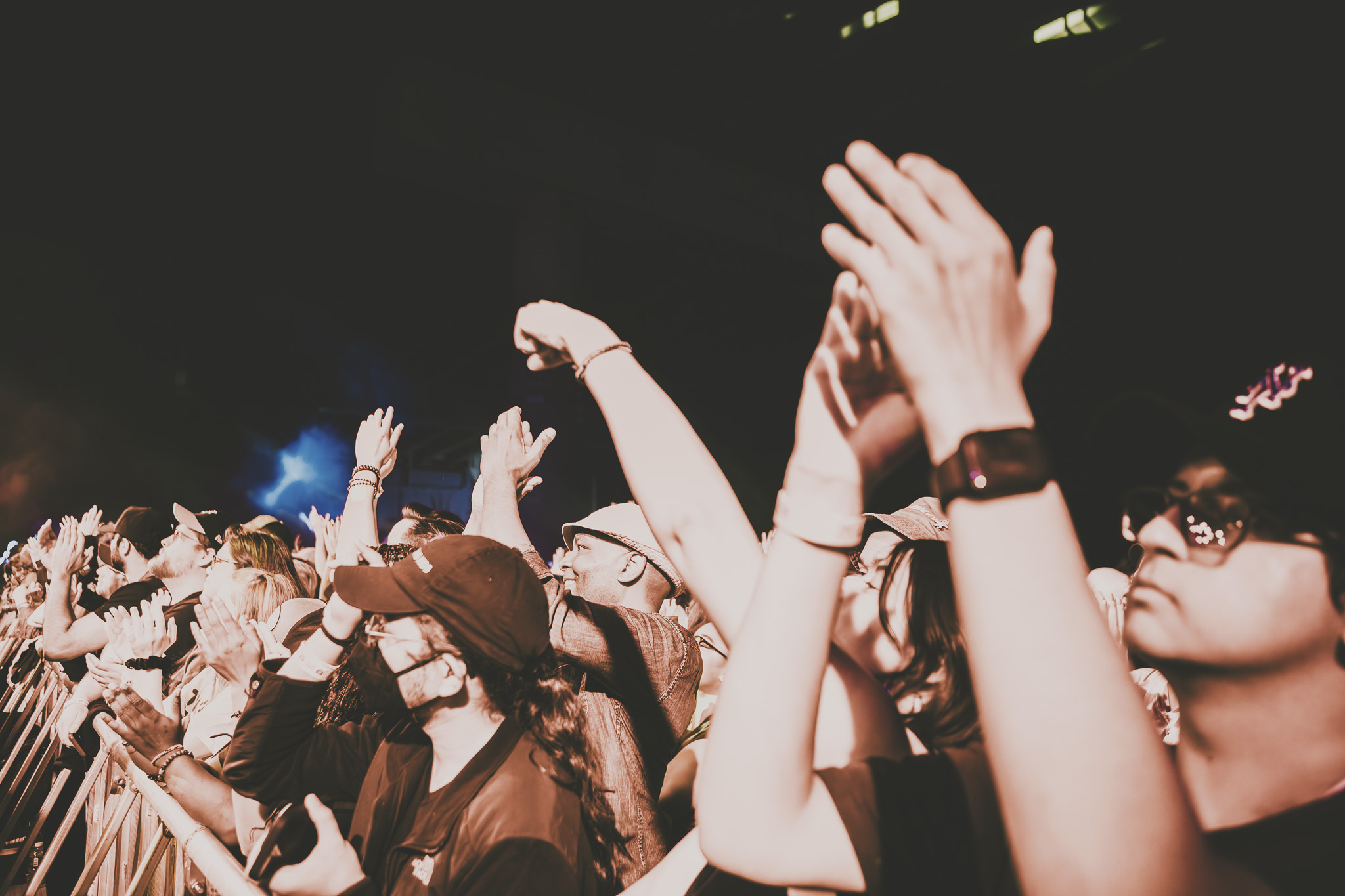
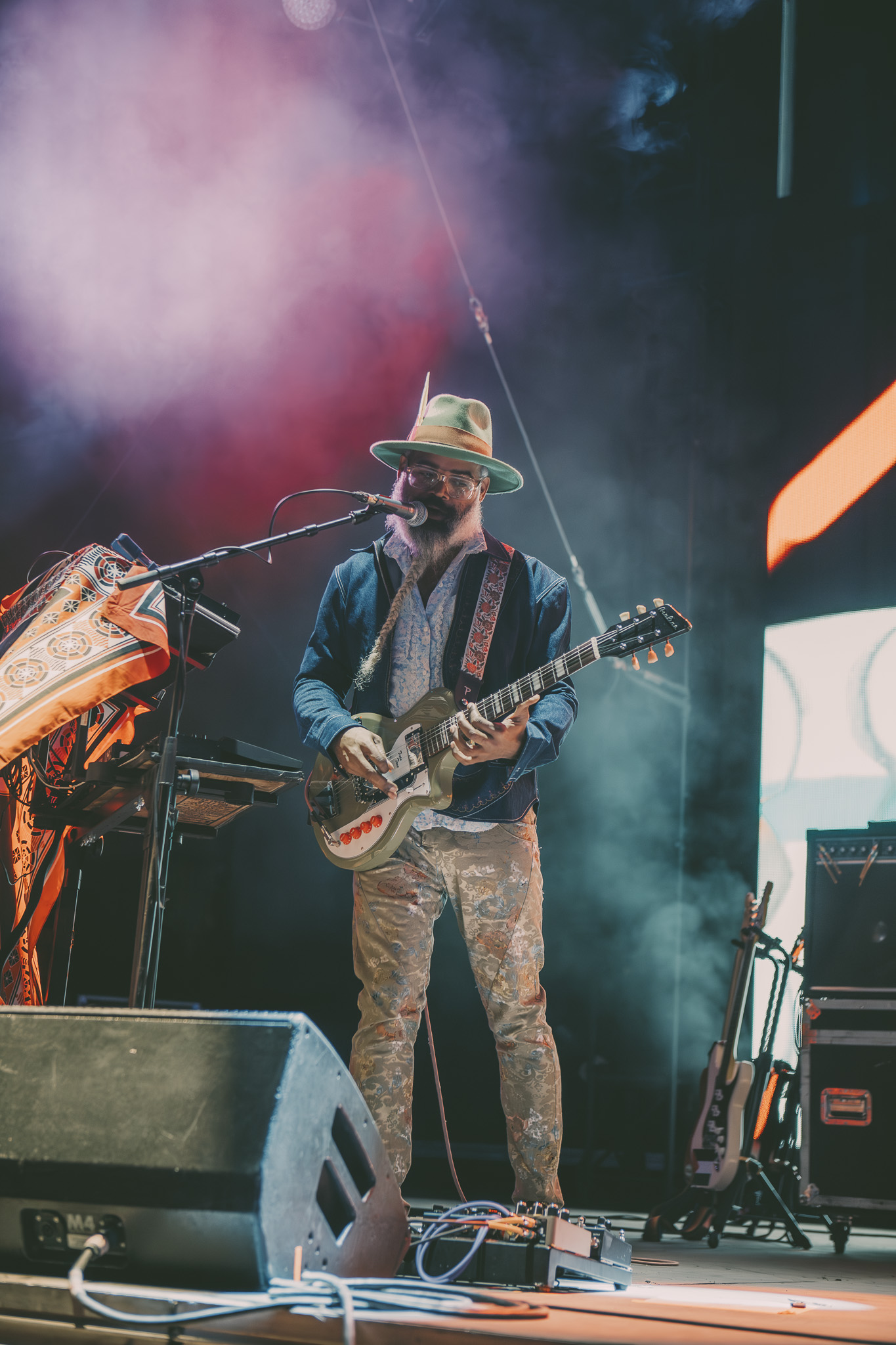
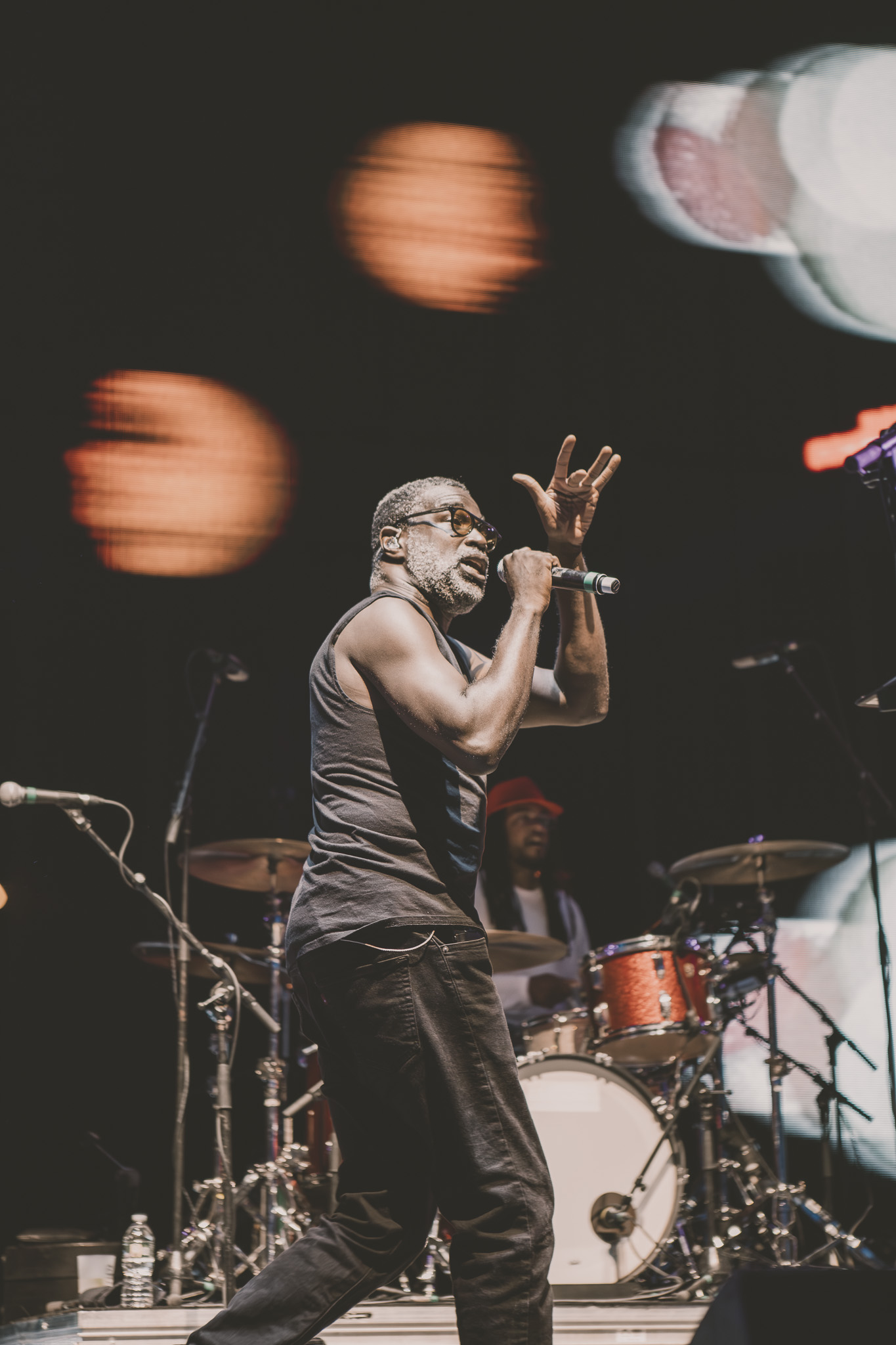
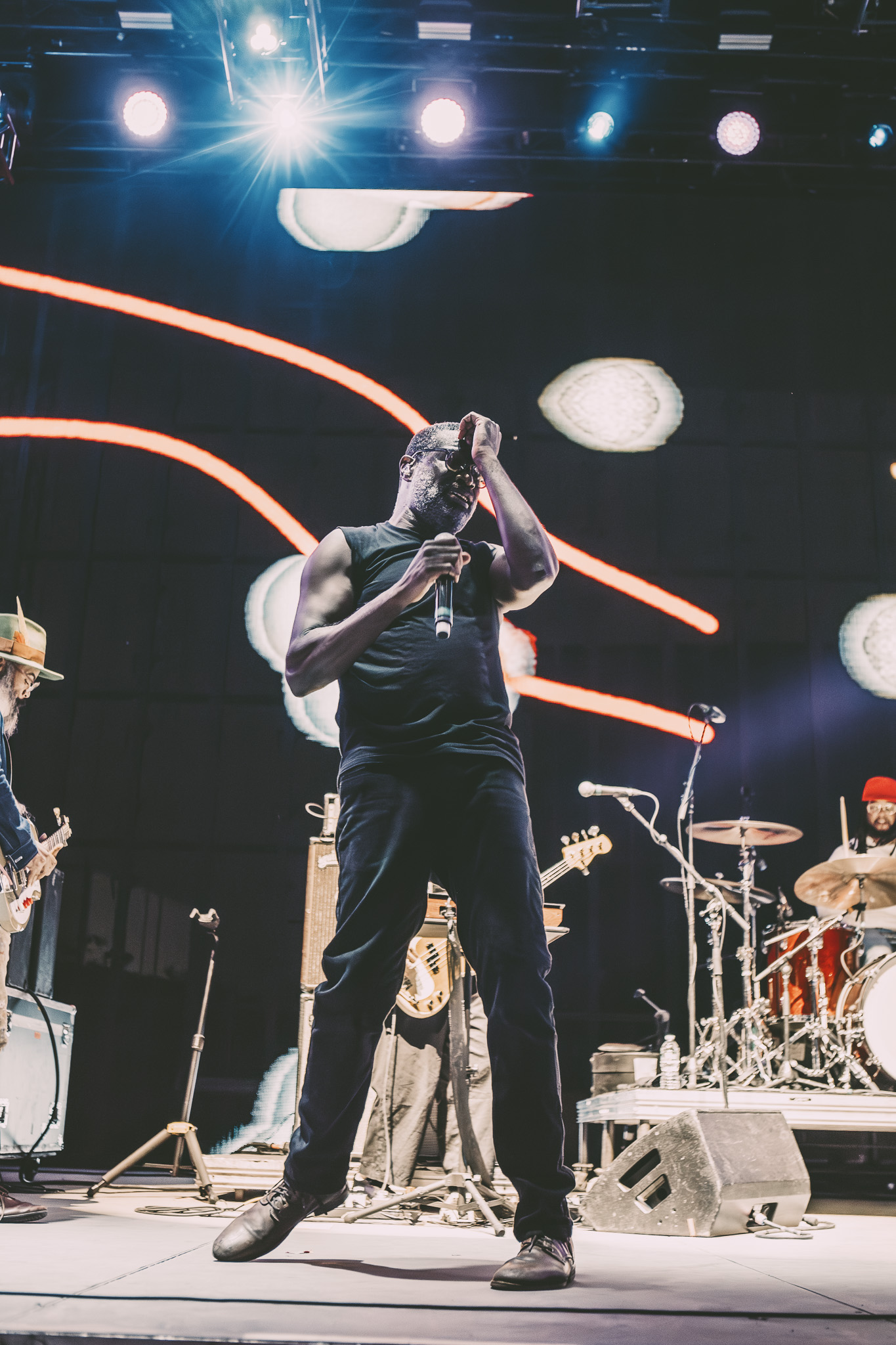
And finally, the homecoming: TV On The Radio. Brooklyn was fascinated, enthralled. They commanded with a 17-song sermon that refused to coast. Visuals that felt immersive, hand-drawn, rain you could almost touch; brass that fattened the air until the bridge itself seemed to hum back. What floored me most was the absence of phones: hands up, bodies swaying, attention unbroken. “Lazerray” was my visual favorite – sketchbook come alive, a storm you could breathe – while “DLZ” clearly belonged to the crowd. The encore was a reminder and a gift – “Killer Crane,” “Trouble,” “Staring at the Sun” – the door you first walked through held wide open again.
We spilled out into the night stitched together by what we’d shared – lighter, somehow, as if the music had craved new space in us. TV On The Radio is on the road now, North America with a few select Australian dates, and if you’re aching for something organic and unguarded, go. Under The K Bridge taught me this: you don’t need to recognize a lineup to recognize your people when the first note hits. Sometimes you just need to stand under a river of concrete and let the sound teach you a new way to listen.
SPELLLING | WEBSITE | INSTAGRAM | FACEBOOK | YOUTUBE
MOOR MOTHER | WEBSITE | INSTAGRAM | FACEBOOK | YOUTUBE


SUDAN ARCHIVES | WEBSITE | INSTAGRAM | FACEBOOK | YOUTUBE


FLYING LOTUS | WEBSITE | INSTAGRAM | FACEBOOK | YOUTUBE


TV ON THE RADIO | WEBSITE | INSTAGRAM | FACEBOOK | YOUTUBE
Leave a Reply