

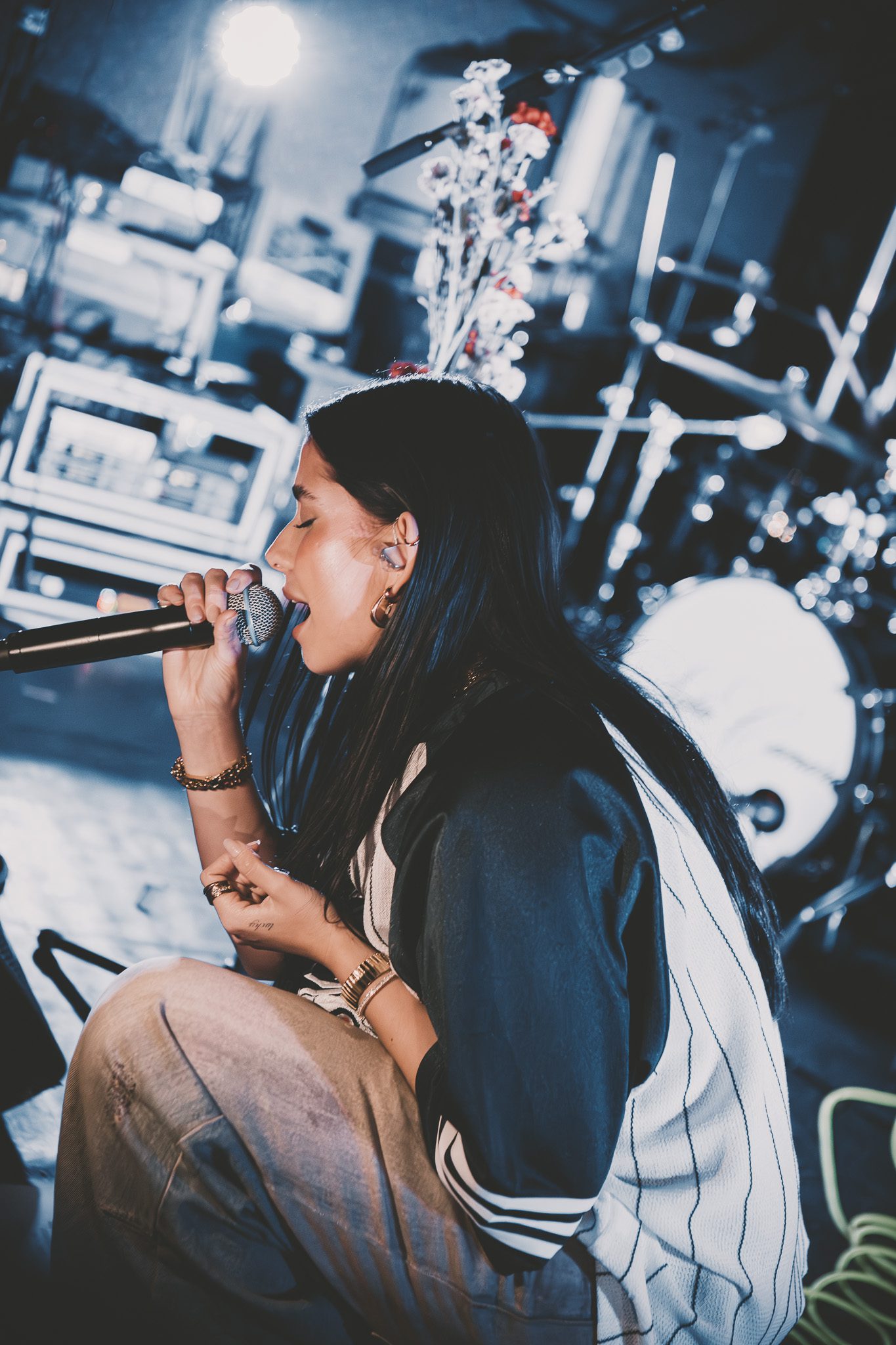
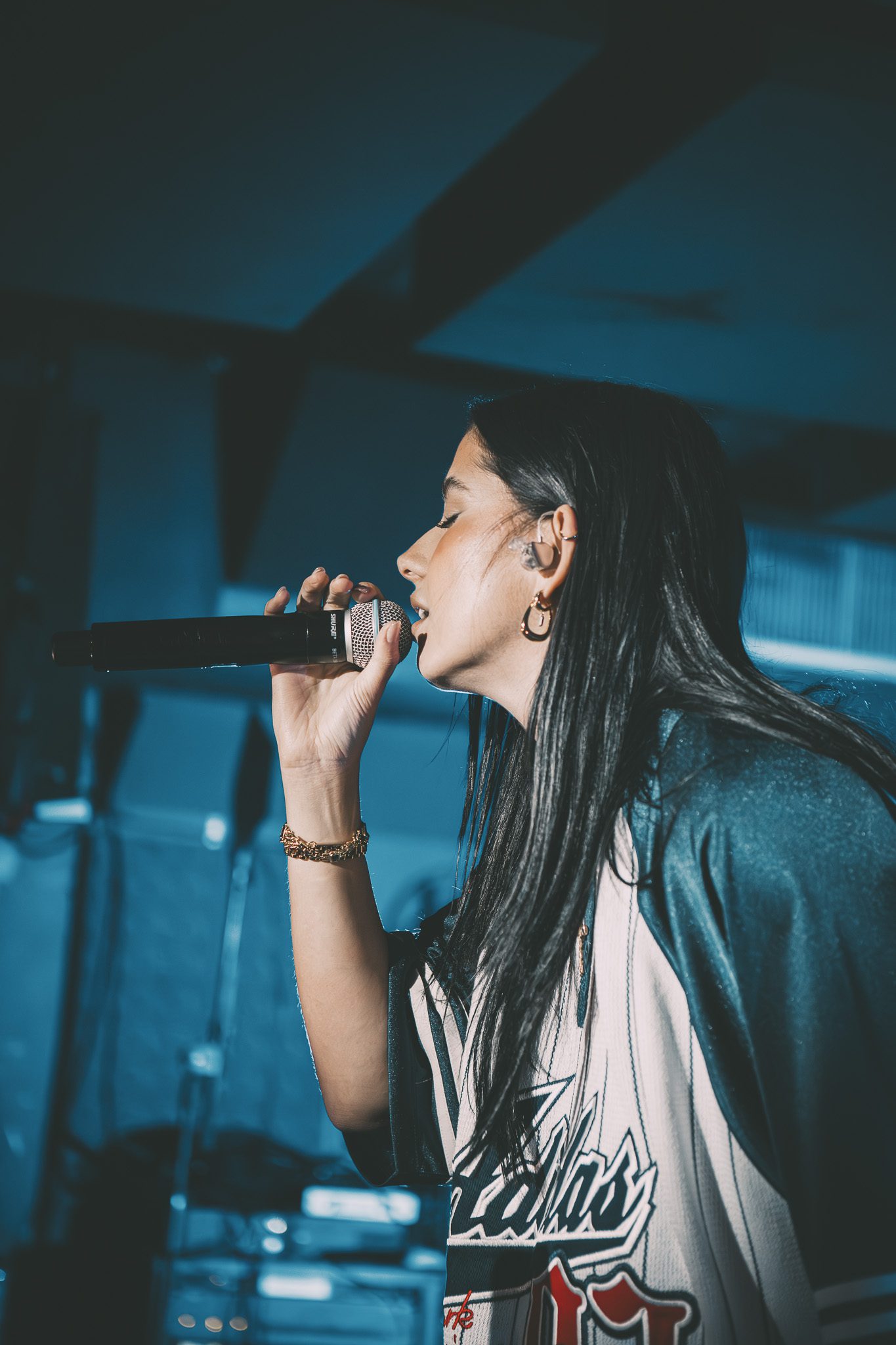
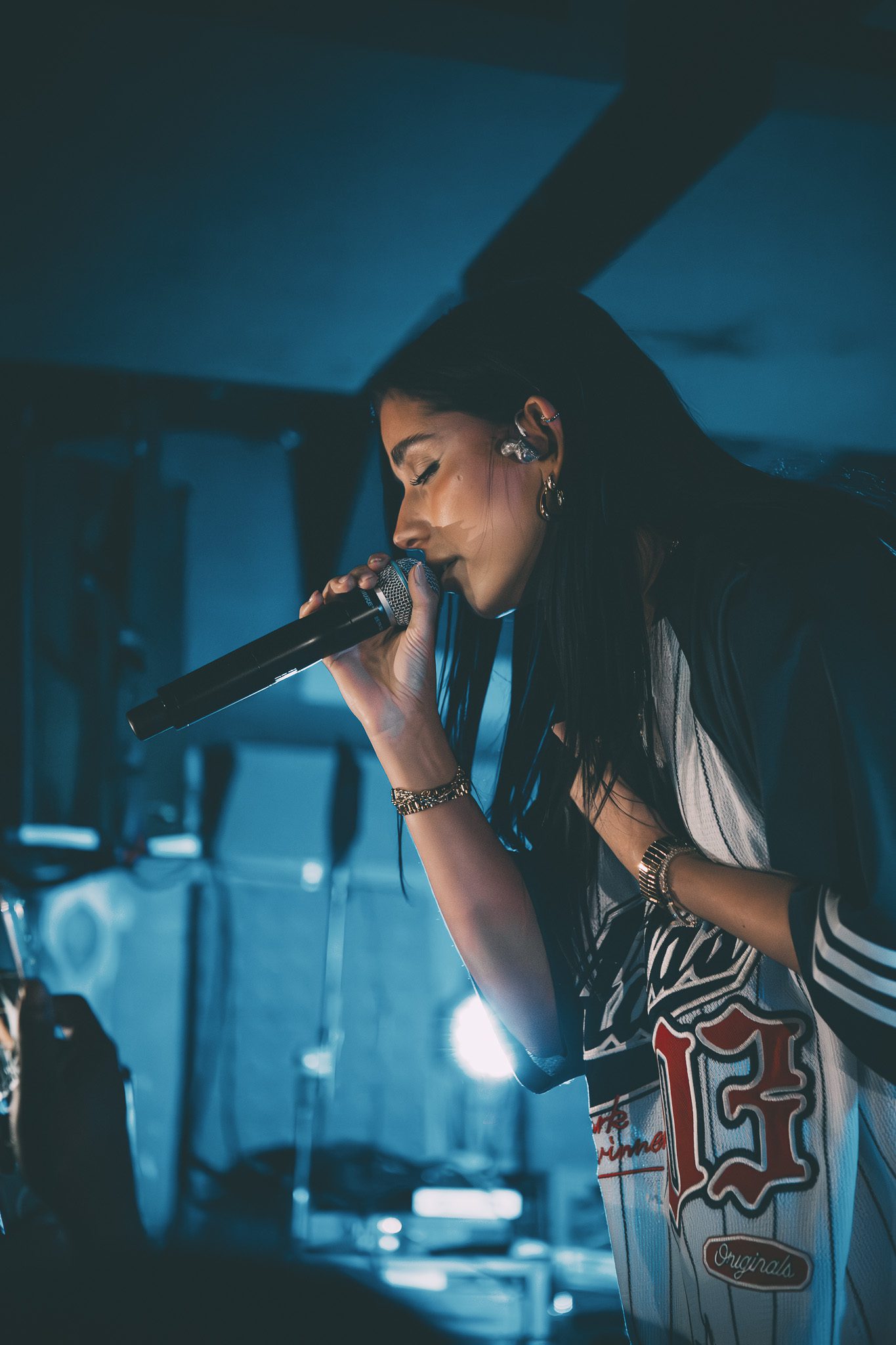
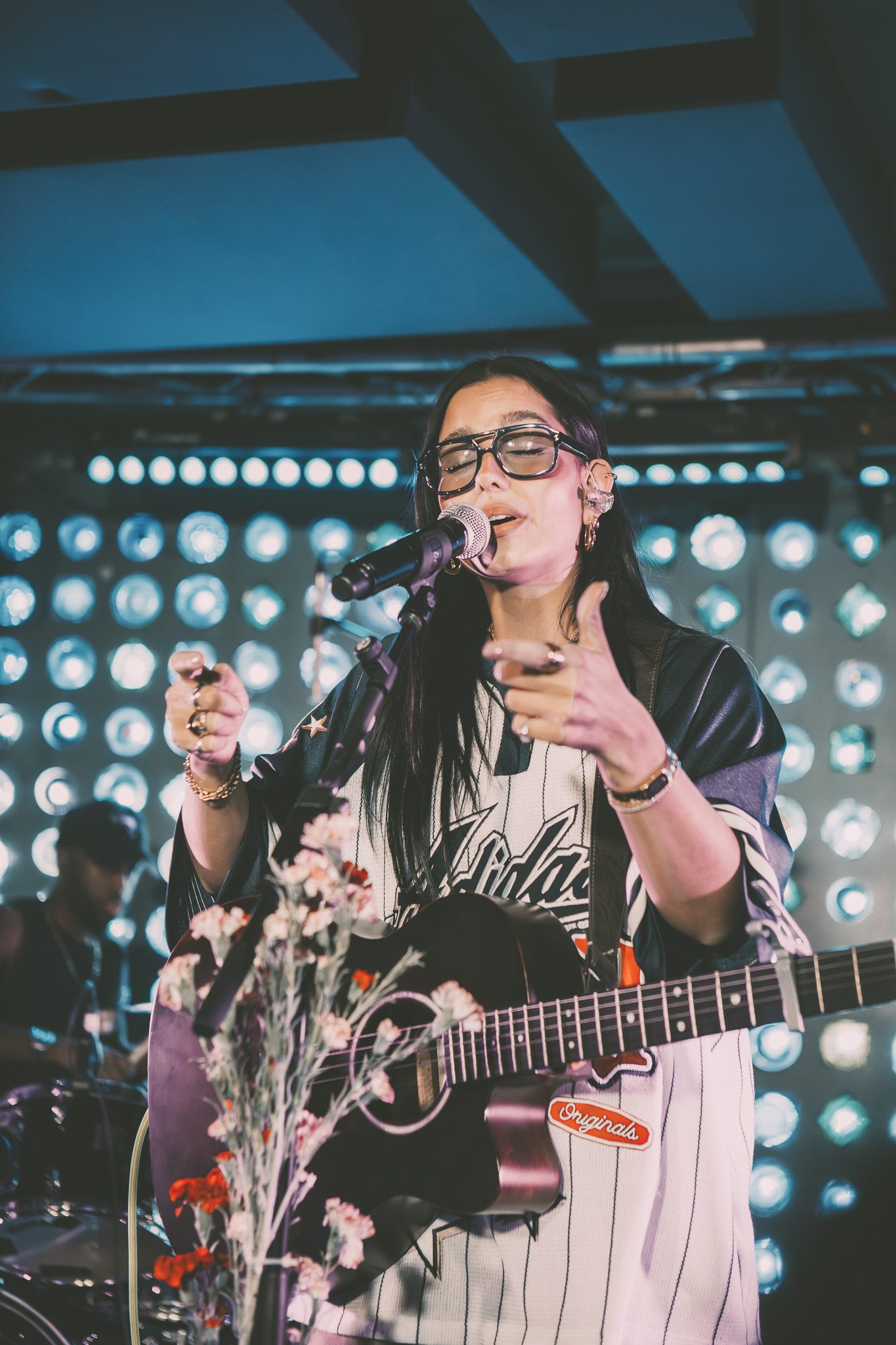
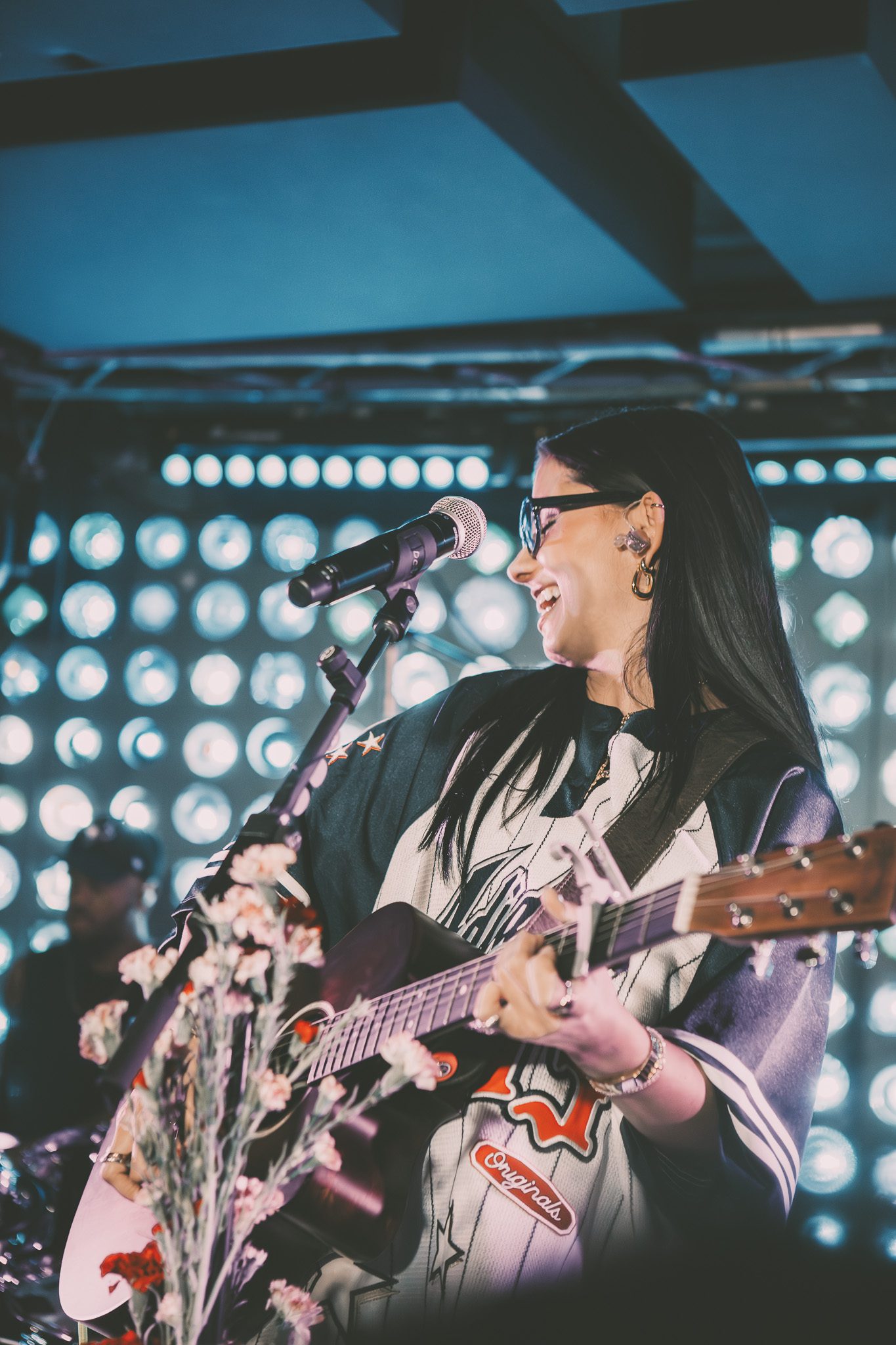
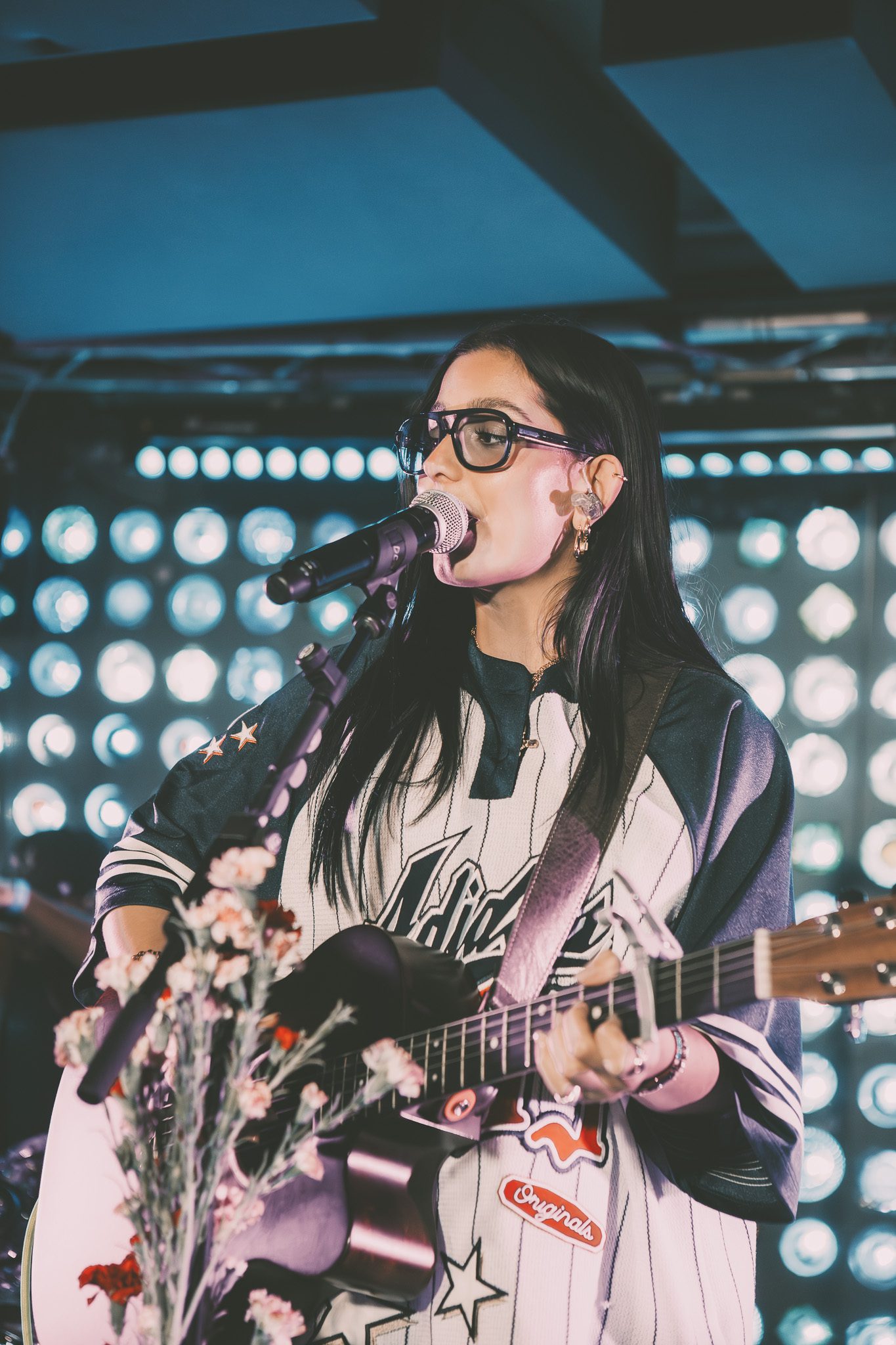
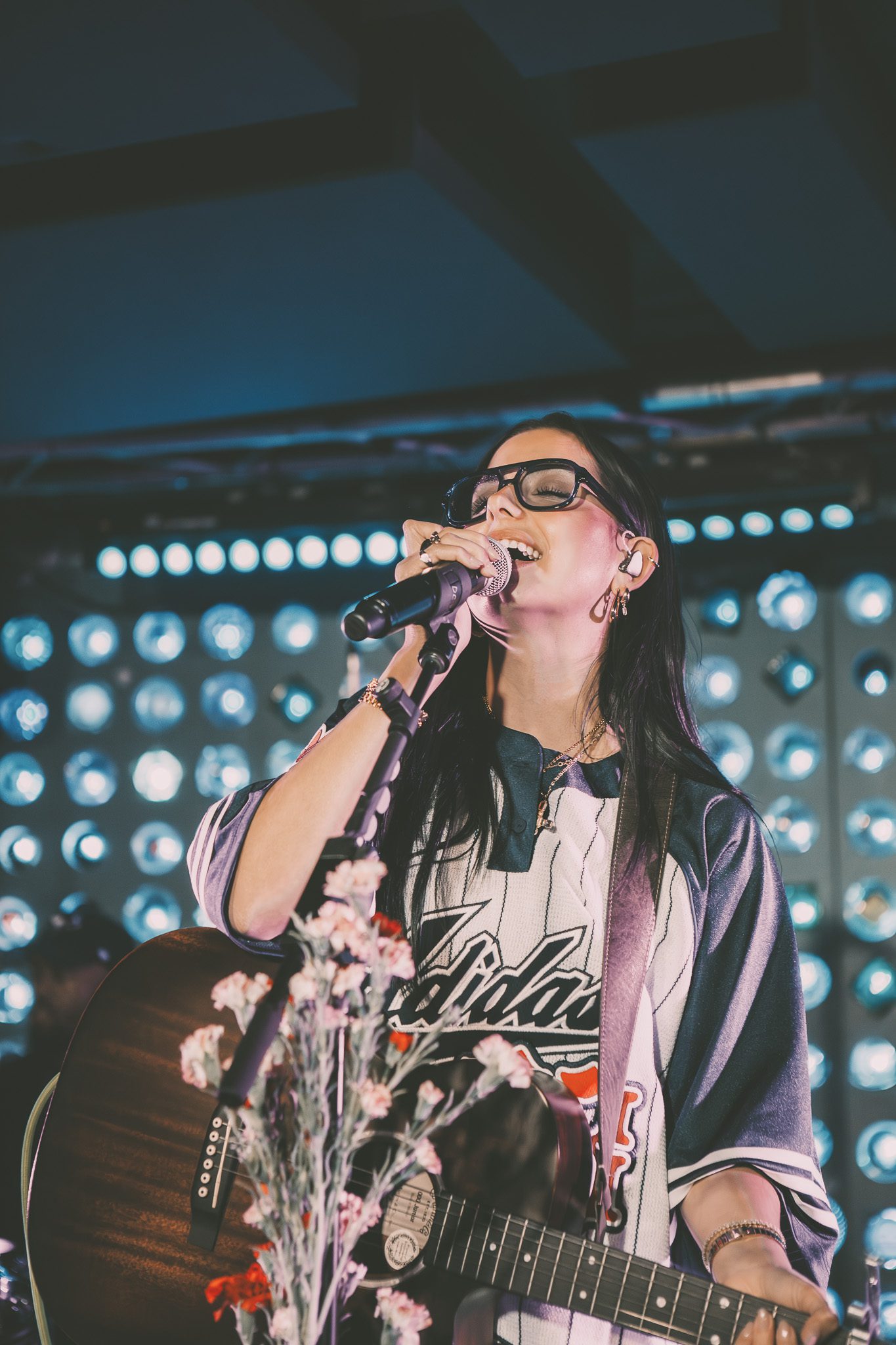
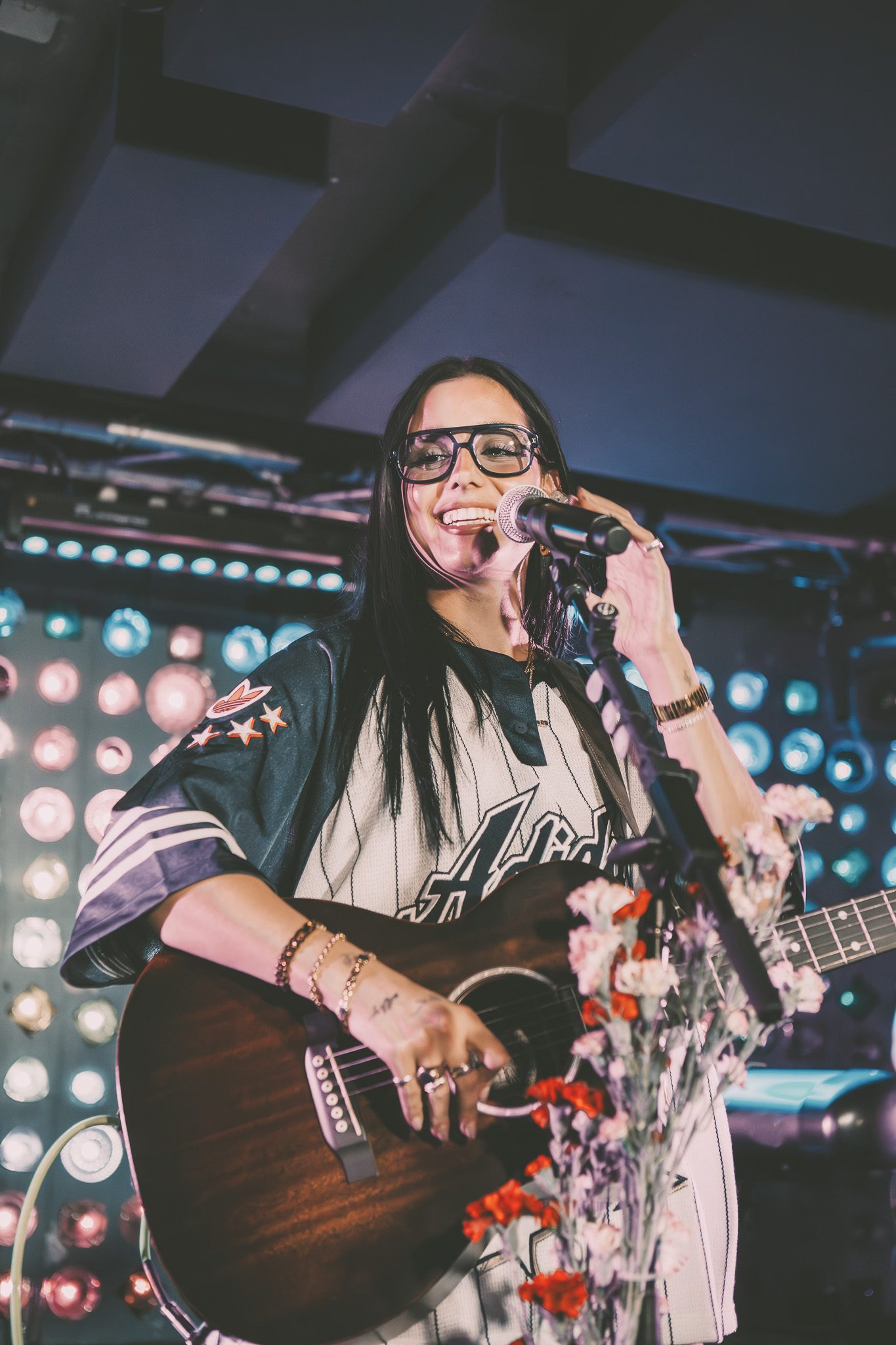
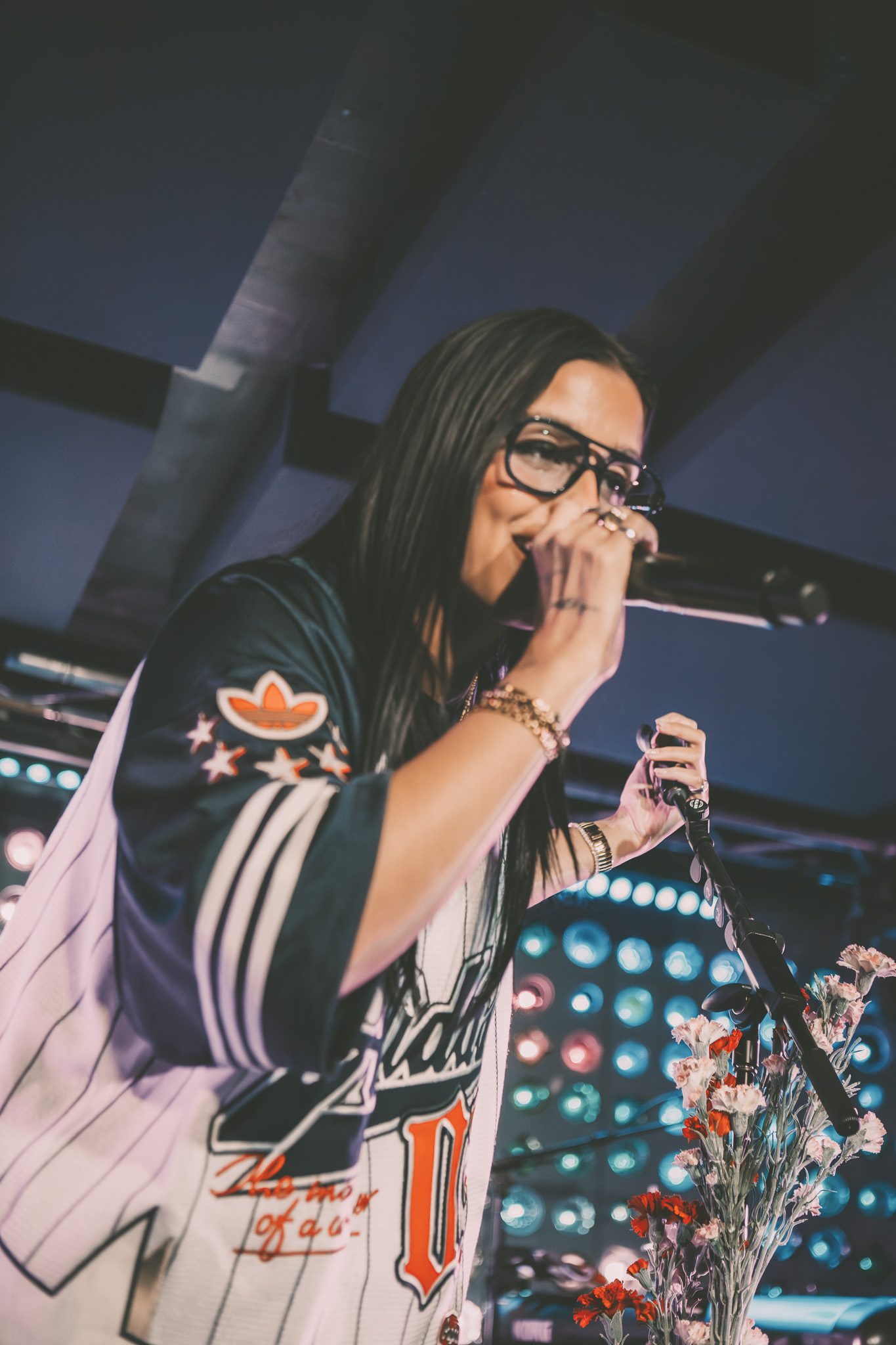
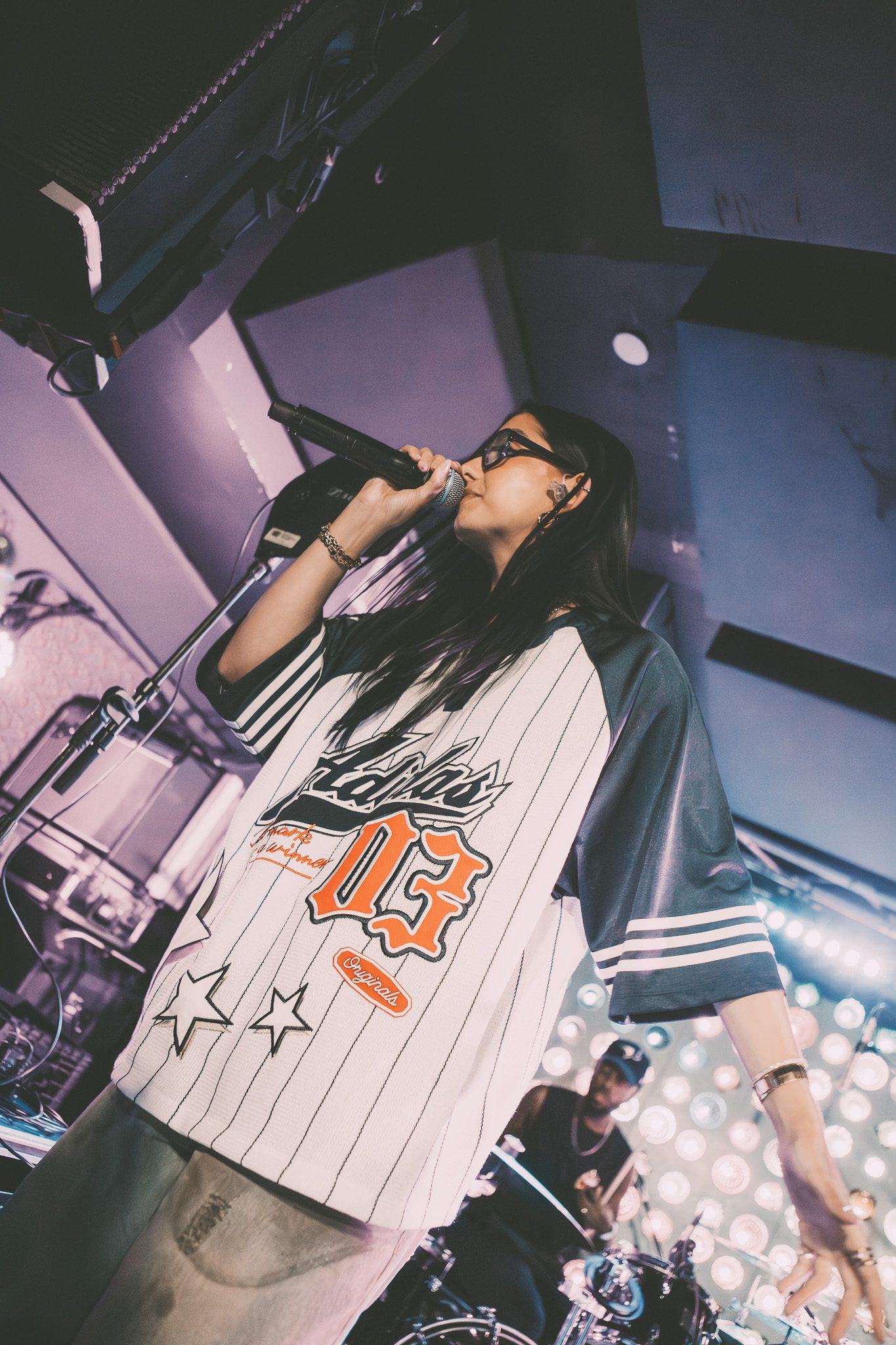
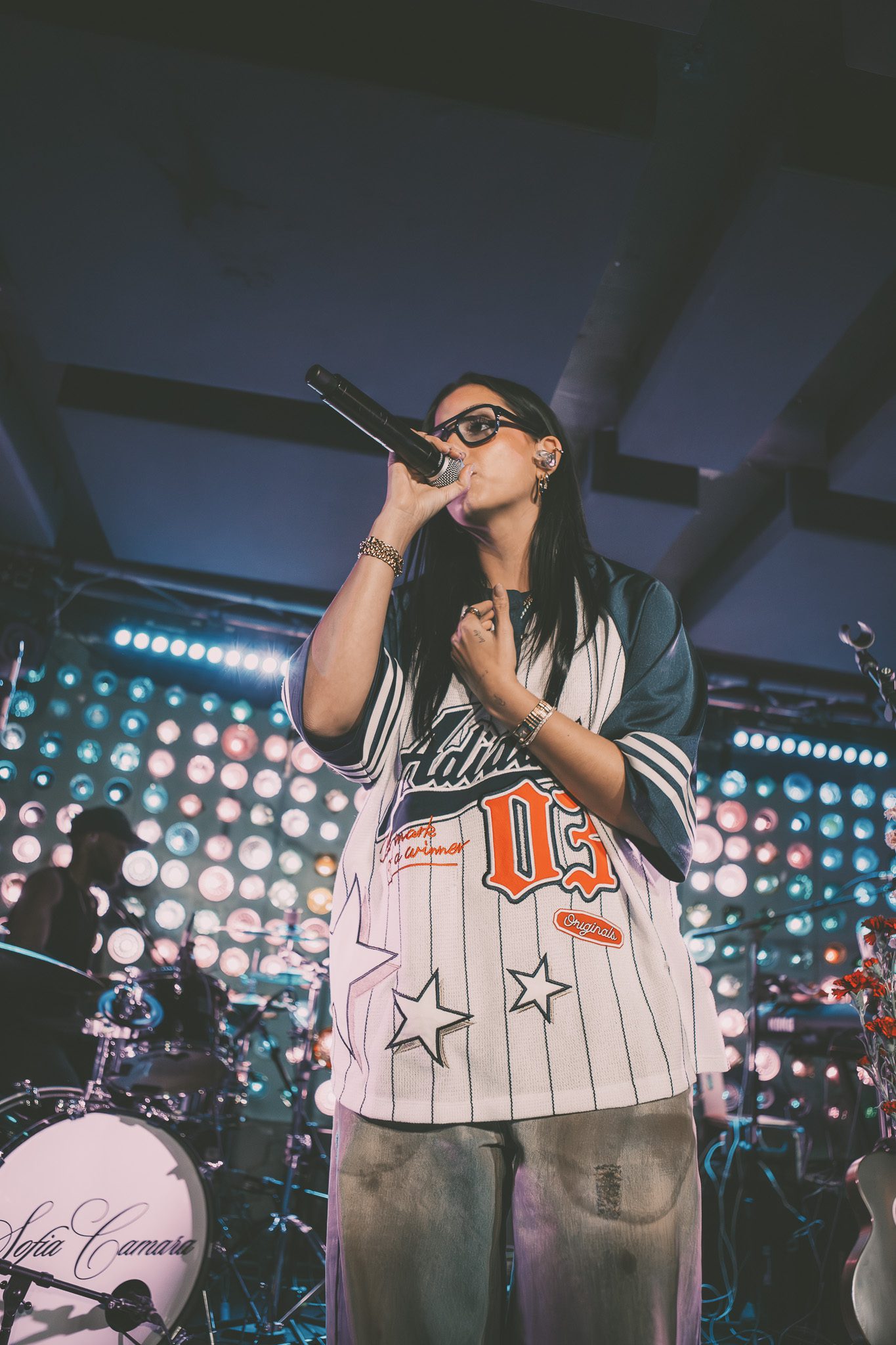
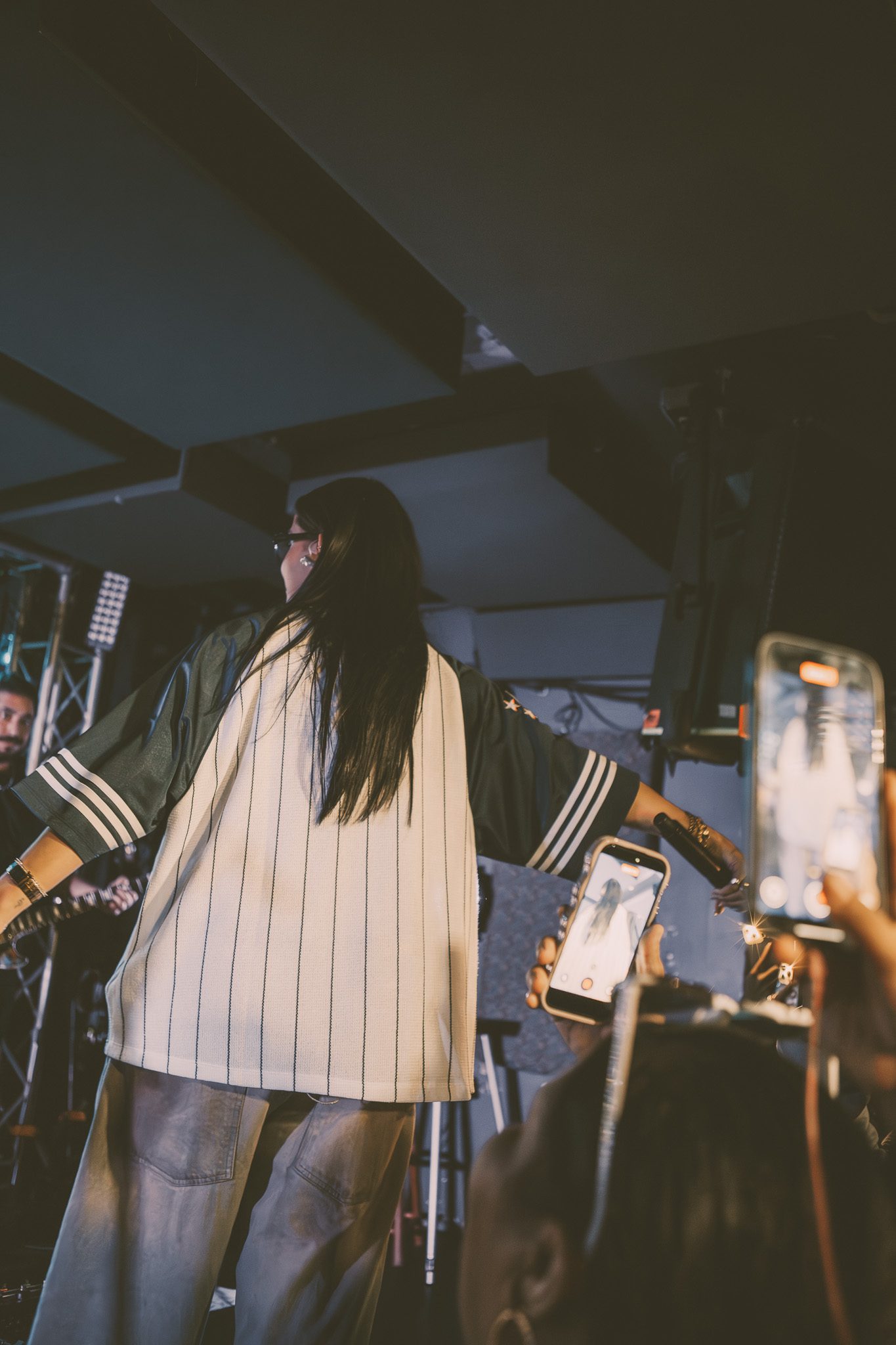
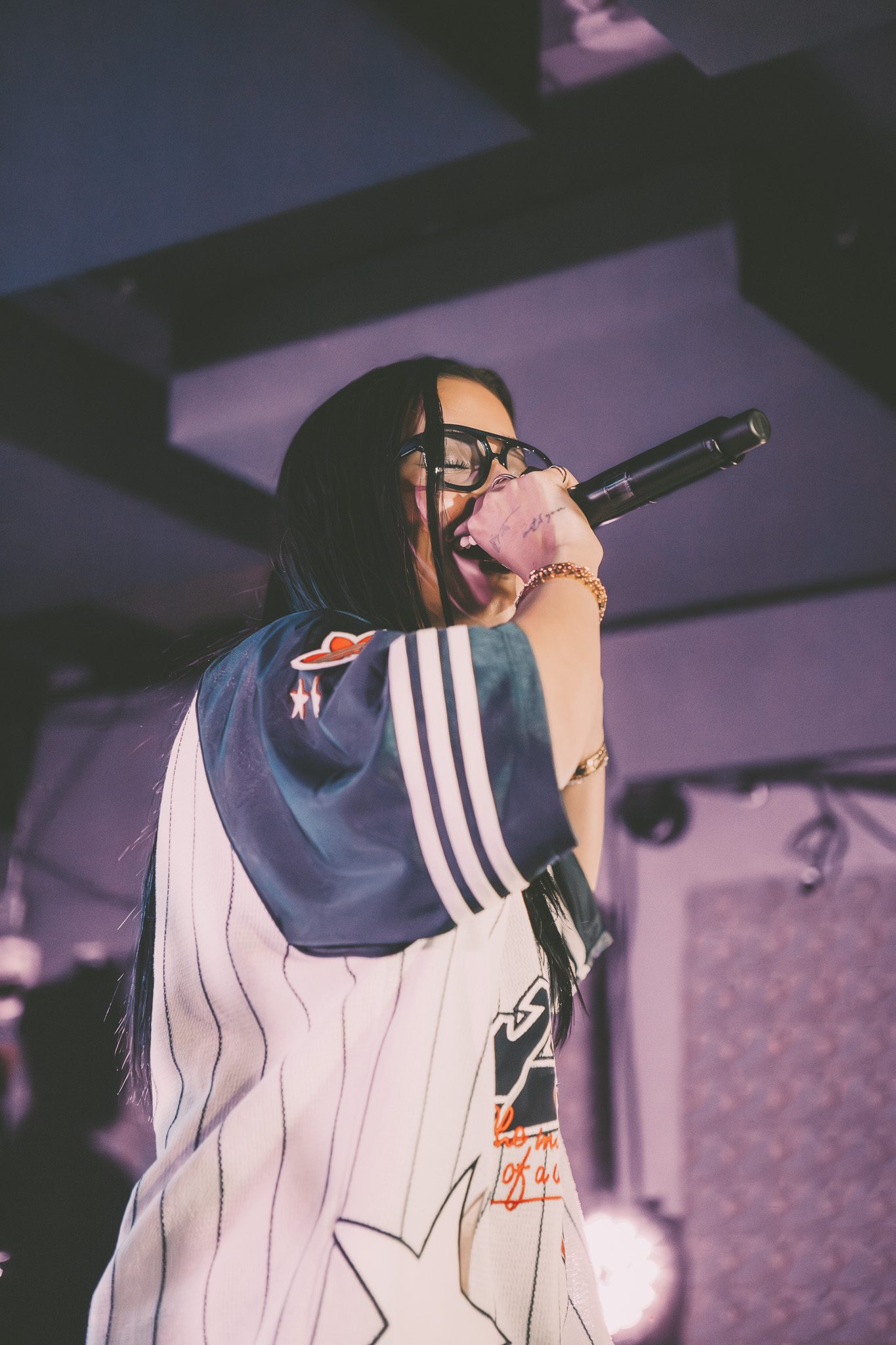
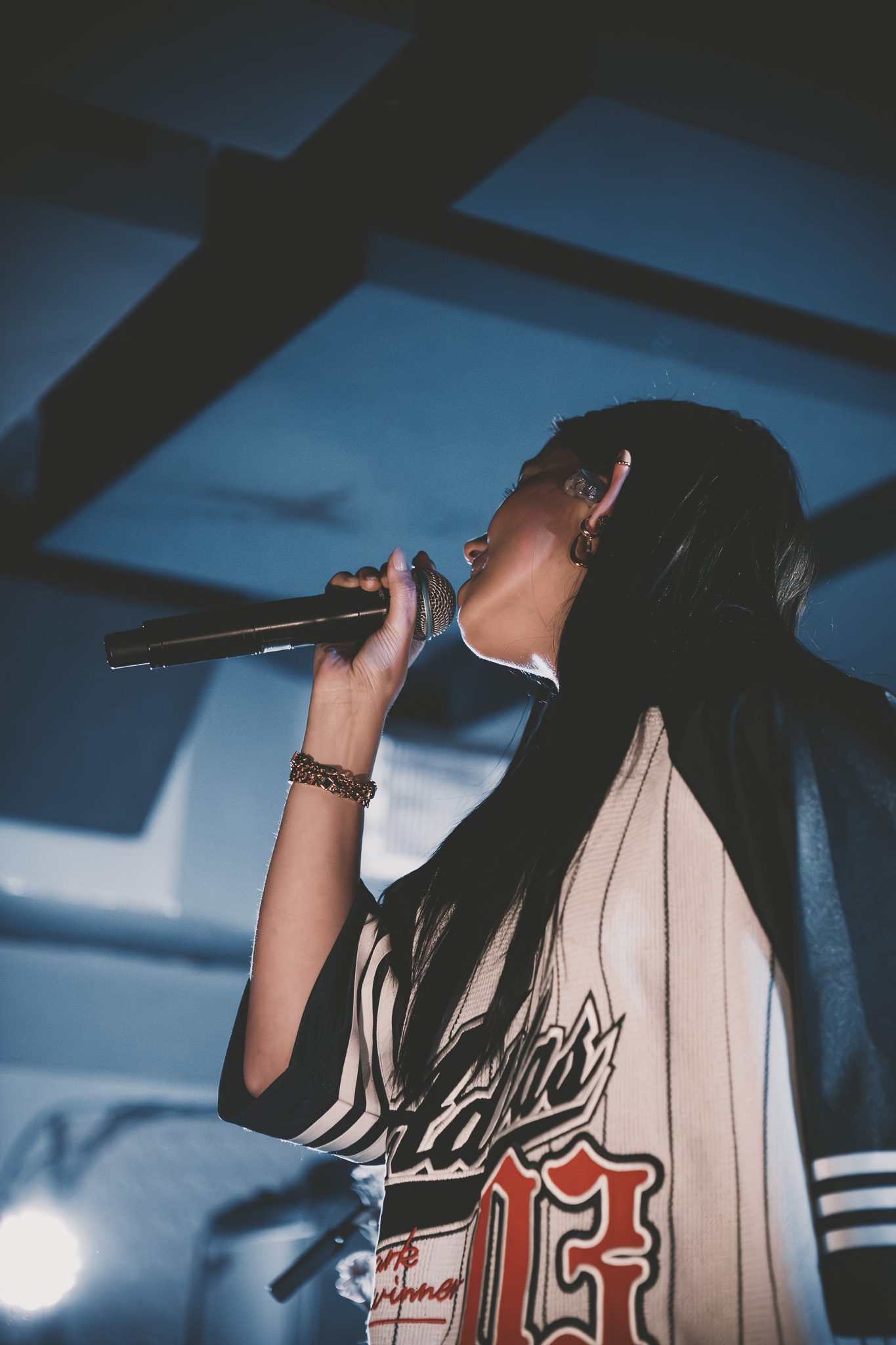
This past Tuesday, Sofia Camara turned heartbreak and lost love into a kind of quiet transformation at Brooklyn’s Baby’s All Right. The room was small, but it hummed with warmth – a closeness that wrapped around her like an embrace. Fans pressed against the stage, voices colliding with her choruses until the space felt less like a venue and more like a confessional booth lit by disco ball reflections and neon. It wasn’t a night of spectacle or sold-out grandeur; it was intimacy in motion, a coming-of-age scene painted in a soft glow and subtle shadow.
Her songs could easily soundtrack a teenager’s late night diary entries, that fragile hour when everything aches and glimmers at once, but the faces in the crowd proved her reach runs wider. At the front stood young girls, eyes wide and glossy as they mouthed each lyric like a promise, while toward the back, adults swayed with drinks in hand, tracing their own ghosts through her melodies.
At just 23, Sofia Camara is carving her place in the pop universe with poise far beyond her years. With only her debut EP on streaming platforms, she’s already amassed over 300 million career streams, Hard To Love alone pulling more than 221 million global plays within seven months. Camara’s first spark came from her social-media covers – tender renditions of Justin Timberlake and Gracie Abrams – the kind that found their way into millions of hearts before catching the attention of Stevie Nicks, who later invited her to open on two tour stops. That nod from a legend became the wind in her sails. Since then, she’s worked alongside engineers Nick Lopez and Jason Suwito, heavyweights in the pop landscape, and even co-wrote with Em Beihold on “That’s Just How You Feel.” The stats already speak, but in Brooklyn, it was the emotion behind those numbers that told the real story.
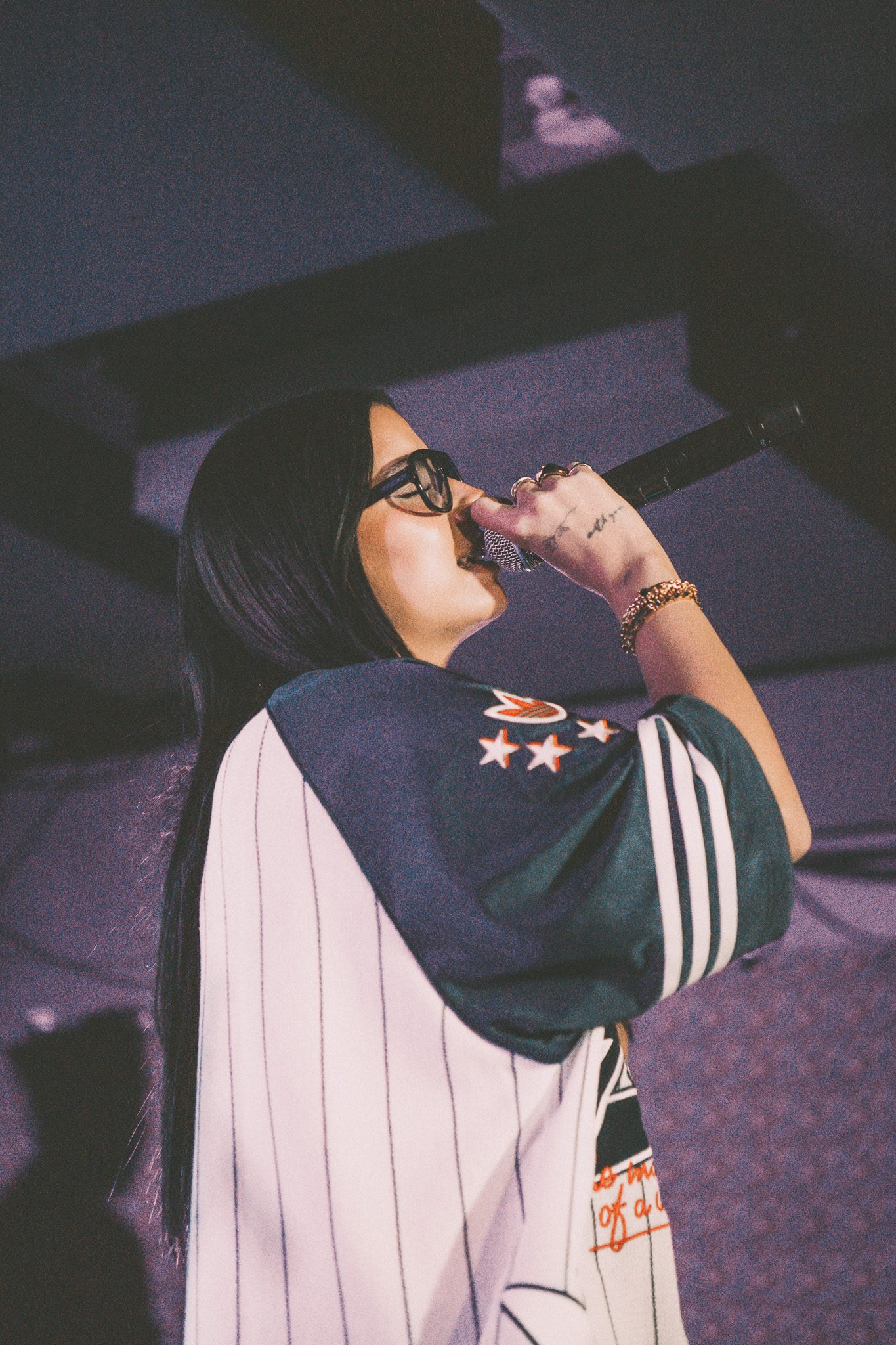
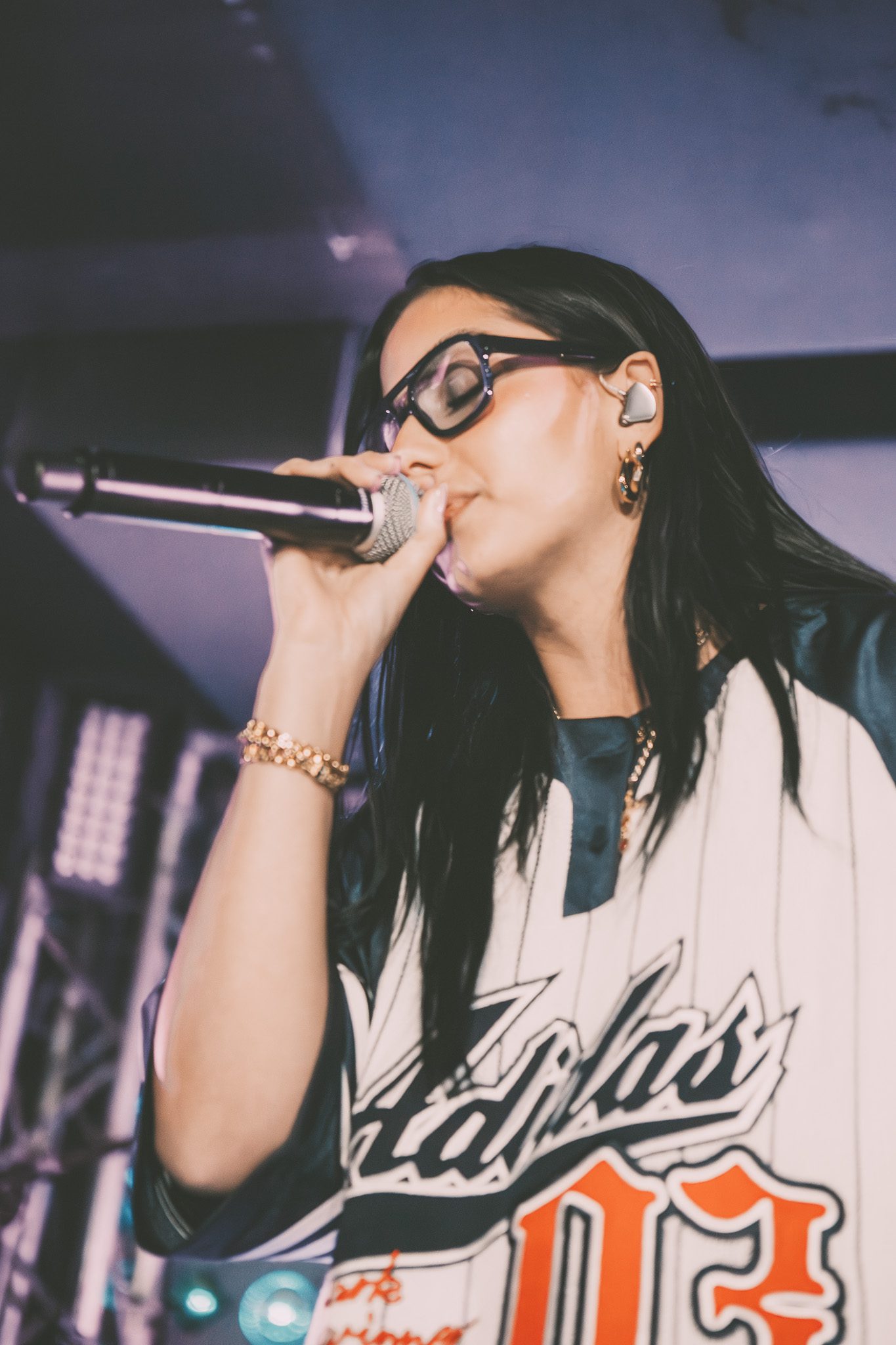
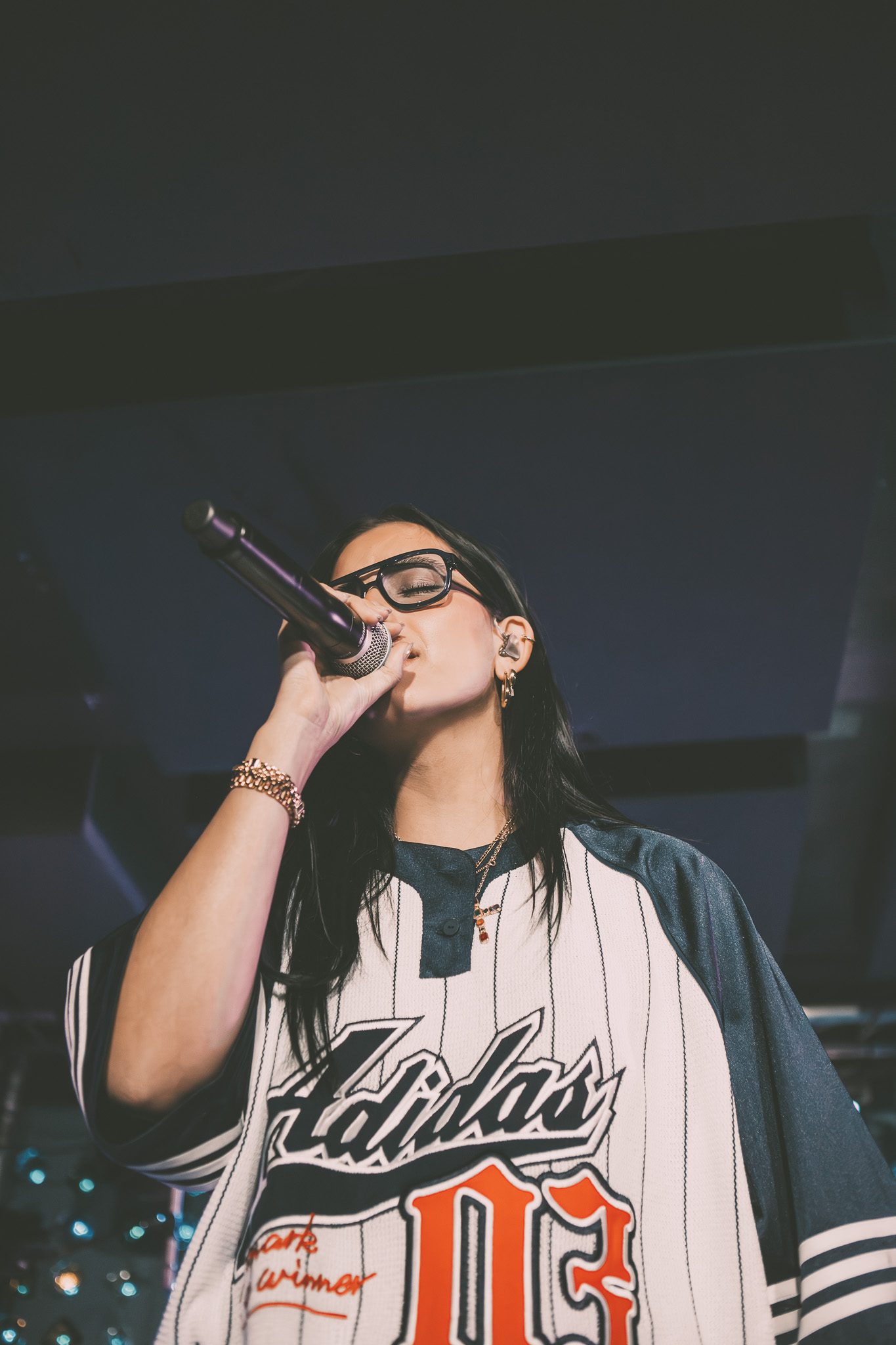
Early in the evening, Camara confessed that this was her first New York City headlining show, that her nerves had been loud all day. But the second she lifted the microphone, they evaporated. Her voice floated above the crowd like a breath held too long: angelic, trembling, and pure. There’s no mistaking it: Sofia Camara belongs on stage. Even when she barely moved, her presence filled the room. Her range sent chills up my spine, her lyrics cut like truth dressed in silk. The magic of her music lies in its familiarity, each verse laced with the small heartbreaks and hopeful turns that make up our own stories.

Between songs, she spoke openly about the moments that shaped them. Every pause felt like a heartbeat shared, a cycle of release and repair. When she performed “Never Be Yours,” the lights dimmed, and only her guitarist accompanied her with the vibrato of rich bronze strings and wood builds. The crowd hushed. For those few minutes, it felt as if we’d slipped out of Baby’s All Right and into her bedroom, cross-legged on the floor, talking through heartbreak while someone softly plucked the strings.
Later, as the night neared its end, Camara laughed about wanting to take a photo with the audience. Realizing she didn’t have a photographer, she asked for a fan’s phone and chose one at random from the sea of raised hands. Everyone formed hearts with their fingers, a snapshot of strangers turned temporary family. She kept the playfulness alive, snapping more photos on borrowed phones before diving into her next song, the crowd erupting as though they’d been waiting all week for this communion.
Several times, she sat on the edge of the stage, knees dangling over the pit, to directly serenade us. Those were the moments that reminded me why live music matters: not just to cheer for artists we admire, but to connect, to remember that art can make us feel seen. When she asked the crowd to sing back lines, the room roared with affection, every syllable thrown like a gift.
The evening felt like the first chapter of something we’ll one day call legendary – one of those shows you’ll swear you were lucky enough to witness before the world caught up. Early in her set, Sofia Camara mentioned she named this run the “Healing Hearts Tour” because music had healed her countless times. In Brooklyn, that sentiment became shared. If you walked in not knowing her name, you walked out holding pieces of her songs in your chest, new anthems for late-night drives and early-morning mending.
This feels like the start of something luminous. And when the world gets louder, I’ll remember this night: Sofia Camara beneath the soft lights of Baby’s All Right, singing heartache into something whole again.
Follow SOFIA CAMARA | WEBSITE | INSTAGRAM | TIKTOK | SPOTIFY | APPLE MUSIC
Leave a Reply