
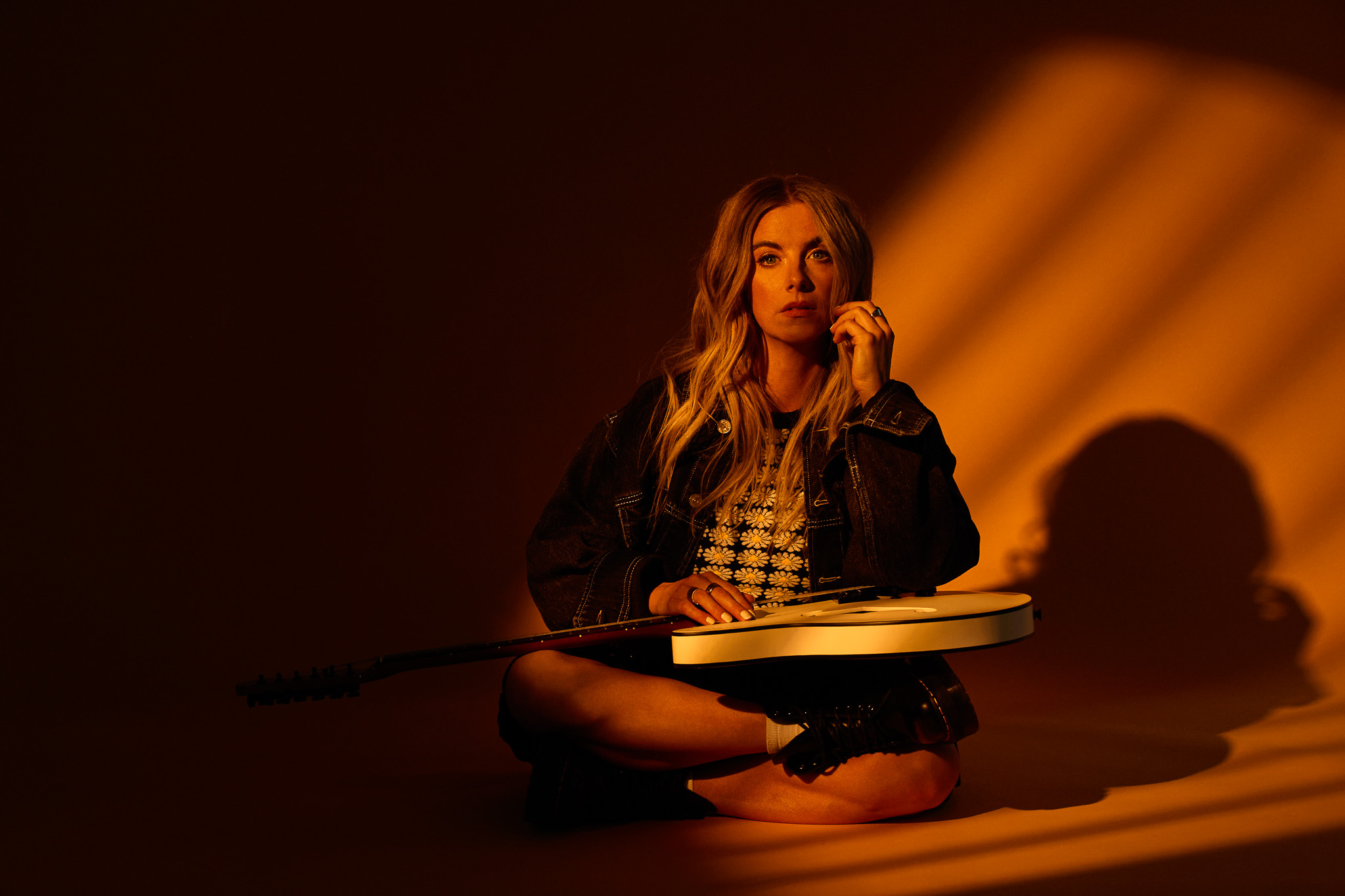
Lindsay Ell’s story does not begin on a massive stage or under the hot glare of television lights. It begins in a living room, in the quiet hum of instruments passed hand to hand, where music was not something to chase but something to live inside. “I grew up in a very musical household,” she says, recalling how both her parents and grandparents played instruments, how holidays turned into “big family jam sessions.” Her earliest memories are not of applause, but of closeness: “learning to play piano when I was six,” her grandfather sitting beside her, proud, steady, present.
Piano came first, but guitar became the language she chose to speak fluently. At eight years old, she asked her father to show her a few chords. Instead, he showed her the opening to “Stairway to Heaven.” “I learned how to play that, and then I was like, this is so cool, and I can learn real songs,” she says, and the door never closed again. Guitar wasn’t just an instrument; it was curiosity with strings, something that “just spiked my curiosity so much and I just sort of ran with it.”
Performance followed naturally, almost innocently. Church stages, youth groups, charity events, coffee shops – places where mistakes were forgiven, and effort was celebrated. “It was the best crowd I could perform in front of because everybody was so forgiving,” she explains. By sixteen, she bought a fifteen-passenger van and zigzagged across the country with a band, chasing rooms instead of certainty. She didn’t ease into the industry; she dove. And somewhere in that dive, she discovered her calling wasn’t just playing songs; it was connection. “I can write my own songs and then play them in front of people, and I can actually make them feel something,” she says. “What an incredible way to influence and help people.”
That instinct, to make people feel less alone, has never left her. When asked what she hopes someone would take away from listening to her entire discography, she doesn’t hesitate. “I hope that if somebody were to listen to my whole discography, that they would want to get to know themselves on a deeper level and they would feel less alone in the pursuit of trying to figure out how to do that,” she says simply. Music, for Ell, is not a performance; it’s an invitation.
For a decade, that invitation lived largely inside the world of country music. When she first moved to Nashville, she imagined herself differently, “a female John Mayer,” inspired by artists who were both musical and deeply song-driven. Then came a record deal, years of touring, radio hits, and milestones that many artists spend a lifetime chasing. “For 10 years straight, I was zigzagging around the world,” she says, releasing music, celebrating number ones, building a career that looked undeniably successful from the outside.
But success can be loud enough to drown out your own voice. Near the end of that decade, something began to shift. “I was really starting to feel me wanting to walk into a studio and create a certain song and then me feeling influenced to create a different song that was going to be more successful on country radio,” she admits. “I can’t play those kinds of games in my creative heart.” She describes that space as dangerous – not financially, but spiritually – when the focus moves away from truth and toward approval. “I think I lost sight of my own artistry, my own artistic heart of what it was really yearning to do.”
So she made the harder choice. She changed her team. She let go of comfort. She stepped into uncertainty with intention. “I’ve never felt better with the music I’m making right now,” she says, describing a recalibration where “the spectrum of where you can stand between commerciality and art starts with the art first.” It wasn’t about abandoning structure; it was about refusing to prepackage herself before the song was even written.
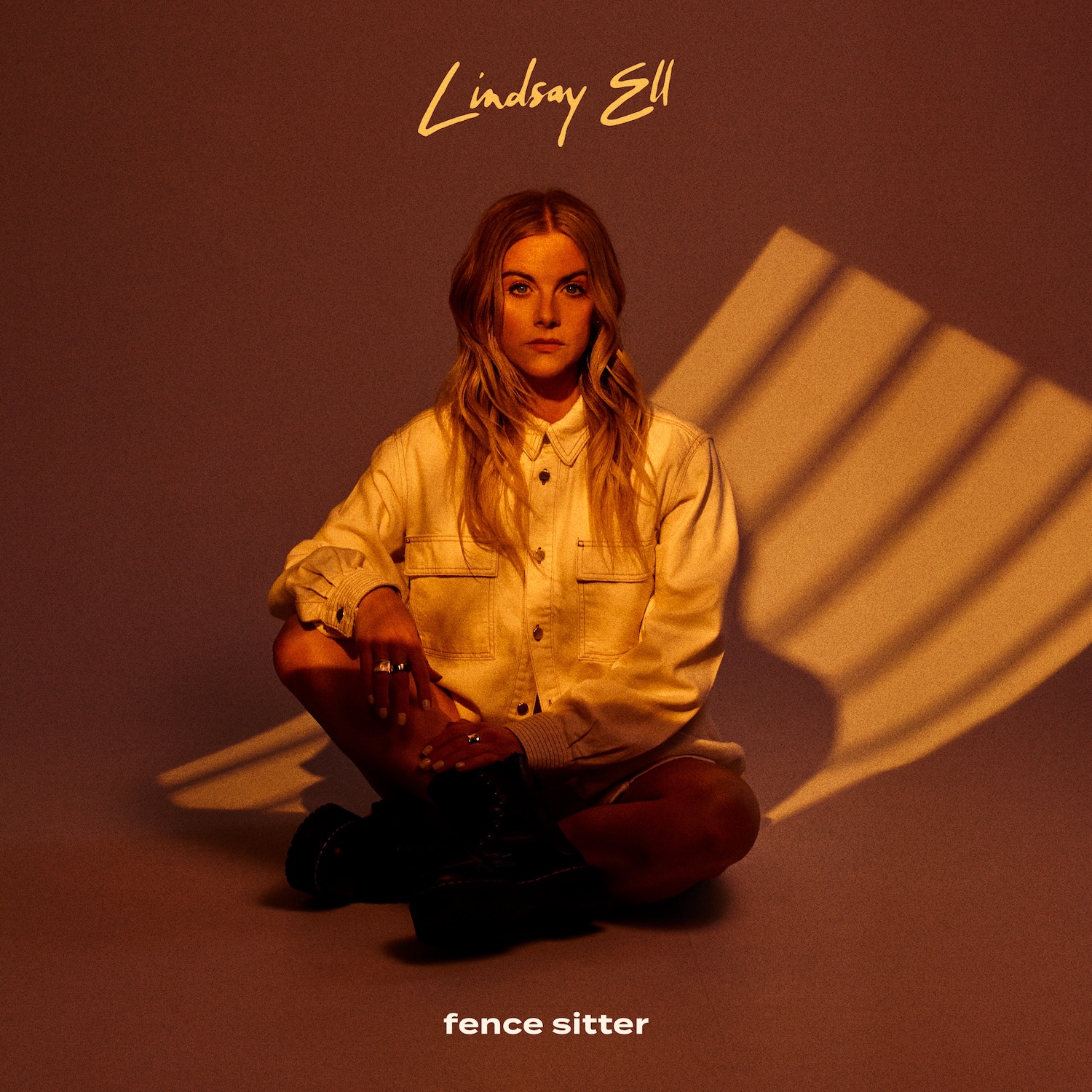
That refusal is the heartbeat of fence sitter, her latest EP. It’s pop-leaning, yes, but it’s also restless, exploratory, and unafraid to brush against rock edges. “It feels really exciting to walk into a writing room and not prepackage it in what it needs to be,” she says. “If anything, I’ve been leaning more into rock, like alternative rock spaces, and it’s felt so cool and so exciting.” For the first time, she feels she can record music and walk onstage without translation. “I can just go on stage and play it exactly as is,” she says. “I don’t think I’ve recorded music ever quite like that.”
If the younger Lindsay could hear this version of herself, Ell knows exactly what would stand out. “She would be really proud of the vulnerability and the honesty,” she says. Writing what’s real, she admits, is often scarier than writing what works. But it’s also the only way the music can breathe. “Sometimes that’s not a commercial thing, and that’s a scarier choice to make,” she says, “but I think the Lindsay back then would be really proud of the songs I’m writing today.”
Reinvention, however, doesn’t come without fear. “Oh my goodness, yes,” she says when asked if the process was intimidating. Leaving what felt safe meant walking away from a life she could have sustained indefinitely. “It felt like shooting myself in the foot,” she admits. At the height of her previous era, she was playing hundreds of shows a year. Now, she laughs gently at the contrast. “I feel like I’m living like the indie artist life, which is so invigorating and terrifying at the same time.” Still, the fear is threaded with hope. “It feels so malleable, and it feels very hopeful and exciting,” she says, because the decisions finally feel aligned.
When she imagines how this era might be remembered, the answer is quiet and resolute. “I want this era to be remembered as she’s being true to herself and she’s finally not letting anything else hold her back,” she says, hoping for a connection that lasts beyond trends or formats— not just listeners, but people who recognize themselves in the songs.
At the end of the conversation, she doesn’t offer a manifesto – just a hope. “I just hope that this music that I’m writing can find the hearts that need to hear it,” she says, “and I hope that anybody listening to this music… can feel more inspired to really be true to what their heart wants.”
Lindsay Ell is no longer choosing between paths. She’s standing in the middle of herself: guitar in hand, art first, finally listening to the voice that’s been there all along.
Follow LINDSAY ELL | WEBSITE | INSTAGRAM | FACEBOOK | SPOTIFY | APPLE MUSIC
Leave a Reply