
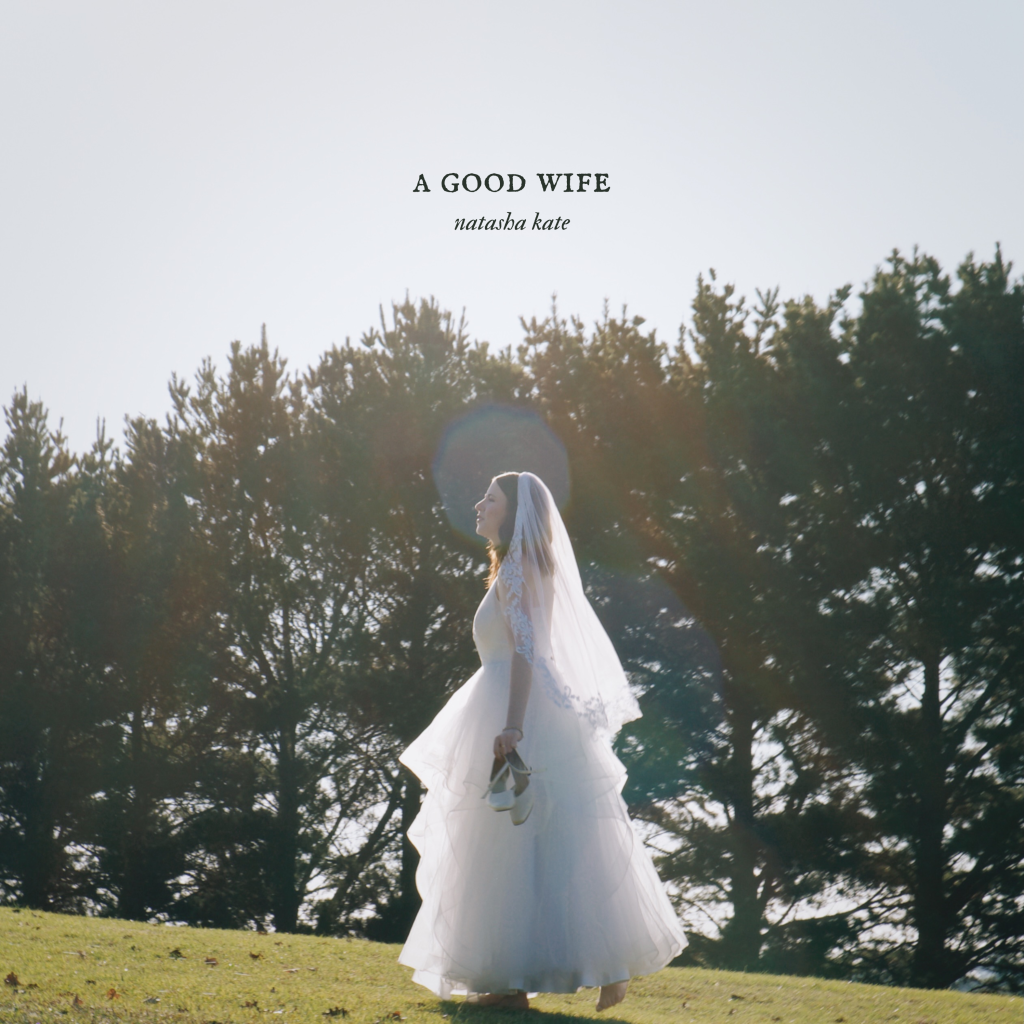
“A Good Wife” feels like a confession whispered after the room has gone quiet. Natasha Kate approaches the song not as a breakup anthem, but as a reckoning – with love given too fully, with expectations inherited rather than chosen, and with the quiet grief of realizing you were never meant to be measured that way. From the first line, the song places us inside a moment of reflection that’s intimate, unresolved, and painfully honest.
Rather than dramatizing heartbreak, the track sits with it, examining the emotional aftermath of loving someone who wanted everything, but still wanted something else.
Musically, “A Good Wife” is restrained and atmospheric, letting space do much of the emotional work. Acoustic elements form the backbone of the track, while subtle glitchy textures and layered vocals flicker in the background like intrusive thoughts. The production never overwhelms the song’s core; instead, it gently destabilizes it, mirroring the unease in the lyrics.
Natasha’s vocal delivery is delicate but steady, carrying a maturity beyond its years. She sings with clarity rather than force, allowing vulnerability to emerge through phrasing and breath rather than volume. The song builds and recedes in waves, never quite exploding, which gives it a haunting, lingering quality.
At its heart, “A Good Wife” interrogates the idea of worth being tied to devotion. The lyrics trace a line between love and self-erasure, asking where commitment ends and expectation begins. Natasha doesn’t frame herself as blameless or bitter; instead, she acknowledges how easily love can turn into performance, how quickly we can offer our bodies, futures, and identities in the hope of being chosen.
The emotional center of the song lies in that contradiction: wanting to reject the stereotype while still feeling trapped inside it. The repeated image of “seeing me in white” becomes both fantasy and accusation, a symbol of everything promised and everything lost.
“A Good Wife” will resonate deeply with listeners drawn to emotionally literate songwriting, those who appreciate artists like Phoebe Bridgers, Lizzy McAlpine, or Angie McMahon, where heartbreak is explored through nuance rather than spectacle. It’s a song for late nights, for moments of quiet self-questioning – for anyone who has loved hard and wondered afterward who they became in the process.
Its power comes from specificity. The story feels personal, but the emotions are widely shared, making the track feel both intimate and universal.
With “A Good Wife,” Natasha Kate proves herself as a songwriter unafraid to sit in discomfort. The song doesn’t offer closure or easy empowerment; instead, it offers truth. It captures the ache of realizing that love alone is not enough when the terms are uneven, and the strength it takes to name that loss.
It’s a tender, unsettling piece of work, and a clear sign of an artist who understands that the quietest songs often leave the deepest marks.
Leave a Reply