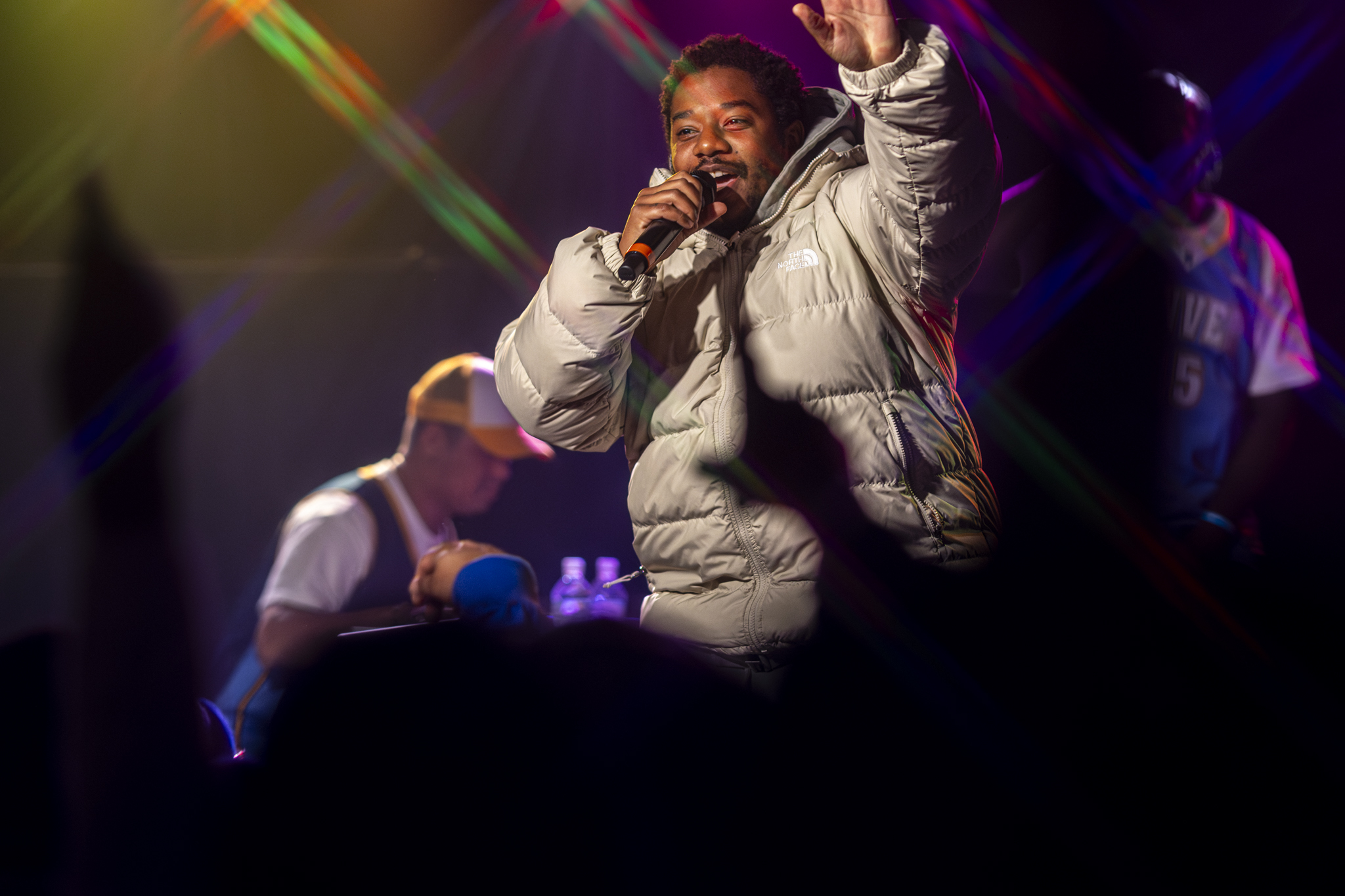
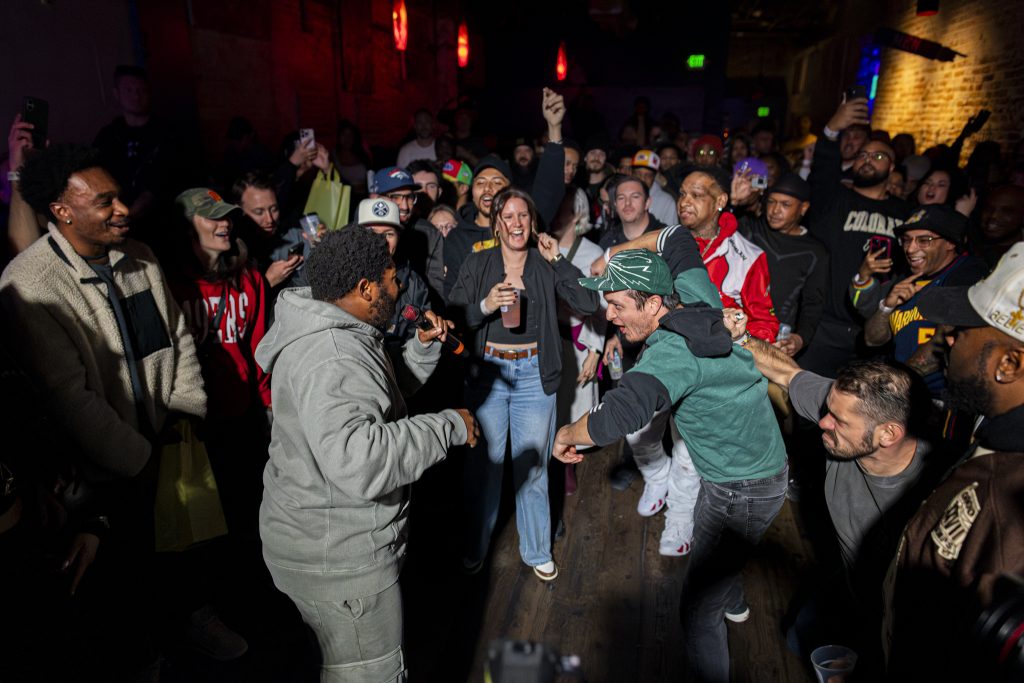
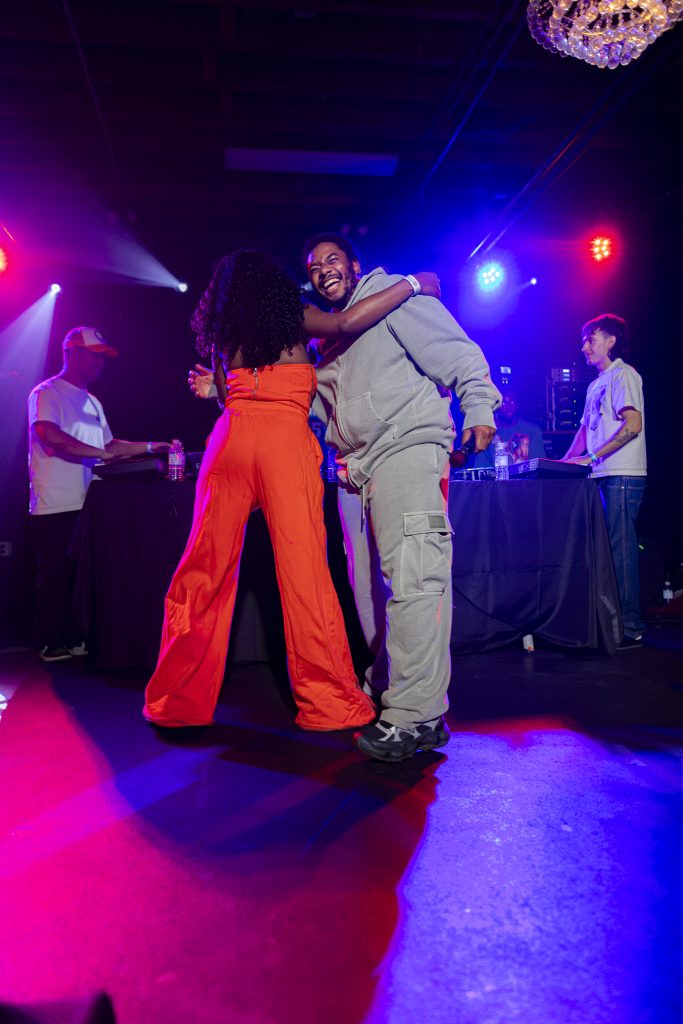
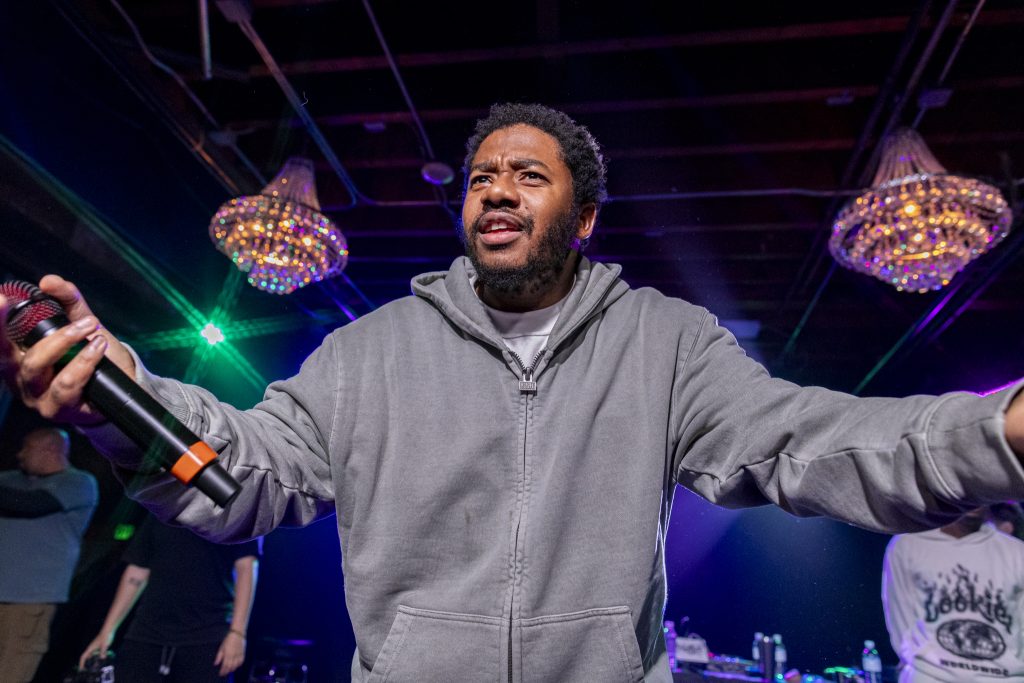
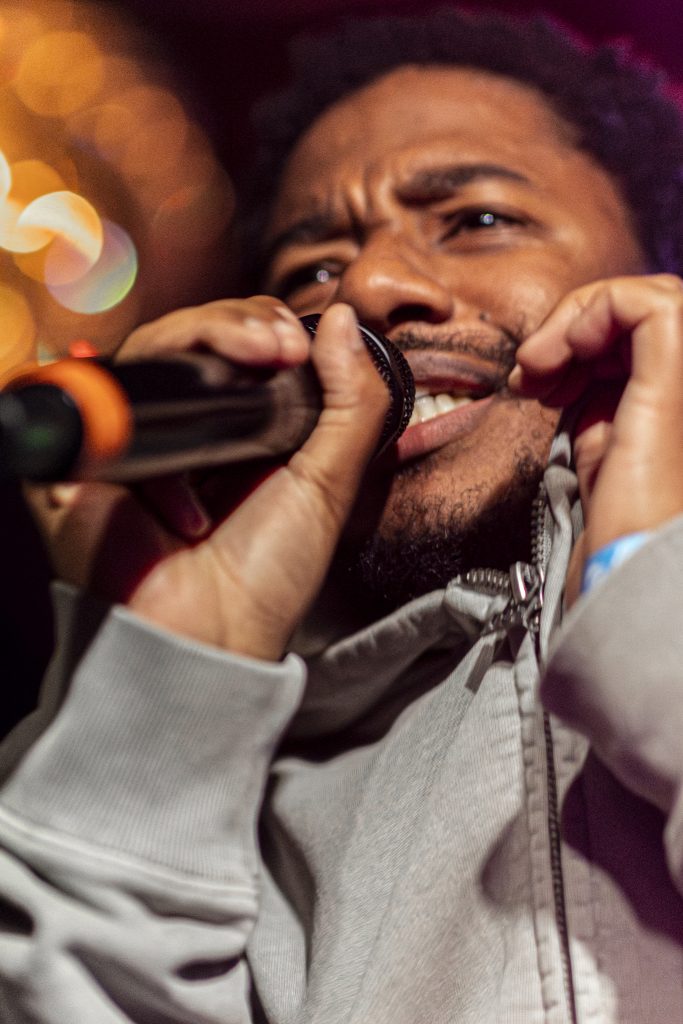
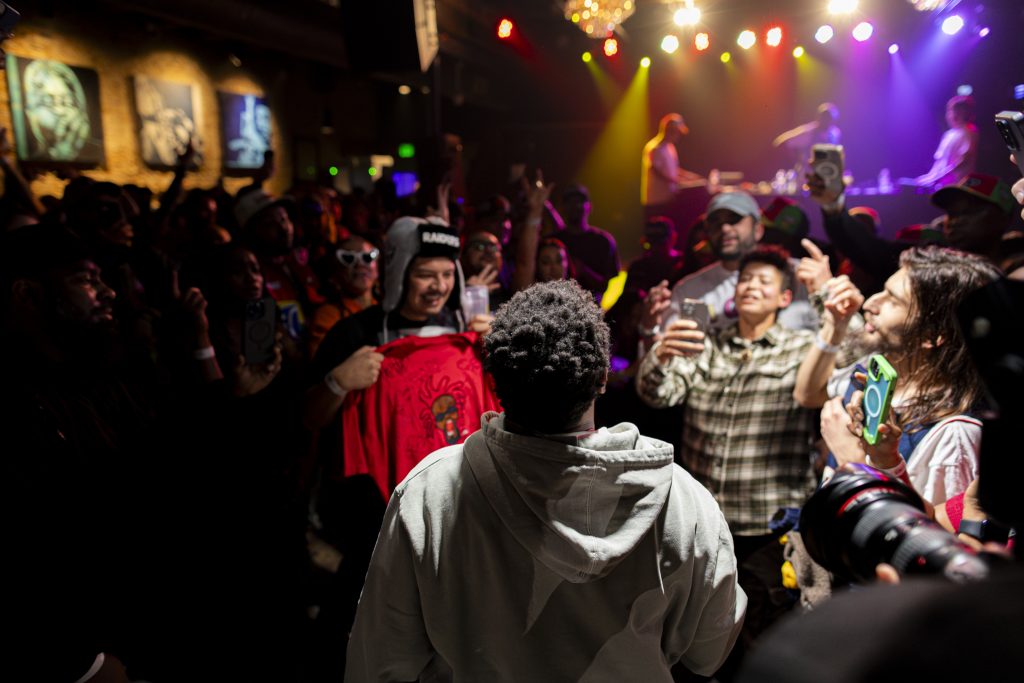
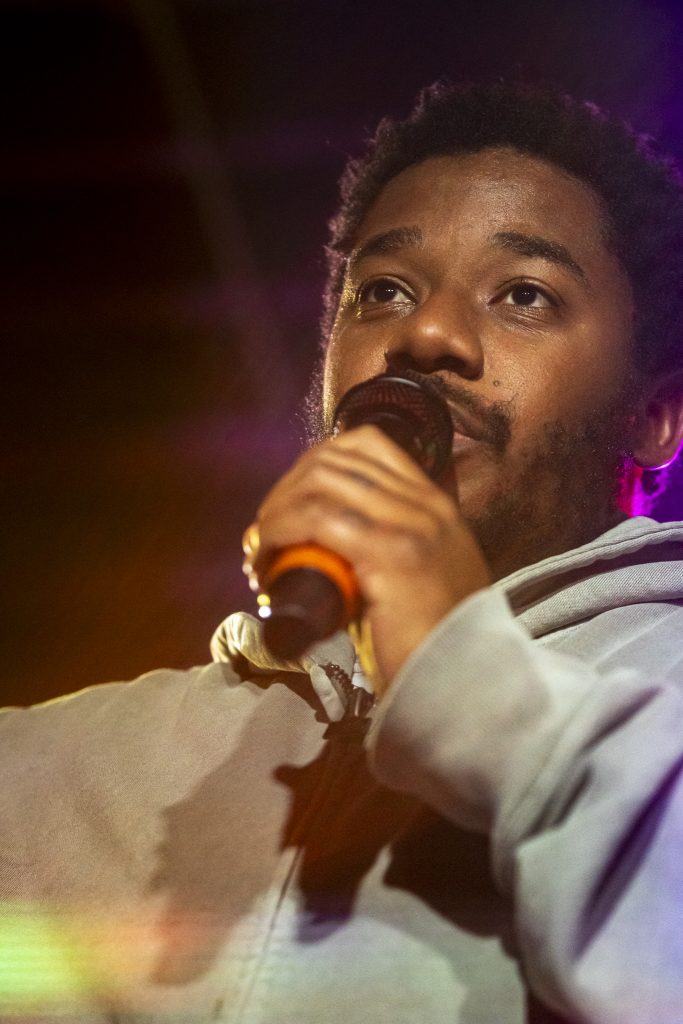
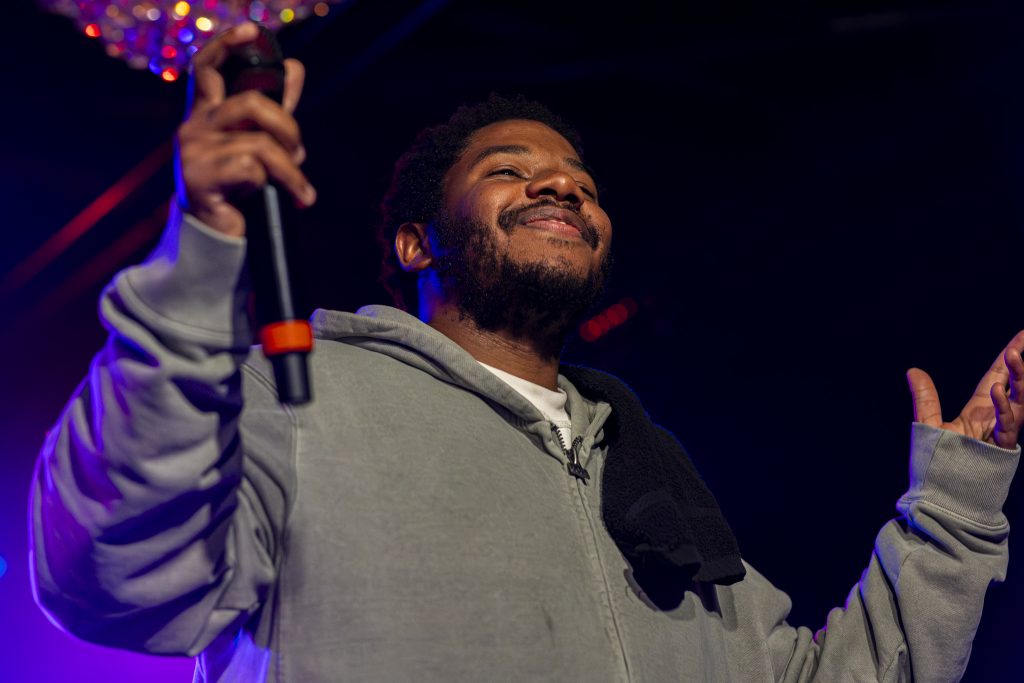
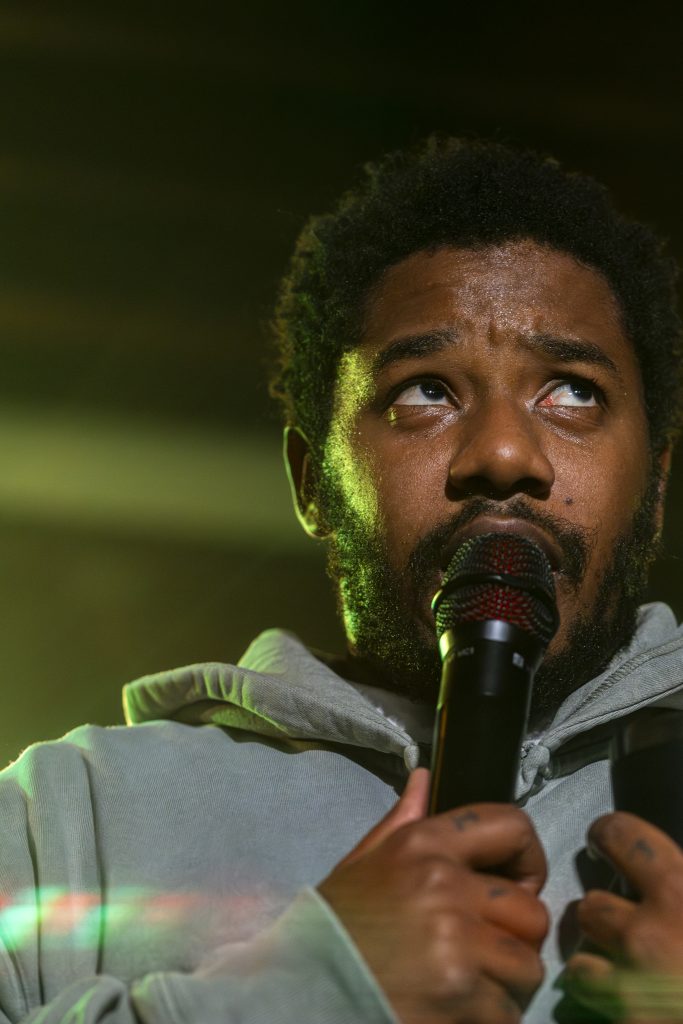
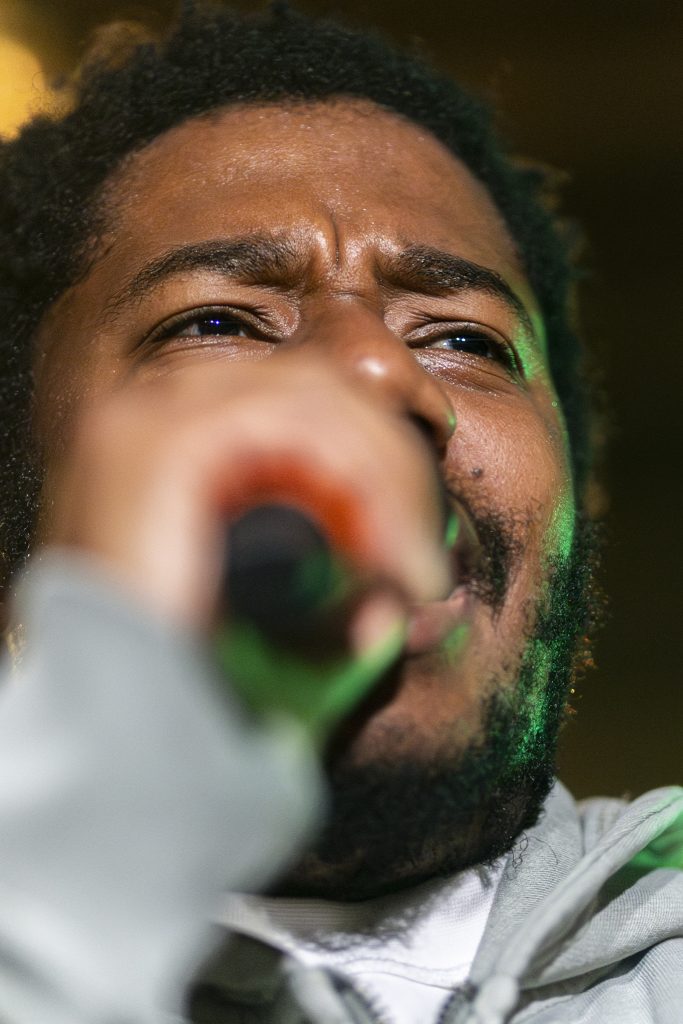
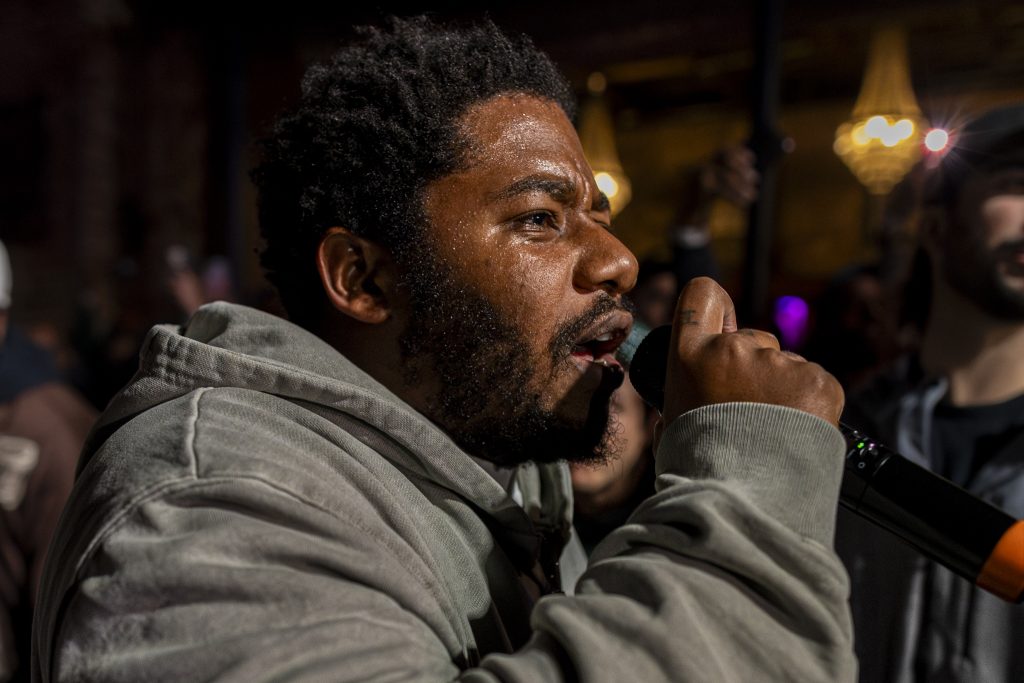
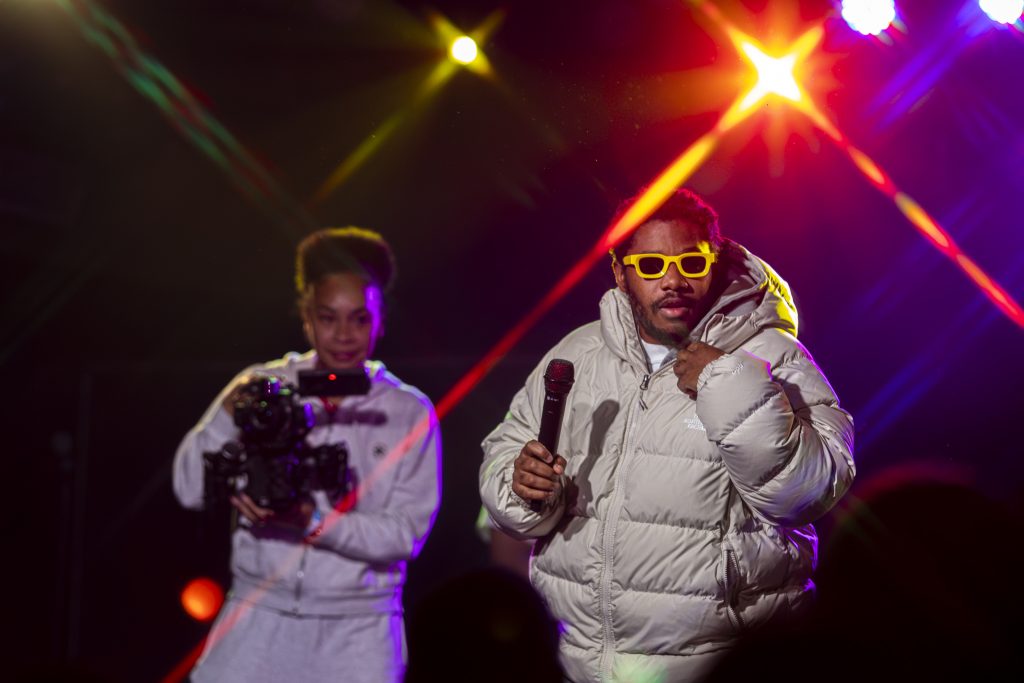
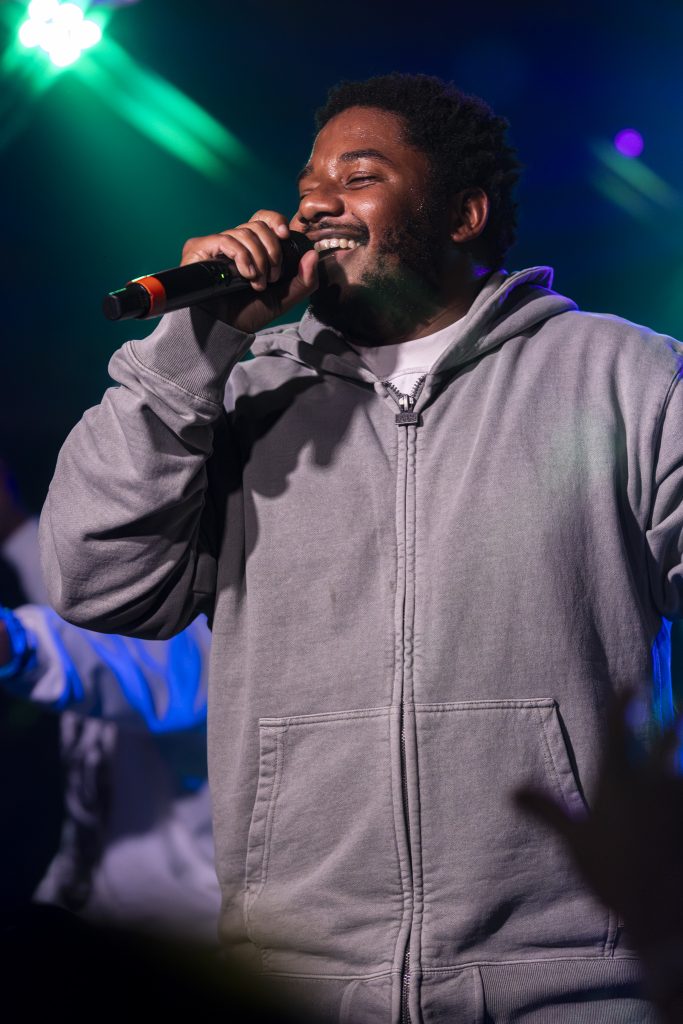
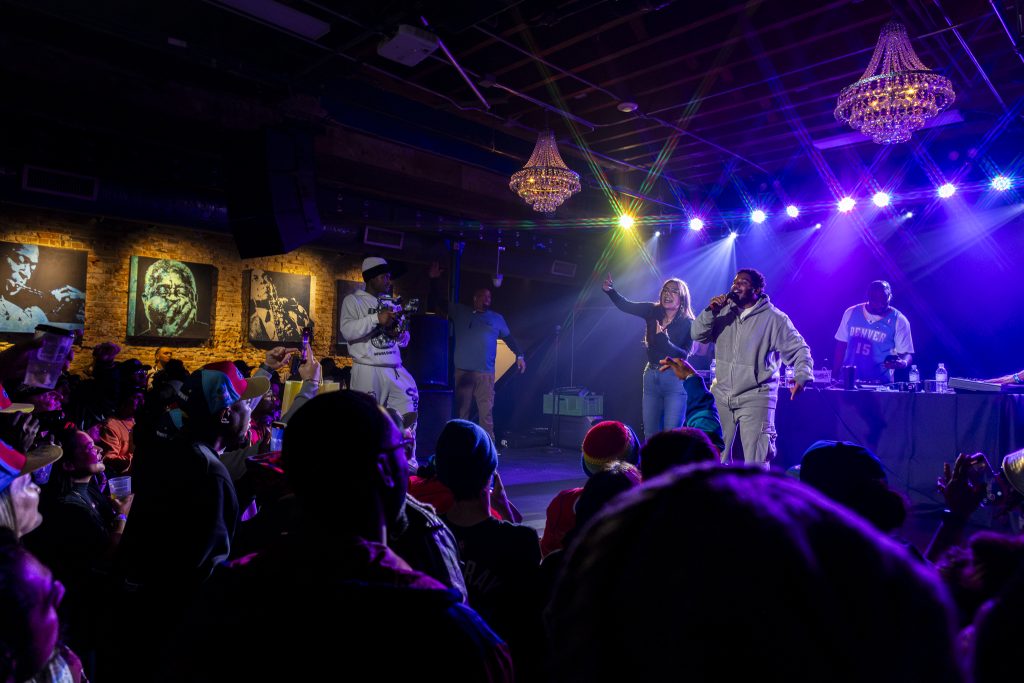
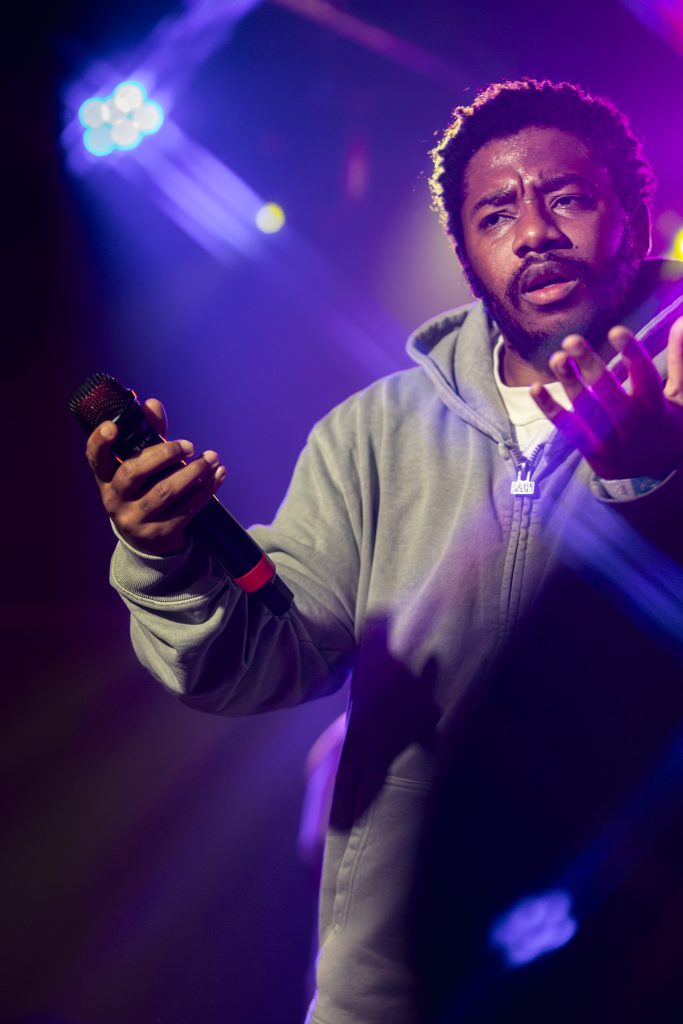
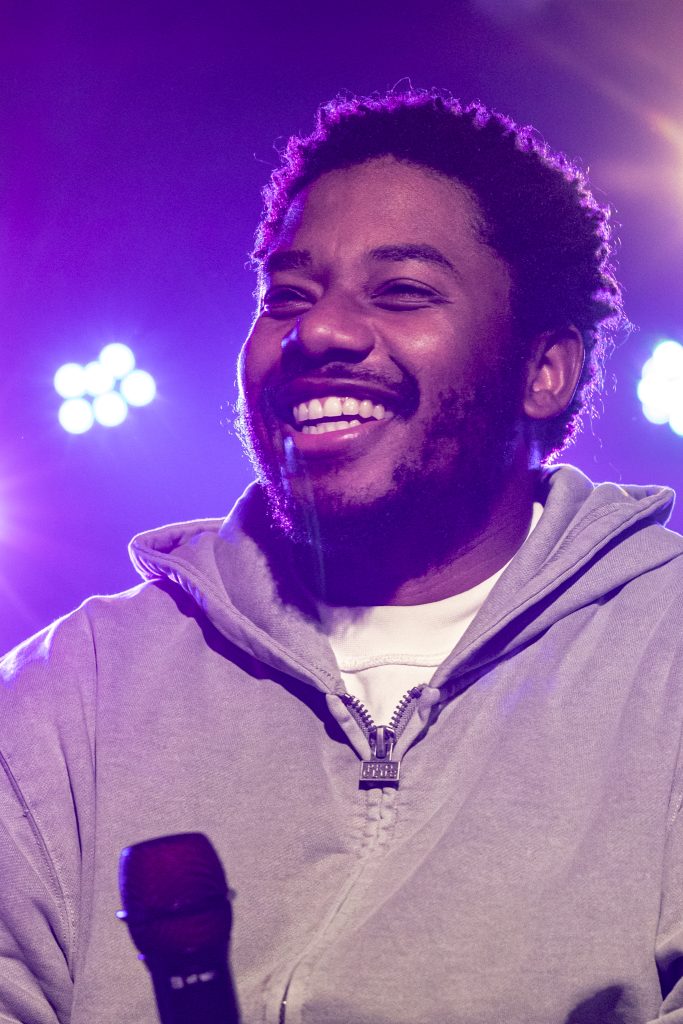
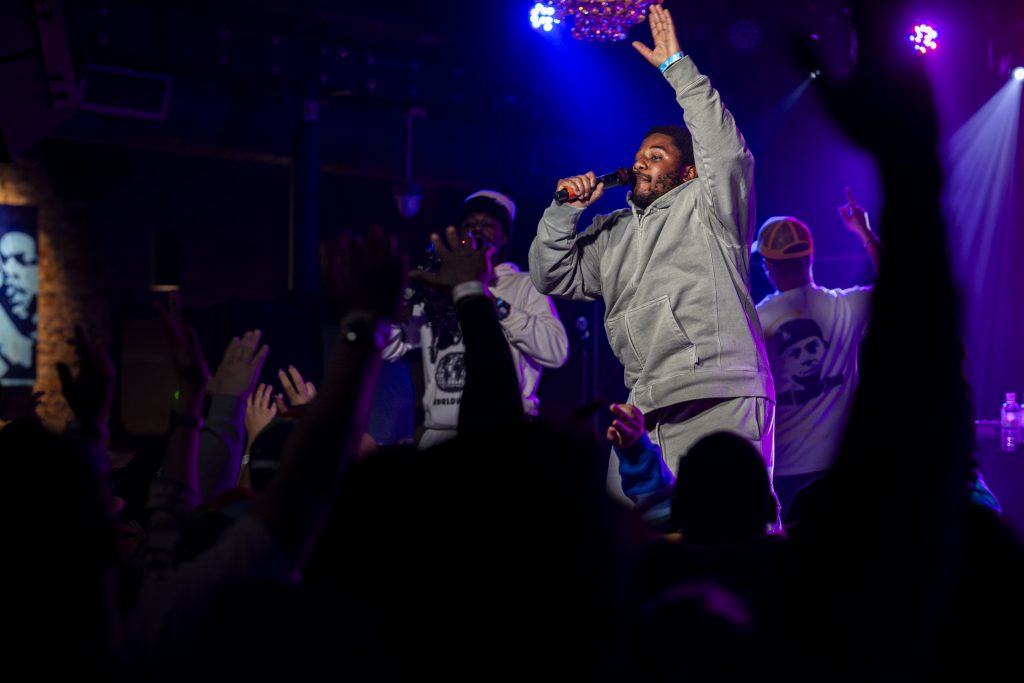
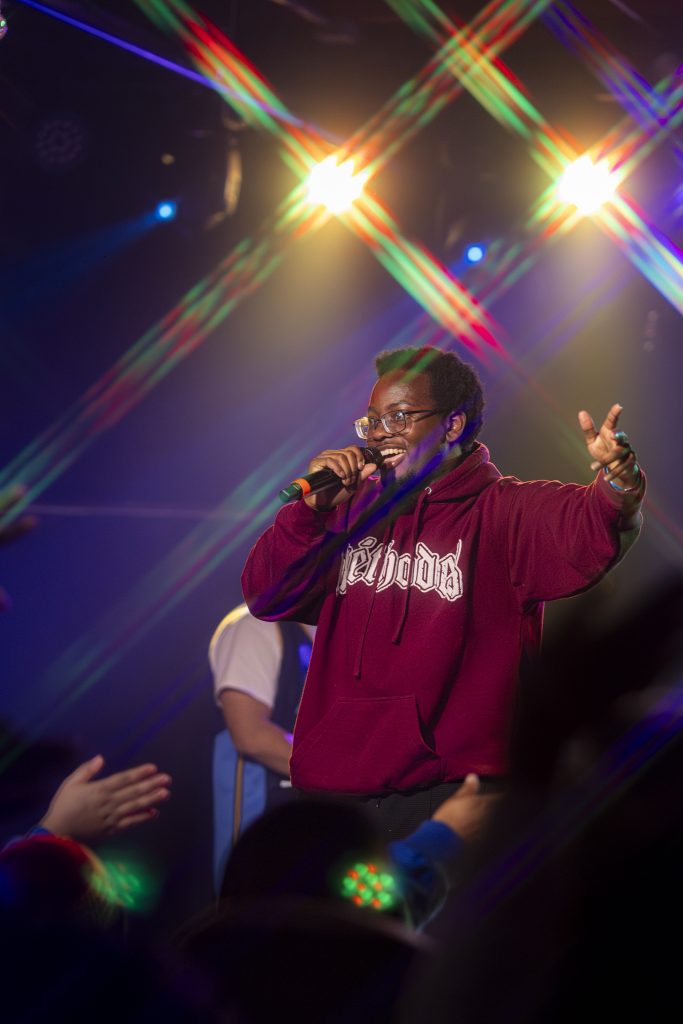
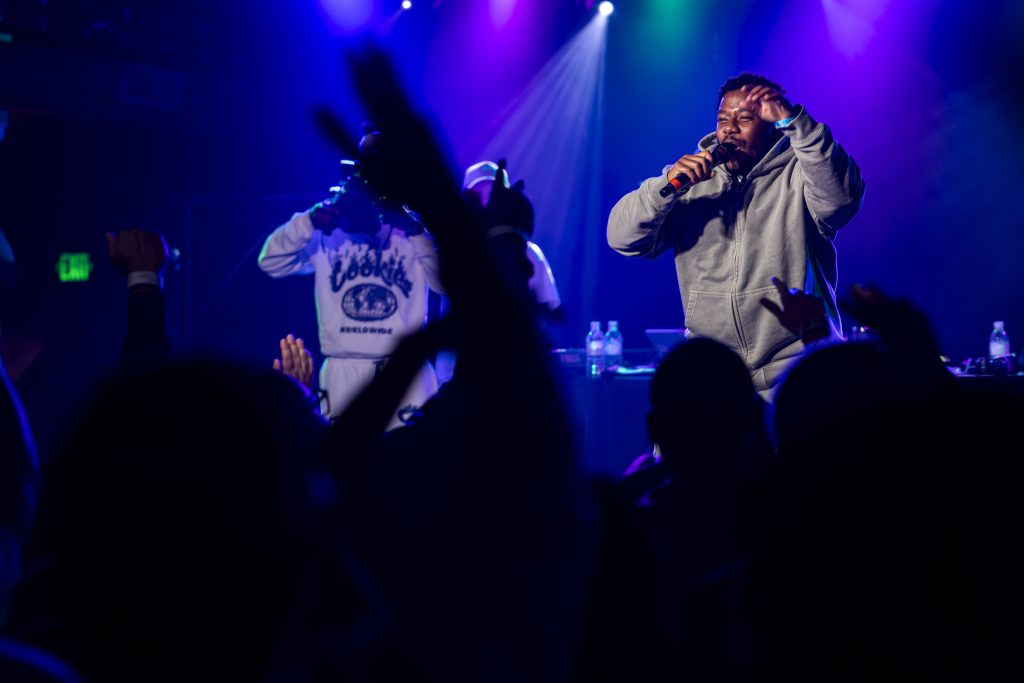
On January 6, I was lucky enough to photograph LaRussell at Cervantes’ Other Side in Denver. This show marked the first stop on his new North American tour, and it was not a rehearsed performance built for polish or spectacle. The entire night felt closer to a Tiny Desk-style session happening in real time, shaped by the room and the people in it.
There was no rigid setlist. The show ran entirely on feel. LaRussell took live requests from the crowd, shifted songs on the fly, and let moments breathe instead of forcing transitions. Early in the set, he said, “I might forget a few words, I might forget a few songs, but I’ll remember more than I’ll forget.” That line set the tone for the night. Presence mattered more than precision.
The intimacy was undeniable. LaRussell stayed close to the crowd and kept the distance between performer and audience intentionally small. The energy felt shared rather than projected. People were not watching something happen to them. They were part of it. In a time when live music often feels overly programmed or disconnected, this felt grounded and honest.
That approach carried beyond the stage. After the show, LaRussell took time to personally sign copies for anyone who purchased his upcoming album Something’s in the Water. All merchandise at the show followed the same philosophy. Albums, merch, and everything else were offered on a pay-what-you-offer basis. Fans named a price, and LaRussell and his team either accepted or countered. The exchange itself was the point. It asked a simple question face-to-face: What is this worth to you?
That philosophy is central to the album’s release. Something’s in the Water is being distributed independently through Even using a pay-what-you-want model with a stated goal of selling 100,000 copies in 30 days without label backing. The campaign is positioned as a direct experiment in community support and artist independence.
The release gained national attention when Kyrie Irving purchased a digital copy for $11,001, a widely reported record for a digital album purchase. In response, LaRussell announced that the funds would be redirected into a community relief initiative, allowing people to submit requests for help with essential bills. Selections are made by his team, keeping the focus on redistribution rather than publicity.
The comparison to artists like Nipsey Hussle comes up often, and here it feels earned, not as branding or mythology, but in practice, ownership, and direct exchange – keeping value inside the community that creates it. Like Nipsey, LaRussell is not interested in disrupting the system with slogans. He is doing it through structure, repetition, and discipline.
What makes LaRussell’s approach stand out is how tangible it is. Burning physical “bootleg” copies at home is not only a smart marketing move, but also an homage to bootlegging CDs and DVDs in the Bay Area back in the day. Selling directly to the people who show up. Letting fans decide what the work is worth and standing by that exchange. Slow, deliberate, intimate, and human by design. Nothing abstract about it.
What stood out most about this night was how real it felt. There were imperfections. There were pauses. There was room for uncertainty and time for laughter and tears. That honesty made the experience resonate more deeply. In a moment when so much of music and life feels optimized, automated, and filtered, this felt intimate, passionate, and grounded.
This show was not about looking good after the fact. It was about meaning something while it was happening. LaRussell is not just performing music. He is actively testing a different way of valuing it. Much like Nipsey before him, he is showing that independence is not a talking point. It is a responsibility. Based on what unfolded inside Cervantes’ Other Side, people are willing to meet him there.




















Leave a Reply