
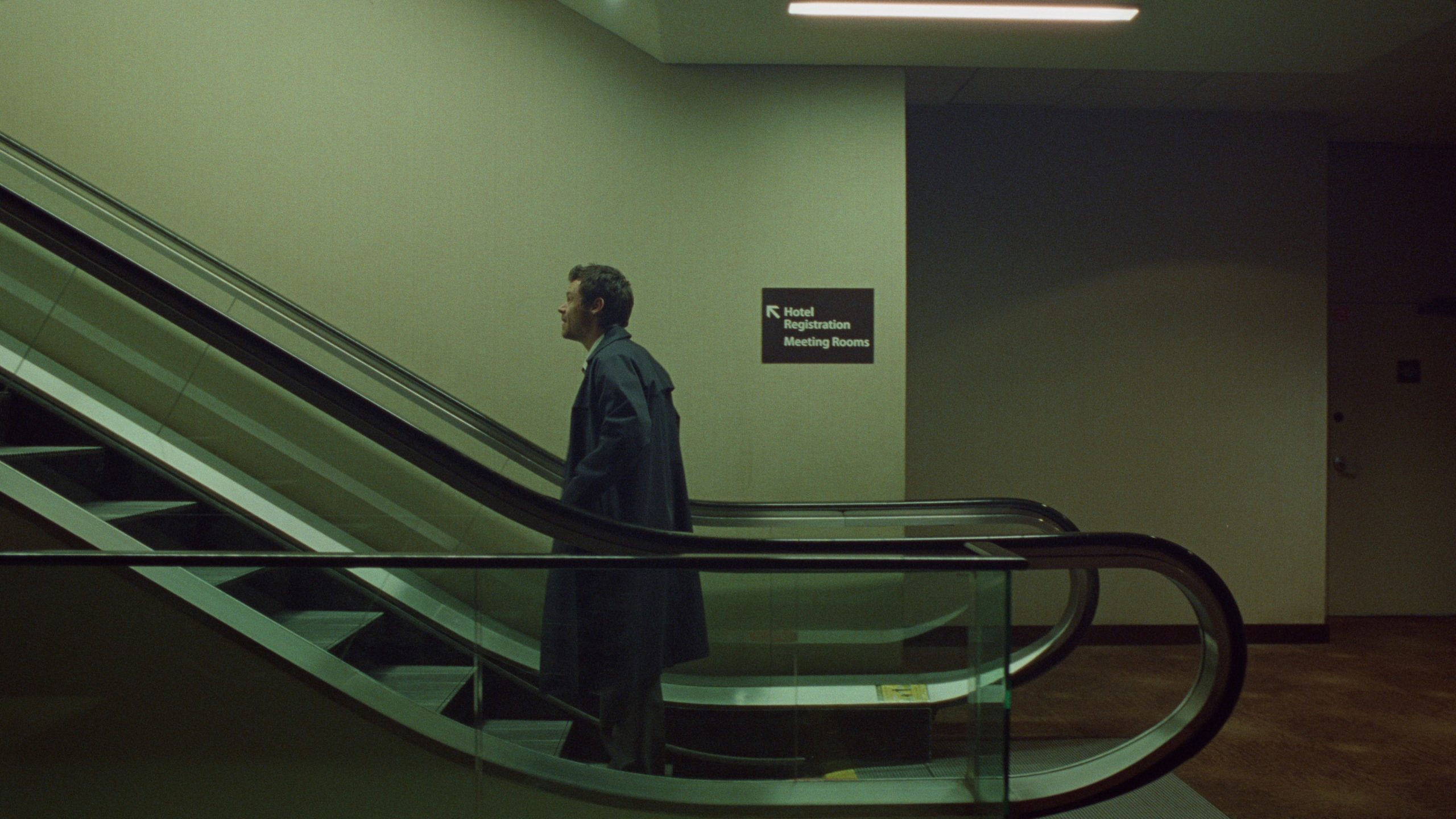

To understand why the release of “Aperture” by Harry Styles is so monumental, you first need to understand house music. Originating in the late 1970s and early 1980s, house music was born from underground clubs shaped by Black and queer communities who were being pushed out of mainstream society. When disco was attacked and disregarded, largely because of racism and homophobia, dance music was pushed out of sight, finding a home in underground and lesser known spaces.
The Warehouse in Chicago, widely known as the birthplace of house music, opened in 1977 and centered on Black and Latino gay men. In addition to being places to dance and have fun, clubs like The Warehouse offered refuge from a world that criminalized, rejected, or erased queer existence. Inside these spaces, marginalized bodies could move freely, affection could be shared openly, and identity did not need to be hidden. During the height of the AIDS crisis — when queer people were losing partners, friends, families, jobs, housing, etc. — these clubs became sites of collective care. They were places to grieve, places to touch when touch became feared, and places to simply be seen when the outside world refused to look. House music became the glue holding these spaces together and a striking reminder that queer people were still here.
This information is relevant because Harry Styles has never made a song like this before. His music has always been beautiful, though it certainly played it safe. It has always been emotionally open while still widely relatable. You could hear whatever you wanted in it. Desire could stay abstract, and love could stay unnamed.
“Aperture” changes this by placing written feelings inside a genre that is inseparable from queer survival. Mass-marketed pop music often smooths queerness out, and lyrics that might be full of longing and deeper meaning often get treated as universal, metaphorical, or baseline. For context, think about how femme lesbians are constantly read as straight because society isn’t trained to read the small, queer details. The same thing is happening here, and without this context of house music, queerness becomes invisible.
If the same lyrics in a non-house song sit on top of a house track, they no longer get to stay neutral. The very audibility of house music relays that what might sound like vague yearning in pop becomes intimate and specific here, which is exactly why Aperture sits in an in-between space, revealing and hiding at the same time. It lets Harry step into a queer musical lineage without having to explain himself. People who know the context will understand immediately, and people who don’t can just ignore it.
Even the song’s opening tells you this track is very different. The synth bounces gently, almost playfully, and Harry’s voice comes in distant and airy, layered and slightly altered, almost like he’s reaching over from another room. The production asks to listen closely as the lyrics sit quietly over the beat, with their own hidden melody underneath. If you focus, you can hear a softer line running beneath everything else, like a secret.
And the lyrics themselves are full of that secrecy. The first verse feels like desire mixed with hesitation. The line, “Take no prisoners for me,” sounds bold, but it’s passed off to someone else, like it wants intensity without giving up control, and “Drinks go straight to my knees” is a metaphor for collapse and vulnerability, while “going on clean” paints a picture of trying to be legible or acceptable.
The second verse pulls back and watches itself, acknowledging that there’s an exhaustion with performance but also an awareness of being watched. Desire is named—“bad boys”—and immediately complicated. Following this, the pre-chorus lands quietly but deeply with, “It’s best you know what you don’t.” That line, in particular, punches hard, essentially saying that not everything needs to be exposed and, maybe, not everything should be. An aperture controls how much light gets let into a camera, not how much light exists in the first place, mirroring how queerness has always existed in selective visibility. Too much aperture means overexposure, distortion, or loss of detail. The goal is to expose your subject enough to be seen without being seen so completely that you are erased.
In the chorus, the line “We belong together” is repeated over and over again, like saying it a million times might finally make it true. The line, “It finally appears it’s only love,” symbolizes that queer love has to pass tests before it’s allowed to just be love. And even then, it’s softened, minimized, and made safe for other people. The use of “we” above also matters. It signals that this isn’t a private love sealed off from the world, but rather a shared love that exists in relation to it. This love, then, is formed against an outside that has never guaranteed belonging to marginalized communities.
By the third verse, the track grows a bit unstable. It tells a story in fragments: not being ready to receive [love, safety], acting before thinking, balancing on trap doors instead of solid floors. Nothing feels fixed or safe. And then, there’s dance halls. Another cadence. The body keeps moving, finding rhythm again. Queerness here is the ability to keep going, even when the ground keeps shifting beneath you.
The bridge simmers down enough to reel you back in, giving you a moment to catch your breath before everything tightens again. It’s built almost entirely out of repetition and is a stabbing reminder that, beneath an exterior, there are promises without names, commitments to things that can’t be fully articulated, a sense of being present in a space you don’t understand, and moments of time that accelerate past you, indifferent to whether you’re ready or not. And then comes the most vulnerable admission in the entire song: “I wanna know what safe it is.”
That line lingers, naming a feeling most people don’t realize they’re carrying until someone else says it out loud. It’s the quiet fear so many marginalized individuals face — that safety isn’t a place they can stand in, but something they’re always chasing after and trying to define. Listening to that line feels like standing still while the world keeps moving, like wanting reassurance without even knowing what reassurance would look like.
I think, ultimately, that’s why I felt such a strong pull toward “Aperture” the first time I listened closely. Instead of just hearing the lyrics, it was like I remembered them. Something about the song kept pulling me back over and over, like it was speaking a language I spent years trying to forget. The quiet tension in Harry’s voice, the layers lingering in the lyrics, the pulses of the house beat that never fully resolved — all echoed the way I learned to navigate my own desires: indirectly, cautiously, and quietly.
Growing up, I became an expert in reading subtext because subtext was the safest place to be as a queer person. Longing became something I performed sideways, disguised as limerence, friendship, or fleeting attention. And listening to this song just conjured up that old mix of fear to hide and desire to be seen anyway. It felt nostalgic in that bittersweet, heavy way where the beauty of recognition is inseparable from the memory of how hard it once was to admit the truth out loud.
There’s no big resolution; the song does not move forward to tidy conclusions or neat answers. It simply lingers, holding its ground and insisting on presence even as uncertainty persists. When the final chorus returns — “It finally appears / it’s only love / we belong together” — it feels weathered by endurance, as if love has cautiously reappeared, aware that safety may never arrive, yet refusing to yield to isolation. The song ends suspended in that delicate balance; it’s together, yet unsure, visible, yet selective.
“Aperture” is undeniably queer. Not because it announces itself as such, but because it moves in the exact same way queerness has always moved: through coded language, shared histories, rhythm, restraint, and an acute attentiveness to what can be revealed and what must remain hidden. It reaches people who have learned to read between the lines and understand that, sometimes, subtext as a space is safer than overt truth. The song was made by—if not a queer person—then by someone who loves queer people.
Lastly, it’s important to remember that some apertures do not open fully. Instead, they let just enough light in to hint at what lies beneath, and to invite the viewer to linger in its glow without exposing everything at once. They do not illuminate the whole frame or demand comprehension, but they do offer a space where presence, however partial, can be acknowledged and seen.
Leave a Reply