
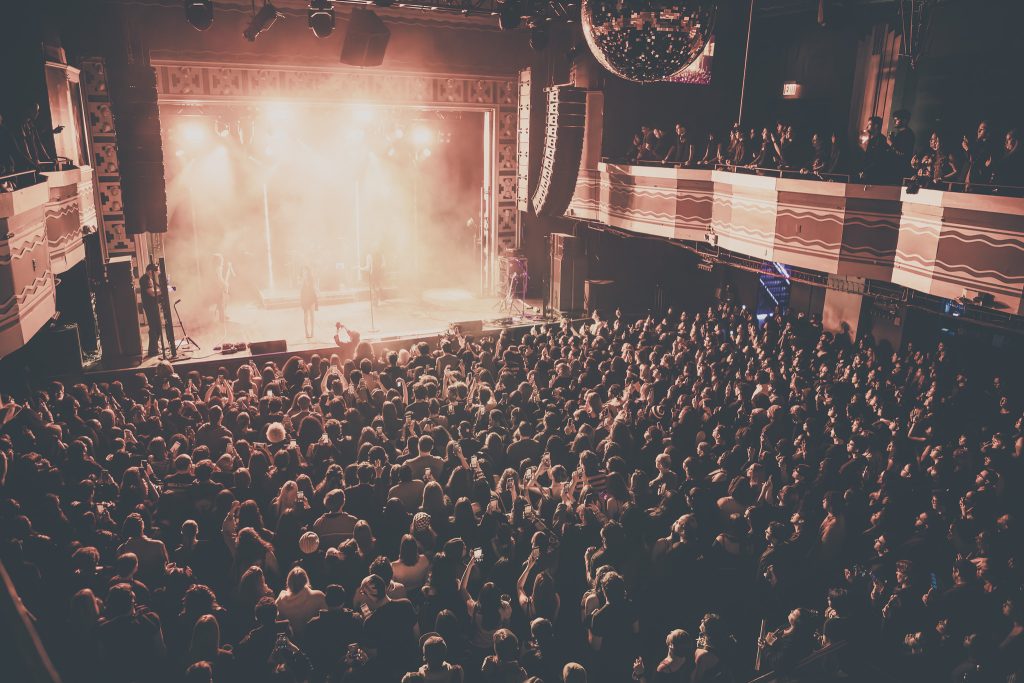
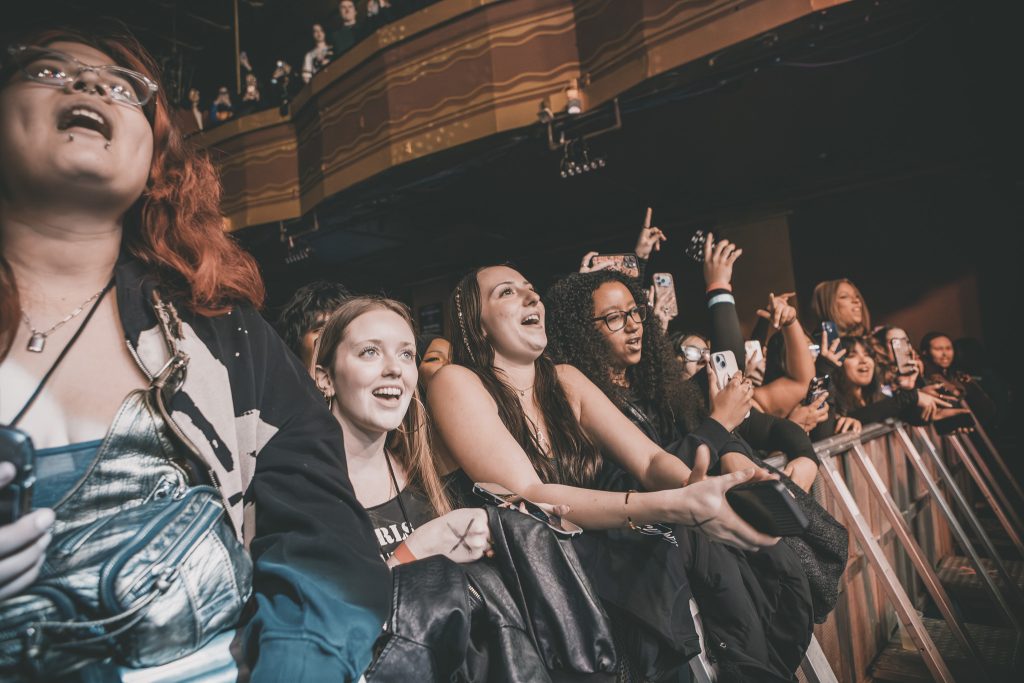
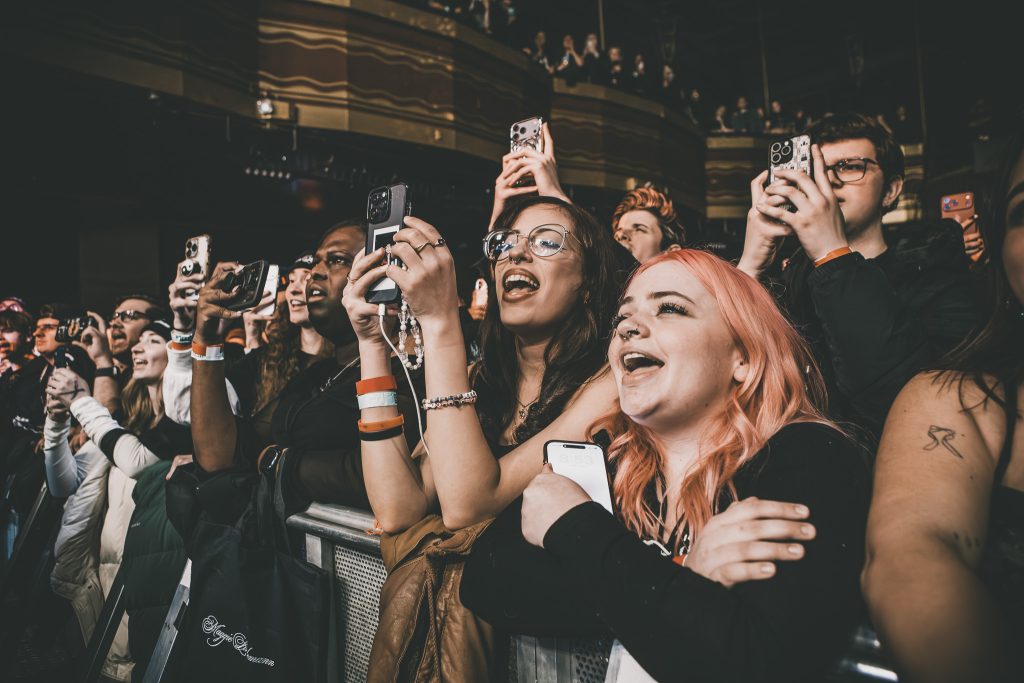
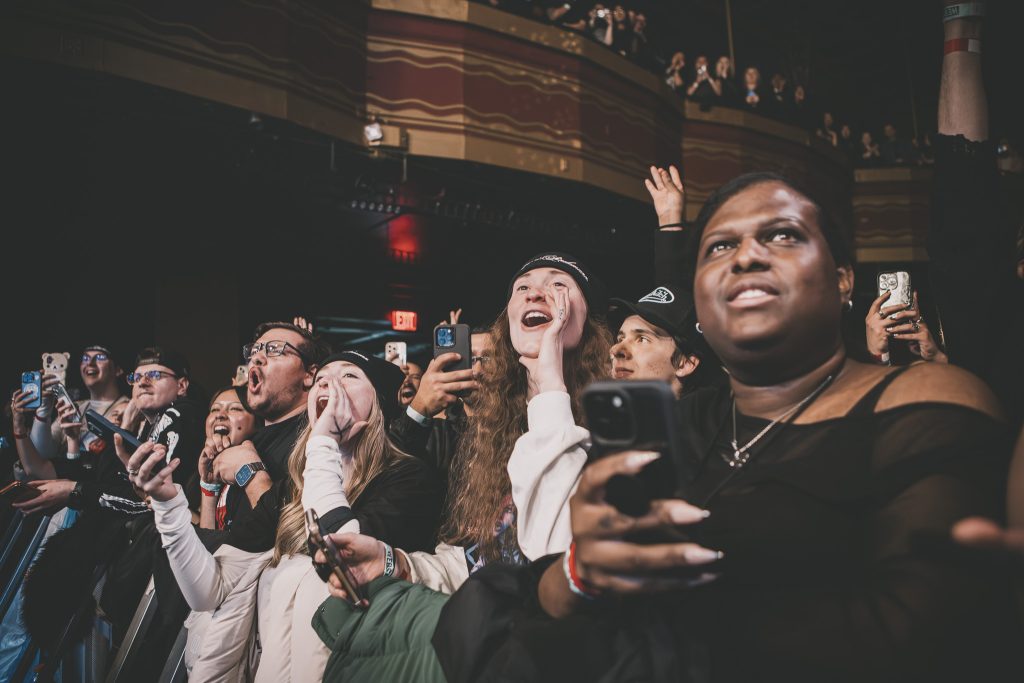
On a rather rainy Tuesday evening in early March, Maggie Lindemann returned to New York City, packing in Webster Hall for a show that reminded us why we fell in love with her in the first place, all the way back in 2016 with her breakout song and formidable social media presence. The line wrapped around the block an hour before doors even opened, despite the rain trickling down in soft, persistent sheets; no one was deterred. Audiences were hungry for front row, to cling to the barricade, for a moment to feel unapologetically, to scream, and maybe even HEADSPLIT.
In promotion of her latest record, I Feel Everything, Maggie Lindemann is traversing the world, from America to Belgium, and everywhere in between, during her spring 2026 “I Feel Everything Tour,” which is ongoing until late April. The recent album, released in October 2025, is a journey through emotional turmoil, and Lindemann doesn’t attempt to sugarcoat her emotions across any of the 16 tracks. One of her most ambitious, fully-fleshed projects to date, the songs explore the highs, the lows, and the fragile in-betweens with an intimate candour that not only is viscerally relatable, but deeply personal; it begs you to connect with the singer on an even deeper level while simultaneously expressing Lindemann’s growth not only as a performer, but also as a lyricist and songwriter.
In the larger narrative of her musical releases, this record feels like a natural evolution: the sound is more refined, the production is more intentional, the lyrics bleed with a quiet poeticism. And with 16 tracks, Lindemann didn’t attempt to cut corners; she laid everything bare, every nerve exposed.
The record largely explores heartbreak, emotional overload, self-destruction versus survival, identity, self-worth, the constant tug-of-war between fight and flight. In our current world, this album feels necessary, almost urgent, and it is clear that listeners became emotionally attached in the same way Lindemann did while creating the record.
At Webster Hall, we were graced with the opener Ayleen Valentine, and truly, Lindemann could not have selected a better counterpart to set the tone of the evening. Valentine’s music nestles somewhere between shoegaze and hyper-indie-pop compositions; there is something refreshing about the soundscapes she carefully builds and then lets dissolve over a crowd. She stepped out onto the Webster Hall stage, and immediately the room leaned in, as if pulled forward by something unseen. Her music tilted a tad more on the mellow side compared to the SUCKERPUNCH Lindemann delivers, but it warmed the crowd for what was to come, like a slow-burning prelude.
We were all under Valentine’s spell, and the reserved chaos felt intentional, controlled. Valentine is early into her career, but has already experienced her ups and downs, admitting to New York City that she had been shelved by a record label and was now taking an independent approach, which she wholeheartedly embraced. Not only is her voice a standout, quivering with a unique undertone that lingers in the air, but she’s an outstanding instrumentalist, beginning her set by looping guitar and keyboard parts of her song in real time. I am avid advocate for organic instrumentation during live performances, and I sincerely appreciated how, with only two people on stage, Valentine didn’t cut corners with computer programming every song, instead opting to build the music piece by piece, live in front of us.
She ended her set with “don’t be sad” off her 2024 record little rainbows after death, which felt like less of a song and more of a mantra, a moment of quiet manifestation shared between artist and audience. She asked the crowd to scream the words with her, and they didn’t hold back – everyone belted it out, and for a moment it felt like communal healing, something collective and unspoken.
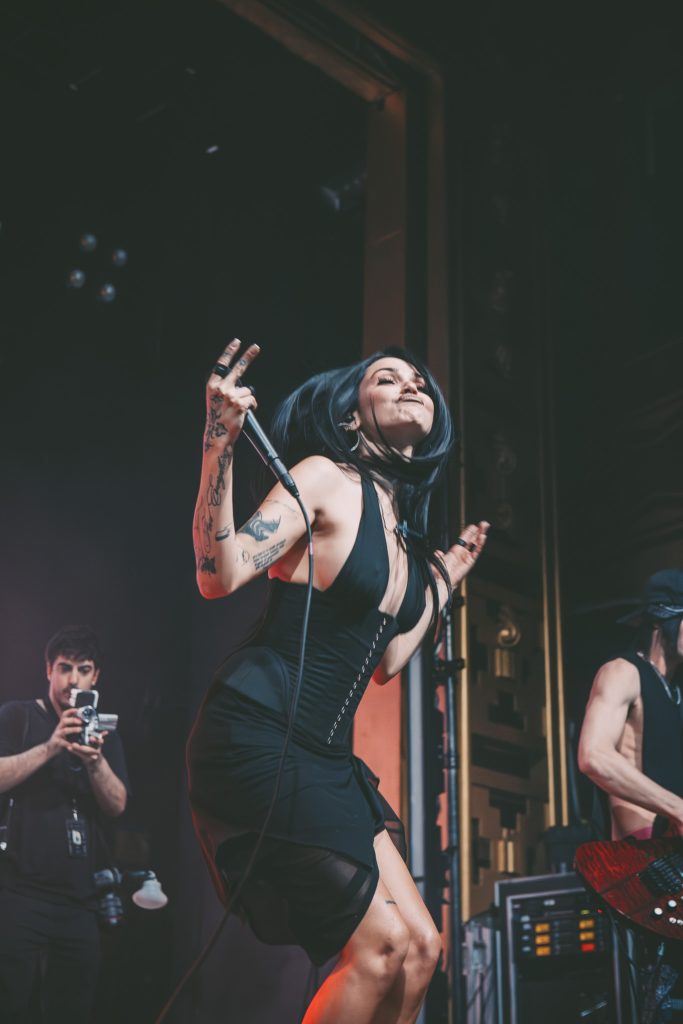
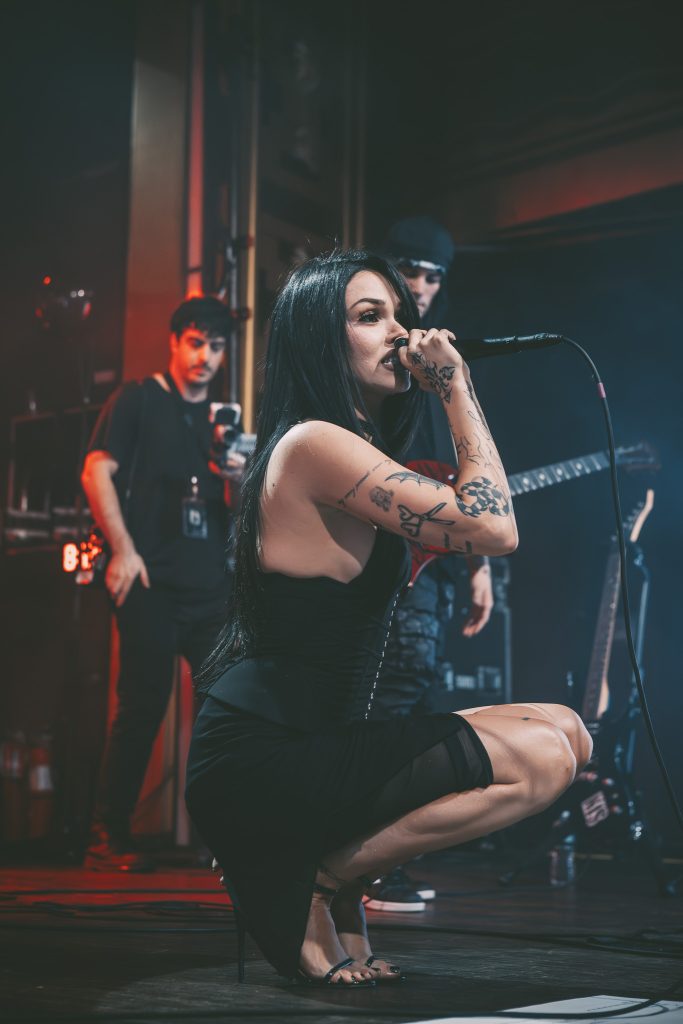
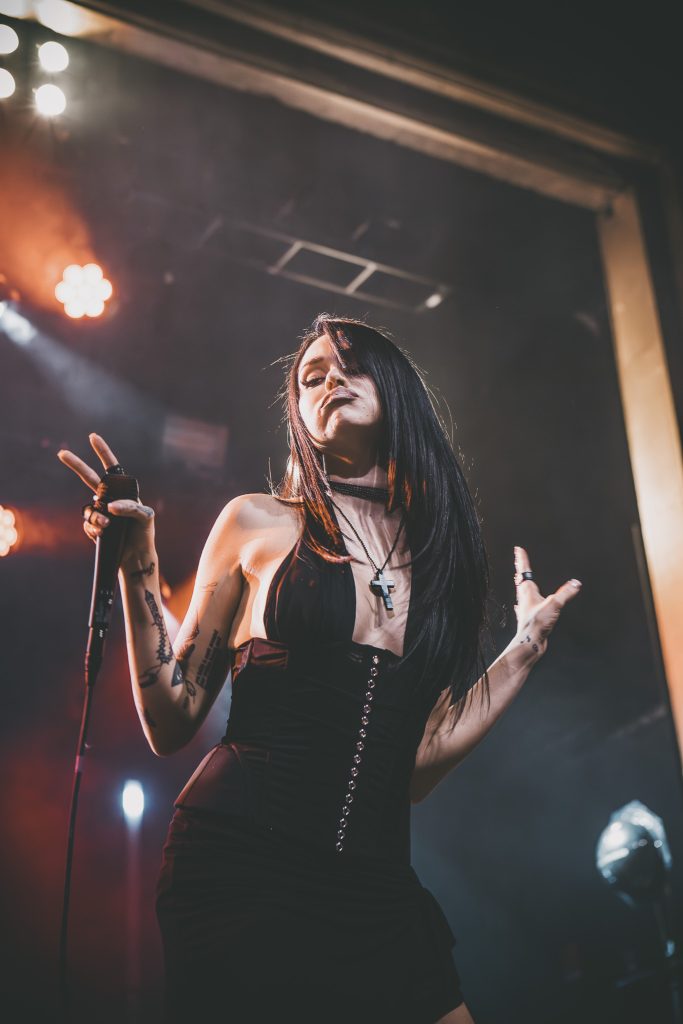
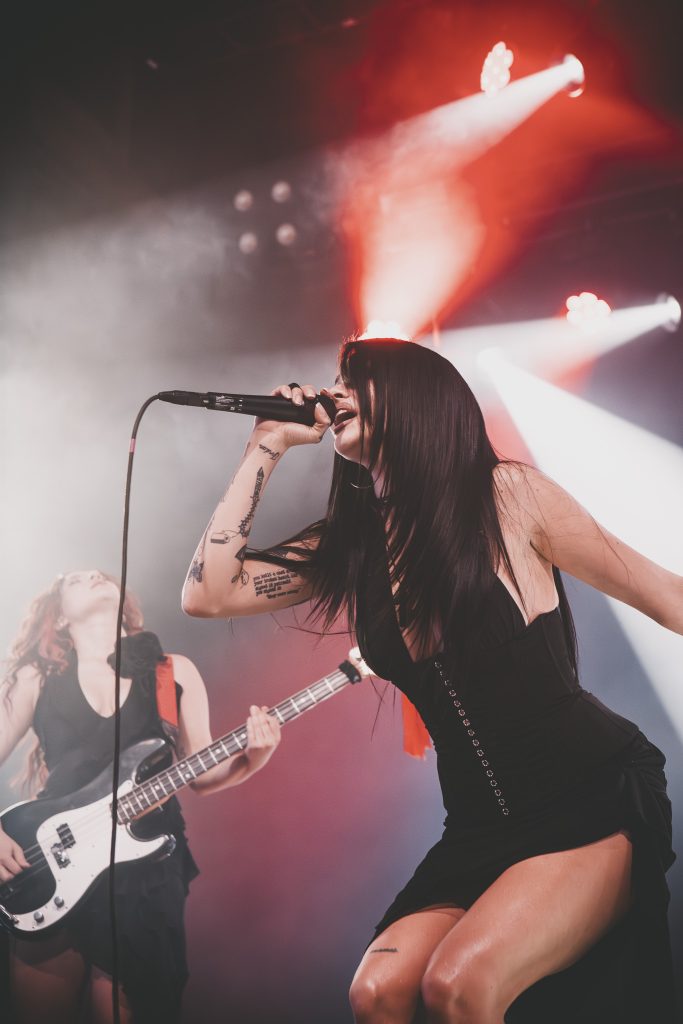
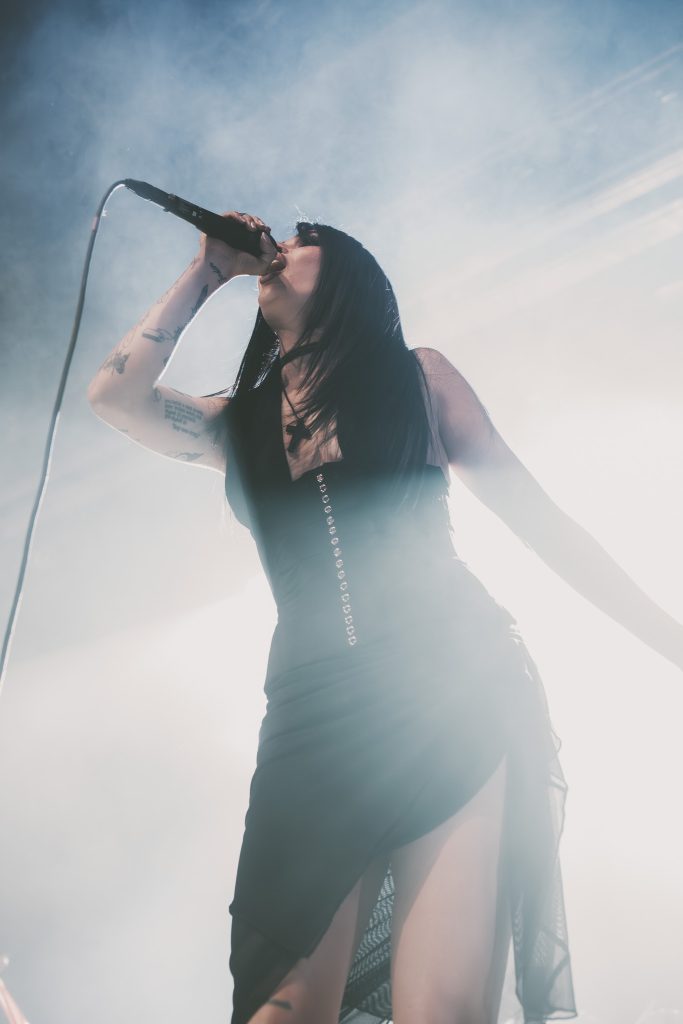
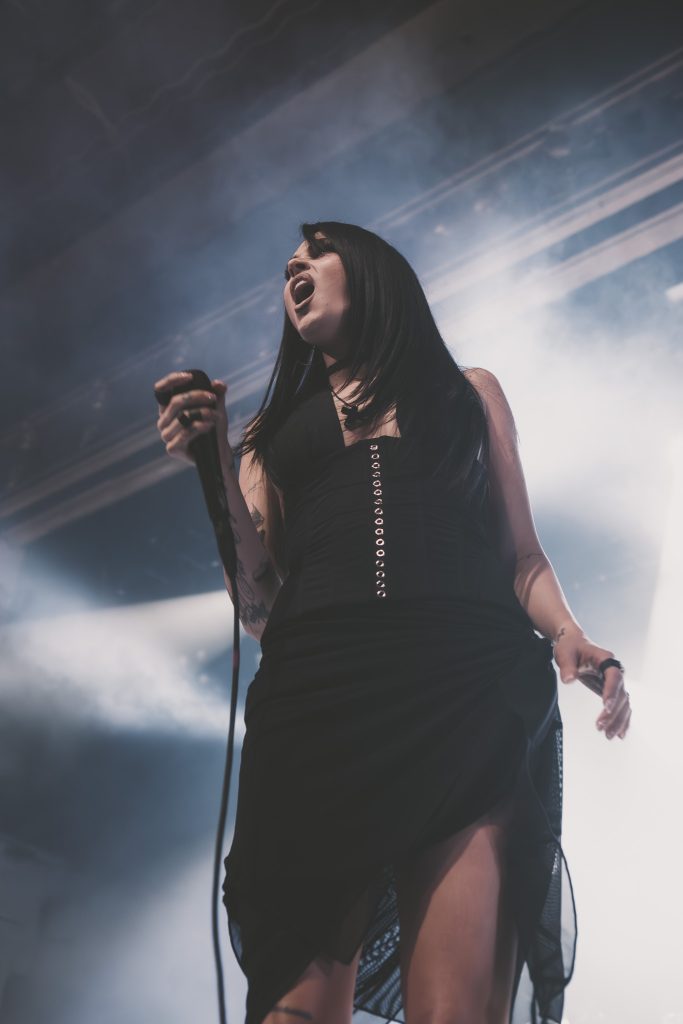
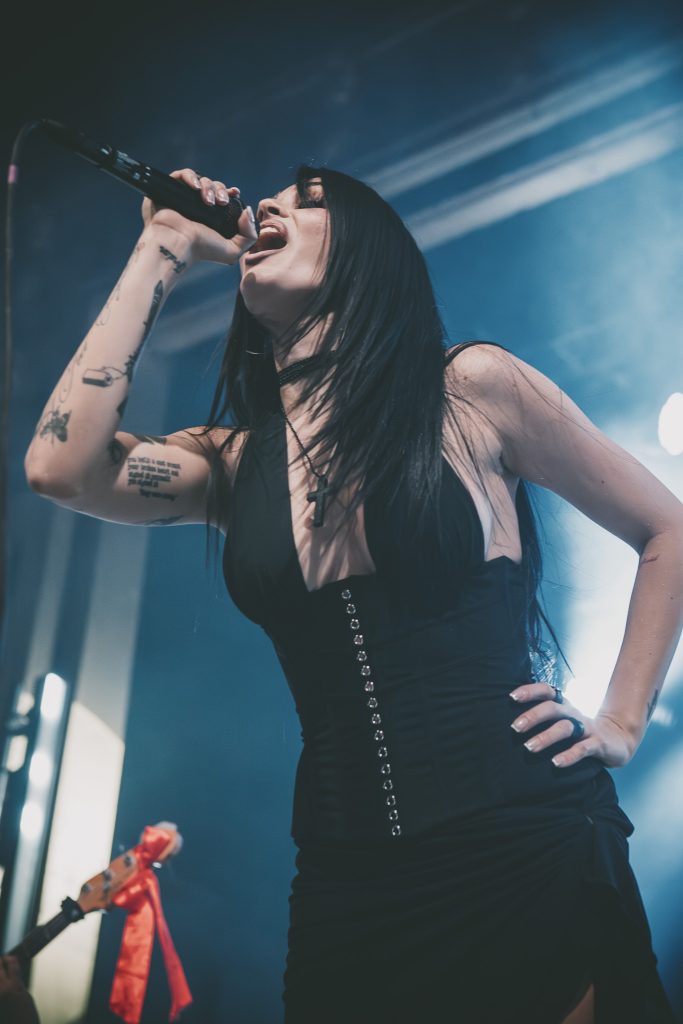
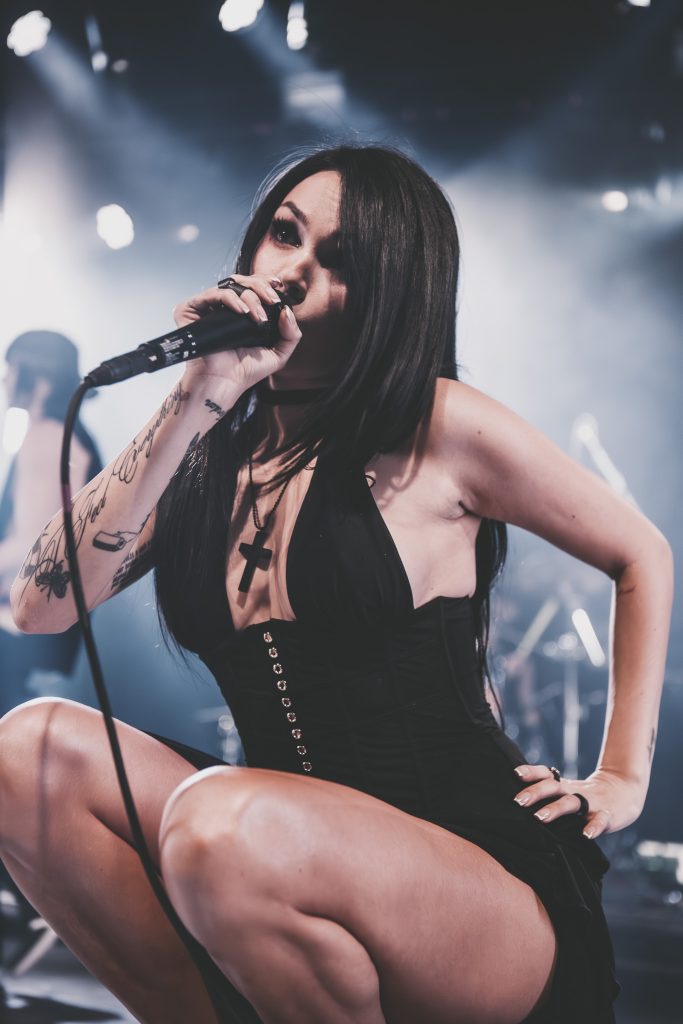
When Maggie Lindemann strutted on stage in a long black dress and tall, thin stiletto heels, I fully expected the show to unravel at a slower pace, although I was naive to assume such with high intensely high-voltage her music is. Immediately, the guitars whined, the bass thumped through your chest, the drums slammed with a force that left no room for hesitation – there was no time to catch your breath, no time to adjust to the sudden shift in atmosphere; Lindemann stomped her foot ont he gas and crashed into the crowd full-throttle, imploring them to join in on the mayhem without warning.
A few years ago, I received an approval that still rests at the top of my “best performances” list: Maggie Lindemann at Mercury Lounge. At the time, SUCKERPUNCH had just been unveiled to the world, Lindemann was still considered my dirty little secret, finding her foot within a new sonic territory, exploring her musical identity in real time. I remember when “PARANOIA” was first released, every single song was an immediate favorite; I recommended the EP to every person that asked me for new music, all of the songs sat comfortably on my playlist, and most-streamed tracks of the year. For me, the debut EP is what put Maggie Lindemann on the forefront. Witnessing her evolution from that small stage to a bigger room like Webster Hall has been nothing short of incredible, and entirely well-deserved.
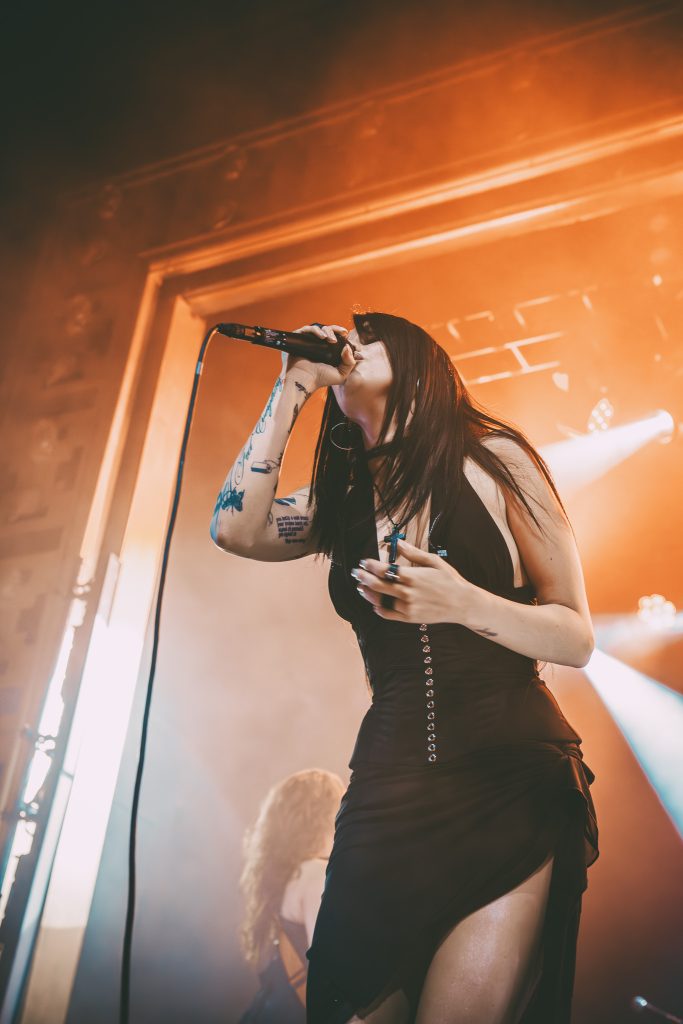
The voice is a muscle, and like any good athlete, its performance strengthens with time, with repetition, with use. That assertion is proven with Maggie Lindemann. At Mercury Lounge, her voice was already dazzling. I remember thinking her tracks rested on autotune, only to be completely blown away by how powerful her presence was live. At Webster Hall, that sentiment only became more pronounced, more undeniable. Her vocals have not only become more polished and potent, but her presence has become something you cannot ignore. She belts out choruses, lets her vibrato stretch and shimmer, elongates notes that aren’t expressed in studio recordings, letting them hang in the air just a second longer.
It was one of those shows that you wished you could turn into a live recording album, something you could revisit and relive. She breathed new life into the songs – more control, more conviction – and it surely left me starstruck. Songs I once experienced at Mercury Lounge, like “Crash and Burn” and “she knows,” held even more weight at Webster Hall; however, “self sabotage” was the standout for me. The lyrics of this song have always resonated with me on a personal level, but live, there was so much emotion seeping through the seams, it cut deeper, it felt more exposed, more honest.
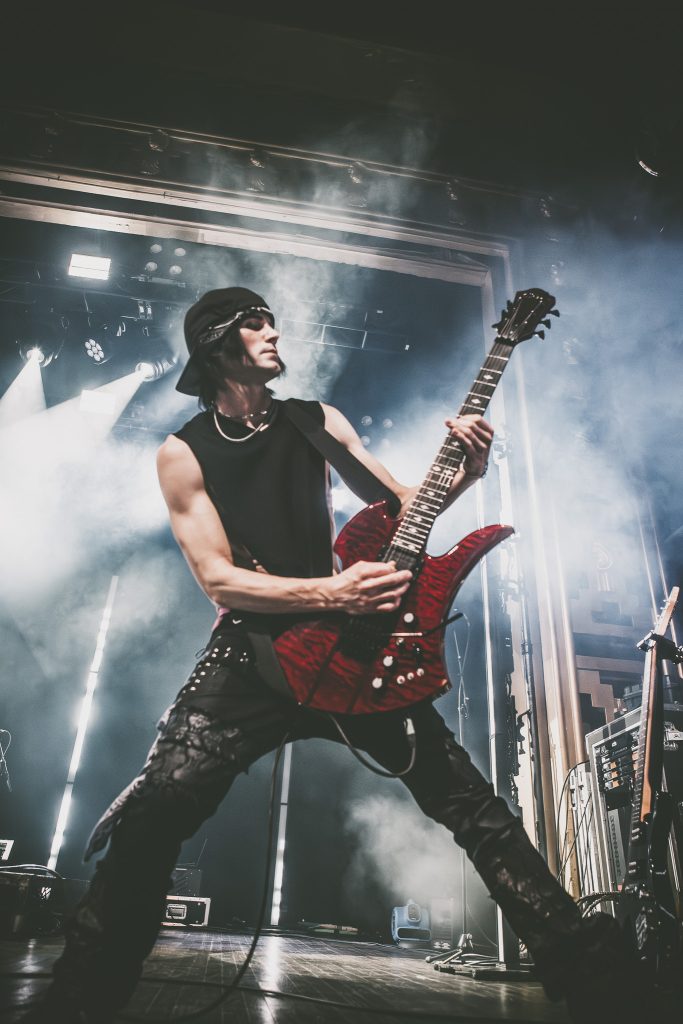
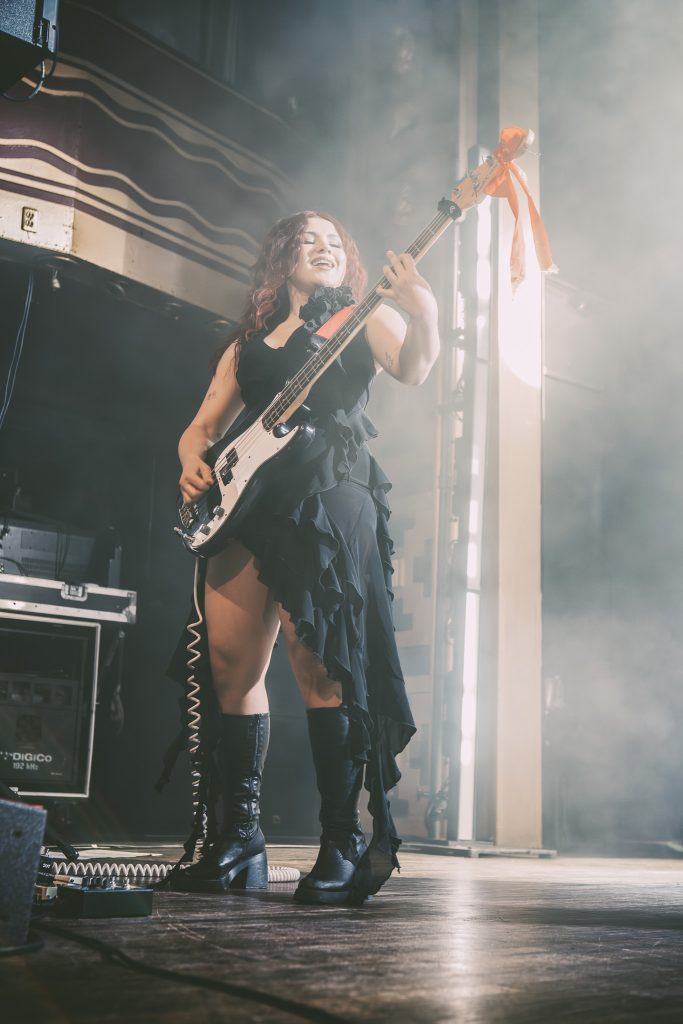
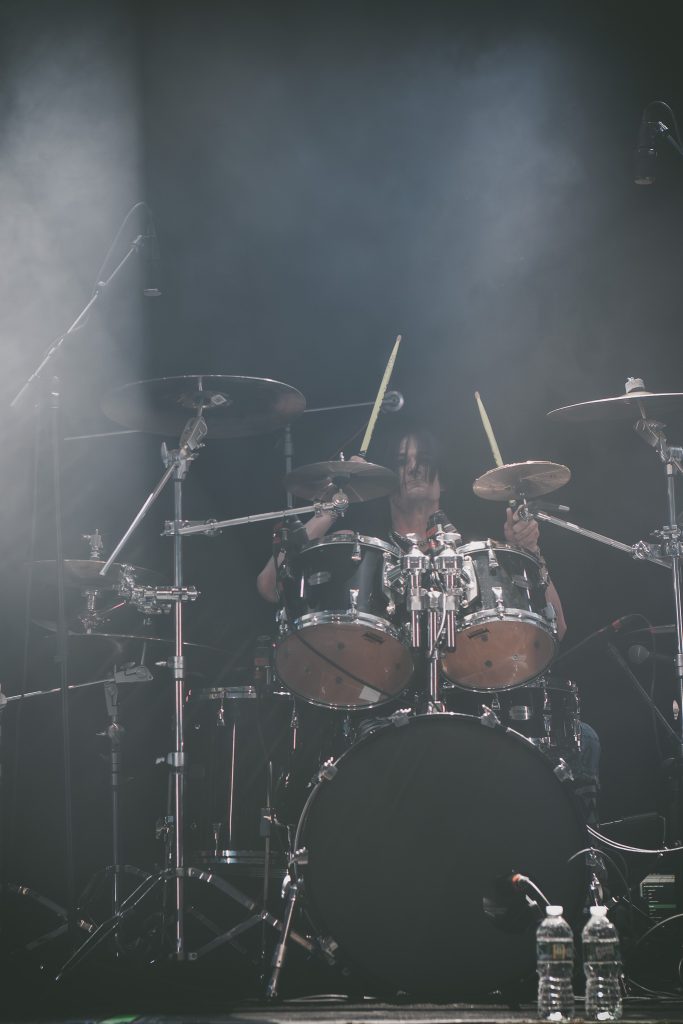
While Maggie Lindemann is a solo artist by nature, she didn’t take shortcuts, bringing out a full live band experience to accompany her, and every single instrumentalist was excepetional in their own regard. As a guitarist myself, I was immediately drawn to the solos woven into the tracks that weren’t in the original recordings. The guitarist was show-stopping, and the guitar cried out all night with lines that you wished you could bottle up and carry with you, tuck back into the studio recordings just to hear them again later. The drummer and bassist held everything down with slicing percision, equally as experienced, equally as locked in. Beside the band, Maggie Lindemann only shined bright; her music begs for this kind of organic, heavy instrumentation – and she absorbed the chemistry, prancing across the stage to the rhythm and beat.
The night ended with an encore featuring “It’s Not Your Fault” – an obvious crowd pleaser from her first EP. The song changes every night, but in New York City, “It’s Not Your Fault’ felt like the finale we needed, one last moment to scream our feelings into the void and sit in that release, that strange mix of vulnerability and self-assurance.
Maggie Lindemann’s return to New York City wasn’t just anticipated; it felt necessary. The artist I once thought was too easily brushed off as just another social media singer finally stepped into the spotlight she has always deserved, and New York City showed up for her, filling in every crevice, every corner, every inch of the room.
Leave a Reply