
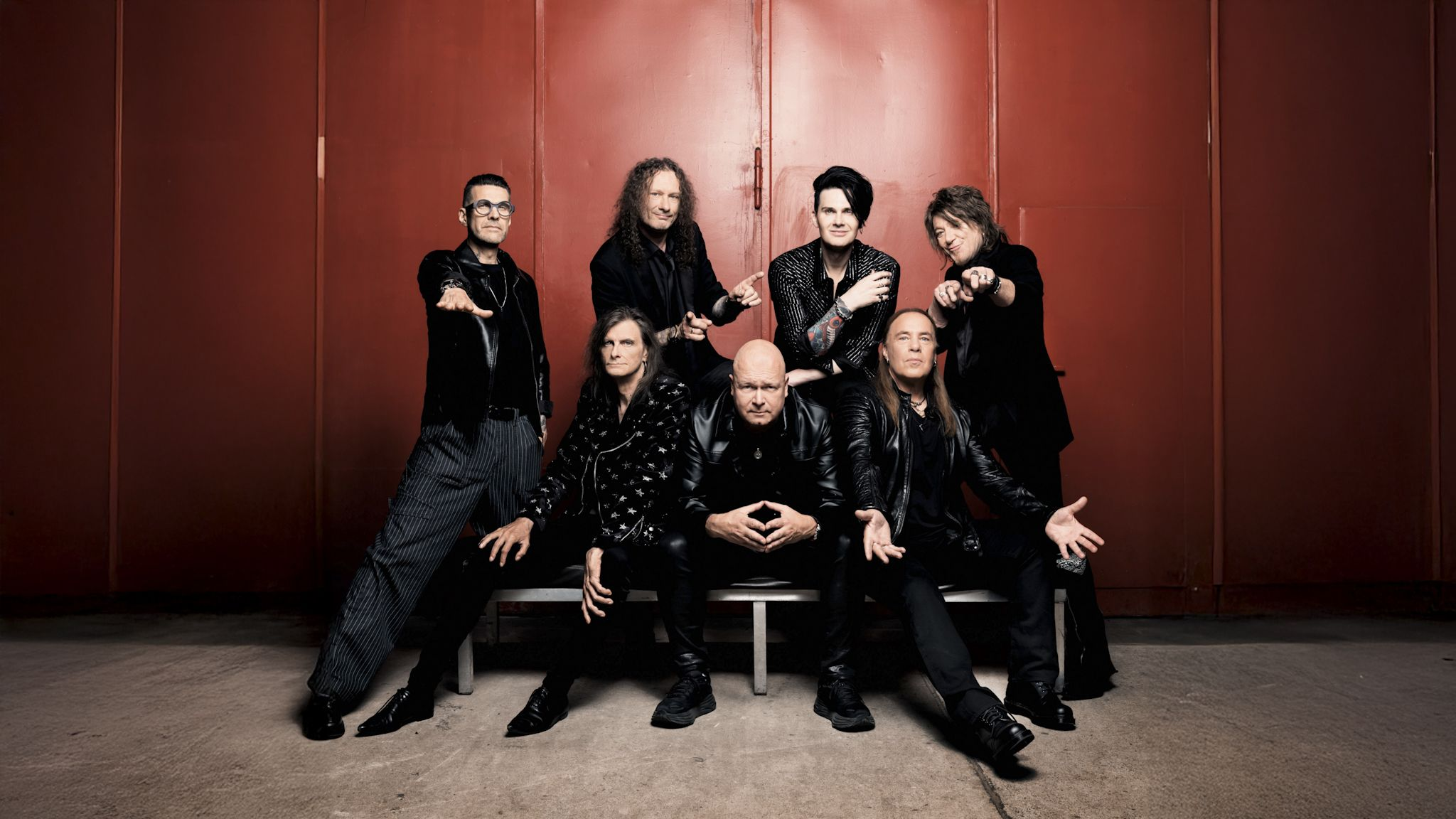
After four decades of music and live performance, there is no question that German power metal ensemble Helloween has a fault of stories to tell about the music, the road, and every fleeting moment in between. We had the pleasure of sitting down with guitarist Michael Weikath ahead of the tour kicking off in early April to discuss the unforgettable moments that have stayed with him, lingering across the last 40 years like echoes that refuse to fade.
For Weikath, his journey into music started with “my own kind of hard rock band with a keyboard player and some friends who were all more or less capable of doing something” in the late ’70s. Structure didn’t matter back then; rather, it was instinct – an urge to create, to make noise, to step into a room and feel something shift. His original band quickly spread, leading him to meet Kai Hensen and Markus Grosskopf, “and then we decided to converge our talents.” At first, the milestone was simply “to get a record contract,” but that ambition quickly stretched outward into something larger, something almost mythic: “world domination in a bigger sense or in a smaller sense or in a better sense.” What guided them through it all: “We have only the purest intentions,” he defines.
“In 1984, we started doing this Helloween band,” and since then, the band has continued to push boundaries, carving out a sound that feels both timeless and relentless. But this upcoming Spring tour holds a different kind of weight: “We’re going to be back doing concerts with multimedia screens behind the stage and lots of setup and some screaming guitars… reuniting with some previous former ex-members.” Musically, the lineup promises nothing but crushing, high-voltage metal explosions, sharpened by decades of experience and backed by an elevated, almost cinematic live experience that feels larger than the stage itself.
When Weikath reflects on the most memorable concerts he’s been a witness to, his memory doesn’t just recall; it drifts, moving between eras, between stages, between moments that left something behind. He begins by naming B.B. King, but quickly jumps to mentioning “Michael Shanker, Paul Raymond, and all them guys… that was amazing.” The most monumental for us to hear is “I saw Pink Floyd on the ‘Animals’ tour… it was pretty impressive.” Being the seasoned musician he is, the list doesn’t end there; it unfolds: “I’ve seen The Kinks like three, four times… I saw Aerosmith in Hamburg when I was 15 or 14 or something.” When you glance over the inventory, his influences seep through naturally, and it becomes clear why Helloween has become a staple in power metal, masters of the genre shaped by some of the most legendary names in the industry.
Having toured since the ’80s, Helloween and Weikath have watched the industry shift, morph, and rebuild itself in real time, the energy in a concert hall evolving into something both new and familiar. Nonetheless, the band is “always trying to come back to the roots of whatever it was that made us start back then.” In 2026, the music feels essential, not so much an experiment as a return to something instinctive. “It was something we wanted to do.”
When it comes to live performance, the band had mastered a formula early on in their career, and they continue to chase that same pulse: “When we did the first few records, we were always doing things based on the club situation or like you’re playing a club… You want to impress people, you want that they leave with a melody stuck in their heads… kind of make sure people would remember and come back for a different show… we kind of developed that vein of stadium metal. Because we had a few occasions of that… like you do this chord, and you do that beat, and then you, ah, it’s like a stadium thing.”
When preparing for the road, there are always the essentials you cannot live without, and of course, Weikath doesn’t skim over the bare necessities: painkillers, a warm blanket, a good pair of shoes, and “the overall bomber jacket. It’s kind of like a lifesaver.” The slightly unconventional just feels natural, almost ritualistic: “The guitar pick, like in the jeans. So you always have access to at least one pick,” and a special brand of Denmark-produced cigarettes. Together, it forms a kind of identity you cannot replicate or manufacture; it’s candid, lived-in, entirely his.
Reminiscing on the last 40 years, Weikath recalls the night they played in Dallas on Halloween; their first time truly experiencing an American Halloween in all its chaos and spectacle. “You’re out there with that name called Helloween with an E, and then you don’t really know anything about it. Like you could have called yourself Easter or Christmas or so, and then you don’t know what’s going on.” But ultimately, one of the most rewarding experiences he returns to is, “Once we came to Woodstock in Poland. You wouldn’t have thought there were like 250,000 people there.” A sea of people, stretching past what feels visible, a moment where scale becomes almost surreal.
What makes this upcoming North American run special is the elevation in production: “We have that multimedia screen behind us, which is feeding everyone optical illusions and stuff and impacts… it’s going to go well with the overall show that we’re going to do on stage.” He jabs briefly, “Supposedly, we’re going to play well, and in sync and harmonious,” but with the lineup featured, that part already feels understood, almost guaranteed.
As for the song fans can anticipate the most, Weikath cites one of the band’s few ballad tracks, “Into The Sun.” It’s not what you would expect from a band as sonically intense as Helloween, but Weikath notes, “It’s kind of easy to play, but it’s also going to take some expression to bring it across in a proper way… I went out there like with my new custom-made guitar mode, which is a white one with a flying V-head, double-cutaway kind of type guitar… the spark goes beyond anything you would have expected that evening.” But this is only one moment among many. Weikath assures, “there’s a few remarkable spots during the show.”
In an age where digital media continues to dominate, physical presence has begun to feel rarer, more cherished. When Michael Weikath flips the lens outward, he reminds us why live music still matters: “because you can catch a certain vibe. You get some vibrations from the sound system. You get to see some strange characters that otherwise you’re not going to meet in the subway. And there’s going to be one or the other emotion that you’re going to feel, that’s going to erupt from your inner self that wouldn’t have expected right then, but there it was.” And for a band like Helloween, that’s the legacy; not just the decades, the records, or the stages, but the feeling they leave behind, impossible to shake.

Leave a Reply