
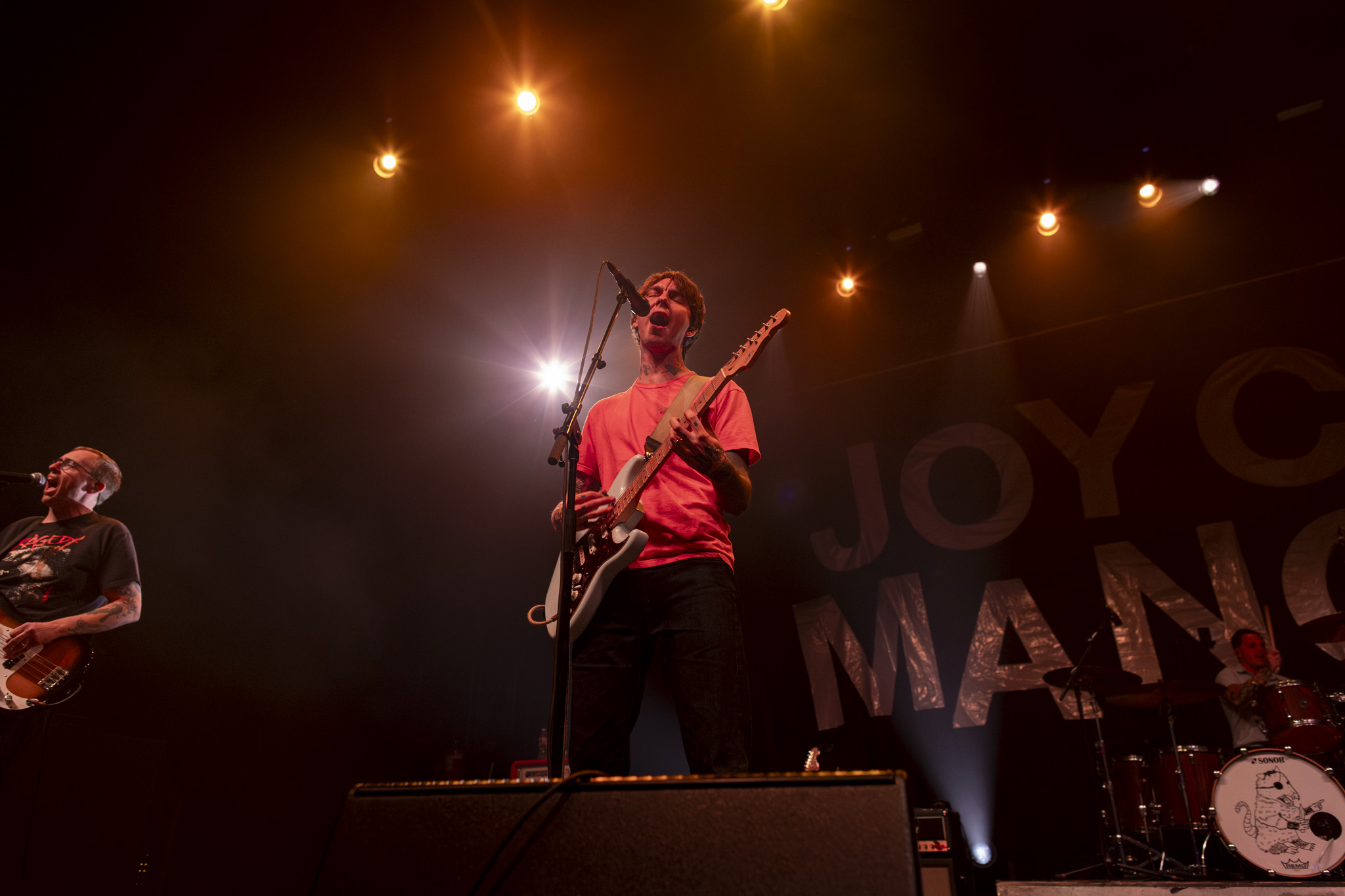
Joyce Manor did not need a massive production to make Fillmore Auditorium feel alive on Monday night. They just needed short songs, sharp hooks, and a room full of people ready to shout every line back like their life — or at least their rent — depended on it.
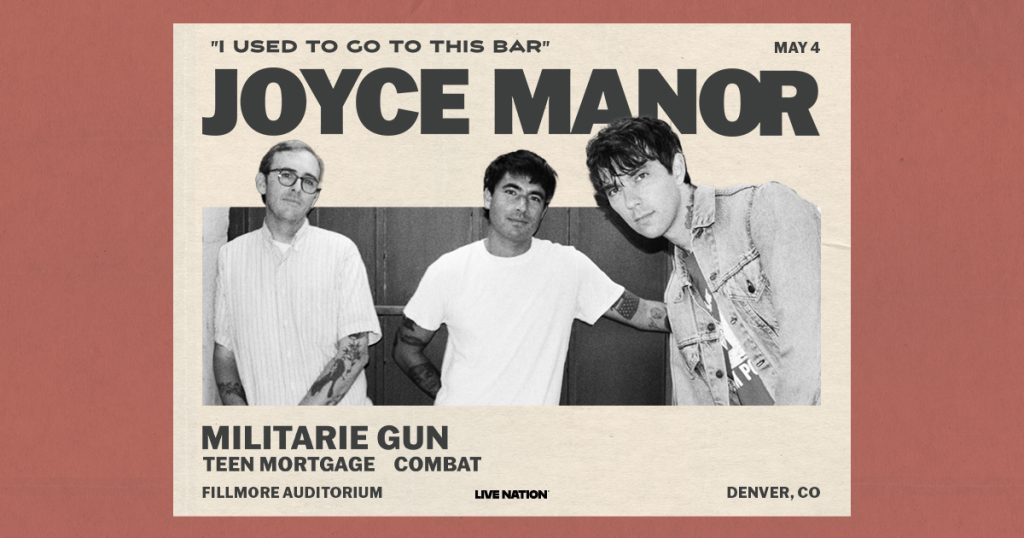
On May 4, Joyce Manor brought the “I Used To Go To This Bar” Tour to Fillmore Auditorium in Denver with support from Militarie Gun, Teen Mortgage, and Combat. The lineup pulled from different corners of punk, hardcore, garage rock, and indie, making the night feel less like a standard touring package and more like a full crash course in how loud, scrappy guitar music keeps mutating without losing its pulse.
Combat opened the night with the kind of early set urgency that made the room feel active before the headliners were anywhere near the stage. Their songs carried a loose, nervous energy that fit the bill well, giving the crowd something immediate to grab onto instead of asking everyone to stand around politely while pretending checking a phone in a dark venue is a meaningful activity.


Teen Mortgage followed with a heavier, dirtier charge. The Washington, D.C. duo brought a garage-punk punch that cut through the room with fuzz, speed, and a little bit of menace. Their set had the kind of rough-edged force that works especially well in a venue like Fillmore, where sound can either spread out or hit straight through the middle. Teen Mortgage chose the second option and made it count.


Militarie Gun pushed the night into a different gear. The band’s blend of hardcore bite and melodic instinct has always been the hook, and live, that contrast landed hard. Their set had muscle, but it also had movement. The songs were aggressive without becoming one note, catchy without sanding off the grit, and direct enough to pull the crowd forward almost immediately.


What makes Militarie Gun stand out is how naturally they bridge scenes that sometimes act like they need separate parking lots. There is hardcore in the foundation, but there is also a strong melodic center that makes the songs feel built for rooms bigger than the basement while still carrying the sweat of one. At Fillmore, that balance worked. The set felt physical, loud, and accessible without feeling cleaned up for mass consumption, which is a nice reminder that bands can evolve without being put through the corporate rock laminator.
By the time Joyce Manor took the stage, the room had already been stretched in several directions. That made their arrival feel even sharper. Joyce Manor songs have always thrived on compression. They do not overstay, overexplain, or dress themselves up with unnecessary drama. They show up, hit the nerve, and get out before anyone can ruin the moment by trying to make it tasteful.


The Torrance, California, band came out with the confidence of a group that knows exactly what its songs mean to people. Joyce Manor’s catalog has become a strange little shared language for fans who grew up somewhere between punk houses, car stereos, heartbreak, bad decisions, and better choruses. At Fillmore, that connection was immediate. The crowd sang loudly, moved constantly, and treated even the shortest songs like full emotional events.
There is something funny about seeing Joyce Manor in a room the size of Fillmore Auditorium because their songs still feel like they belong inches from your face. Even when the venue is bigger, the music keeps its small-room urgency. The band did not need to inflate the songs to fit the space. Instead, the space seemed to shrink around them. The choruses carried to the back, the faster moments pulled the floor into motion, and the quieter emotional turns still felt close enough to sting.
Joyce Manor’s set leaned into the band’s greatest strength: economy. The songs came fast, rarely wasting a second, but each one landed with a clear identity. Some bands write short songs because they run out of ideas. Joyce Manor writes short songs because they know exactly where the blade is supposed to go. It is efficient, rude, and frankly refreshing in a world where too many bands treat a bridge like a zoning requirement.


The crowd responded with the kind of full-room participation that turns a show from performance into release. Fans shouted lyrics back with the urgency of people who had been carrying those lines around for years. The floor stayed restless, but the energy never felt detached from the songs. It was not movement for movement’s sake. It was tied to memory, tension, nostalgia, and the very specific joy of hearing a band play songs that still feel like they know too much about you.
The newer material from I Used To Go To This Bar fits naturally beside the older favorites, carrying the same directness that has defined Joyce Manor while giving the night a current pulse. The tour’s title alone feels like a thesis statement for a band whose music has always been tangled up with place, memory, and the weird emotional archaeology of growing older without becoming boring. An impressive trick, considering adulthood usually tries to turn everyone into a calendar notification with knees.


Leave a Reply