
Mad Cool Festival turned 10 this year, and it celebrated the only way it knows how: by getting bigger, louder, and more ambitious. Running from the 8th to the 11th of July across four days, the festival took over the Iberdrola Music venue in Madrid’s Villaverde district, capping daily attendance between 50,000 and 55,000 people. For an anniversary edition, that restraint felt deliberate. This wasn’t a festival trying to prove how big it could get; it was one trying to prove how good it could be.
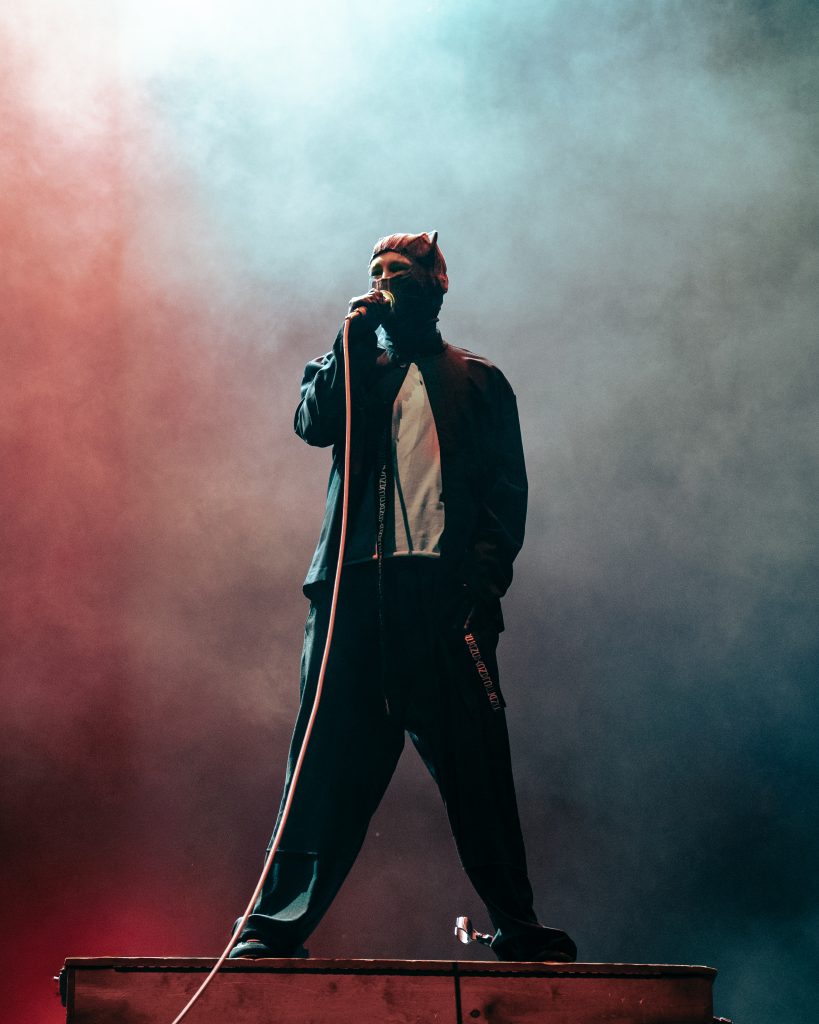
Image of Twenty One Pilots by Rosie Arron
Mad Cool is almost an entirely outdoor affair, spread across five stages that each carry their own personality. The Region of Madrid Stage was the main event, hosting the festival’s biggest names, including Twenty One Pilots, Kings of Leon, Wolf Alice, and Pulp. Alongside it sat the Orange Stage and the Loop Stage, which showcased dance music and DJ sets. The real surprise, though, was the Mahou Cinco Estrellas and Mahou Reserva stages. Both were indoor and air-conditioned, and their lineups leaned more towards up-and-coming artists, including TTSSFU, Florentenes, and overpass. They also offered something the outdoor stages couldn’t. The lighting and enclosed space made these sets feel less like a festival slot and more like a proper gig, creating a sense of intimacy that the open-air stages couldn’t quite match.
Tickets were available in a few different options. A standard four-day general admission pass cost €240 and included festival entry. Single-day tickets were also available for around €95, making them a good choice if only one day’s lineup caught your eye. Then there was the VIP option: roughly €430 for four days, or €160 for a single day, which included a dedicated entrance away from the general queue, a terrace with a privileged view of the main stage, a relaxation area with discounted food and drinks, a welcome pack, and home delivery of the wristband for anyone based in Spain. It’s a useful upgrade for anyone who wants to skip the queues to get in or would rather not be shoulder-to-shoulder with 50,000 other people. But it’s worth saying plainly: general admission holds up just fine on its own. The festival grounds are generous enough, and the atmosphere is good-natured enough, that VIP feels like a comfort purchase rather than a necessity.
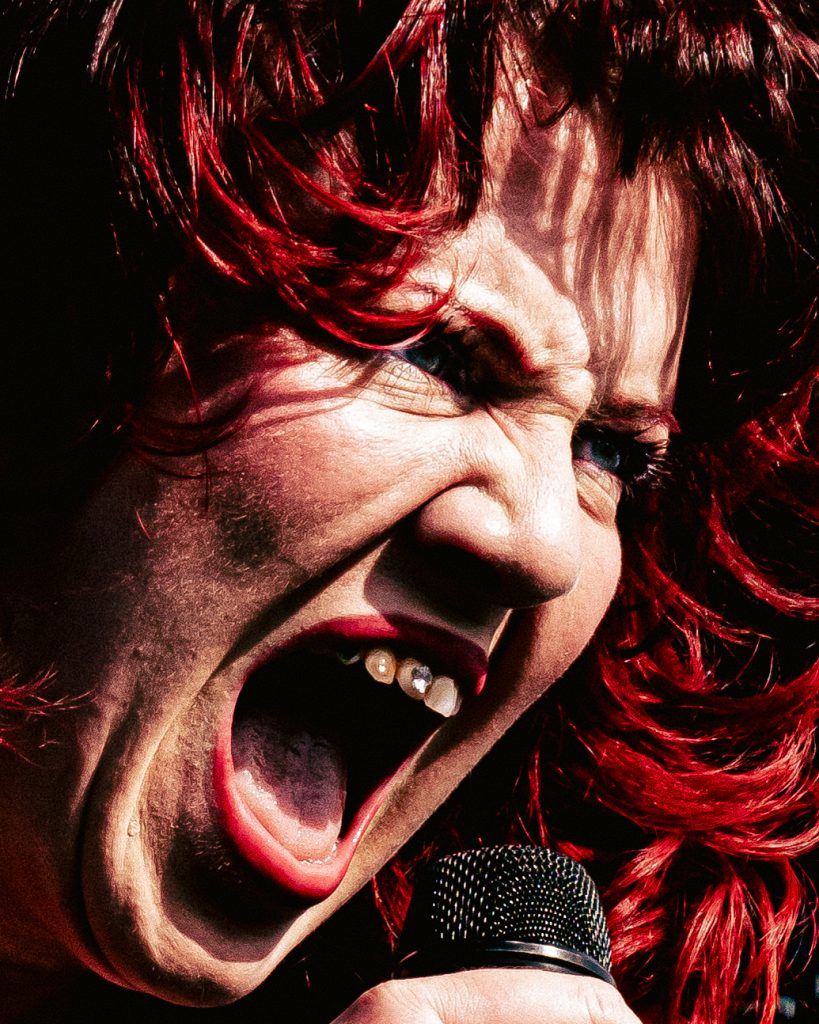
Image of CMAT by Rosie Arron
Mad Cool is built around the reality of Madrid’s summer heat. Gates didn’t open until 6 p.m. each day, with the festival running well into the early hours of the morning. It’s a sensible call rather than an inconvenience. By the time the sun dropped and the temperature followed, the whole site took on a different energy, one that a daytime festival in that kind of heat simply couldn’t sustain. The majority of the crowd was Spanish, but Mad Cool attracted visitors from all over the world. Festival-goers had travelled from the United Kingdom, across Europe, and from as far away as Japan, with plenty of other accents heard throughout the site. Twenty One Pilots deserve particular credit here: their fanbase is one of the most devoted in music right now, and a huge number of the festival’s international visitors had clearly built their entire trip around that one headline slot.
As a young woman travelling from the U.K., this was the safest I have ever felt at a festival of this size. Security were consistently helpful and attentive, and the crowd itself felt entirely focused on the music rather than anything else. It showed in smaller ways as well. The grounds were remarkably clean throughout, with virtually no litter underfoot, large bins placed at regular intervals, and a reusable cup system in place across every bar, meaning drinks were served in refillable cups rather than single-use plastic. It’s a small detail, but one that said a lot about how the festival is run.
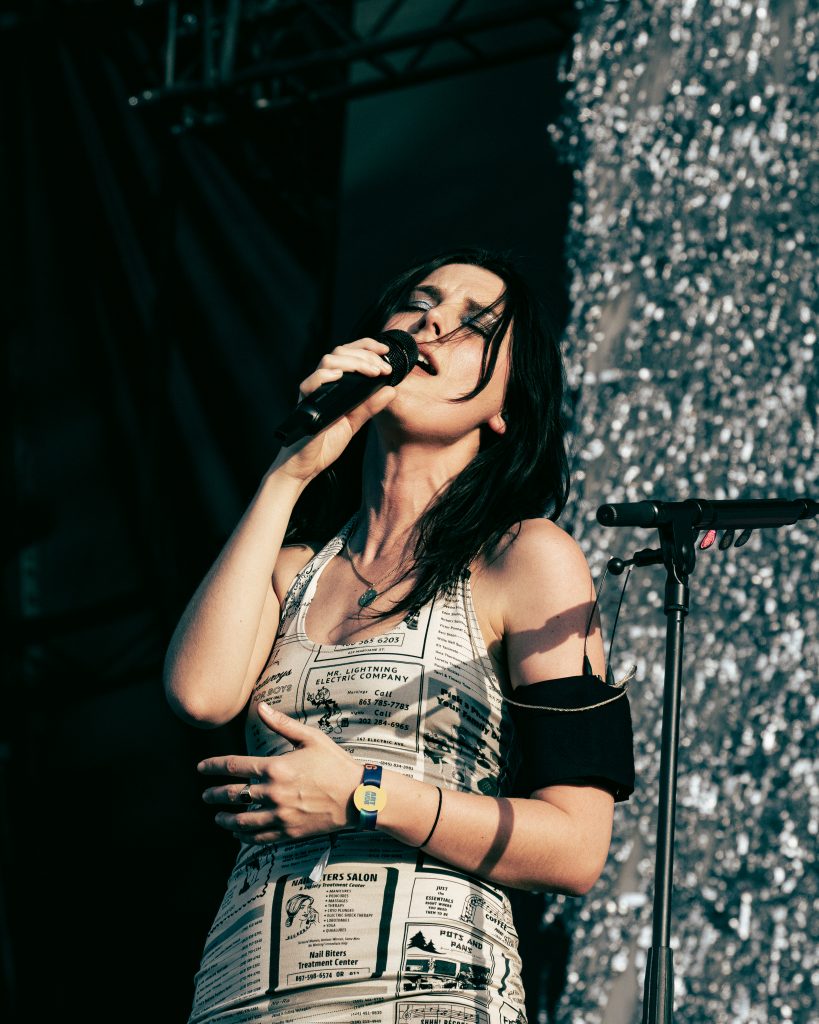
Image of Wolf Alice by Rosie Arron
Food was one of the festival’s greatest strengths, with 23 food stands and two food trucks offering plenty of choice across the four days. Vegetarian, vegan, and gluten-free options were built into the offering rather than tacked on as an afterthought, and the sheer range made choosing what to eat each evening a challenge in itself. Picnic tables clustered near the food court gave people somewhere to actually sit and eat, rather than balancing a plate while standing. Drinks were easy to come by too, with several bars scattered across the site and the main one positioned centrally, beneath the VIP section. Mahou beer and Aperol stands were dotted around at roughly €6 a drink, which felt fair for a festival of this scale.
Mad Cool’s genre spread is broad by design, and this year’s bill leaned into rock and alternative heavyweights, Foo Fighters, Florence + The Machine, Nick Cave & the Bad Seeds, Pulp, and Kings of Leon, while pulling in pop and electronic names like Lorde, JENNIE, Halsey, Charlie Puth, Zara Larsson, and Moby to round things out. Interpol, The Vaccines, Pixies, The Black Crowes, and David Byrne gave the bill a strong indie and alt-rock backbone, while acts like Boys Noize, Nina Kraviz, and Richie Hawtin kept the Loop Stage firmly in dance territory. What stood out most was the balance between established international acts and emerging Spanish artists. Homegrown names like La Paloma, Aerea, Yung Prado, and Luxi Villar shared the bill with some of the biggest artists in the world, giving festivalgoers the chance to discover new music alongside major headline performances. Seeing local acts play to audiences who had travelled from across Europe and beyond made those sets feel all the more significant.
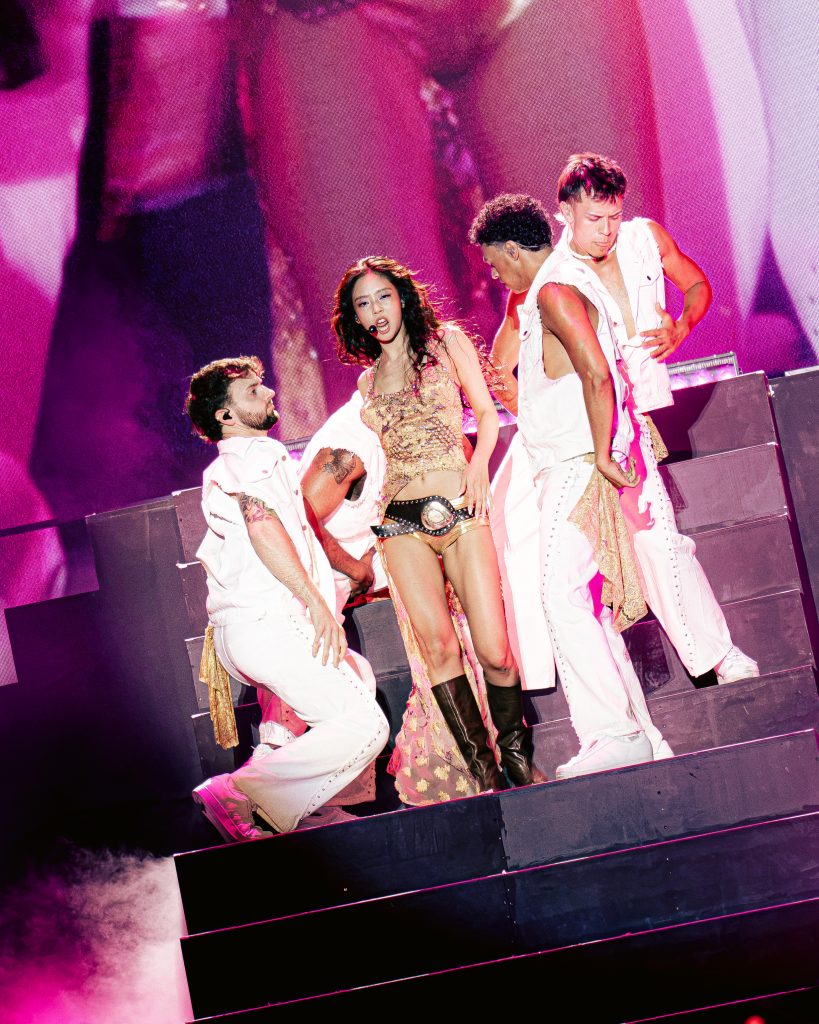
Image of JENNIE by Rosie Arron
Merch is an easy thing to get wrong at festivals, and Mad Cool clearly put real thought into theirs. Beyond the expected lineup tee, there were Mad Cool-branded football-style jerseys and star-print zip-up hoodies, alongside a colourful run of t-shirts that stood apart from the usual black-on-black festival uniform. It felt less like merchandise and more like a small clothing line, which is a rare thing for an event like this to pull off. The festival’s app and social media presence did a lot of useful work too. Set time changes and updates arrived constantly, but so did notices for the things happening off-stage such as spray-on tattoo stations, a Ray-Ban Meta experience, and even a screening of Spain’s World Cup match.
A few performances stood out in particular, with artists proving they had the ability to command a festival-sized audience without losing any sense of connection. Wolf Alice took to the stage early on day one, with a glittering backdrop setting the scene as crowds gathered from across the site. Ellie Rowsell is a genuinely magnetic frontwoman, and the rest of the band matched her energy throughout. There was nothing forced about the performance; they played like a band fully comfortable in their own identity, and it feels only a matter of time before they step into headline territory at festivals like Mad Cool. Lorde’s set was the opposite in scale but not in impact. For a festival this size, it felt remarkably intimate, built around long stretches where it was just her, her band, and two dancers on a stage that suddenly felt much smaller than it was. She has a way of making 50,000 people feel like they’re each having a private moment with her, and the crowd repaid that in full, erupting for “Green Light” and “Ribs” in a way that made it clear whose set this festival season really belonged to.
Twenty One Pilots headlined day three, and the ritual around it started before the music did, with thousands of fans in coordinated outfits sprinting toward the main stage the second the gates opened. The show itself lived up to the anticipation, and, by the second song, Tyler Joseph was already out in the crowd, held aloft on a platform by fans, a small moment that said everything about the level of control the band has over an audience that size. It played less like a festival set and more like a full production, unpredictable in exactly the right way. Then there was CMAT, who brought a different kind of fearlessness entirely. The Irish singer-songwriter has been open, in her music and in public, about the scrutiny she’s faced over her body and appearance as her profile has grown, and none of that seemed to touch her on stage. If anything, it’s fuel. Her set was ruthless in the best sense: high-energy, unapologetic, and generous enough to keep pulling focus back to her band, who got their own moments to shine throughout.


10 years in, Mad Cool has clearly figured out what most festivals never quite manage: that the bill is only ever half the story. The stages mattered, obviously, and this year’s lineup was as strong as any European festival has put together in recent memory. But it was the details around it, the food, the merch, the cup deposit scheme, the late gates built around Madrid’s heat, that made the anniversary edition feel like more than just a very good weekend of music. It felt like a festival that has grown up without losing the identity that made people want to return in the first place.
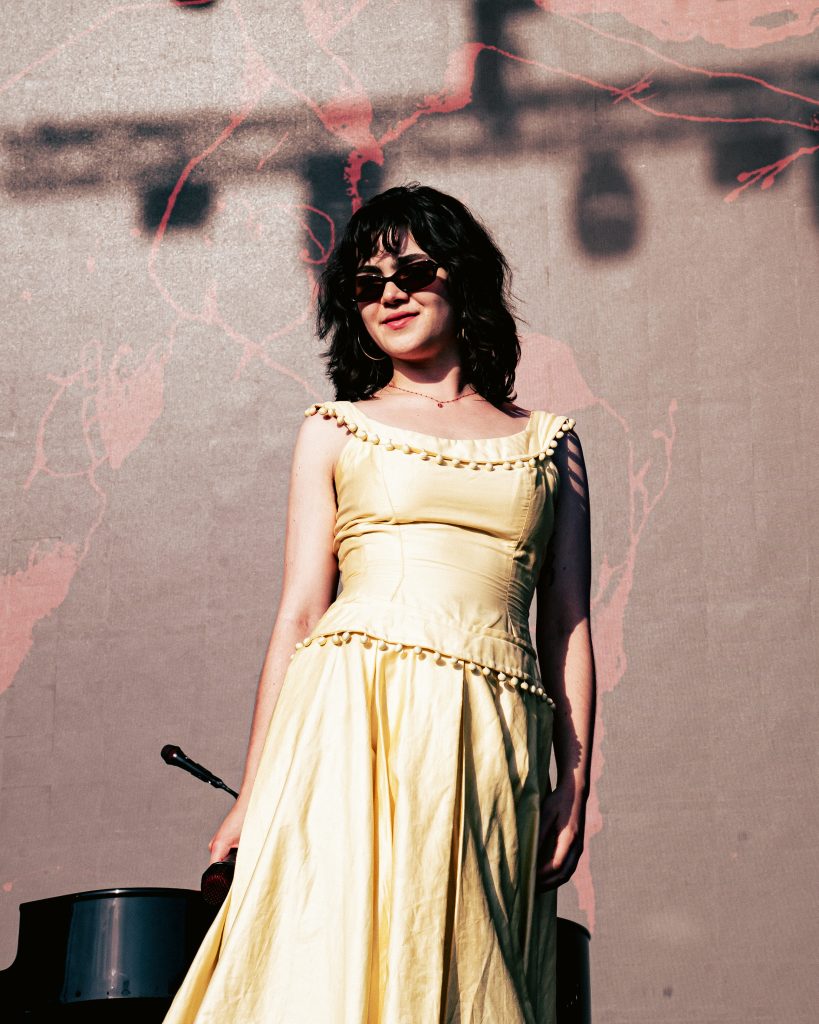
Image of The Last Dinner Party by Rosie Arron
Leave a Reply