
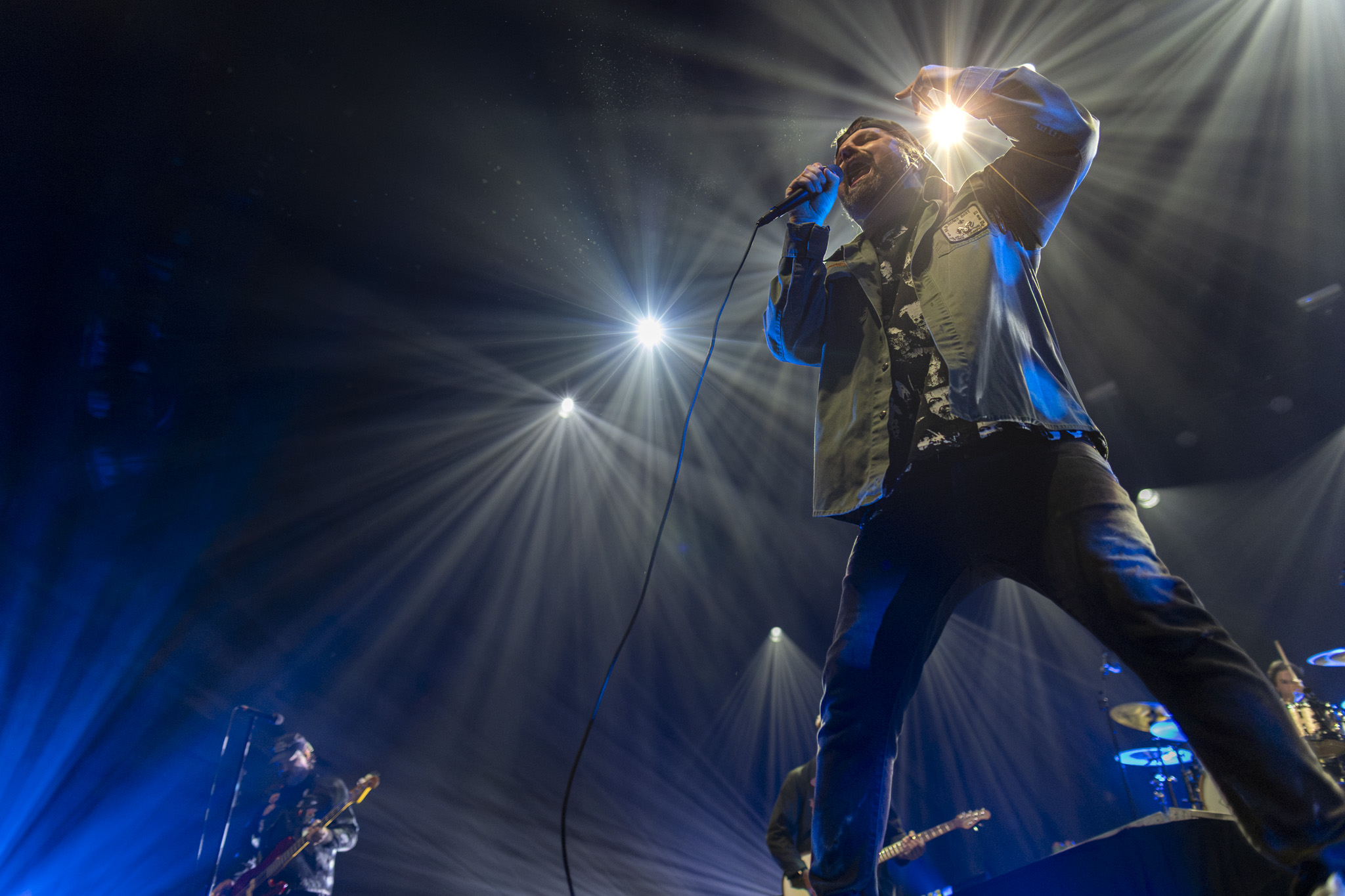
On July 22, the “Camp Screamo Tour” brought Silverstein and Story of the Year to Mission Ballroom in Denver, with Origami Angel and Ally Nicholas opening the night. The lineup felt built for anyone who grew up somewhere between burned CDs, basement shows, Warped Tour heat, and the deeply questionable emotional architecture of early-2000s post-hardcore.
The night had the kind of energy that only a bill like this can create. It was nostalgic without feeling trapped in the past, emotional without becoming overly precious, and loud enough to remind everyone that growing up does not mean the songs stop working. Unfortunately for anyone hoping to be emotionally well adjusted, they still work just fine.
Ally Nicholas opened the night with a set that immediately gave the room something to lean into. Her sound brought a darker, more modern edge to the bill, balancing atmosphere, emotion, and intensity in a way that helped widen the night beyond a simple nostalgia package. She carried the early slot with confidence, making the room feel engaged before the heavier waves of recognition started hitting later in the evening.


Origami Angel followed and were, as always, great. The D.C. duo have a way of making technically sharp, emotionally overloaded, hyper-melodic songs feel loose and joyful in a live setting. Their music can turn on a dime between pop-punk brightness, emo urgency, mathy guitar movement, and full-speed catharsis, yet somehow it never feels overworked. It just feels alive.


At Mission Ballroom, Origami Angel brought the kind of set that makes a room feel younger and more awake. Their songs hit with bounce and precision, but the real strength was how much heart sits inside the chaos. They are one of those bands that can make complicated playing feel effortless and emotional sincerity feel fun instead of unbearably heavy – a suspiciously useful skill.
The crowd responded with the kind of immediate warmth that Origami Angel tends to pull out of people. Their set did not feel like a detour before the co-headliners. It felt like its own bright, scrappy, fully realized piece of the night. On a tour built around the long shadow of emo and post-hardcore, they helped connect the older foundation to where this music keeps evolving now.
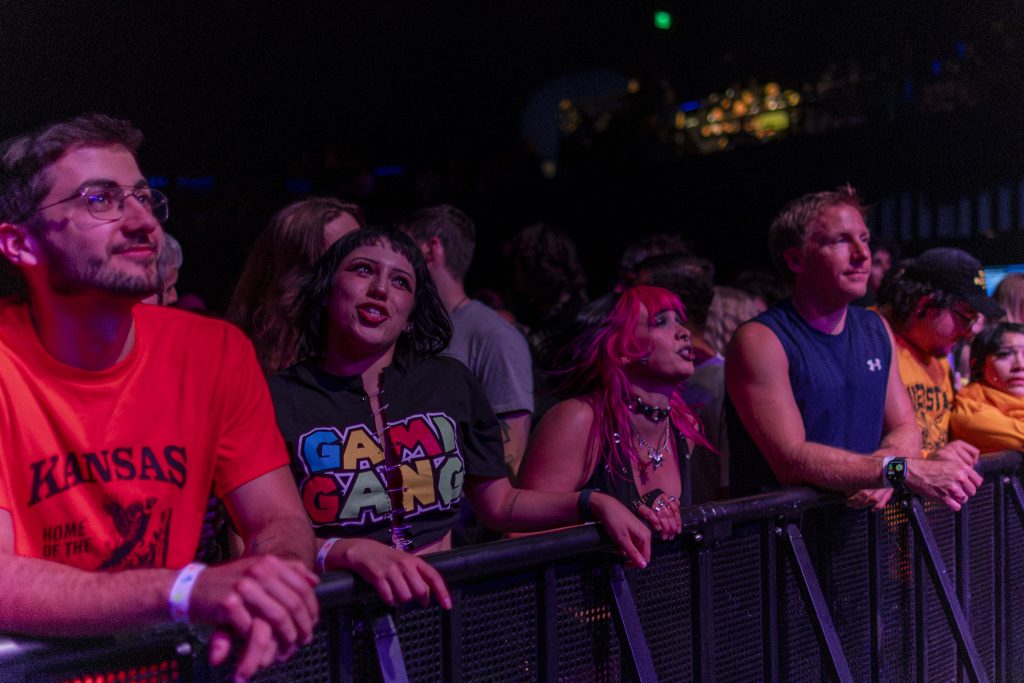
Story of the Year took the stage next and were stellar. The band’s live reputation has always been tied to movement, volume, and sheer physical commitment, and at Mission Ballroom, they delivered exactly that. Their set had the force of a band that still knows how to turn a room into a release valve.
From the first moments, Story of the Year played with the kind of urgency that makes their older material feel less like a throwback and more like unfinished business. The riffs were sharp, the choruses were massive, and the band carried themselves with the confidence of veterans who still look like they would rather be launching themselves across a stage than politely aging into moderation.


That is what made the set work so well. Story of the Year did not treat the night like a victory lap. They played like the songs still had something to prove. The crowd gave that energy right back, turning familiar hooks into full-room singalongs and making the set feel like one of the night’s biggest communal moments.
There is a particular kind of release that comes from hearing post-hardcore and emo songs live years after they first found you. The songs change because the people singing them back have changed. What once soundtracked heartbreak, anger, youth, or survival starts carrying new memories, new people, new reasons to keep showing up. Story of the Year understood that balance and gave Denver a set that felt both familiar and immediate.
Then came Silverstein.
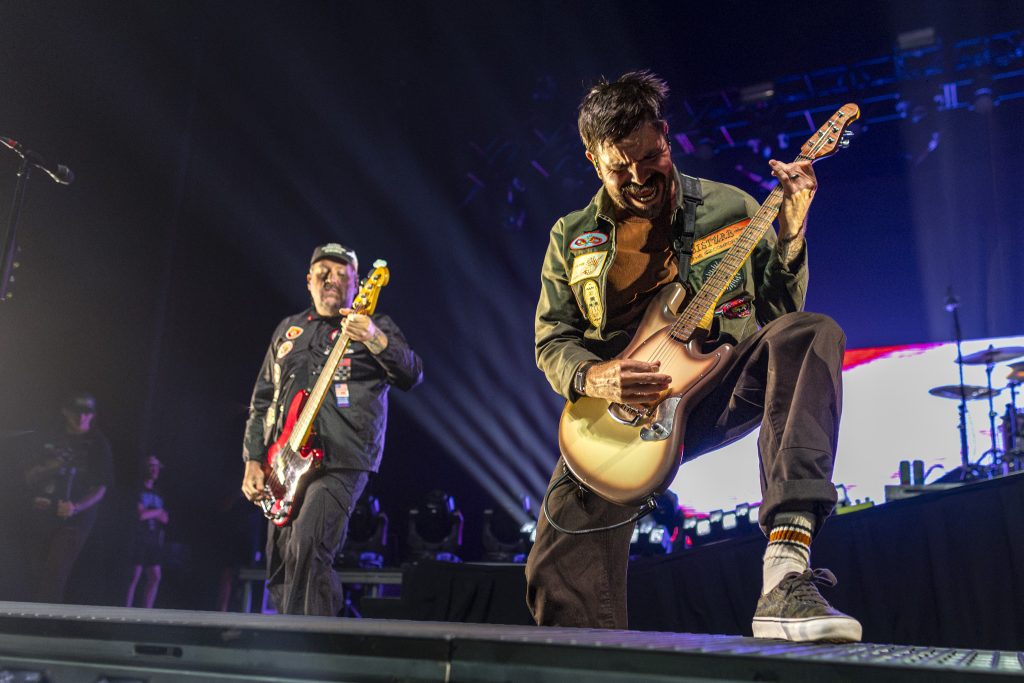
For some people, Silverstein are simply one of the defining post-hardcore bands of the 2000s. For others, they are tied to something much more personal: hard nights, growing pains, long drives, old headphones, and songs that showed up when people needed somewhere to put everything they could not say cleanly. For me, they have been one of those bands since the first album. Getting to photograph them felt like crossing something off a list I did not even realize I had been carrying for that long.
That is the strange thing about a band like Silverstein. Their music does not just sit in one era of your life. It follows you. These are songs that can be there during the bleakest nights, then somehow later become part of dance parties with your kid in the living room. Music is weird like that; it refuses to stay in one emotional box.
Silverstein’s set at Mission Ballroom carried that weight without ever becoming overly sentimental. The band played with the precision and force of a group that knows exactly what these songs mean to people, but they never let that history slow them down. Shane Told’s voice remains one of post-hardcore’s most recognizable instruments, able to move between melody, grit, and full-throated release with the kind of urgency that made the band matter in the first place.


The band’s performance had everything fans came for: the emotional pull, the heavy sections, the giant singalong moments, and the sharp contrast between vulnerability and impact that has always defined their best work. Silverstein has spent decades proving that heaviness does not have to come at the expense of melody, and melody does not have to soften the blow. At Mission Ballroom, that balance still hit hard.
What stood out most was how alive the material felt. It would be easy for a band with Silverstein’s catalog to let the songs run on muscle memory, but that was not the feeling in the room. The set had purpose. The older songs still carried urgency, the newer material fit naturally beside them, and the crowd stayed locked in from start to finish.
Mission Ballroom was the right room for it. The venue gave the production enough space to feel big without losing the closeness that this music needs. Silverstein’s songs are built for collective release, and the crowd responded like people who had carried those words around for years. Some sang with fists in the air. Some shouted like they were trying to get something out of their chest. Some just stood there taking it in, which is usually what happens when a song finds the old bruise and presses directly on it. Very rude. Very effective.


The strength of the “Camp Screamo Tour” was how each act brought a different piece of the larger emotional map. Ally Nicholas gave the night a darker modern pulse. Origami Angel brought speed, brightness, and heart. Story of the Year delivered the kinetic, full-room post-hardcore release. Silverstein closed with the kind of set that reminded everyone why these songs became anchors in the first place.
By the end of the night, Silverstein had delivered more than a bucket-list photo opportunity. They delivered a reminder of how long a band can stay with you when the songs are real enough to survive every version of your life. From first albums to hard nights to dance parties with your son, some music becomes part of the wiring.
Leave a Reply