
Every festival has its aftermovie. A few carefully edited minutes designed to convince us that, somehow, we all experienced the same thing. But what happens when a single story simply cannot exist?
This year, Boomtown might have an answer.
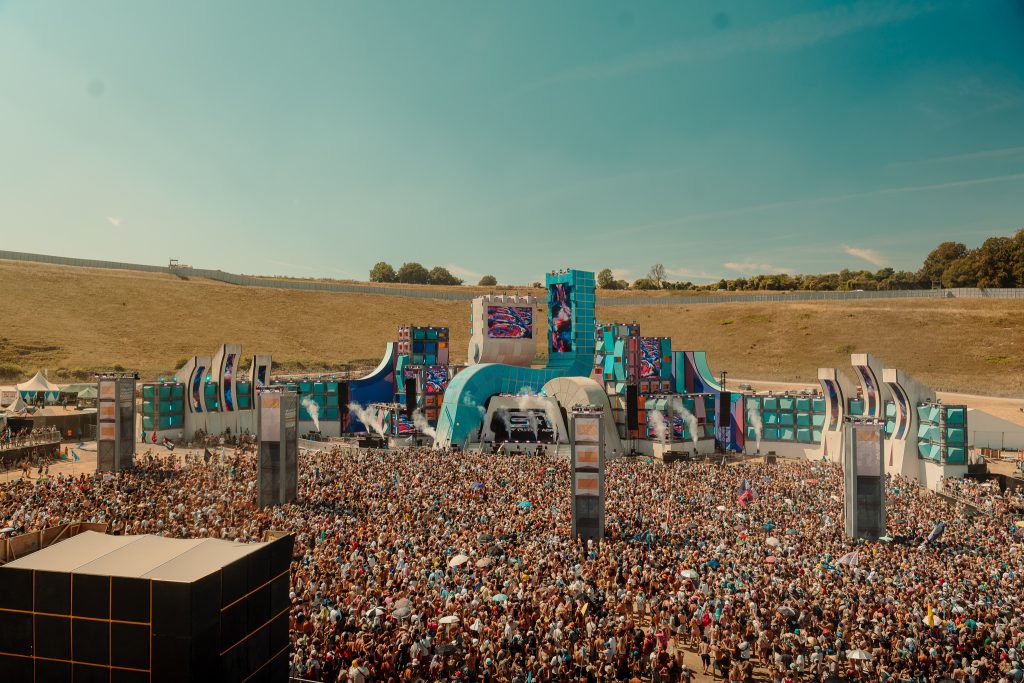
From 12 to 16 August, 77,000 “citizens” descended on Matterley Estate in Hampshire for “Chapter Five: Radical Redesign” – five days in which a festival became something much closer to a temporary city, spread across six districts, dozens of hidden venues and a world of music, theatre, art and storytelling.
And perhaps the most interesting thing wasn’t what everyone saw. It was everything that was impossible to see.
That is where Boomtown Unboxed comes in. The project tracks each citizen’s journey through the festival, from the artists they discovered to the districts they explored, the quests they completed, and the venues they visited, and turns it into a personalised cinematic record.
It feels almost like a natural response to Boomtown’s very nature. Because at a festival built like a city, experienced by 77,000 people and filled with different places, stories and possibilities, one person’s experience simply cannot be the same as another’s.
A Festival Without a Single Centre
Trying to sum up this year’s line-up is almost impossible. Skrillex closed HYDRO XL with surprise guests Flowdan and Chase & Status; Four Tet, Floating Points and Groove Armada took electronic music in different directions, while elsewhere the festival moved from jungle and drum & bass to punk, reggae, hip hop and pop.
The return of the Lion’s Den made that diversity even more apparent. Madness, Kneecap, Shaggy, Scooter, Faithless, Vengaboys, and Eve all shared the same enormous natural amphitheatre, crossing generations and musical worlds that might otherwise seem miles apart.
And perhaps that’s the point: Boomtown doesn’t seem particularly interested in building a lineup that necessarily makes sense on paper. Instead, it invites you to find something you weren’t looking for.
Because the most important moment at a festival isn’t necessarily the one belonging to the artist whose name is printed largest on the poster. It might be a woodland stage discovered by accident, a hidden venue, a performance encountered on the way somewhere else, or a wrong turn that takes you somewhere completely different from where you intended to go.
With Radical Redesign, Boomtown physically reshaped its city around that idea: six districts, new spaces, hidden venues, and a story that doesn’t unfold only on the stages.
You’re not simply a spectator. You have to move through it.
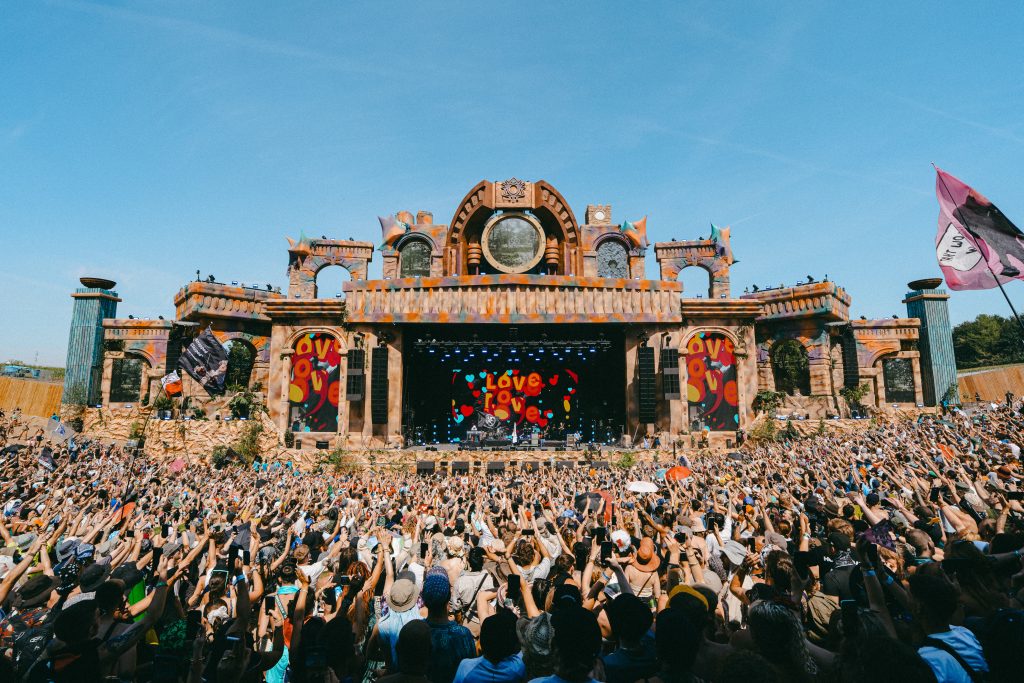
When the Festival Starts Looking at Itself
Perhaps the most surprising part of this edition wasn’t musical at all.
The Observatory transformed Boomtown into a living laboratory, bringing researchers from United Kingdom universities into the heart of the festival to study identity, belonging, creativity, collective behaviour and the way people interact with one another and with their surroundings.
It’s a curious idea: 77,000 people abandoning their usual routines for five days, living alongside strangers and building a kind of temporary society while someone tries to understand what all of this might teach us.
The same philosophy can be found in HYDRO XL, the new 20,000-capacity stage powered entirely by green hydrogen technology. Here, sustainability isn’t simply a message to put on a poster; it becomes part of the festival’s infrastructure itself.
Perhaps this is the real meaning of Radical Redesign: not simply moving stages or redrawing the map, but asking what a festival can become when music, technology, the environment, research, and participation occupy the same space.
And Then There Was Skrillex
Of course, none of this means Boomtown has forgotten how to create a huge moment.
On Sunday night, Skrillex closed HYDRO XL in front of 20,000 people. First Flowdan, then Chase & Status appeared on stage as surprise guests, with the three artists performing together live for the first time and debuting unreleased music.
It is exactly the kind of moment that belongs in an aftermovie.
The lights. The crowd. The surprise. The moment everyone will film on their phones.
And yet, while thousands of people were experiencing that same moment, others were probably discovering something completely different somewhere else in the city.
And that is where the idea behind Unboxed becomes interesting: it doesn’t try to decide what the Boomtown moment was. It accepts that there were many.
What Remains When the Gates Close?
Perhaps this is the most important question left behind by Radical Redesign.
For five days, it is easy to feel part of something when 77,000 people share the same space, the same music and the same temporary city. It is much harder to carry that feeling with you when you return to normal life.
Boomtown seems to be experimenting with exactly that boundary: what happens if a festival doesn’t simply entertain, but tries to leave something behind with its citizens?
We don’t yet know how much of all this will truly remain once everyone goes home. But perhaps that’s the point: the festival shouldn’t be the one to provide the answer.
Chapter Five ended with one of the most surreal images imaginable: a spectacular drone show and BBXL™’s space programme launching a rocket towards Mars, while Chapter Six, Wild Style, is already on the horizon.
An aftermovie can tell you what happened. But it can’t tell you what happens next. And perhaps, for Boomtown, that’s exactly where the most interesting part begins.
Leave a Reply