
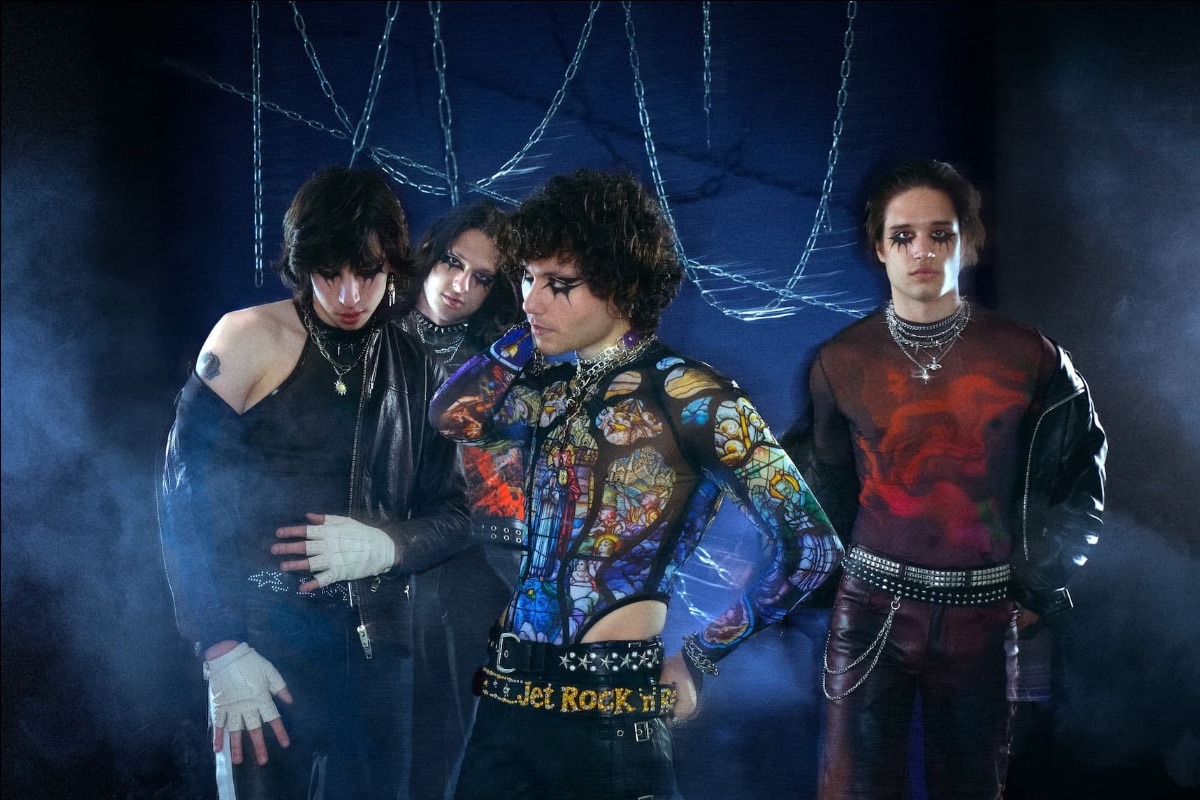
Sometimes a band like PLUME comes along that can be defined more than just a genre. PLUME has elements such as emo, metalcore, hyperpop, electronic music, and pop that creates such an immersive world that’s perfect for storytelling through visuals and their unique sound. With the new album; Saferooms & Healing Frequencies it confronts fear, being able to navigate personal struggles, and honestly finding meaning between everything even when there is so much uncertainty. The album has no problem exploring the complicated relationship between healing and pain and it also gives the listener no answer how to move forward from these unsettling situations. We spoke with Pacey (Pascal Pashaee) about the creative vision behind PLUME, the story that created “Angel Engine” and the journey to the center of the the whole album.
Interviewer: PLUME feels less like a band trying to fit into a genre and more like a world you’ve built. When did you realize PLUME needed to be treated as an entire universe rather than simply a musical project?
Pacey: “Very early on, actually. Whenever we write a song, a whole deeper concept naturally starts to form around it. We immediately start thinking about things like music videos, the visual aesthetic, the overall vibe and how everything ties together. It just gives us so much more room to express ourselves creatively. So why limit it to just the music?“
With the creative process for this album; it goes way beyond writing and recording each song. The point of this album and each track is to create a larger concept that allows the band to connect the sound through visuals and storytelling that gives this project an identity. It will create a world for listeners that feels inviting and constantly feeling like everything is made intentionally for a reason.
Interviewer: There’s a strange contradiction at the center of PLUME: the music can feel futuristic and digitally polished while the emotions underneath it are incredibly human and vulnerable. How important was it to preserve that human imperfection underneath such a massive production aesthetic?
Pacey: “That’s actually extremely important to me. I think you never stop learning about life, no matter how old you are. We’re human beings creating this music and the people listening to it are human too. Chances are, we share a lot of the same struggles. Feeling things is just part of being human and that’s why it’s so important to me to bring that humanity into my art.”
Even though PLUMES sound may seem complexed; its true foundation is sharing human experiences. Pacey emphasizes that production and experimenting should never shadow over the human feelings that make the music important. With each track being polished; there should always be an understanding that those listening to the music have their own struggles and experiences that allows them to resonate to each song differently.
Interviewer: If someone completely removed the genre labels emo, metalcore, hyperpop, electronic, pop from PLUME, what would you want them to understand about the project simply by experiencing it?
Pacey: “Excitement. We’d love for people to feel like they’ve discovered something genuinely new. When we write music, one of our main goals is to recreate that feeling you get when you discover a new genre for the first time. That “wow, I’ve never heard anything like this before” feeling.”
PLUME’s main goal is to not be defined under a specific label, but to create music that challenges expectations within the industry. That sense of unfamiliarity is central to the band’s creative identity, giving it the freedom to experiment without being confined by established boundaries.
Interviewer: “Angel Engine” plays with the idea of salvation and destruction existing almost simultaneously. What does an “Angel Engine” mean to you personally? Is it something that saves us, controls us, or potentially does both?
Pacey: “The song is based on a creepypasta/analog horror story in which an angel comes to Earth to save humanity from extinction. But instead of accepting its help, humans capture the angel and use it as a source of energy. So I’d say the Angel Engine itself is actually something that wants to save us. It’s our own human nature, blinded by darkness and ignorance, that keeps us from seeing that.”
The story turns a symbol of hope into something unsettling, showing how fear, ignorance, and the need for control can ruin humanity’s chance at salvation. The real horror isn’t just what happens, but how people react to the possibility of being saved.
Interviewer: The song deals with control and fear without giving the listener a clean resolution. Why was it important to leave that tension unresolved rather than turning the song into a story about overcoming those feelings?
Pacey: “I think fear and control are closely connected. Sometimes you’re in control of your fear and sometimes, or honestly most of the time, it controls you. Maybe you can’t really control it at all and all you can do is learn how to cope with it. That’s exactly the feeling and the question I wanted to convey with this song.”
“Angel Engine” holds that uncertainty which makes the track feel so real. In real life; we need to understand that fear doesn’t go away because we decide that it should, but sometimes we need to live with those feelings instead of trying to overcome them. The single leaves room for the listener to analyze their own thoughts and emotions even when those emotions might be too difficult to understand
Interviewer: The title Saferooms & Healing Frequencies sounds comforting at first, but there’s also something unsettling about it. What does a “saferoom” represent to you? Is it somewhere we heal, somewhere we hide, or sometimes somewhere we accidentally trap ourselves?
Pacey: “For us, the rehearsal room where we wrote the album became our own safe room. It was a place where we could temporarily forget about the chaos in our personal lives, but more importantly, work through it. Like in a survival horror game, a safe room is somewhere you can take a breath, because you know nothing can hurt you there. But if you want to keep moving forward in the game, you eventually have to leave that room again.”
The album’s title speaks to the need for a place where we can step away from everything when life gets too heavy. For PLUME, the rehearsal room became more than just a place to make music. It was somewhere they could work through their struggles and turn difficult experiences into something creative. But, as the survival-horror comparison suggests, having a safe place to retreat to can only take us so far. Sometimes, we need that space to catch our breath before finding the strength to face what’s waiting for us outside.
Interviewer: Was the album written from the perspective of someone trying to escape something, someone trying to heal from something, or someone learning that escape and healing aren’t necessarily the same thing?
Pacey: “It was written from the perspective of someone realizing that pain and healing share the same door. They’re connected to each other. Sometimes there’s less pain, sometimes more and healing works the same way. It’s not a linear process, and it can take time.”
Interviewer: What is the emotional journey of the album? If someone listens from beginning to end without reading a single lyric, what do you hope they feel changing as the record progresses?
Pacey: “You get lost in yourself and as the album progresses, you start to notice that something is changing. There’s a certain melancholy that gradually creeps in and the album starts to explore more religious and spiritual themes. It’s a kind of search for meaning. Some people might find that meaning at the beginning of the album, others at the end, and some might not find it at all.“
At its heart, Saferooms & Healing Frequencies is about finding your own way through life, learning to understand your emotions, and realizing that healing doesn’t always happen the way you expect it to. PLUME builds a world full of experimental sounds and unsettling stories, but what really makes the album stand out is the emotion behind it all. Whether it’s the futuristic production, the darker themes, or the more vulnerable moments, there’s something here that feels real and relatable. The album reminds us that sometimes we’re caught between feeling safe and facing our fears, struggling with pain while trying to heal, and searching for answers when we don’t even know where to begin
Socials: Instagram / Spotify / TikTok / YouTube
Leave a Reply