
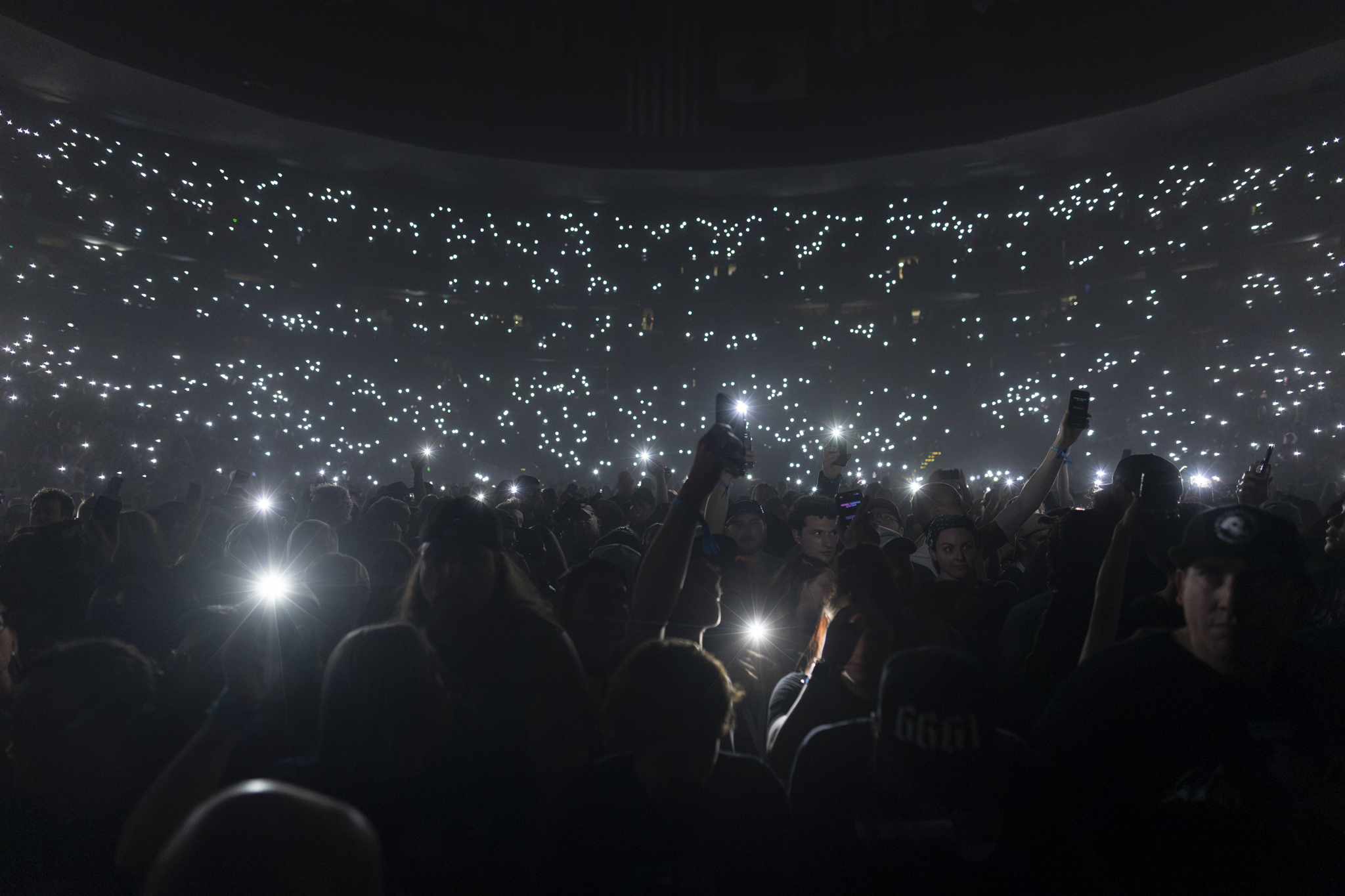
There are arena bands, and then there are bands that make the arena feel like part of the show’s machinery. On Sunday, August 23, Avenged Sevenfold brought their North American Tour to Ball Arena in Denver, Colorado, with Good Charlotte, rounding out a night that moved between nostalgia, spectacle, and heavy music built for scale.
Good Charlotte’s set leaned into hooks, memory, and the kind of full-room recognition that only comes from songs people have carried with them for years. On paper, Good Charlotte and Avenged Sevenfold may seem like an unusual pairing, but live, the contrast worked. Good Charlotte brought the communal release. Avenged Sevenfold would later bring the darkness, weight, and spectacle.
Good Charlotte’s songs have always lived in that space between defiance and catharsis, and in an arena, those choruses still know exactly what to do. The crowd responded like people who did not just remember the songs, but remembered the versions of themselves that first needed them.
By the time Avenged Sevenfold came out for the main set, Ball Arena had shifted into a different mode entirely. The room felt heavier, more focused, and ready for the kind of show that does not rely only on volume. Avenged Sevenfold have spent years building a catalog that can move between metal, hard rock, progressive ambition, and theatrical darkness, and that range is what makes their live show feel bigger than a simple greatest hits run.


From the photo pit, the opening moments of their set felt massive. The band knows how to use shadow and scale, letting the stage breathe before the full force of the production takes over. Every member of the band looked locked into the size of the room, playing with the confidence of a group that knows Ball Arena is not too big for the songs. If anything, the songs seemed to grow into it.
Avenged Sevenfold’s older material carried the expected emotional weight. Songs like “Nightmare,” “Afterlife,” “Bat Country,” and “Unholy Confessions” are not just staples because they are familiar. They are staples because they still work in real time. The riffs still cut, the choruses still pull the room together, and the crowd still knows exactly where to put its voice.


That history mattered throughout the set. For many fans, Avenged Sevenfold is tied to a specific era of metal and hard rock, but the band has never been content to stay frozen there. The newer material brought a different kind of atmosphere, stretching the show outward and giving the set a more unpredictable shape than a pure nostalgia run would have had.
That balance between legacy and evolution was the core of the night. Avenged Sevenfold gave fans the songs that built the connection, but they also leaned into the more surreal and experimental side of where the band is now. It made the show feel like a band still pushing forward rather than simply collecting applause for the past.
Visually, the show gave plenty to work with. Avenged Sevenfold’s production used the scale of Ball Arena well, creating moments that felt cinematic without losing the grit of a rock show. The lighting helped shape the mood of each section, from darker, more ominous passages to brighter arena-wide moments where the crowd became part of the visual field.


That is where Avenged Sevenfold are strongest live; they understand that spectacle only matters when the songs can carry it. The production was big, but it never felt like it was compensating for a lack of force. The band still sounded and moved like the center of the show, with the visuals amplifying the music instead of burying it.
The crowd gave that energy back all night. Ball Arena can sometimes make a show feel distant, but this one held onto a strong sense of connection. Whether fans were there for the older metalcore-adjacent chaos, the arena rock anthems, or the band’s more recent creative turns, the room felt invested in the full arc.


Leave a Reply